Survival, Paradoxes, and Prehistoric Terror: The Ending of ‘The End of Oak Street’ Explained
The summer of 2026 has been defined by an unlikely cinematic showdown. On one side, the family-friendly spectacle of Paw Patrol: The Dino Movie; on the other, David Robert Mitchell’s high-concept, Amblin-inspired sci-fi odyssey, The End of Oak Street. Marking Mitchell’s first directorial effort in nearly eight years—following the cult success of It Follows and the polarizing Under the Silver Lake—this Warner Bros. production has quickly established itself as a modern benchmark for the dinosaur subgenre.
Produced by J.J. Abrams, the film blends 1980s suburban nostalgia with the visceral terror of the Mesozoic era. However, it is the film’s complex final act, involving temporal anomalies and a morally ambiguous "happy" ending, that has left audiences and critics debating long after the credits roll.
Main Facts: A Suburban Nightmare Millions of Years in the Making
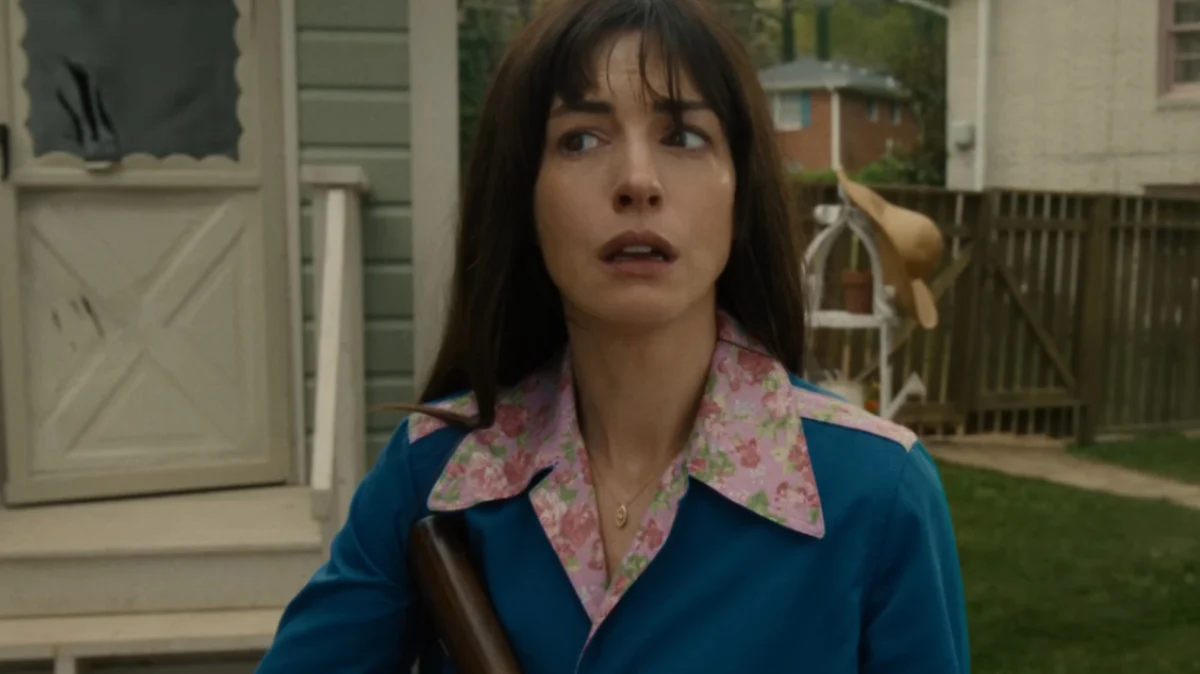
The End of Oak Street centers on the Platt family, living in the seemingly perfect neighborhood of Flowervale in 1982. The cast is led by Academy Award winner Anne Hathaway as Denise and Ewan McGregor as Greg, supported by rising stars Christian Convery (Brian) and Maisy Stella (Audrey).
The narrative catalyst is a "cosmic event"—a series of mysterious lights that culminate in the physical displacement of an entire suburban block. Oak Street is ripped from its foundations in 1982 and deposited into a prehistoric jungle. The film moves away from the "science gone wrong" trope of the Jurassic Park franchise, opting instead for a "Lost World" scenario driven by astronomical and temporal phenomena.
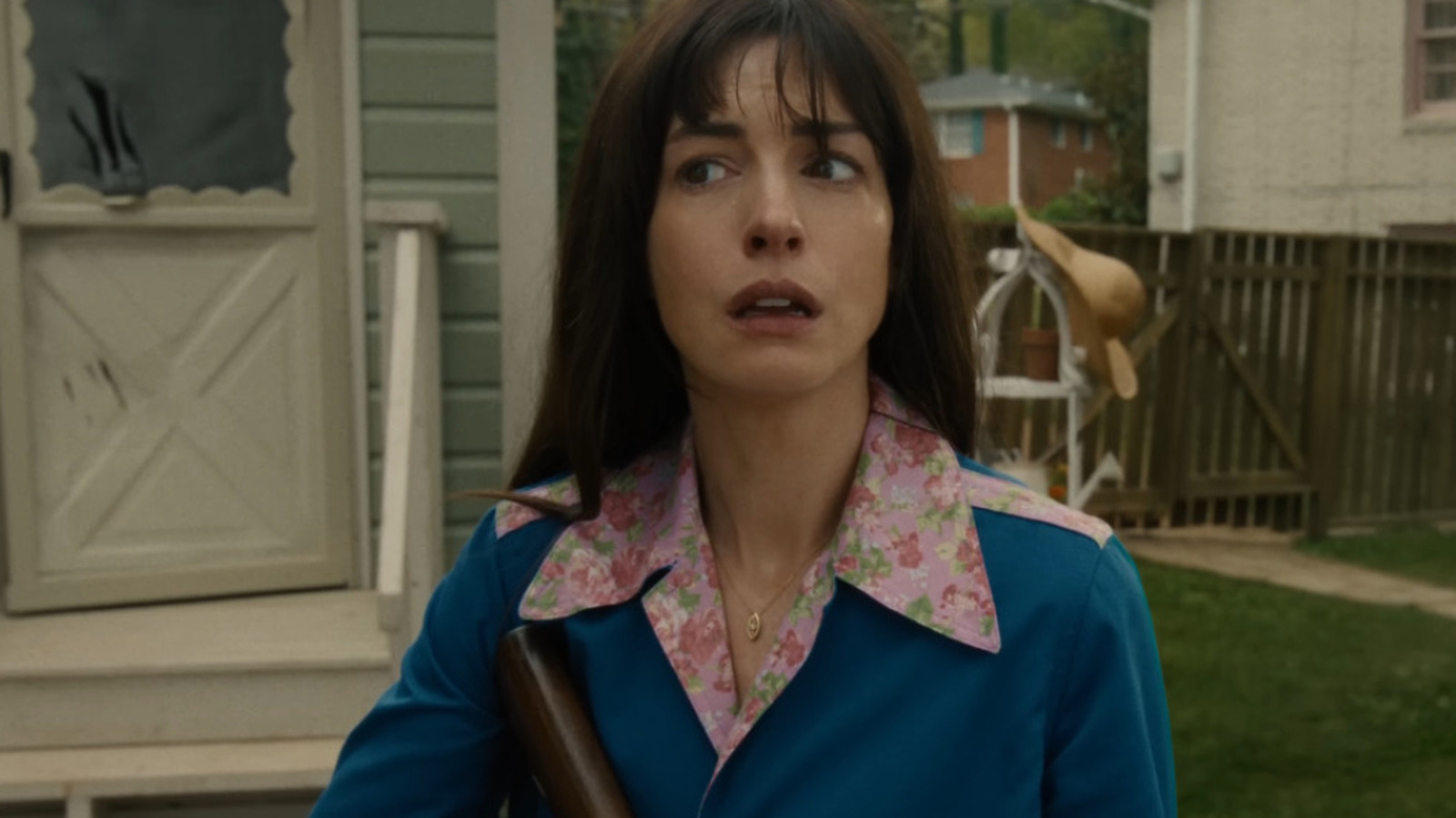
Critics have lauded the film for its practical effects and its ability to balance Spielbergian wonder with the creeping dread typical of Mitchell’s filmography. While the film functions as a survival thriller, its core is a domestic drama about a family on the brink of collapse, forced to reconcile their internal fractures while being hunted by apex predators.
Chronology: From the Block Party to the Cretaceous
The Fractured Foundation
The film opens with a meticulously crafted portrait of 1982 suburbia. However, the "perfection" is a facade. Greg Platt (McGregor) is struggling under the weight of financial instability, working a grueling pizza delivery job on the side. Denise (Hathaway) is emotionally distant, secretly writing a manuscript that serves as a manifesto for her desire to leave her life behind. Their children, Brian and Audrey, are equally disconnected. This internal family tension sets the stakes: they are lost to each other long before they are lost in time.
The Displacement
After several nights of "atmospheric anomalies," the neighborhood is engulfed in a blinding white light. When the sun rises, Oak Street is no longer in Ohio. It is surrounded by dense, alien foliage and the sounds of creatures that should be extinct. The first act concludes with the realization that there is no "edge" to the world they knew; the pavement simply ends in a sheer drop-off into a swamp.
Survival and Loss
The second act follows the community’s attempt to fortify their homes. The survivalist aspect is grim; neighbors are picked off by small, agile raptors and a looming Allosaurus. The Platts take in Jeannette (Jordan Alexa Davis), a young neighbor orphaned by an attack. The turning point occurs during a desperate nighttime excursion. Greg, attempting to defend his family with nothing but a hammer and sheer willpower, is brutally maimed and consumed by an Allosaurus. This moment serves as the emotional nadir of the film, shifting Denise from a passive participant to a desperate protector.
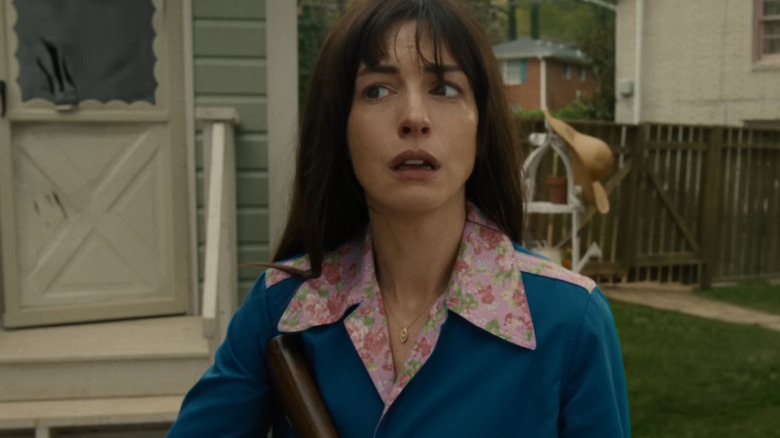
The Wormhole and the Escape
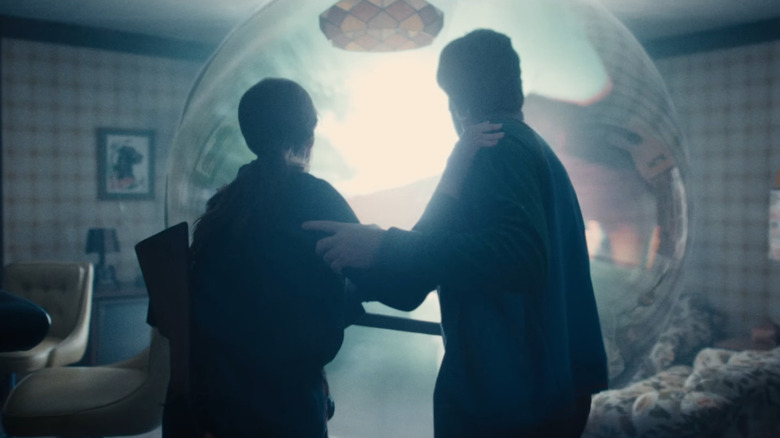
Denise and the children discover "bubbles"—fluctuating temporal rifts that appear near the neighborhood’s library. These portals are unstable, flickering in and out of existence. The climax involves a harrowing journey through the dinosaur-infested ruins of Oak Street to reach the final bubble.
The Ending Explained: The "Pizza Order" Paradox
The final ten minutes of The End of Oak Street are where David Robert Mitchell shifts the film from a survival story into a mind-bending temporal puzzle.
After a frantic battle with a giant snake and a pterosaur, Denise, Brian, Audrey, and Jeannette reach the wormhole. They successfully jump through, finding themselves back in 1982, but on the outskirts of Flowervale—the area that wasn’t taken.
The "twist" comes when Denise realizes the exact timing of their arrival. They have returned to the night of the event, moments before the block was transported. In a desperate bid to save the man she just watched die, Denise finds a payphone. She calls the pizza parlor where Greg is working and places a large, fake order.
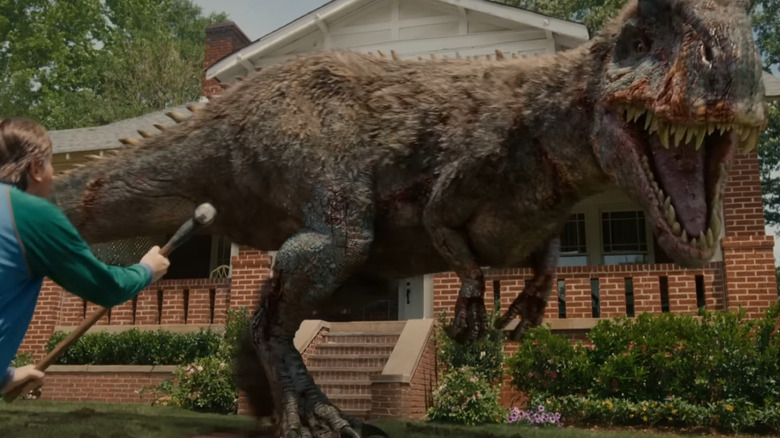
This call prevents Greg from returning to Oak Street at the moment of the displacement. Because he is out on a delivery in a different part of town, he is not on the street when it vanishes.
The Two-Year Epilogue
The film jumps forward two years. Denise is now a celebrated author, having written a "fictionalized" account of their trauma titled The End of Oak Street. The world has moved on, though it is fundamentally changed; several dinosaurs were "swapped" into 1982 in place of the neighborhood, leading to a world where prehistoric sightings are a documented reality.
The Platts are seen at a BBQ with Jeannette’s family. Greg is alive, and the family seems healed. However, the visual cues suggest a lingering trauma. The "happy ending" is undercut by the presence of two Jeannettes—the one who survived the jungle and the "original" one who was saved because the survivor warned her family.
Supporting Data: Genre Analysis and Visual Language
To understand the impact of The End of Oak Street, one must look at how it differentiates itself from recent dinosaur cinema. Unlike the Jurassic World trilogy, which focuses on genetic engineering and corporate greed, Mitchell’s film treats dinosaurs as an elemental force of nature—akin to the shark in Jaws.
- VFX Integration: The film utilized a 70/30 split between practical animatronics and CGI. This gives the dinosaurs a tactile, terrifying weight that CGI-only productions often lack.
- The "Amblin" Aesthetic: Cinematographer Mike Gioulakis uses wide, anamorphic shots to capture the scale of the prehistoric world against the smallness of the 1980s architecture.
- Genre Subversion: While the film marketed itself as an adventure, the middle hour is a straight horror film, utilizing the same "stalker" mechanics Mitchell perfected in It Follows.
Official Responses: Director and Studio Insights
In a post-release interview with Sight & Sound, David Robert Mitchell addressed the film’s ambiguous morality. "I wanted to explore the idea of a ‘calculated’ happy ending," Mitchell stated. "Denise saves her husband, but she does so by essentially creating a fracture in reality. She chooses her own happiness over the ‘natural’ flow of time."
Warner Bros. executives have remained tight-lipped about the "scientific" rules of the movie, preferring to let the "Abrams Mystery Box" element drive ticket sales. However, the studio has confirmed that the film’s $150 million budget was largely allocated to creating a "lived-in" 1982, ensuring that the contrast between the suburban and the prehistoric felt jarringly real.
Critics have noted that the film serves as a metaphor for divorce and reconciliation. The "End of Oak Street" isn’t just the physical destruction of a neighborhood; it’s the end of the idealized, suburban lie the Platts were living.
Implications: The Moral Cost of Survival
The ending of The End of Oak Street is far darker than its Spielbergian trappings suggest. By saving Greg via the pizza order, Denise has created a timeline where the "original" versions of herself and her children were still sent back to the prehistoric past.
The Sacrifice of the "Others"
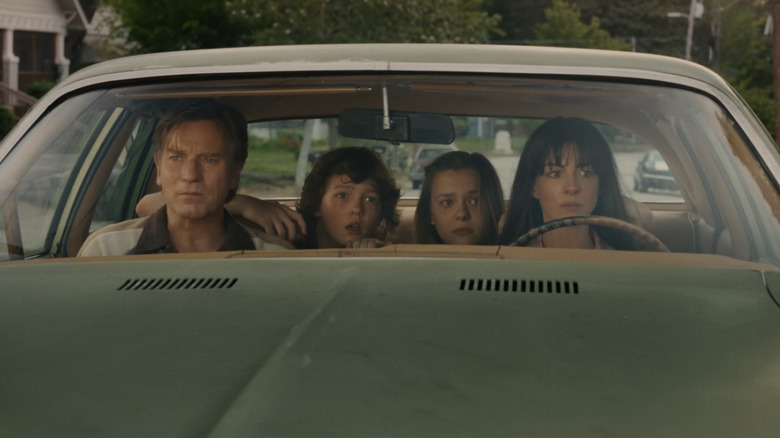
The epilogue makes no mention of the other versions of the Platt family. The implication is that while this version of Denise and her kids escaped, another version of them—the ones who were originally at home that night—were still transported and likely died in the jungle. To secure her family’s future, Denise had to abandon another version of them to a horrific fate.
A New Franchise Model?
The film’s success and its expansive world-building have already sparked rumors of a "Cloverfield-style" anthology. While the story of the Platt family feels complete, the existence of the "swapped" dinosaurs in 1982 provides a wealth of narrative opportunities.
- Potential Sequel: A film focusing on the "Dino-Invasion" of 1980s America.
- The Anthology Approach: Stories of other neighborhoods or time periods affected by the same cosmic anomaly.
Ultimately, The End of Oak Street succeeds because it refuses to provide easy answers. It is a film about the lengths a mother will go to to protect her children and the terrifying realization that in a world of monsters and time-slips, survival always comes with a price. As Denise looks at her "saved" husband in the final frame, her expression isn’t one of pure joy—it is the look of a woman who knows exactly what she had to leave behind in the dark.