Doriax Engine: A Powerful, Open-Source Contender in the Game Development Landscape
[City, Date] – In the ever-evolving world of game development, the emergence of new tools and technologies can significantly reshape how creators bring their visions to life. Among the latest contenders making waves is the Doriax Game Engine, a remarkably capable open-source platform that supports both 2D and 3D game creation across Windows, macOS, and Linux. Previously known as the Supernova engine, Doriax has rebranded and continues its mission to provide developers with a robust, flexible, and freely accessible toolset.
This comprehensive engine, licensed under the permissive MIT license, positions itself as a compelling alternative for indie developers, hobbyists, and even studios looking for a cost-effective and powerful solution. Its commitment to open-source principles fosters a collaborative environment, encouraging community contributions and rapid iteration. This article delves into the core features of Doriax, its historical context, supporting data, and the broader implications of its presence in the game development ecosystem.
The Genesis and Evolution of Doriax: From Supernova to a New Horizon
The journey of the Doriax engine is intrinsically linked to its predecessor, the Supernova engine. While the exact timeline of its inception is not extensively detailed in public documentation, the rebranding to Doriax signifies a renewed focus and potentially a new phase of development and community engagement. Open-source projects often undergo such transformations as they mature, adapt to community feedback, or seek to establish a stronger brand identity.
The transition from Supernova to Doriax suggests a commitment to continued development and support. Open-source engines, by their nature, rely heavily on community involvement. A rebranding can serve as a catalyst, attracting new contributors, users, and potentially even commercial entities interested in leveraging or supporting the technology. The MIT license, a cornerstone of Doriax’s open-source model, is highly permissive, allowing for broad use, modification, and distribution, including in commercial projects, without significant legal encumbrances. This is a crucial factor for developers considering integrating Doriax into their workflows.
Unpacking the Core Strengths: Why Developers Might Choose Doriax
The allure of any game engine lies in its ability to empower developers to create without undue limitations. Doriax aims to achieve this by offering a suite of features designed to streamline the development process and provide creative freedom. While specific detailed feature lists are often found within the engine’s official documentation and repositories, the general philosophy behind Doriax points towards a focus on:
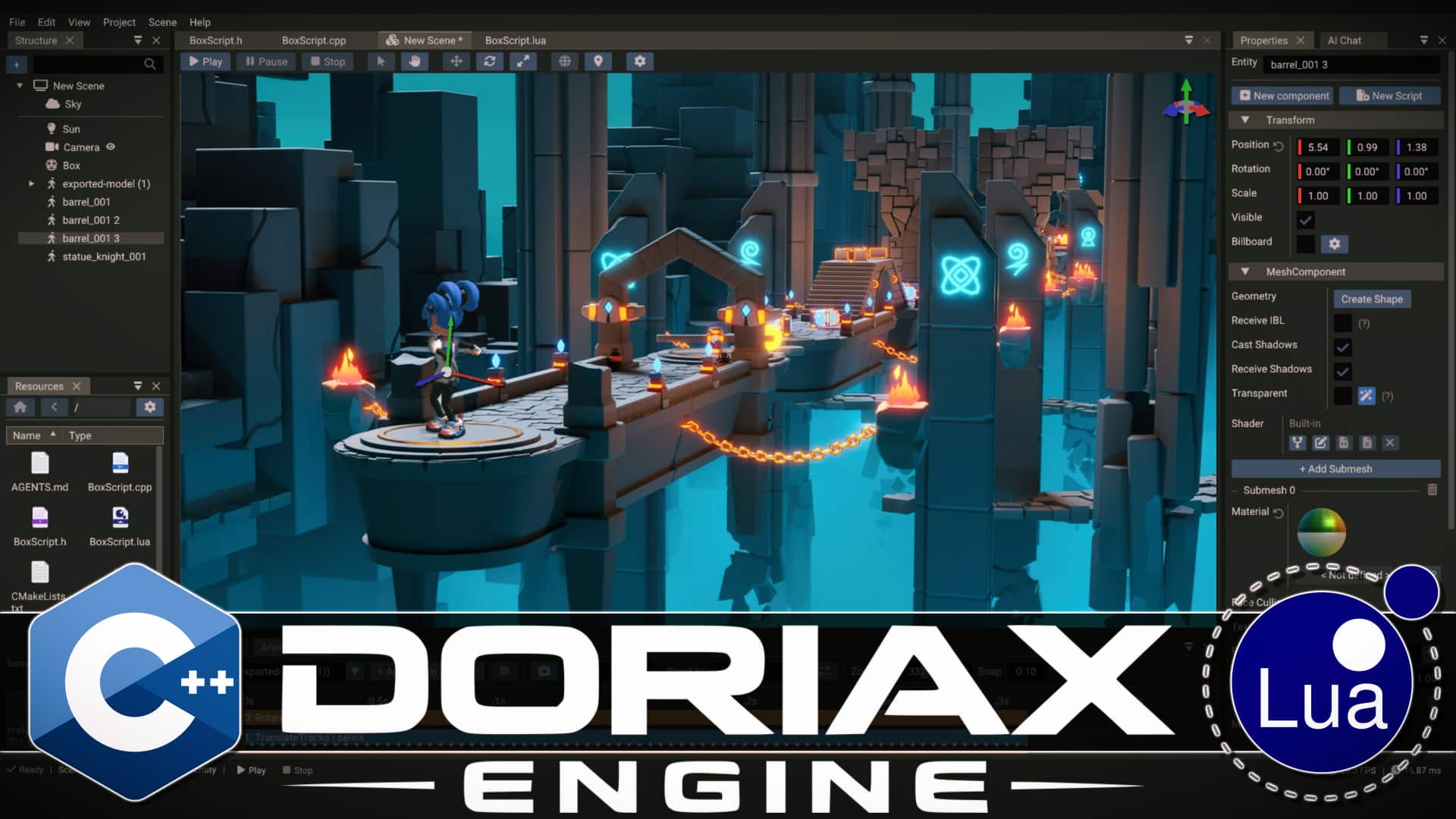
- Cross-Platform Compatibility: The ability to develop a game once and deploy it across multiple operating systems (Windows, macOS, Linux) is a significant advantage. This broad compatibility reduces development overhead and expands the potential audience for a game. For indie developers with limited resources, this feature alone can be a game-changer.
- 2D and 3D Capabilities: The engine’s dual support for both 2D and 3D game development makes it a versatile tool. This flexibility allows developers to tackle a wider range of game genres and styles without needing to switch between different engines. Whether crafting a retro pixel-art platformer or an immersive 3D adventure, Doriax aims to provide the necessary tools.
- Open-Source and MIT License: As previously mentioned, this is a foundational strength. The transparency of open-source development allows for in-depth understanding of the engine’s inner workings, potential for customization, and the absence of licensing fees. The MIT license offers unparalleled freedom, making it an attractive option for both hobbyists and commercial ventures.
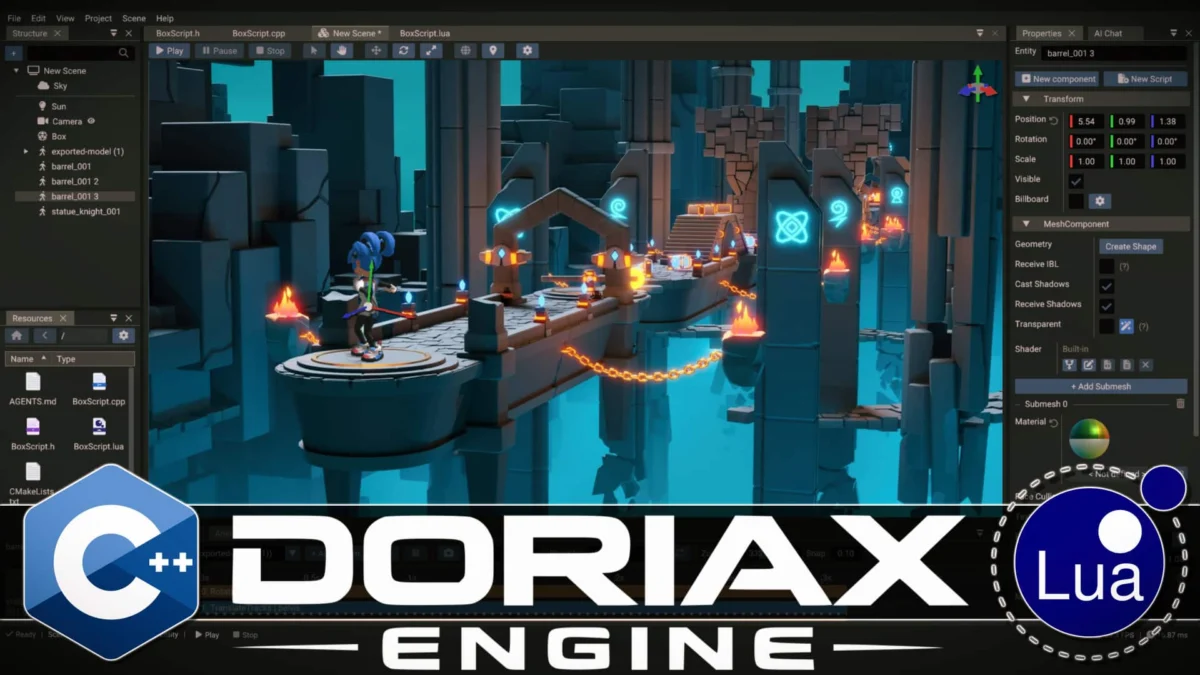
- Editor Functionality: A robust editor is crucial for any game engine, providing a visual interface for scene construction, asset management, scripting, and debugging. While the specifics of the Doriax editor are best explored through direct experience or video demonstrations, its presence indicates a commitment to a user-friendly development environment.
- Performance and Optimization: Game development demands efficient performance. While benchmarks and detailed performance analyses are often community-driven or emerge with more extensive use, the underlying architecture of an engine plays a vital role. Doriax, like many modern engines, likely aims for optimized rendering and scripting performance to handle complex game logic and visuals.
- Scripting Language Support: The choice of scripting language(s) is a key consideration for developers. Doriax’s specific scripting language support would be a critical piece of information for potential users. Common choices in the game development space include C++, C#, Lua, or custom scripting languages. The accessibility and power of the scripting environment directly impact a developer’s ability to implement game mechanics and logic.
- Asset Pipeline: Efficiently importing, managing, and manipulating game assets (models, textures, audio, animations) is vital. A well-designed asset pipeline within Doriax would contribute significantly to a smooth development workflow.
- Physics Engine Integration: For games that require realistic object interactions, a built-in or easily integrated physics engine is essential. This allows for simulating gravity, collisions, and other physical phenomena.
- Networking Capabilities: For multiplayer games, robust networking features are paramount. The extent to which Doriax supports network programming would determine its suitability for online game development.
- Community and Documentation: The strength of an open-source project often hinges on its community and the quality of its documentation. Active forums, Discord servers, and comprehensive tutorials are invaluable resources for developers seeking help and learning the engine.
Supporting Data and Community Engagement: Gauging the Engine’s Traction
To truly assess the viability and potential of any game engine, it’s essential to look beyond its feature list and consider the supporting data and community engagement. While specific, quantifiable metrics for Doriax (like download numbers, active user counts, or a portfolio of released games) might be nascent or not publicly disclosed, several indicators can be examined:
- GitHub Repository Activity: The Doriax GitHub repository serves as a central hub for its development. Metrics such as the number of commits, pull requests, issues, and stars can offer insights into the level of ongoing development and community interest. A high rate of activity suggests a vibrant project.
- Discord Server Activity: The official Discord server is often the pulse of an open-source community. Active discussions, the presence of core developers, and the willingness of users to help each other are strong indicators of a healthy and engaged user base.
- Video Demonstrations and Tutorials: The availability of video content, such as the YouTube video mentioned, is crucial for showcasing the engine’s capabilities and providing learning resources. The quality and frequency of such content reflect the project’s commitment to accessibility.
- Community-Developed Projects: While not explicitly detailed, if the Doriax engine has been used to create publicly released games, these serve as the most compelling form of supporting data. The success and visibility of these games would directly correlate with the engine’s effectiveness.
- Developer Feedback and Reviews: As the engine gains traction, independent reviews, forum discussions, and developer testimonials will emerge, offering valuable qualitative data on user experiences, pros, and cons.
Official Responses and Future Outlook
Direct official responses from the Doriax development team are typically found within their official channels, such as their website, GitHub, or Discord. These responses often address bug fixes, feature updates, roadmap announcements, and community feedback. The transparency and responsiveness of the development team are critical for building trust and fostering a loyal user base.
The future outlook for Doriax appears promising, particularly given its open-source nature and the continued demand for powerful, accessible game development tools. The rebranding from Supernova to Doriax suggests a strategic move to revitalize the project and attract a wider audience. Key factors that will influence its long-term success include:
- Continued Development and Innovation: The engine must consistently evolve to keep pace with industry trends and the demands of game developers. This includes introducing new features, improving performance, and addressing technical debt.
- Community Growth and Contribution: The strength of an open-source project is directly tied to its community. Encouraging contributions, providing clear contribution guidelines, and fostering a welcoming environment will be vital for Doriax’s sustained growth.
- Usability and Documentation: A steep learning curve can deter potential users. Investing in comprehensive, well-organized documentation, tutorials, and example projects will be crucial for lowering the barrier to entry.
- Ecosystem Development: As the engine matures, the development of plugins, extensions, and integrations with other tools can significantly enhance its capabilities and appeal.
The Broader Implications: A More Accessible Game Development Landscape
The continued rise of powerful, open-source game engines like Doriax has significant implications for the entire game development landscape.
- Democratization of Game Development: Open-source engines remove financial barriers, making professional-grade game development tools accessible to a much broader audience. This empowers individuals and small teams with limited budgets to create ambitious projects that might have previously been out of reach.
- Increased Innovation: With more developers having access to sophisticated tools, the potential for creative innovation in game design and mechanics increases. Open-source development itself fosters a culture of experimentation and rapid iteration.
- Reduced Reliance on Proprietary Solutions: The availability of strong open-source alternatives provides developers with more choices and reduces their dependence on proprietary engines, which can come with licensing fees, restrictive terms of service, and less transparency.
- Educational Opportunities: Open-source engines serve as invaluable learning tools for aspiring game developers. Students and self-taught individuals can delve into the engine’s code, understand its inner workings, and contribute to its development, gaining practical experience.
- Niche Market Opportunities: Doriax’s focus on 2D and 3D development, combined with its cross-platform capabilities, allows it to cater to a wide range of game genres. This flexibility can enable developers to target specific niches that might not be as well-served by more generalized engines.
In conclusion, the Doriax Game Engine, born from the Supernova project, represents a significant development in the open-source game engine space. Its commitment to accessibility, cross-platform compatibility, and robust features positions it as a compelling option for a diverse range of game creators. As the project continues to evolve and its community grows, Doriax has the potential to become an increasingly influential force, further democratizing game development and fostering a more vibrant and innovative industry. Developers seeking a powerful, flexible, and cost-effective solution for their next project would be well-advised to explore what Doriax has to offer.