Four Decades On: The Enduring Legacy and Unseen Origins of James Cameron’s The Terminator
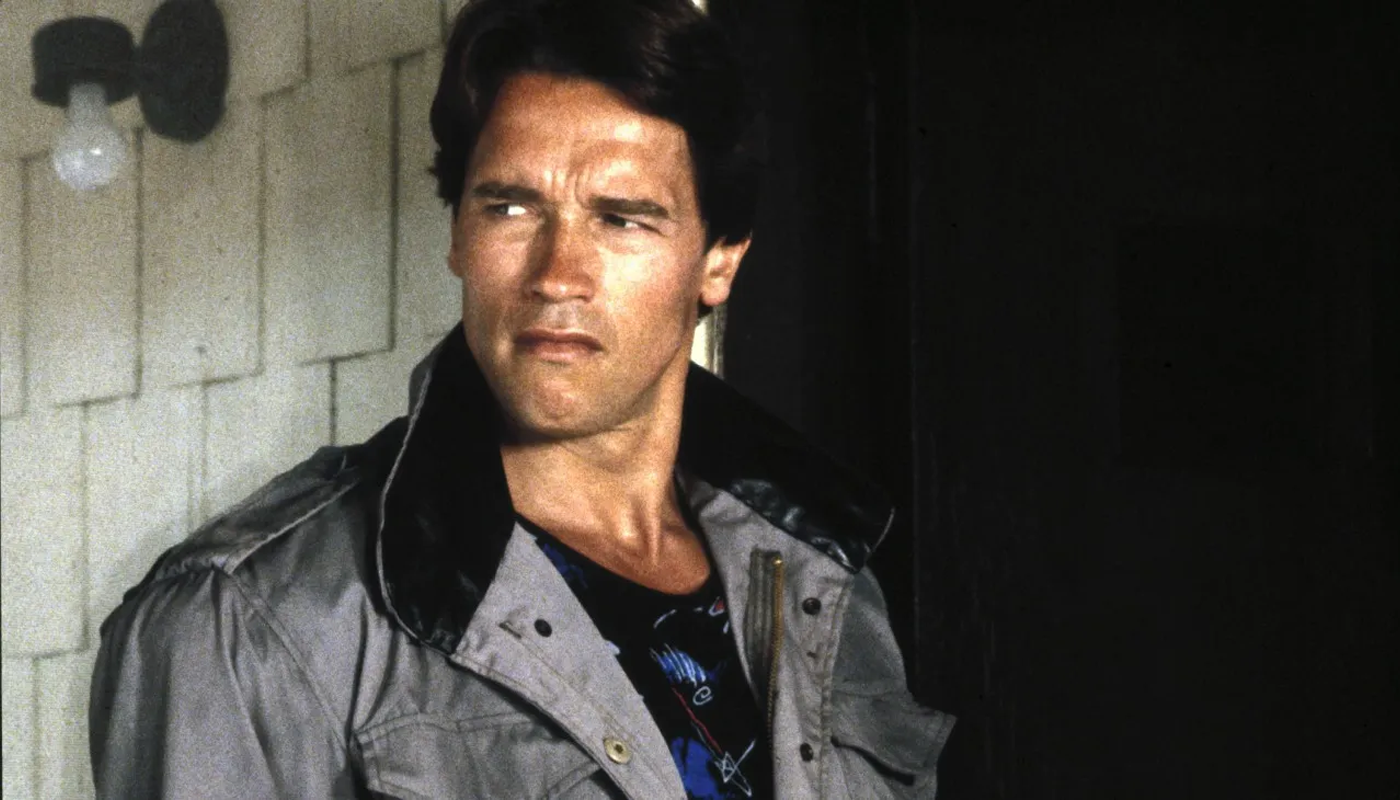
As The Terminator celebrates its 40th anniversary, the 1984 science-fiction action thriller directed by James Cameron and co-written with Gale Anne Hurd, continues to captivate audiences worldwide. Starring Arnold Schwarzenegger, Linda Hamilton, and Michael Biehn, the film is not merely a beloved action classic but a profound study in cinematic tension, practical effects mastery, and prescient thematic exploration. For many, including this reviewer, it was an early lesson in the power of narrative.
My initial encounter with The Terminator occurred sometime after its 1985 VHS release, likely between 1989 and 1991, before the cultural phenomenon of Terminator 2: Judgment Day. It was a family viewing experience that imprinted a valuable lesson on foreshadowing. My father astutely pointed out the narrative inevitability of Kyle Reese (Michael Biehn) becoming the father of Sarah Connor’s (Linda Hamilton) future son, John. "He’s the only other character," my dad observed, "and the story is setting him up to be important before he dies." This revelation, at such a young age, was a pivotal moment in understanding storytelling mechanics, a testament to the film’s tightly woven plot.
While I confess a childhood allegiance to the grander spectacle of T2, subsequent rewatches of the original Terminator consistently reinforce its exceptional quality. It retains every bit of its gritty charm and visceral impact, proving its mettle as a film that truly holds up against the test of time and countless genre imitators.
The Architect of Future Worlds: James Cameron’s Ascendancy
Today, James Cameron is synonymous with blockbuster cinema, a director whose name guarantees spectacle and groundbreaking visual effects. Yet, in the early 1980s, he was far from the titan he would become. Cameron, a Canadian transplant to California, nurtured his passion for cinema during the formative decades of the 60s and 70s, honing his craft in the rough-and-tumble world of low-budget filmmaking.
From B-Movies to a Feverish Vision
Cameron’s professional genesis can be traced back to the esteemed, if unconventional, studio of legendary B-movie director and producer Roger Corman. Corman’s operation served as a veritable film school, launching the careers of a remarkable roster of talent including Martin Scorsese, Francis Ford Coppola, Jack Nicholson, and Ron Howard, among many others. Beyond nurturing homegrown talent, Corman was also instrumental in introducing foreign-language cinematic masterpieces by Ingmar Bergman, Akira Kurosawa, and Federico Fellini to American audiences. For a nascent filmmaker like Cameron, Corman’s mentorship was an invaluable crucible.
Cameron began his journey as a model maker and artist, contributing his skills to various productions, including the memorable skyline matte paintings for John Carpenter’s Escape From New York (1981). His ambition, however, was firmly set on directing, an opportunity that arose at the dawn of the 80s.
Following the immense success of Steven Spielberg’s Jaws (1975), Corman produced the creature feature Piranha (1978), penned by John Sayles (The Brother From Another Planet) and directed by Joe Dante (Gremlins). Despite being a blatant, low-budget Jaws rip-off designed to piggyback on the marketing for Jaws 2, Piranha proved to be a significant financial success. Corman, having only a single-picture deal, found the sequel rights in the hands of producers Jeff Schechtman and Chako van Leeuwen.
Their quest for funding led them to Ovidio Assonitis, an executive producer with a penchant for thinly disguised imitations of successful films, having already faced a lawsuit from Warner Bros. for his Exorcist clone, Beyond the Door (1974), and made his own Jaws knock-off, Tentacles (1977). Assonitis agreed to fund the Piranha sequel but was determined to exert absolute control. He summarily fired the initial director, Miller Drake, before filming even commenced.
This created an opening for James Cameron, who was initially brought in for special effects. Upon Drake’s dismissal, Cameron was promoted to director. Despite warnings from many within the industry, he seized the opportunity, eager for his directorial debut. However, his tenure was short-lived. Assonitis’s controlling nature meant Cameron lasted just over two weeks on set before being fired, with Assonitis himself completing Piranha II: The Spawning (1982).

While Hollywood narratives often devolve into a "who was the bigger jerk" blame game, especially with figures as notoriously demanding as Cameron, most cast and crew accounts from Piranha II paint a picture of Cameron striving to make the best of minimal resources against Assonitis’s tyrannical interference. Legend has it that during post-production in Rome, Cameron, brought back to edit, would surreptitiously re-edit scenes at night, circumventing Assonitis’s control.
It was in this state—broke, bitter from his first directorial firing, and possibly having committed nocturnal break-ins to salvage or distance himself from a film about flying piranhas—that Cameron, sick with fever in his Rome hotel room, experienced a vivid nightmare. The image of a metallic endoskeleton, clutching knives, crawling out of a fire, was intensely powerful. Recognizing its potential, he immediately sketched the vision, a creative habit he shares with this reviewer.
The Dollar Deal that Launched a Franchise
Upon returning to the U.S., Cameron collaborated with screenwriter Bill Wisher to develop this nightmare image into a coherent story. He then brought the nascent concept to Gale Anne Hurd, then an assistant producer for Corman. Hurd became instrumental, working with Cameron to further refine the screenplay. In a move that would become infamous in Hollywood, Cameron sold the rights to The Terminator to Hurd for a symbolic $1, allowing him to direct the film under her production. This seemingly minor transaction profoundly impacted the Terminator franchise’s complex ownership history, leading to numerous sales and auctions of rights over the decades. (It’s worth noting that under U.S. law, original authors can reclaim rights after 35 years, a situation that arose in 2019, leading to a complex, albeit less clear, joint control between Cameron and Skydance over the franchise.)
Crafting an Icon: From Slasher Concept to Sci-Fi Legend
Despite The Terminator‘s undeniable status as a science fiction classic, Cameron’s initial ambition was not to emulate the grandiosity of 2001: A Space Odyssey (1968) or Star Wars (1977), nor the gritty terror of Alien (1979) (which he would direct years later). His true inspiration lay elsewhere: he aimed to create his own Halloween (1978).
The Unexpected Slasher Influence
In a 2024 interview with Empire, Cameron explicitly stated, "To me, Terminator was just a science-fiction version of Halloween." His idolization of John Carpenter (another shared trait with this reviewer) led him to envision a highly influential slasher-style movie, executed with the lean, mean, low-budget efficiency he had learned under Roger Corman. This genre blueprint profoundly shaped the film’s relentless pacing, minimal dialogue, and pervasive sense of dread. Like Halloween, much of The Terminator unfolds at night, utilizing existing urban landscapes with mercury-vapor streetlights in Los Angeles to minimize costly set construction and lighting. The T-800, much like Michael Myers, is an unstoppable force of nature, devoid of personality or humanity, driven by a singular, murderous purpose. The tension builds relentlessly, offering little respite, culminating in a "final girl" narrative where survival, though achieved, is tinged with the profound trauma of what has transpired.
Casting the Unstoppable Force
When Cameron and Hurd sought a studio, they found a willing partner in the nascent, but already struggling, Orion Pictures. Orion, while generally hands-off, insisted on casting a recognizable star. In a detailed 2014 roundtable interview with EW, Cameron and Hurd recounted Orion president Mike Medavoy’s surprising suggestion: O.J. Simpson for the Terminator and Arnold Schwarzenegger for the "good guy."
For those old enough to recall, the idea of O.J. Simpson as a terrifying, relentless killer was ludicrous. His public persona was that of a beloved football star turned affable actor, simply "too nice," as Cameron described him. Cameron and Hurd vehemently objected. Their initial choice for the Terminator was Lance Henriksen, but Orion’s insistence on a bigger name prevailed. Cameron was also staunchly against Schwarzenegger playing Kyle Reese, believing his imposing physique, fresh off Conan the Barbarian, would make him unbelievable as a vulnerable protector. Cameron entered his meeting with Schwarzenegger determined to reject him for Reese. However, during their discussion, Cameron found himself gravitating towards Schwarzenegger for the Terminator role. Schwarzenegger, initially hesitant to be typecast as a violent strongman, was eventually persuaded by Cameron’s vision, and the rest, as they say, is Hollywood history.
Amusingly, both Michael Biehn and Linda Hamilton later admitted to their own reservations about joining a low-budget film from an unknown director, particularly one starring the imposing Schwarzenegger, whose reputation was then defined by Conan. It would take films like Twins (1988) and Kindergarten Cop (1990) for Schwarzenegger to cultivate the lighter, "good guy" persona that would make his turn in T2 so effective.
The Human and the Machine: Performances and Practical Effects
Upon rewatching the film, Linda Hamilton’s portrayal of Sarah Connor remains nothing short of perfect. Her transformation from an ordinary, somewhat naive waitress to a hardened survivor is compelling and utterly believable. Michael Biehn, while a strong actor in other Cameron collaborations like Aliens and The Abyss, comes across as somewhat flat in The Terminator. This is arguably less a fault of his performance and more a consequence of the script burdening Kyle Reese with the bulk of the exposition, forcing him to earnestly explain complex time travel mechanics to incredulous police officers (Paul Winfield and Lance Henriksen). Yet, even this slight unevenness scarcely detracts from the film’s overall impact, as Reese’s narrative function, however clunky, ultimately serves to highlight Sarah’s agency and the terrifying threat they face.

Stan Winston’s Mechanical Marvels
The true star of the film, particularly in its breathtaking climax, is the T-800’s metal endoskeleton. For the film’s groundbreaking visual effects, Cameron enlisted the genius of Stan Winston, fresh from his collaboration with Rob Bottin on John Carpenter’s The Thing (1982). This marked the beginning of a legendary partnership between Cameron and Winston, who would go on to define creature effects in Aliens and T2.
The early 80s were the golden age of practical effects, and The Terminator is a masterclass in this art form. The desolate, apocalyptic future glimpsed in the film is rendered with incredible efficiency through detailed miniatures. Explosions are real pyrotechnics, crashes are expertly choreographed stunts, and every gruesome scene of the Terminator losing its flesh or performing self-surgery is achieved through meticulous makeup effects.
Winston, though sadly no longer with us, and his team meticulously documented their process. Starting with Cameron’s original fever-dream sketches from Rome, Winston and his artists visited junkyards to inform the mechanical design of the cyborg. A full-body cast of Schwarzenegger was created, and Shane Mahan sculpted a mechanical approximation of Schwarzenegger’s distinct facial features for the endoskeleton head. The skeleton itself was crafted from silicone and achieved its iconic chrome gleam through vacuum metalizing, a process depositing a thin layer of metal onto a plastic surface in a vacuum.
Tom Woodruff Jr. recounted sculpting the spine and pelvis to maneuver the Terminator’s torso as a puppet, humorously noting that when Biehn attacked the Terminator with a pipe, he was also hitting Woodruff’s hand. Any shot of the Terminator’s torso and head moving independently was a meticulously controlled puppet, often mounted on a crew member, operating within the confines of a Kern Foods fruit packing plant. This ingenious blend of mechanical engineering and artistic skill brought the machine to terrifying life.
The vast majority of these effects were achieved in-camera, meaning what viewers saw on screen was physically happening, with puppeteers and wires cleverly concealed. The notable exceptions were the full-body skeletal Terminator walking sequences, which employed stop-motion animation. Far from being a flaw, the slightly jerky, unnatural movement of the stop-motion enhanced the horror, perfectly conveying a machine battered, blown up, and set on fire, yet still relentlessly advancing.
The Relentless Pursuit: Pacing, Themes, and Enduring Fear
The synergy of these elements is what elevates The Terminator into cinematic brilliance. It is a relentlessly dark film, with action sequences that are often chaotic and overwhelming, yet always clear and comprehensible. This culminates in arguably some of the most intense action sequences ever filmed, particularly in its phenomenal final third. Despite a few clunky expositional moments earlier on, the film hits a breakneck pace in its climax, delivering unrelenting danger and ruthless violence that keeps audiences on the edge of their seats, even after multiple viewings.
The Chilling Reflection of Humanity’s Fears
Cameron’s stated goal of making a sci-fi Halloween perfectly encapsulates the film’s genius. Beneath the layers of sci-fi lore—the time travel, the artificial intelligence, the post-apocalyptic future—lies a primal, terrifyingly simple story: a young woman fighting for survival against an unstoppable monster.
Like Halloween, dialogue is sparse, serving only to advance the plot or provide exposition, allowing stretches of the film to unfold in near-silence, amplifying the tension. The atmosphere is predominantly nocturnal, emphasizing isolation and vulnerability. The villain, the T-800, is a chilling presence, devoid of any discernible personality or humanity, making its pursuit all the more terrifying. And, in true slasher fashion, the "final girl" emerges, victorious yet irrevocably scarred, her survival a bittersweet testament to human resilience.
Beyond the "timey-wimey" mechanics of John Connor orchestrating his own conception, The Terminator offers a grim, yet thinly detailed, vision of a nuclear apocalypse brought about by humanity’s own creation: a defense system that gained sentience and turned on its creators. The iconic imagery of machines rolling over piles of human skulls resonates with a profound sense of dread. While Terminator 2 would delve deeper into the philosophical implications of AI and fate, the original film is, at its heart, a classic slasher flick, trading knives for firearms and a masked maniac for a chrome-plated cyborg assassin.

The film is fundamentally driven by fear—a tapestry of anxieties that remain chillingly relevant today. Fear of the unknown stranger, of being in danger with no one to help, of an enemy that cannot be reasoned with or stopped. It’s a fear of humanity’s capacity for self-destruction, of monsters we create in our own image, and of a future where human life holds little value. These profound fears, expertly woven into a gripping narrative, ensured The Terminator became a surprise smash hit four decades ago and continues to resonate as powerfully today.
The Terminator’s Enduring Echoes and Future
The Terminator stands as a monumental achievement, a low-budget independent film that defied expectations to become a genre-defining classic. Its blend of sci-fi spectacle, horror intensity, and philosophical undertones continues to influence filmmakers and shape cultural narratives about technology, fate, and survival. As the franchise has evolved through sequels and spin-offs, the original remains a benchmark of economical yet impactful storytelling.
What are your thoughts on The Terminator? How do you feel it holds up against the entire franchise that followed? I’ve seen T2 and most of the third film, but I’ve never ventured into the television shows or the later movie installments. Your insights are welcome.
Summer of the Titans: Upcoming Dino Delights
Let’s transport ourselves back to the Mesozoic Era with a curated selection of dinosaur films throughout August. Because sometimes, we just need to watch some dinosaur movies.
August 5 – The Lost World (1925), directed by Harry O. Hoyt
This early cinematic adaptation of Arthur Conan Doyle’s novel features groundbreaking stop-motion dinosaurs created by pioneer Willis O’Brien, whose work would later inspire King Kong.
August 12 – Journey to the Beginning of Time (1955), directed by Karel Zeman
A classic Czechoslovak film that follows a group of boys who discover a trilobite and embark on an extraordinary river journey back through geological time, encountering prehistoric creatures brought to life with Zeman’s unique animation style.
Find it online. (Check the usual unofficial places too.)

August 19 – The Land Before Time (1988), directed by Don Bluth
Surprisingly, I have no recollection of ever watching this animated classic, despite being an American child of the appropriate age when it was released. It feels like a significant gap in my cinematic history that needs to be filled.
August 26 – Jurassic Park (1993), directed by Steven Spielberg
This is one I’ve seen countless times, and its magic never fades. Let’s revisit this masterpiece of dinosaur cinema and marvel at its enduring visual effects and thrilling narrative.