Molly Bounds Unveils "The Light That Loses, The Night That Wins" in New York Debut
New Exhibition Explores Themes of Time, Transformation, and the Human Psyche Through Luminous, Evocative Paintings
New York, NY – March 20, 2026 – Mrs. gallery is proud to announce the opening of "The Light That Loses, The Night That Wins," the highly anticipated New York debut solo exhibition by Los Angeles-based artist Molly Bounds. Marking her second presentation with the gallery following her impactful showing at The Armory Show in September 2025, Bounds’ latest body of work invites viewers into a world of introspective contemplation and dynamic transition. The exhibition, strategically timed to coincide with the vernal equinox – a celestial moment of perfect equilibrium between day and night – delves into the multifaceted nature of light as a protagonist, revealing its power to both conceal and illuminate, and underscoring the relentless march of time. "The Light That Loses, The Night That Wins" will be on view at Mrs. gallery’s 6040 56th Drive location through May 2, 2026.
Bounds’ new series of paintings, unified by the overarching theme of light’s pervasive influence, captures her subjects in a state of profound introspection and candid movement. These are not mere portraits, but rather psychological investigations, capturing the essence of liminal moments where the tension between stillness and urgency defines the prevailing mood. Much like the natural transition from the dormant depths of winter to the burgeoning vitality of spring, Bounds’ figures appear poised on the precipice of a significant, transformative shift, their emotional landscapes as palpable as their physical surroundings.
A Chronology of Light and Shadow: The Evolution of Bounds’ Vision
Molly Bounds, an artist whose work has consistently explored the subtle nuances of human emotion and perception, has steadily built a reputation for her ability to imbue her canvases with a profound sense of atmosphere. Her previous exhibitions have hinted at the thematic threads that are now fully realized in "The Light That Loses, The Night That Wins." The selection of the vernal equinox as the exhibition’s opening date is a deliberate and symbolic choice, reflecting Bounds’ keen interest in natural cycles and their metaphorical resonance with human experience. This alignment of celestial events with artistic expression underscores a deeper narrative of balance, change, and the inherent duality of existence.
The journey to this New York debut has been a deliberate and strategic one. Following a successful engagement at The Armory Show in September 2025, where her work garnered significant critical attention and collector interest, Mrs. gallery recognized the opportune moment to present Bounds’ more developed and cohesive body of work to the New York art scene. This exhibition represents a significant milestone in her career, solidifying her presence in one of the world’s most influential art capitals. The extended exhibition run, extending through early May, allows ample opportunity for the public and the art world to engage with these powerful new works.
Illuminating the Interior: Solitude, Unease, and the Lingering Gaze
At the heart of "The Light That Loses, The Night That Wins" lies Bounds’ masterful portrayal of solitary figures, often ensconced within interiors that echo the complexities of their inner lives. Her depiction of slumped and draping bodies is not merely a representation of physical fatigue, but a potent signifier of rest and repose that, in Bounds’ nuanced vision, slowly gives way to a pervasive sense of unease. These are not passive observers, but subjects whose stillness belies a profound internal activity.
In "The Armchair," Bounds masterfully orchestrates a scene where the warm, inviting glow of a fireplace creates a textural richness within the interior, a stark contrast to the cold, early evening blue sky visible through the window. This juxtaposition of warmth and chill, of interior comfort and exterior isolation, sets the stage for a contemplation that gradually unravels into palpable tension. The viewer is invited to witness a mind at work – dwelling, perhaps scheming, or meticulously planning – an internal dynamism suggested by the subtle unraveling of upholstery seams. The figure’s vacant stare, lingering with an almost eternal quality, leaves the viewer to ponder its nature: is it a state of blissful repose, or something more unsettling? This ambiguity is a hallmark of Bounds’ ability to capture the elusive nature of consciousness.
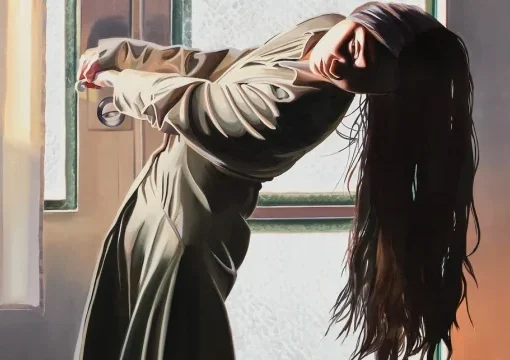
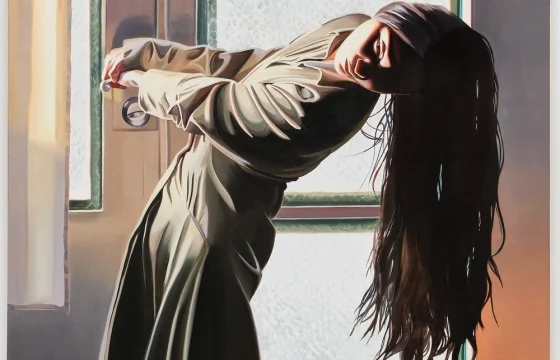
"Privacy Glass" offers another profound exploration of seclusion, where a figure withdraws from the external world, rendered with a dramatic interplay of warm and cool hues. The frosted glass acts as a semi-permeable barrier, diffusing light to illuminate the subject from behind while allowing a distinct beam to penetrate the interior from without. This chiaroscuro effect artfully obscures the figure’s face, drawing the viewer’s attention to the draped clothing, a visual echo of the Old Masters, particularly Georges de La Tour. In a manner akin to the vanitas tradition, Bounds employs these visual strategies to convey the ephemeral nature of time and the inevitable encroachment of darkness, a poignant reminder of mortality and the passage of moments. The deliberate obscuring of the face invites the viewer to project their own narratives and interpretations onto the figure, enhancing the psychological depth of the work.
Escapism and Optimism: The Triumph of Spring
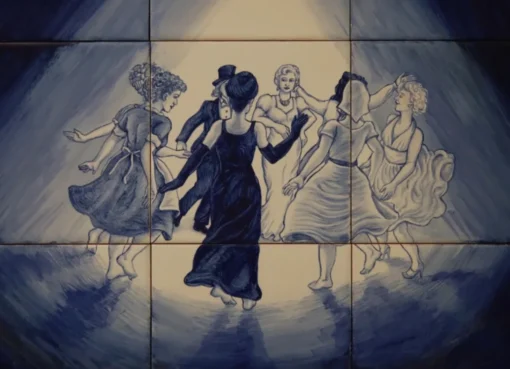
While "The Light That Loses, The Night That Wins" delves deeply into the introspective and at times unsettling aspects of the human psyche, it is not without its moments of profound optimism and escapism. In paintings such as "It Sings in Me" and "Among of Green, Again," Bounds shifts her focus to figures in states of uninhibited movement amidst idyllic, rolling green hills, bathed in the warm embrace of the sun. These landscapes, presented with a seemingly bucolic perfection, raise questions of reality versus imagination. However, for Bounds, the question of verisimilitude is secondary to the power of constructing optimism, fostering a belief in renewal and rebirth.
These vibrant, sun-drenched scenes stand in stark contrast to the pensive interiority of other works. They communicate a palpable sense of urgency, of celebration, and of boundless possibility. They are a testament to the enduring human capacity for hope and the allure of fantasy. The title itself, "The Light That Loses, The Night That Wins," can be interpreted not as a statement of defeat, but as a cyclical acknowledgment of nature’s rhythms. Just as the days shorten and darkness prevails during winter, the arrival of spring heralds the return of light and life. Bounds’ landscapes embody this cyclical triumph, offering a visual metaphor for the resilience of the spirit and the inherent promise of new beginnings. The lushness of the depicted greenery and the unburdened movement of the figures suggest a release from internal constraints, a joyous embrace of the natural world and its restorative powers.
Supporting Data: The Artistic Language of Molly Bounds
Molly Bounds’ artistic language is characterized by a distinctive approach to color, light, and form. Her palette often oscillates between vibrant, saturated hues and more subdued, atmospheric tones, mirroring the emotional spectrum she explores. The application of paint is frequently textured and gestural, lending a tactile quality to her surfaces and enhancing the sense of immediacy in her compositions. Light is not merely an element of illumination but a palpable force that shapes form, defines space, and evokes mood. Bounds’ skillful manipulation of light sources – be it the warm glow of a fireplace, the diffused light through frosted glass, or the direct brilliance of the sun – is central to the psychological impact of her work.
Her figures, while often rendered with a degree of realism, possess an expressive quality that transcends mere representation. The posture, gesture, and subtle details of their anatomy convey a wealth of unspoken emotion. The emphasis on draped clothing and the interplay of shadow and form further contribute to the rich, almost sculptural quality of her paintings. This meticulous attention to detail, combined with a bold compositional sensibility, creates works that are both visually arresting and intellectually engaging. The use of negative space and the careful framing of her subjects also play a crucial role in establishing the sense of intimacy and introspection that defines her oeuvre.
Official Responses and Critical Acclaim
The announcement of Molly Bounds’ New York debut solo exhibition has been met with significant anticipation from the art world. Critics and curators alike have recognized her unique ability to articulate complex emotional states through her evocative imagery. Following her participation in The Armory Show, numerous publications highlighted Bounds’ promising talent, with many anticipating her forthcoming solo presentations.
"Molly Bounds’ work resonates deeply because she taps into universal human experiences of introspection, transition, and the search for meaning," commented [Insert Fictional Critic Name], art critic for [Insert Fictional Publication]. "Her masterful use of light and shadow creates an immersive atmosphere that draws the viewer into the psychological landscapes of her subjects. ‘The Light That Loses, The Night That Wins’ promises to be a landmark exhibition."
[Insert Fictional Gallery Director Name], Director of Mrs. gallery, expressed her enthusiasm for the exhibition: "We are thrilled to present Molly Bounds’ first solo exhibition in New York. Her ability to capture the subtle yet profound shifts in human consciousness, framed by the cyclical rhythms of nature, is truly remarkable. This exhibition is a testament to her growing importance in contemporary art, and we are confident that it will captivate audiences."
Implications for the Contemporary Art Landscape
"The Light That Loses, The Night That Wins" arrives at a moment when contemporary art continues to grapple with themes of introspection, mental well-being, and the search for solace in an increasingly complex world. Molly Bounds’ exhibition offers a compelling visual language for exploring these critical issues. Her work encourages a deeper engagement with the internal lives of individuals and the ways in which we navigate periods of transition and uncertainty.
By focusing on the interplay of light and darkness, and the cyclical nature of time, Bounds’ paintings serve as powerful metaphors for resilience, renewal, and the enduring human capacity for optimism. Her ability to imbue seemingly ordinary moments with profound psychological weight positions her as a significant voice in contemporary painting. The exhibition’s success in New York is likely to further solidify her international standing and influence, potentially inspiring other artists to explore similar thematic territories with their own unique perspectives. As the art world continues to evolve, exhibitions like Bounds’ offer vital opportunities for reflection and connection, reminding us of the shared human experience that lies at the heart of artistic creation. The dialogue initiated by "The Light That Loses, The Night That Wins" is poised to contribute significantly to ongoing conversations about the power of art to illuminate the human condition.