Navigating the Labyrinth of the Soul: An In-Depth Look at ‘HeartWeaver’ and the Future of Mental Health Narratives in Gaming

The landscape of independent gaming has shifted dramatically over the last decade. Where once the "puzzle-platformer" was defined by mechanical precision and twitch reflexes, a new sub-genre has emerged: the introspective adventure. These games seek to do more than challenge the player’s coordination; they aim to map the complexities of the human psyche. Joining this prestigious lineage is HeartWeaver, a 3D puzzle-adventure game that offers a poignant, surreal, and often uncomfortable journey into the mind of its protagonist, Ace.
As showcased at the recent Pocket Gamer Connects event, HeartWeaver is not merely a collection of environmental riddles. It is a narrative-driven exploration of trauma, repression, and the arduous road to emotional recovery. By personifying internal struggles and transforming psychological defense mechanisms into gameplay mechanics, the developers have crafted an experience that is as intellectually stimulating as it is emotionally resonant.
Main Facts: The Architecture of Ace’s Mind
At its core, HeartWeaver is a third-person 3D puzzle game where players control Ace, an individual trapped within the confines of their own subconscious. The game’s world is a fragmented "mindscape" composed of various realms, each representing different facets of Ace’s history and personality.
The Premise and Setting
The narrative hook of HeartWeaver is the concept of "unweaving" the damage done by years of emotional repression. The mindscape is visually striking but inherently broken. Players encounter "memory worlds" that have been overgrown by thick, suffocating vines—a literal representation of memories that have been choked out or suppressed by the brain as a survival tactic.
The objective is twofold: solve environmental puzzles to progress through these fragmented worlds and, in doing so, recover the "lost" memories that Ace has hidden away. The ultimate goal is not escape in the traditional sense, but "healing"—a state of psychological equilibrium where Ace can finally confront the emotions they have spent a lifetime avoiding.
Key Characters and Antagonistic Forces
One of the most striking elements of HeartWeaver is the presence of Mark, a giant "book monster." Unlike traditional video game companions who offer encouragement, Mark serves as a personification of the Inner Critic. He is harsh, judgmental, and frequently critical of the player’s (and Ace’s) progress.
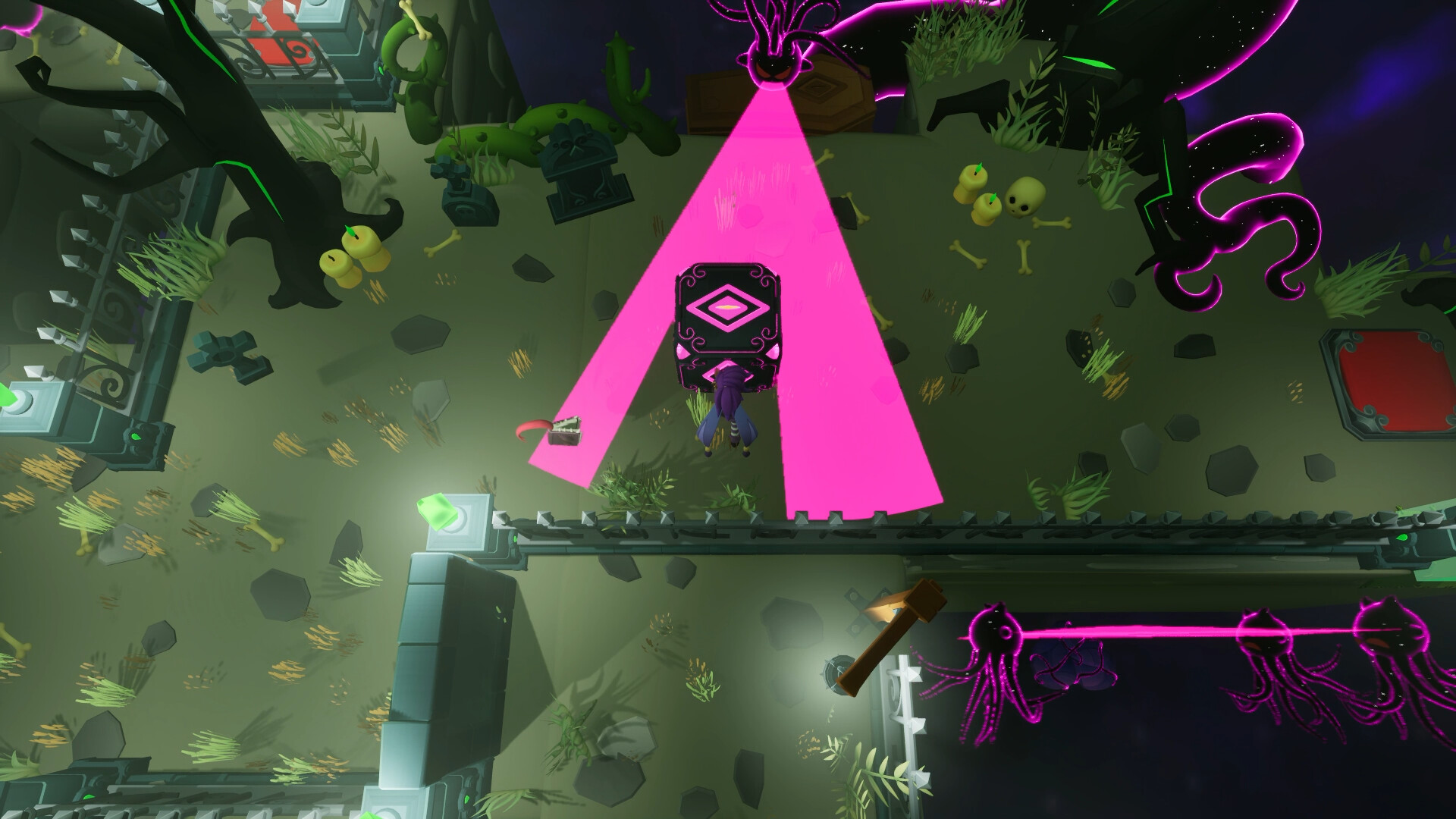
Interestingly, Mark is often correct in his assessments, making him a frustrating yet indispensable part of the journey. His role reflects the reality of self-reflection: the voice in our heads that tells us the truth is often the one we most want to ignore. Alongside Mark, players must navigate "octopus monsters"—entities that cannot be defeated through combat, forcing the player to find non-violent, clever ways to bypass them.
Chronology: From Concept to Showcase
The development of HeartWeaver follows a trajectory common among ambitious indie titles that prioritize narrative depth over commercial tropes.
- Conceptualization and Prototyping: The game began as an exploration of how to gamify the therapeutic process. The developers sought to move away from "gamifying" mental health in a clinical way, opting instead for a metaphorical approach where emotions become tools.
- The Rise of the Demo: HeartWeaver gained initial traction through its presence on Steam. The release of a playable demo allowed the community to experience the game’s unique tone—a blend of whimsy and existential dread.
- Pocket Gamer Connects Presentation: The most significant milestone in the game’s recent history was its showcase at Pocket Gamer Connects. This industry event provided a platform for the developers to demonstrate the game’s mechanics to a wider audience of critics and publishers. It was here that the game’s "emotional ability" system was first highlighted as a standout feature.
- Current Status: As of late 2024, the game remains in active development, with a growing "wishlist" following on Steam. The developers continue to refine the balance between puzzle difficulty and narrative pacing, ensuring that the message of healing remains at the forefront.
Supporting Data: The Mechanics of Emotion
What sets HeartWeaver apart from its contemporaries is how it integrates psychological states directly into the gameplay loop. In most puzzle games, the player’s tools are external—a portal gun, a grappling hook, or a light source. In HeartWeaver, the tools are Ace’s own feelings.
The Emotional Toolkit
The game utilizes a system where Ace’s current emotional state grants specific abilities necessary to navigate the environment. This reflects the psychological concept that our emotions, while sometimes overwhelming, serve functional purposes in navigating life’s challenges.
- Sadness (Time Dilation): When channeling Sadness, the world slows down. This allows the player to navigate fast-moving hazards or time-sensitive puzzles. It suggests that sadness often forces a period of reflection and a slower pace of life.
- Fear (Astral Projection): Fear allows Ace to "leave their body," scouting ahead or interacting with objects from a distance. This mirrors the psychological phenomenon of dissociation—a defense mechanism where the mind separates from the immediate reality to avoid perceived danger.
- Anger (Repulsion/Force): Anger provides the ability to push objects away with great force. It is a tool of boundaries and externalization, allowing Ace to clear paths that were previously blocked by heavy obstacles.
Puzzle Design and Environmental Storytelling
The puzzles in HeartWeaver are designed to be "non-harmful" to the player’s emotional state. This means the game eschews traditional "game over" screens or violent failures. Instead, failure is framed as a need to rethink one’s emotional approach.
The environment itself tells the story. The vines that cover the memories are not just obstacles; they are interactive elements that the player must learn to "destroy" or unravel. This process of clearing the vines serves as a metaphor for the difficult work of deconstructing defense mechanisms to reach the core truth of a traumatic event.
Official Responses: The Developer’s Vision for Healing
While specific developer names are often kept behind the studio curtain during early showcases, the design philosophy shared at events like Pocket Gamer Connects speaks volumes. The creative team behind HeartWeaver has emphasized that the game is intended to be a "safe space" for exploring "unsafe" feelings.
According to statements provided during the showcase, the inclusion of Mark the book monster was a deliberate choice to avoid the "man vs. self" cliché where the internal struggle is purely silent. By giving the inner critic a voice—and a physical, somewhat monstrous form—the developers hope to help players recognize their own internal critics.
"The goal wasn’t to make a game that ‘cures’ sadness," one representative noted during a Q&A session. "The goal was to make a game that validates the necessity of sadness, fear, and anger. These aren’t ‘bad’ emotions; they are tools for survival that sometimes get stuck in the ‘on’ position. HeartWeaver is about learning how to use those tools properly again."
This vision aligns with a broader movement in the "Serious Games" industry, where play is used as a medium for social and psychological education.
Implications: The Evolution of "Empathy Games"
The emergence of HeartWeaver arrives at a critical juncture for the gaming industry. As the medium matures, there is an increasing demand for titles that tackle complex subject matter with nuance and respect.
Impact on the Indie Scene
HeartWeaver follows in the footsteps of games like Gris (which explored the stages of grief) and Celeste (which tackled anxiety and depression). However, by focusing specifically on the mechanics of emotion rather than just the narrative, HeartWeaver pushes the genre forward. It suggests that the future of indie gaming lies in "mechanical empathy"—where the way a player interacts with the world is dictated by the character’s internal state.
Mental Health Representation
The game’s portrayal of healing as a non-linear, often frustrating process is a significant departure from more "gamified" versions of mental health, where a character simply collects "happiness points." By making the player interact with a character like Mark, HeartWeaver acknowledges that healing often involves listening to hard truths and dealing with unpleasant aspects of one’s own personality.
The Role of Non-Violent Conflict Resolution
In a market saturated with combat-centric titles, HeartWeaver’s commitment to solving problems without "killing" the monsters (like the octopuses) is a bold design choice. It reinforces the theme that you cannot "kill" your problems or your past; you can only learn to navigate around them or integrate them into a healthier worldview.
Conclusion: A Journey Worth Taking
HeartWeaver stands as a testament to the power of video games as a tool for introspection. By combining high-quality 3D environmental puzzles with a deeply personal narrative, it offers players a chance to look inward while they play.
The presence of the demo on Steam and the game’s successful showing at Pocket Gamer Connects suggest that there is a significant audience hungry for this kind of experience. While Mark the book monster may be "annoying" and the vines of repression may be difficult to clear, the journey through Ace’s mind is one that promises a rare reward in gaming: not just a high score, but a sense of genuine emotional resolution.
As we look toward the full release, HeartWeaver is poised to be more than just a game; it is an invitation to understand the tangled threads of our own hearts and the slow, beautiful process of weaving them back together.
How to Play:
- Demo Available: Currently on Steam for PC.
- Wishlist: Recommended for updates on the official release date.
- Event History: Featured at Pocket Gamer Connects 2024.