A Culinary and Moral Odyssey: Rida Altaf’s "Judar of the Island" Challenges Privilege and Perception
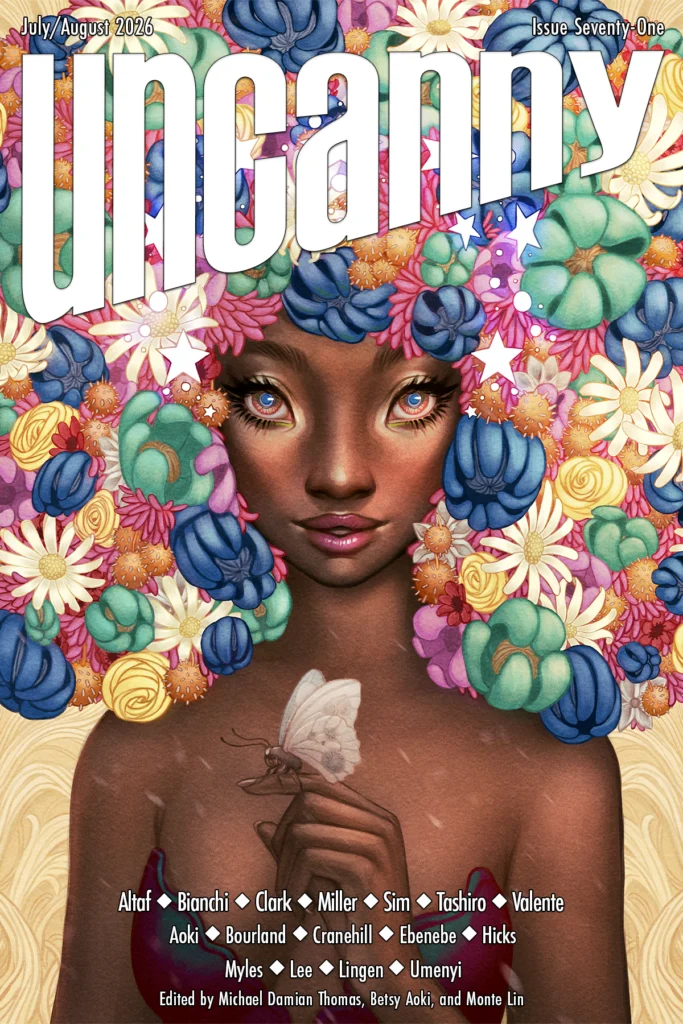
Karachi-based writer Rida Altaf, a recently graduated Fulbright scholar with a master’s degree in comparative literature, has made a powerful debut in Uncanny Magazine with her short story, "Judar of the Island: A Story Told in Four Feasts." Hailed as a poignant exploration of ethics, hypocrisy, and the stark realities of privilege, Altaf’s work masterfully interweaves fantastical elements with a sharp critique of contemporary societal desensitization. Structured around four meticulously described feasts, the story not only showcases Altaf’s burgeoning talent but also firmly establishes her as a voice deeply attuned to both the magical and the morally complex dimensions of human experience.
Altaf, whose interests span "weird natural and supernatural stuff, including djinn and black holes," brings a unique intellectual curiosity to her fiction. A graduate of the Clarion West Workshop in 2025, her short fiction has previously appeared in Tasavvur and is forthcoming in Tales & Feathers. Beyond her literary pursuits, Altaf finds solace in obsessive reading, endless mugs of chai, and the contemplation of unsettling physics theories – a testament to the eclectic mind that informs her storytelling. "Judar of the Island," with its vibrant descriptions of food juxtaposed against a sobering examination of human nature, serves as a compelling introduction to her distinctive narrative style and thematic concerns.
From Ancient Lore to Modern Conscience: The Genesis of "Judar of the Island"
The genesis of "Judar of the Island" is a fascinating tapestry woven from ancient folklore, academic rigor, and piercing contemporary observation. Altaf reveals that the story, while seemingly fresh, had been marinating in her subconscious for years, awaiting the right catalyst to coalesce. A significant spark ignited during her extensive reading of the unabridged Penguin Classics version of The Thousand and One Nights for her comparative literature degree. This monumental 2000-page collection immersed her in a world where "characters from Shahrazad’s tales were living rent-free in my head."
Among the myriad figures, Judar’s character resonated most profoundly, not for his eventual acquisition of a magical ring and subsequent construction of a castle, but for a fleeting moment that precedes the conventional heroic arc. Altaf was captivated by Judar’s initial impulse upon gaining the ring: to conjure a bag capable of producing an endless supply of food. This seemingly simple act sparked a profound "what if" in Altaf’s mind: "What if, I asked myself, someone acquired a magical ring and only used it for food? What kind of character would they be?" This imaginative leap became the foundational premise, shifting the narrative from grand quests to an intimate, yet expansive, exploration of indulgence and its implications. The very act of focusing solely on sustenance, rather than power or riches, immediately imbued the story with a unique ethical dimension, forcing a re-evaluation of desires and priorities.
While Judar’s magical origins are rooted in fictional antiquity, the story’s secondary, yet equally pivotal, characters—the sisters—sprang from Altaf’s stark observations of the modern world. Over the past few years, as global events have escalated in violence and human suffering, Altaf has witnessed a creeping desensitization in society, a phenomenon she experiences firsthand on her own social media feeds. She describes the jarring juxtaposition of "scroll[ing] past videos of mutilated and malnourished children, begging for help," only to encounter "videos of viral recipes in the same breath." This stark contrast became a powerful driving force, compelling her to question the very nature of existence in such a world.
Altaf openly acknowledges her own position within this complex ethical landscape. "What is this world we are living in, I keep asking myself, but at the same time, I acknowledge that I am in the same position as the sisters. Privileged enough that it doesn’t directly affect me. That I can ignore it on the pretext of helplessness." This candid self-reflection forms the story’s emotional core, transforming it from a mere fantasy tale into a deeply personal meditation on complicity and moral responsibility. The "pretext of helplessness," she fears, is a "selfish excuse," a comfortable shield against uncomfortable truths. "Running in circles with these thoughts," Altaf found that "this story just really helped me put them all down," channeling her internal conflict into a narrative that challenges readers to confront their own roles in a world saturated with both abundance and anguish.
Crafting the Narrative: Structure, Symbolism, and the Unbidden Thought
The journey from inspiration to finished story was not without its structural complexities. Altaf candidly admits that deciding how to tell the story proved to be the most formidable challenge. With characters firmly envisioned but a plot still nascent, the pressure of a deadline—the story was written during week one of the intensive Clarion West workshop—loomed large. It was within this crucible of creative urgency that a solution emerged: exposure to Henry Lien’s four-act structure, which champions non-conventional narrative approaches. This framework provided the scaffolding Altaf needed, allowing her to experiment with form and content.
The collaborative environment of Clarion West played a crucial role in shaping the story’s distinctive aesthetic. Altaf credits classmates Kehkashan Khalid and Aishatu Ado for their invaluable input during the workshopping process. "I remember being tentative, and saying, ‘I am bad at descriptions, but I think painstakingly describing food is really key to the story here,’" Altaf recalls. This tentative hypothesis proved to be the unlocking mechanism. Once she committed to the central role of detailed food descriptions, the story flowed "out of me. I wrote it in one sitting." This deliberate focus on culinary detail transforms the food from mere props into potent symbols of excess, indulgence, and the very privilege the narrative critiques, serving as a constant, sensory reminder of the characters’ insulated world.
While the structural design was a conscious effort, Altaf’s most cherished moments in writing often arrive unbidden, moments where a character’s thought or action surprises even her, feeling instinctively "right." One such moment stands out: when the character Somaiya witnesses her sister burning and thinks, "Who was the burning man? I should have tried to save him." This line, delivered with stark simplicity, is a masterclass in character revelation. It exposes Somaiya’s delayed empathy, her unconscious self-preservation, and the human tendency to prioritize direct impact over distant suffering. "I think that moment just reveals a lot about Somaiya’s character in few words," Altaf explains, "but also a lot about human nature, how we don’t think of things deeply unless they affect us directly, and I think that is also part of the larger theme of the story." This powerful, almost visceral, reaction encapsulates the story’s central critique of a world that compartmentalizes suffering until it breaches personal boundaries.
The Unfolding Endings: Intuition, Complicity, and the Reader’s Reflection
Altaf approaches the craft of storytelling with a profound reliance on intuition rather than rigid plotting. "I am not a big plotter, so I don’t usually arrive at endings, the endings arrive themselves, at my doorstep, if the writing is going well," she explains, acknowledging that "sometimes, it isn’t and there is no ending and only a horrible draft." In the case of "Judar of the Island," the narrative flow was strong, and the ending, which Uncanny Magazine rightly described as "powerful," felt organically derived from the story’s deep thematic undercurrents. The themes, having resided in her mind for so long, simply "came out of me that night [and] just felt right." This intuitive process lends the story an authentic, almost inevitable, quality, making its conclusion resonate with a visceral truth.
When asked about her hopes for readers, Altaf eschews prescriptive interpretations. There is no single "right" answer, she believes. Instead, her ambition is to provoke thought, to stir introspection. "I think I just want readers to think and arrive at their own conclusions," she states. This invitation for personal engagement is central to her artistic philosophy. More specifically, Altaf hopes readers will "investigate their own helplessness," a direct echo of her own internal struggle during the story’s conception. She challenges her audience to move beyond passive observation and to actively question their position in the global tapestry of suffering.
The most profound takeaway Altaf envisions for her readers is an uncomfortable, yet vital, self-examination: "And I want readers to think about what all of us are complicit in, as a global audience to the suffering of all the oppressed people on the earth." This statement encapsulates the story’s powerful moral core, transforming a fantastical narrative into a mirror reflecting contemporary global inequities and the collective responsibility that often goes unacknowledged. The story becomes a catalyst for readers to confront the often-unseen threads of their own complicity, urging a deeper consideration of the ethical implications of privilege in an interconnected world.
A Feast of Flavors and Cultural Commentary: The Strategic Use of Food
Beyond its ethical complexities, "Judar of the Island" is also a sensory feast, characterized by its vibrant and meticulous descriptions of food. Altaf reveals that the selection of dishes for the story’s four pivotal meals was, for the most part, "pretty random," a direct reflection of her recent culinary experiences. Having moved to the US for her degree, she encountered a diverse array of foods, and these novel flavors and preparations "seeped into my writing, I suppose." This organic assimilation of personal experience into her art adds an authentic, lived-in quality to the narrative’s gastronomic landscape.
However, the "randomness" was punctuated by a deliberate and playful subversion, particularly evident in her depiction of English breakfast options. Altaf admits to purposefully "mess[ing] up the English breakfast options," an act she retrospectively framed as "a fun little reverse appropriation." This seemingly lighthearted twist carries a subtle yet significant intellectual weight. She connects it to Judar’s own "run-in with postcolonial theory," suggesting a conscious, albeit initially unpremeditated, critique of cultural dominance and historical narratives. The act of playfully altering a culturally iconic meal becomes a symbolic gesture of reclaiming agency and challenging established norms, mirroring the larger thematic concerns of power and influence within the story.
This strategic deployment of food, therefore, serves multiple purposes. It is not merely a backdrop for the narrative but an active participant, symbolizing abundance, distraction, and the often-unquestioned consumption of resources. The detailed descriptions immerse the reader in the characters’ world of comfort and indulgence, heightening the contrast with the unspoken suffering that the story implicitly references. Through the very act of eating, Altaf explores the layers of privilege, cultural identity, and the subtle ways in which consumption can both define and blind us.
Weaving Worlds: Literary Ancestry and Contemporary Voices
Rida Altaf’s literary landscape is rich and varied, drawing deeply from both ancient epics and contemporary genre-bending works. Unsurprisingly, The Thousand and One Nights stands as a monumental influence, not just for inspiring "Judar of the Island" but as a foundational text that continues to shape her imaginative framework. Its intricate narrative structure, its blend of the fantastical and the human, and its profound moral inquiries resonate deeply with Altaf’s own storytelling ethos.
Beyond this classic, Altaf expresses a profound admiration for the work of Saad Z. Hossain, an author whose unique voice she finds particularly captivating. She recommends his titles Djinn City and Kundo Wakes Up, highlighting their shared interest in djinn—a supernatural entity deeply embedded in Islamic folklore—and Hossain’s distinctive blend of "comedic flair and a kind of cynicism." These elements, Altaf believes, are "reflected somewhat in my story," suggesting a lineage of speculative fiction that engages with ancient myths through a modern, often satirical or darkly humorous, lens. Hossain’s ability to ground the fantastic in relatable human foibles, while maintaining a critical eye on societal absurdities, clearly informs Altaf’s own approach to infusing magical realism with sharp social commentary.
Her reading tastes also extend to more introspective and stylistically experimental works. Altaf recently finished It Lasts Forever Then It’s Over by Anne de Marcken, a novella she describes as "more of a no plot, just vibes, sort of novella." What resonated with her was its "beautiful prose" that "aims straight for the heart," and its unique approach to weighty themes. The novella, which "plays on some zombie tropes," is praised as "an excellent meditation on grief." This appreciation for works that prioritize atmosphere and emotional resonance over conventional plot structures reveals Altaf’s openness to diverse narrative forms and her keen eye for writing that explores the profound depths of human emotion, even within speculative contexts. Her influences are thus not merely confined to thematic parallels but also extend to stylistic and structural innovations, contributing to her distinct and evolving voice.
Beyond the Horizon: Black Holes, Djinn, and the Quest for Meaning
Looking ahead, Rida Altaf is embarking on an ambitious new project: a novel that promises to be a significant departure from her previous work. "I am working on a novel and it’s completely out of my wheelhouse because it’s Sci-Fi," she reveals, acknowledging that her childhood science education was minimal. Yet, this foray into science fiction is fueled by a genuine and infectious curiosity. She is currently "enjoying reading a bunch of physics books, and learning more and more about black holes and quantum mechanics at the moment." This intense period of scientific exploration, she admits with a smile, is "just an excuse to nerd out," but it underscores her commitment to thorough research and her intellectual adventurousness.
Despite the shift in genre, the novel will retain Altaf’s signature thematic concerns and imaginative touch. At its core, she explains, "this story too is about djinn and sisters," echoing the familial dynamics and supernatural elements present in "Judar of the Island." However, the focus will broaden and deepen: "its focus is less on revolution, and more on interpersonal relationships, the gaps in communication, our obsessions with things, people, the outside word, and the persistent and sometimes futile quest for meaning in an apocalyptic world." This ambitious scope suggests a narrative that will explore the intimate human dramas unfolding against a vast, perhaps existential, backdrop, leveraging scientific concepts to illuminate fundamental questions about human connection and purpose in a collapsing world.
Altaf describes the novel as still being "very much in vague blob-like form," a testament to the organic, intuitive nature of her creative process. She hopes that, like "Judar of the Island," once the ideas have "marinated enough in my head," the story "will come out unbidden, and startle me into a powerful ending." This statement beautifully encapsulates her unique blend of intellectual rigor and creative surrender, a process that allows for both deep contemplation and spontaneous artistic revelation. As Rida Altaf continues to weave her intricate tales of magic, morality, and the human condition, readers can anticipate works that are as intellectually stimulating as they are emotionally resonant, pushing the boundaries of genre while consistently challenging perceptions of our shared world.