The Shifting Architecture of Gaming: Analyzing Activision Blizzard’s Revenue Streams Amid the Microsoft Merger
Executive Summary: The Surprising Data Behind the Deal
In the high-stakes world of interactive entertainment, the proposed $68.7 billion acquisition of Activision Blizzard by Microsoft stands as the largest deal in tech history. While much of the public discourse and regulatory scrutiny has focused on the "Console Wars" between Xbox and PlayStation, internal financial disclosures from Activision Blizzard reveal a much more complex and diversified revenue landscape.
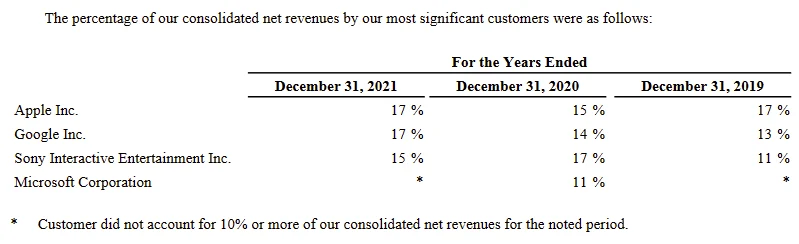
According to analysis of Activision Blizzard’s annual reports and recent commentary from industry veteran Nicholas Lovell of Gamesbrief, the traditional console market—long considered the heart of the industry—is no longer the primary driver of growth for the world’s largest third-party publisher. Most notably, Microsoft’s own platform contributed less than 10% of Activision Blizzard’s total revenue prior to the acquisition announcement, while mobile platforms and "alternative" distribution channels have ascended to dominant positions. This data reframes the strategic logic of the merger, suggesting that Microsoft’s ambitions lie far beyond the living room console, aiming instead at the lucrative mobile and direct-to-consumer ecosystems.
Chronology: From Console King to Multi-Platform Titan
To understand the current revenue split, one must look at the strategic pivot Activision Blizzard executed over the last decade.
- 2012–2015: The Call of Duty Era. During this period, Activision was heavily reliant on the annual cycle of Call of Duty releases on PlayStation and Xbox. Revenue was largely tied to physical retail and early digital storefronts on consoles.
- 2016: The King Acquisition. In a transformative $5.9 billion deal, Activision Blizzard acquired King Digital Entertainment, the makers of Candy Crush. This move was the catalyst for the shift toward mobile dominance, providing the company with a massive, recurring revenue stream independent of the console cycle.
- 2019: The Mobile Expansion. The launch of Call of Duty: Mobile (developed in partnership with TiMi Studio Group) signaled a new era where Activision’s core intellectual properties (IP) were no longer tethered to high-end hardware.
- January 2022: The Microsoft Bid. Microsoft announced its intent to acquire Activision Blizzard, sparking a global regulatory firestorm. The deal was positioned by Microsoft as a "mobile-first" strategy, a claim supported by the revenue data that would later emerge in annual filings.
- August 2022: Data Transparency. Nicholas Lovell and other analysts highlighted that Microsoft accounted for less than 10% of Activision’s revenue, a startlingly low figure for a company seeking to own the publisher.
Supporting Data: Deconstructing the Revenue Pie
The financial disclosures from Activision Blizzard’s 2021 and 2022 filings provide a granular look at where the money actually comes from. The breakdown challenges the "big three" (Sony, Microsoft, Nintendo) narrative that has dominated gaming journalism for decades.
The Mobile Juggernaut
Combined, the two main mobile platforms—Apple’s App Store and the Google Play Store—represented approximately one-third (33%) of Activision Blizzard’s total revenue. This is largely driven by the "King" side of the business, but increasingly bolstered by mobile iterations of Call of Duty and Diablo Immortal. Mobile is now the company’s largest single platform category, outstripping any individual console.
The Platform Split: Sony vs. Microsoft
One of the most striking revelations in the annual report was the disparity between the two console giants. While Microsoft’s Xbox platform contributed less than 10% of revenue (a figure low enough that it did not require specific line-item disclosure in some categories), Sony’s PlayStation platform consistently exceeded the 10% threshold.
When looking at the 2020-2021 data:

- The "Big Four" (Apple, Google, Sony, Microsoft): Collectively accounted for roughly 57% of revenue.
- Sony’s Lead: Sony typically accounts for 15% to 20% of Activision’s revenue, nearly double that of Microsoft. This explains why Sony has been the most vocal opponent of the deal, as they stand to lose the most if Call of Duty were to become an Xbox exclusive.
The "Elsewhere" Factor: The Hidden 43%
Perhaps the most significant finding is that 43% of Activision Blizzard’s revenue comes from "elsewhere"—platforms outside the Apple/Google/Sony/Microsoft quadrille. This massive segment includes:
- Battle.net: Blizzard’s proprietary PC launcher, which hosts World of Warcraft, Overwatch, and StarCraft. This allows the company to bypass the 30% "platform tax" charged by console makers.
- Nintendo: While a major player, Nintendo represents less than 10% of Activision’s revenue, largely because Call of Duty has been absent from the Switch platform.
- Steam and Third-Party PC: Revenue from Valve’s Steam store and other PC distributors.
- Regional Partnerships: Significant revenue from China via licensing deals with companies like NetEase (though these relationships have recently faced turbulence).
- Advertising: In-game advertising within King’s mobile titles.
Official Responses and Regulatory Friction
The revelation that Microsoft represents a minority share of Activision’s revenue has become a double-edged sword in the ongoing regulatory reviews by the Federal Trade Commission (FTC) in the U.S. and the Competition and Markets Authority (CMA) in the UK.
The FTC’s Broadened Mandate
Under the leadership of Chair Lina Khan, the FTC has shifted away from the traditional "Consumer Welfare Standard," which focused primarily on whether a merger would lead to higher prices for consumers. Instead, Khan’s FTC is looking at "vertical foreclosure" and the potential for Microsoft to harm competitors by denying them access to essential "input" (like Call of Duty).
Nicholas Lovell notes that he agrees with this wider definition of antitrust harm. The fact that Microsoft currently only accounts for 10% of the revenue is precisely why the FTC is concerned; by acquiring the other 90% of the revenue streams (or at least the IP that generates them), Microsoft could theoretically exert unprecedented leverage over Sony and the mobile ecosystem.
Microsoft’s Defense
Microsoft has used these numbers to argue that it is a "small player" in the mobile space and that the acquisition is necessary to compete with the "duopoly" of Apple and Google. Microsoft Gaming CEO Phil Spencer has repeatedly stated that the goal of the acquisition is to increase their presence on mobile and to bring more games to more people, rather than pulling them away from PlayStation.
Sony’s Counter-Argument
Sony Interactive Entertainment has argued to regulators that Call of Duty is an "essential" title. Sony’s high share of Activision’s revenue (roughly 15-20%) proves how dependent the PlayStation ecosystem is on Activision’s content. Sony argues that even if Microsoft promises to keep the game on PlayStation, they could degrade the experience or offer exclusive "Game Pass" benefits that would effectively force players to switch to Xbox.
Implications: The Future of the Gaming Ecosystem
The data analyzed by Lovell suggests three major shifts in the strategic landscape of the gaming industry:

1. The Marginalization of the Console
If consoles (excluding PC) only represent about one-third of Activision Blizzard’s revenue, the "Console War" is increasingly a sideshow to the real battle: Mobile and Cloud. Microsoft’s willingness to spend $68.7 billion is a bet that the future of gaming will be platform-agnostic. They are not buying Activision to sell more Xbox hardware; they are buying it to own the content that will populate their Game Pass subscription service across mobile, PC, and smart TVs.
2. The Rise of Direct-to-Consumer (DTC)
The 43% "elsewhere" revenue highlights the power of owning the distribution channel. Blizzard’s Battle.net is a model for what Microsoft likely wants to achieve on a larger scale. By owning the IP and the store, companies can capture 100% of the revenue, bypassing the gatekeeper fees of the mobile and console giants.
3. Regulatory Precedents
The FTC’s scrutiny of this deal, despite Microsoft’s currently low revenue share of Activision’s business, marks a turning point in tech regulation. Regulators are no longer looking at what a company is today, but what it could become by controlling the most valuable IP in the world. If the deal is blocked, it may signal the end of the era of "mega-mergers" in the tech space. If it proceeds, it will likely come with "behavioral remedies"—legally binding promises to keep content available on rival platforms like Sony and Nintendo for a decade or more.
Conclusion
The financial reality of Activision Blizzard—where mobile reigns supreme and Microsoft is a relatively small contributor—upends the traditional narrative of the gaming industry. As Nicholas Lovell observed, "Sometimes, the platforms that we think are big… are not as big as we think."
The industry is moving toward a future defined by content ownership and multi-platform accessibility rather than hardware loyalty. Whether Microsoft is allowed to lead this charge depends on whether regulators believe that such a massive consolidation of "the other 90%" of revenue is a move toward innovation or a march toward monopoly. For now, the numbers suggest that the "Xbox" of the future may not be a box at all, but a sprawling digital empire that lives on every screen in a consumer’s life.