Navigating Pop Culture and Collective Spirit: A Weekend of Reflection, Revival, and Riveting Sport
Introduction: Finding Solace in Shared Experiences
In an era defined by rapid change and often overwhelming news cycles, the cultural landscape continues to offer powerful touchstones for reflection, escape, and collective joy. From the enduring legacies of beloved actors and the anniversaries of iconic science fiction moments to the cinematic grandeur of a master director and the unifying thrill of high-stakes sports, communities find common ground and solace in shared narratives. As summer approaches, bringing with it a sense of renewed energy and possibility, these diverse threads of popular culture weave together, reminding us of the profound impact stories and spectacles have on our collective consciousness. This weekend, as the Reactor staff chat surprisingly veered towards sports, and the weather hinted at early summer, a broader sentiment emerged: a collective yearning for moments of positivity, deep feeling, and shared experience. It’s a time to perhaps call our representatives, enjoy a popsicle, or immerse ourselves in the cinematic worlds of Steven Spielberg, all while celebrating the figures and events that shape our cultural tapestry.
A Legacy Endures: Reflecting on Anthony Stewart Head’s Iconic Portrayal of Rupert Giles
Main Facts: The Enduring Impact of a Beloved Character
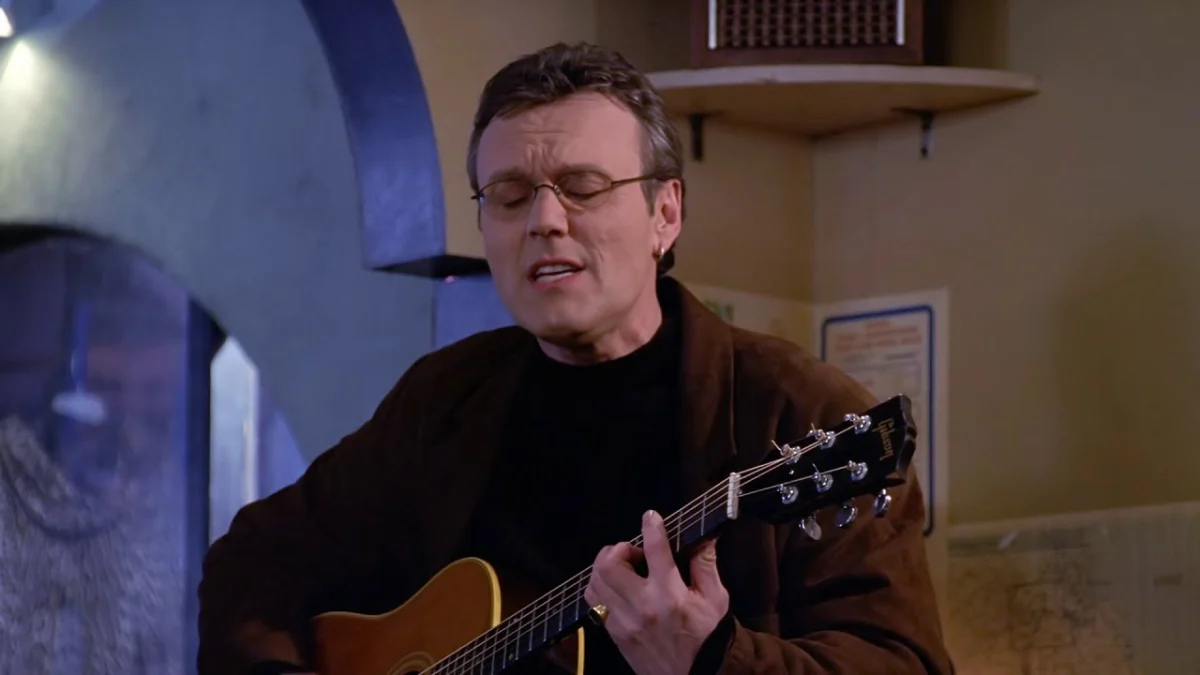
The world of Buffy the Vampire Slayer has resonated deeply with audiences for decades, thanks in no small part to its compelling characters and the talented actors who brought them to life. Among the most cherished is Rupert Giles, the Watcher, portrayed with quintessential British wit and gravitas by Anthony Stewart Head. While some reports or fan discussions might mistakenly suggest otherwise, it is important to clarify that Anthony Stewart Head, who brilliantly embodied Giles, is very much alive and continues his illustrious career. This clarification is vital for journalistic integrity, especially when celebrating the career of an actor whose work has left such an indelible mark on popular culture. The enduring affection for Giles and the Buffy cast often prompts reflections on their collective impact and the passage of time, leading to a deep appreciation for their contributions.
Chronology: From Coffee Commercials to Cult Icon
Anthony Stewart Head’s career spans several decades and genres, showcasing his remarkable versatility long before he became a household name for Buffy fans. Born in London in 1954, Head began his acting journey in theatre, eventually transitioning to television and film. He gained early recognition in the 1980s and 90s, notably for his memorable role in a series of popular Gold Blend (Taster’s Choice in the U.S.) coffee commercials alongside Sharon Maughan, which played out a charming, serialized romance. This visibility set the stage for his casting in Buffy the Vampire Slayer in 1997, a role that would define an entire generation’s perception of the "wise mentor." Following Buffy‘s conclusion in 2003, Head continued to build an impressive resume, including significant roles in fantasy series like Merlin as King Uther Pendragon, and appearances in acclaimed films and television shows such as Little Britain, Doctor Who, and Ted Lasso. His consistent presence in quality productions underscores a career built on talent and dedication.
Supporting Data: The Multifaceted Layers of Rupert Giles
Giles was more than just Buffy’s mentor; he was her surrogate father, confidant, and moral compass. Anthony Stewart Head imbued the character with a complex blend of dry wit, intellectual rigor, and profound emotional depth. He was the "long-suffering, tweedy, dry, wise, and supportive" figure who often bore the brunt of the Scooby Gang’s youthful indiscretions while steadfastly guiding them through apocalyptic threats.
His performances were consistently praised for their nuance. Consider the pivotal moment at the end of "Innocence," when Buffy blames herself for Angel’s transformation. Giles’s response – "If it’s guilt you’re looking for, Buffy, I’m not your man. All you will get from me is my support… and my respect" – perfectly encapsulated his unwavering belief in her, a moment Head delivered with powerful, understated emotion. Beyond his wisdom, Head expertly navigated Giles’s more eccentric and even rebellious facets. His muttered exasperation at "bloody Americans" and their supernatural shenanigans provided consistent comedic relief, while his transformation into a rebellious teen in "Band Candy" allowed Head to showcase a surprisingly different, yet equally compelling, side of the character. Episodes like "Lie to Me" and "Once More, With Feeling" further cemented Giles’s place as one of television’s most well-developed and beloved supporting characters, demonstrating his capacity for both profound sacrifice and unexpected vulnerability. The wealth of "Giles moments" available for revisit on streaming platforms speaks to the character’s enduring appeal and Head’s masterful portrayal.
Implications: The Enduring Power of Fictional Parenthood
Anthony Stewart Head’s portrayal of Rupert Giles cemented his status as one of television’s "best fictional dads ever." The character provided a vital anchor for Buffy and the audience, embodying responsibility, love, and unwavering support amidst supernatural chaos. The collective desire to rewatch Buffy and revisit these moments underscores the profound emotional connection fans form with such characters. In an increasingly complex world, the comfort of a wise, steady, and supportive figure like Giles remains a potent draw, reminding us of the positive influence fictional relationships can have. Head’s legacy, therefore, is not just one of acting excellence, but of creating a character who continues to offer guidance and warmth to generations of viewers.
Celebrating a Milestone: David Tennant’s Enduring Legacy as the Tenth Doctor
Main Facts: A Pivotal Anniversary Amidst Shifting Tides
The universe of Doctor Who is constantly in flux, with regenerations, new companions, and evolving narratives being its very essence. Recently, "Who-land" has seen its share of speculation and change, with discussions around the show’s future and streaming availability. However, amidst these shifts, a significant milestone emerged: June 18th marks the 21st anniversary of David Tennant’s inaugural appearance as the Tenth Doctor. This celebration offers a poignant opportunity to revisit one of the most beloved and impactful eras in modern Doctor Who history, a time characterized by both thrilling adventure and profound emotional depth. The availability of modern Who on platforms like AMC+ ensures that these iconic stories remain accessible to both longtime fans and new generations.
Chronology: The Arrival of an Icon and a Defining Era
David Tennant’s tenure as the Tenth Doctor officially began not with his own full episode, but with a dramatic and unforgettable debut in "The Parting of the Ways," the concluding episode of Christopher Eccleston’s first (and only) series. Airing on June 18th, 2005, in the UK, this episode saw Eccleston’s Ninth Doctor regenerate, giving way to the energetic, charismatic, and emotionally complex Tenth Doctor. This moment was more than just a change of lead actor; it heralded a golden age for the revived series. Tennant’s Doctor quickly became synonymous with the show’s resurgence in global popularity, leading the series through three full seasons and numerous specials until his own departure in "The End of Time" in 2010. His era was characterized by epic storylines, memorable villains, and deeply resonant character arcs, particularly his relationship with companion Rose Tyler.
Supporting Data: The Emotional Resonance of "The Parting of the Ways"
"The Parting of the Ways" is far more than just a regeneration episode; it’s a narrative crucible that forged many elements central to the Tenth Doctor’s subsequent adventures. The episode saw the dramatic resurrection of Captain Jack Harkness, a character who would go on to star in the spin-off series Torchwood and become a fan favorite. Crucially, it also laid the groundwork for the overarching "Bad Wolf" mystery, with Rose Tyler absorbing the Time Vortex and scattering the words "Bad Wolf" across time and space as a message to herself, ultimately leading to a powerful climax and the Ninth Doctor’s regeneration.
Tennant’s arrival, though brief at the episode’s close, immediately showcased his magnetic presence. His first lines and actions hinted at the vibrant, witty, yet deeply vulnerable Doctor he would become. The episode itself, with its themes of sacrifice and destiny, perfectly set the tone for the Tenth Doctor’s journey, which would often grapple with profound emotional stakes. For many, the Rose and Ten storyline, beginning implicitly here, would become one of Doctor Who‘s most celebrated and heartbreaking romances, culminating in a departure that continues to evoke "a lot of feelings" among fans. The depth of connection forged between these characters is a testament to the writing of Russell T. Davies and the performances of Tennant and Billie Piper.
Official Responses: Renewed Vision and Global Reach
While the original article mentions "Christmas is canceled" and the show’s "uncertain future," this refers to specific scheduling decisions and the natural ebb and flow of production. In reality, Doctor Who is experiencing a significant resurgence under the renewed stewardship of showrunner Russell T. Davies, who famously helmed the show’s 2005 revival. With Ncuti Gatwa taking on the mantle of the Fifteenth Doctor and a new global distribution deal with Disney+, the show’s future is, in fact, incredibly promising and expansive. The shift to AMC+ for modern Who in the US, while a change, represents a strategic move to broaden accessibility and cater to contemporary streaming habits, aligning with the show’s ongoing evolution and global ambitions. These developments signify a vibrant, rather than uncertain, trajectory for the venerable science fiction series.
Implications: The Enduring Power of Regeneration and Nostalgia
The 21st anniversary of David Tennant’s debut serves as a powerful reminder of Doctor Who‘s unique ability to reinvent itself while maintaining its core identity. The show’s concept of regeneration allows for continuous storytelling, ensuring its relevance across generations. Celebrating such anniversaries taps into a wellspring of nostalgia for fans, allowing them to reconnect with pivotal moments and beloved incarnations of the Doctor. In times of change and uncertainty, both within the show’s narrative and in the wider world, the familiar comfort of revisiting a cherished era provides a valuable anchor. The emotional intensity of the Tenth Doctor’s run, particularly his relationship with Rose, continues to resonate, proving that even in a show about time and space, human connection remains its most powerful element.
Deconstructing a Titan: The Enduring Narrative of Steven Spielberg
Main Facts: An Unprecedented Look at a Cinematic Maestro
Steven Spielberg is, without question, one of the most influential filmmakers in cinematic history. His body of work has not only shaped the landscape of modern cinema but has also profoundly impacted the childhoods and imaginations of billions worldwide. To truly grasp the scope of his impact requires a comprehensive and insightful approach. This is precisely what Bilge Ebiri’s "Raider of a Lost Art," an extensive oral history published in Vulture, endeavors to do. This ambitious project gathers dozens of voices to construct a multifaceted narrative of Spielberg’s life and career, offering an unparalleled deep dive into the mind and methods of a true cinematic titan.
Chronology: A Career Defined by Innovation and Evolution
Spielberg’s career began in the late 1960s, quickly moving from television (notably the pilot for Columbo and the acclaimed TV movie Duel) to feature films. His breakthrough came with Jaws in 1975, a film that not only became a massive box office success but also essentially invented the modern summer blockbuster. This was followed by a string of seminal films throughout the late 70s and 80s, including Close Encounters of the Third Kind, Raiders of the Lost Ark, and the cultural phenomenon E.T. the Extra-Terrestrial. These films defined a generation, blending wonder, adventure, and deeply felt human emotion.
The 1990s saw Spielberg pivot dramatically, earning critical acclaim and Academy Awards for more serious, historical dramas like Schindler’s List and Saving Private Ryan, alongside another groundbreaking blockbuster, Jurassic Park. This demonstrated his remarkable versatility and willingness to tackle complex themes. In subsequent decades, his output has remained diverse, encompassing historical epics (Lincoln), sci-fi adventures (War of the Worlds), biographical dramas (Catch Me If You Can), and even musicals (West Side Story). His semi-autobiographical film The Fabelmans (2022) offered his most personal reflection yet on his formative years, illustrating how deeply his own experiences have informed his cinematic vision across his entire filmography.
Supporting Data: The Personal Threads Woven into Blockbusters
Ebiri’s oral history provides crucial "supporting data" by allowing those who worked with Spielberg, as well as critics and contemporaries, to illuminate his creative process and thematic preoccupations. As Ebiri notes in his introduction, Spielberg’s films are intensely personal, regardless of their subject matter. Whether he’s exploring the wonder of childhood through aliens in E.T., the terror of the unknown in Jaws, the complexities of war in Saving Private Ryan, or the pursuit of justice in Lincoln, a recurring set of themes emerges: broken families, the search for belonging, the clash between innocence and experience, and the pursuit of dreams.
The format of an oral history is particularly effective for a figure like Spielberg, whose career is so intertwined with the evolution of Hollywood itself. It allows for multiple perspectives, anecdotes, and direct quotes, providing a richer, more nuanced understanding than a single-authored biography. The "delightful side-notes" that Vulture is known for likely add further context and interesting trivia, making the extensive piece both informative and engaging. This comprehensive approach is essential for dissecting the work of a director whose influence spans visual effects, narrative structure, and emotional storytelling across such a broad spectrum of genres.
Implications: Understanding a Director’s Enduring Cultural Resonance
An oral history of Steven Spielberg is more than just a chronological account; it’s an exploration of how one individual’s vision can profoundly shape global culture. His movies are synonymous with childhood wonder for many, a universal language of adventure and emotion. The enduring impact of films like E.T. on collective memory speaks to his genius for capturing the human spirit.
The implications of such a detailed account are far-reaching. It helps audiences and aspiring filmmakers alike understand the dedication, challenges, and creative choices involved in crafting iconic cinema. It underscores how personal experiences can fuel universal stories, and how a director’s style can evolve while retaining a distinctive signature. In an age where cinematic experiences are constantly diversifying, a deep dive into Spielberg’s legacy reaffirms the power of storytelling and the lasting cultural resonance of a truly visionary artist. Such a piece is not just "worth your time" but a valuable contribution to understanding the very fabric of modern entertainment.
The Unifying Roar: Game 5 of the NBA Finals and the Power of Underdog Spirit
Main Facts: A City United by an Unexpected Playoff Run
In a refreshing turn from the usual pop culture discourse, the collective attention of many has pivoted dramatically towards the electrifying drama of the NBA Finals. Specifically, Game 5 has become the unexpected focal point, demonstrating the potent ability of sports to capture widespread imagination and unite diverse groups. For New York, in particular, the focus was squarely on the improbable journey of the Knicks, whose playoff run became a rallying cry and a much-needed source of collective joy and distraction.
Chronology: From Playoff Underdogs to National Sensation
The Knicks’ recent playoff trajectory has been anything but predictable. For years, the team has experienced periods of struggle, making their deep run in the NBA Finals a surprising and exhilarating development for fans and casual observers alike. The writer’s personal anecdote—initially disengaged from basketball, then drawn in by a "miracle" finish at a neighborhood bar—perfectly encapsulates how quickly and unexpectedly sports can seize public interest. The specific game that sparked this fervor was not merely a victory; it was a testament to resilience and the sheer thrill of an underdog story. This particular game, a Wednesday night showdown, featured one of the "greatest comeback[s] in NBA Finals history," transforming skeptics into passionate supporters overnight. This monumental shift in momentum and public perception set the stage for Game 5, elevating it to a must-watch event.
Supporting Data: The Knickerbockers’ Storied, Yet Often Challenging, History
The Knicks’ enduring appeal, particularly during a successful playoff run, is rooted in a rich history intertwined with periods of profound struggle. The team last won an NBA championship in 1973, making their current pursuit of the title a nearly five-decade-long quest for glory. This prolonged championship drought amplifies the emotional investment of the fanbase, transforming every playoff victory into a moment of collective catharsis. The "miracle" comeback game, therefore, was not just a statistical anomaly but a powerful narrative moment that tapped into a deep well of longing and hope. The collective rallying around the team—with people who "never known to care one jot about basketball" suddenly becoming "Knicks fans"—speaks to the universal human need for something to believe in, something to celebrate, especially when other aspects of life might feel challenging. The individual "grudge against the Spurs since 2005" playfully highlights the often irrational, yet deeply personal, reasons people attach themselves to sports narratives and rivalries, underscoring that emotional connection often trumps pure logic in fandom.
Official Responses: The League and City React
The NBA and the city of New York have undoubtedly responded to the Knicks’ playoff surge with enthusiasm. The league benefits from high-stakes, dramatic series, especially those involving large-market teams with passionate fanbases. Analysts and commentators across sports media have dissected the Knicks’ performance, the coaching strategies, and the individual heroics that led to their remarkable comeback. The buzz generated by such a compelling narrative extends beyond sports pages, permeating local news and social media, reflecting the city’s pride and renewed hope. The broadcast of Game 5 on ABC, scheduled for 8:30 PM EDT on Saturday, signifies its prime-time status and the broad audience it is expected to command, further cementing its position as a major cultural event.
Implications: The Therapeutic Power of Collective Triumph
The sudden, widespread fascination with the NBA Finals, and particularly the Knicks’ underdog narrative, carries significant implications for understanding collective psychology. In a world often fraught with stress and division, sports offer a unique and universally accessible outlet for shared emotion. The phrase "Everyone needs something nice. We really, really, really need something nice" articulates a profound truth: collective joy and the pursuit of a shared goal can be incredibly therapeutic. The "unreasonable" nature of sports fandom—the deep-seated grudges, the sudden allegiances, the emotional highs and lows—is precisely what makes it so powerful. It provides an arena where emotions can be freely expressed, where triumphs are shared, and where hope, even if fleeting, can unite an entire city or nation. This weekend, Game 5 was more than just a basketball game; it was a testament to the enduring human need for spectacle, connection, and the exhilarating possibility of a miracle.
Conclusion: A Tapestry of Shared Human Experience
From the nuanced performances of beloved actors like Anthony Stewart Head to the emotional journeys within the Doctor Who universe, the profound cinematic legacy of Steven Spielberg, and the unifying drama of the NBA Finals, our engagement with popular culture is far more than mere entertainment. It is a reflection of our collective desires for meaning, connection, and joy. These narratives and spectacles, whether they inspire reflection, provide escape, or foster communal celebration, serve as vital anchors in a dynamic world. They remind us that amidst the serious calls to action and the everyday realities, there is immense value in the shared experience of storytelling and the pursuit of moments that make us feel deeply, together.