Digital Brushes and Virtual Bristles: BrushHammer: Miniature Painter Set to Redefine the Hobby on Meta Quest
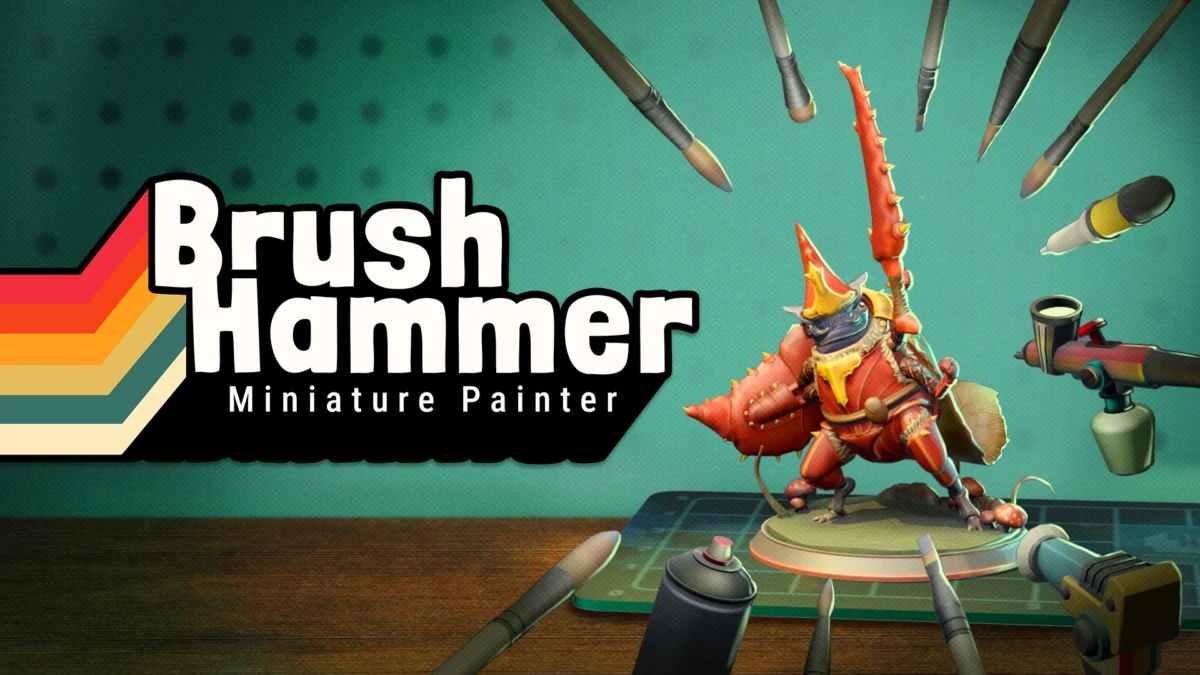
The intersection of traditional craftsmanship and cutting-edge spatial computing is about to become more accessible than ever. Soliton Interactive has officially announced that its highly anticipated mixed reality (MR) title, BrushHammer: Miniature Painter, will launch on the Meta Quest platform on August 26. Revealed during the recent VR Games Showcase, the title promises to bridge the gap between the tactile satisfaction of miniature painting and the limitless, "undo-enabled" convenience of digital artistry.
For decades, the hobby of miniature painting—central to tabletop gaming icons like Warhammer 40,000 and Dungeons & Dragons—has been defined by its high barrier to entry. It requires steady hands, significant financial investment in paints and plastic, and a dedicated physical space free from the fear of permanent stains. BrushHammer seeks to disrupt this paradigm by offering a "cozy," mistake-proof environment that exists entirely within the user’s headset, yet feels as real as the desk in front of them.
Main Facts: The Digital Evolution of a Physical Craft
BrushHammer: Miniature Painter is designed as a comprehensive simulation of the miniature painting hobby, optimized for the Meta Quest 2, Quest 3, and Quest Pro. The primary objective of the application is to provide a serene, creative outlet that eliminates the "friction" points of the physical hobby—namely cost, mess, and the anxiety of ruining an expensive model.
Key Features at Launch
At its core, the application provides a suite of tools that mimic professional-grade painting equipment. This includes:
- Diverse Toolsets: Players can utilize traditional brushes, airbrushes, and spray cans, each with distinct physics and application behaviors.
- Handcrafted Collections: The app launches with a variety of original, high-fidelity 3D models designed specifically for the platform.
- Kitbashing Capabilities: In a nod to advanced hobbyists, the app allows for "kitbashing," the process of taking parts from different models to create entirely new, custom configurations.
- Mixed Reality Integration: Utilizing the Meta Quest’s passthrough technology, users can place their virtual workspace on their actual physical desk, blending their real-world environment with their digital creations.
- The "Undo" Safety Net: Unlike real-world acrylics, BrushHammer allows for instant reversals of mistakes, encouraging experimentation without the risk of "clogging detail" or wasting supplies.
Chronology: From Concept to the VR Games Showcase
The journey of BrushHammer reflects the broader evolution of the "cozy gaming" genre within the VR space. While VR has traditionally been dominated by high-intensity shooters and rhythm games, there has been a growing demand for meditative, hobby-focused experiences.
The Initial Tease
Soliton Interactive first hinted at the project earlier this year, positioning it as a summer release. Early teasers showcased the fluid motion of the airbrushing tool, which caught the attention of both the VR community and the tabletop gaming world. The developer emphasized that while the app was "digital," the skills required—such as steadying one’s hand and understanding color theory—would translate directly from the real-world hobby.
The VR Games Showcase Reveal
The August 2024 VR Games Showcase served as the definitive platform for the game’s final launch details. The showcase featured a one-minute gameplay trailer that demonstrated the precision of the Quest’s controllers in simulating fine brushwork. The trailer also confirmed the August 26 release date, moving the project from a "summer" window to a concrete launch.
Post-Launch Roadmap
While the initial launch focuses on the core painting experience, Soliton Interactive has confirmed that development will continue. A "Career Mode" is currently in the works, designed to give players a sense of progression through specific challenges and commissions, though the developer has remained cautious about whether this feature will be fully integrated on day one or arrive as a subsequent update.
Supporting Data: The Technical and Economic Appeal of Virtual Hobbying
To understand why BrushHammer is a significant release for the Meta Quest ecosystem, one must look at the data surrounding the miniature painting industry and the limitations of physical hobbying.
The Cost Barrier
A standard "start-up" kit for a real-world miniature painter can easily exceed $200. This includes a set of basic paints (averaging $4–$6 per 12ml bottle), a variety of brushes, primers, and the miniatures themselves, which can range from $15 for a single figure to over $150 for a centerpiece model. BrushHammer provides an unlimited supply of digital "paint" and a library of models for a single, likely much lower, software price point.
The Space and Logistics Factor
According to hobbyist surveys, one of the primary reasons individuals quit miniature painting is the lack of a dedicated workspace. Traditional painting requires "wet palettes," water pots, and ventilated areas for airbrushing and priming. BrushHammer requires only the space occupied by the user’s headset and controllers. By utilizing Mixed Reality, it effectively turns any kitchen table or coffee shop desk into a high-end hobby studio without any cleanup required.
Technical Fidelity
Soliton Interactive has leveraged the Quest 3’s improved passthrough and hand-tracking capabilities. The application uses high-resolution textures to ensure that even under extreme "zoom," the models maintain the appearance of physical plastic and paint. The physics engine simulates the "flow" of paint, ensuring that the digital medium behaves similarly to its physical counterpart, responding to pressure and stroke speed.
Official Responses: The Developer’s Vision for "Cozy" Creativity
Soliton Interactive has been vocal about its design philosophy, focusing on the concept of "mistake-proof" creativity. In statements regarding the game’s development, the team noted that BrushHammer is not intended to replace real-world painting, but to supplement it and make it accessible to those who might otherwise be intimidated.
"For clumsy people, or those just starting out, the fear of making a mistake on a model you spent forty dollars on is real," the developer noted in promotional materials. "We wanted to create a space where that fear doesn’t exist. You can undo, you can restart, and you can experiment with color schemes that you might be too afraid to try on a physical model."
The developer also highlighted the "kitbashing" feature as a point of pride. In the physical world, kitbashing requires cutting plastic with hobby knives and using caustic glues. In BrushHammer, this becomes a modular, safe, and infinitely reversible process of digital assembly.
Implications: A New Era for Digital Hobbies and the Meta Quest
The release of BrushHammer: Miniature Painter on August 26 carries several significant implications for the VR industry and the broader hobbyist community.
1. The Democratization of the Hobby
By lowering the financial and physical barriers to entry, BrushHammer could act as a "gateway drug" for the miniature painting world. It allows curious outsiders to test their interest in the craft without a significant investment. Conversely, for veteran painters, it serves as a high-fidelity "sketchbook" where they can test color palettes and kitbash ideas before committing to physical plastic.
2. The Maturation of Mixed Reality
As Meta continues to push the Quest 3 as an MR-first device, apps like BrushHammer provide the strongest use cases for the technology. Unlike fully immersive VR, which cuts the user off from their surroundings, MR allows the user to remain present. Painting a virtual miniature while still being able to see one’s real-world coffee cup or interact with family members in the room makes the technology feel more integrated into daily life.
3. Environmental and Health Considerations
Traditional miniature painting involves chemical primers, plastic waste (from "sprue" frames), and sometimes toxic pigments. A digital alternative offers a 100% sustainable way to enjoy the hobby. Furthermore, for those with respiratory sensitivities who cannot use traditional airbrushes or spray cans indoors, BrushHammer offers a safe, fume-free alternative.
4. The "Cozy" Trend in VR
The success of titles like Vermillion (oil painting) and Puzzling Places (3D puzzles) has proven that there is a massive market for low-stress, meditative VR. BrushHammer is poised to become a staple of this sub-genre. As the VR market matures, the industry is seeing a shift away from purely "gamified" experiences toward "experiential" tools that focus on relaxation and personal growth.
Conclusion: A New Canvas for the Digital Age
When BrushHammer: Miniature Painter arrives on the Meta Quest Store on August 26, it will represent more than just another app in the library. It is a testament to how spatial computing can preserve the soul of a traditional craft while removing the logistical hurdles that often stifle creativity.
Whether for the veteran painter looking for a mess-free way to practice or the newcomer seeking a "cozy" entry point into a world of fantasy and sci-fi models, BrushHammer offers a compelling vision of the future of hobbies. In a world that is increasingly digital, Soliton Interactive is proving that the most satisfying experiences are often those that let us slow down, pick up a brush (even a virtual one), and create something beautiful.
The game is currently available for wishlisting on the Meta Quest Store, and with its launch just weeks away, the miniature painting community is waiting with bated breath to see if digital bristles can truly match the magic of the real thing.