The Emerald Noir: Unpacking the Shocking Series Premiere of HBO’s ‘Lanterns’
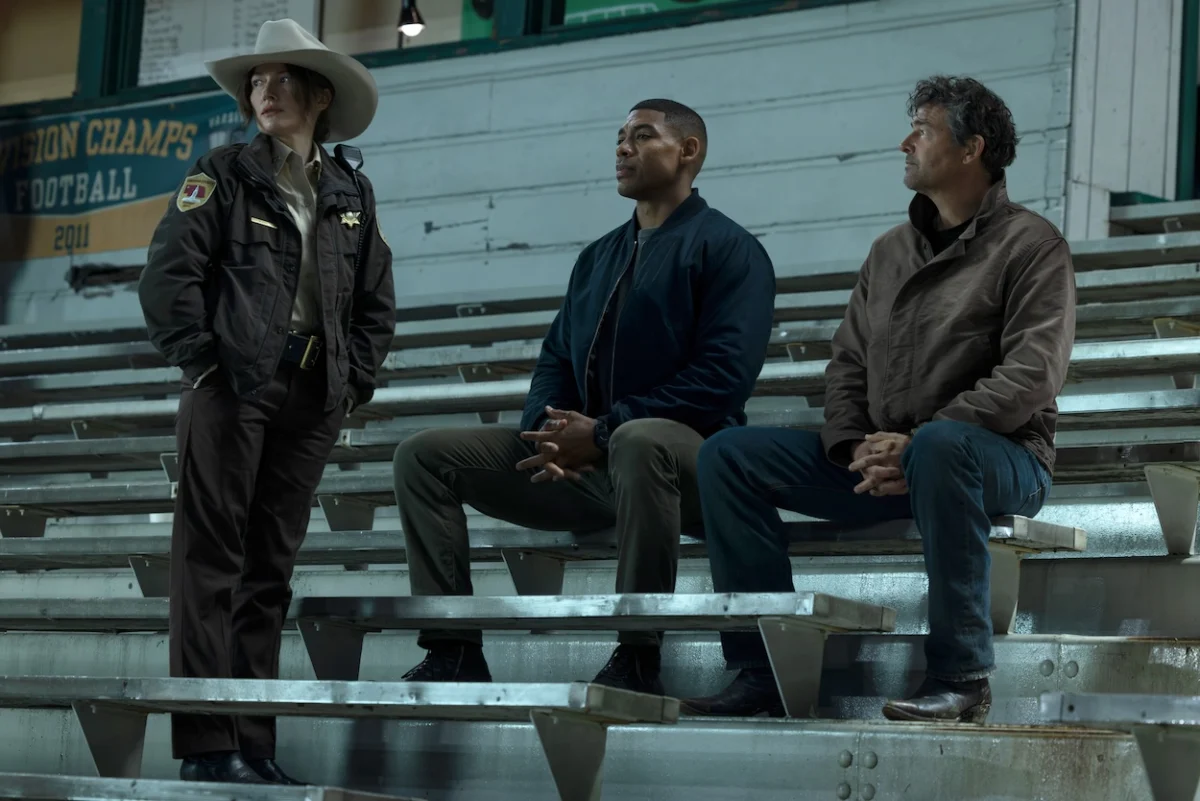
The long-awaited arrival of HBO’s Lanterns has finally occurred, and it has immediately signaled that this is not the high-flying, neon-soaked superhero spectacle audiences might have expected. Instead, the series premiere, titled "Pilot," delivers a gritty, grounded, and emotionally resonant procedural that feels more akin to True Detective or Sharp Objects than a traditional comic book adaptation. Co-written by showrunner Chris Mundy (Ozark), Damon Lindelof (Watchmen, The Leftovers), and celebrated comic author Tom King, the episode serves as a masterclass in atmospheric world-building while dropping a narrative bombshell that has left the fandom reeling.
Main Facts: A New Vision for the Green Lantern Corps
The premiere introduces us to two iterations of the Green Lantern: the legendary, grizzled veteran Hal Jordan (portrayed by Kyle Chandler) and the disciplined, younger recruit John Stewart (played by Aaron Pierre). Set primarily in the year 2016 in the rural, isolated town of Rushville, Nebraska, the series centers on an investigation into a bizarre quadruple homicide on a high school football field.
The most significant takeaway from the premiere is the show’s bold narrative structure. The episode concludes with a jarring ten-year flash-forward to 2026, revealing a bleak reality: Hal Jordan is dead. His frozen corpse, discovered in the snow with a bullet hole in the forehead and his power ring missing, serves as the ultimate "hook" for the season. This creative choice immediately raises the stakes, transforming the show from a standard investigation into a temporal mystery regarding the downfall of one of DC’s most iconic heroes.
Furthermore, Lanterns makes a deliberate effort to distance itself from the critically maligned 2011 Green Lantern film. There are no digital suits or over-the-top space battles here. Instead, the "Willpower" of the Lanterns is portrayed through a more tactile, psychological lens, focusing on the human cost of being a galactic peacekeeper stationed on a "backwater" planet like Earth.
Chronology: From 2016 Investigation to 2026 Revelation
The narrative of "Pilot" is woven through three distinct time periods and perspectives, each building toward the central mystery of the "Rushville Massacre."
The 2016 Investigation
The bulk of the episode follows Hal and John as they arrive in Rushville to investigate what appears to be a tragic mass shooting at a high school football game. Four victims, all wearing identical sweatshirts, were gunned down during a field goal celebration. While local authorities, led by the weary Sheriff Kane (Kelly Macdonald), believe it to be a case of domestic escalation, Hal’s intuition—aided by a "Hal-o-gram" (a holographic backup consciousness he uses to monitor the sector)—suggests something more sinister.

The investigation leads them to a fifth "victim," Waylon Sanders (Chris Coy), who Hal correctly identifies as an extraterrestrial in disguise. Through a tense interrogation, Hal exposes Waylon’s lack of human cultural knowledge. Before detonating a suicide bomb, Waylon cryptically mentions a "war of vengeance," linking the murders to a larger, hidden conflict on Earth.
The Backstories (Trauma and Fathers)
Interspersed with the investigation are glimpses into the formative years of our protagonists. We see a young John Stewart dealing with an abusive, militaristic father who forces his sons to participate in a terrifying "William Tell" apple-shooting drill to prove their lack of fear. Meanwhile, Hal’s past is explored through a "60 Minutes" interview, where he discusses the death of his pilot father and his recruitment by the dying alien Abin Sur near Rushville years prior. These segments establish that both men view "fearlessness" not as a virtue, but as a byproduct of profound trauma.
The 2026 Flash-Forward
The episode’s final minutes jump to 2026. A goateed, older John Stewart arrives at a snowy crime scene in an SUV—not by flight. He is led by Sheriff Kane to a body discovered by a groundskeeper. It is Hal Jordan, frozen and lifeless. The absence of his ring and the presence of a gunshot wound suggest a tragic, unceremonious end for the "Greatest Green Lantern."
Supporting Data: Production Context and Character Dynamics
The success of the Lanterns premiere rests heavily on its cast and the creative pedigree of its production team.
Cast Performances
Kyle Chandler brings a "Friday Night Lights" ruggedness to Hal Jordan, but subverts it with a sense of profound isolation. His Hal is a man who has seen too much and cares too little for bureaucracy. Aaron Pierre’s John Stewart is his perfect foil: stoic, observant, and burdened by a sense of duty that Hal seems to have discarded. The chemistry between the two is intentionally abrasive, reflecting the "buddy-cop" tropes while grounding them in realistic friction.
The Lindelof Touch
Damon Lindelof’s influence is palpable throughout the episode. Similar to his work on Watchmen, the show uses a superhero framework to explore socio-political themes. The setting of rural Nebraska in 2016—a pivotal year in American politics—is not accidental. References to the Obama administration and the "colonization" anxieties of local rancher William Macon (Garret Dillahunt) suggest that the "alien" threat is a metaphor for the xenophobia and isolationism prevalent in the American heartland.

Technical Craft
Visually, the show opts for a desaturated, cinematic palette. The decision to keep the Lanterns in civilian clothes for the majority of the episode is a strategic move to emphasize the "cop" aspect of the "Space Cop" premise. The ticking clock sound effect, a recurring motif in the episode, serves as a direct nod to Lindelof’s previous HBO work and heightens the sense of impending doom.
Official Responses: Critical Reception and Creator Intent
While HBO has not released formal "official statements" regarding the plot twists (keeping the "mystery box" sealed), the creative team has hinted at the show’s direction through various interviews and promotional materials.
Showrunner Chris Mundy has stated that the goal of Lanterns was to create a "terrestrial mystery with celestial implications." By centering the story in a small town, the writers intend to show how the presence of the Green Lantern Corps affects ordinary people. Tom King, whose comic book work often deals with the PTSD of superheroes, has emphasized that this version of Hal and John is meant to be "deeply human and deeply flawed."
Critical reception to the premiere has been overwhelmingly positive, with many praising the "B+" grade quality of the writing. Critics have noted that the "Hal-o-gram" concept is a clever way to keep Kyle Chandler’s presence in the show even if the "real" Hal is dead or missing in the future timeline. The consensus is that HBO has successfully reinvented a franchise that was previously considered "unfilmable" due to its high-concept sci-fi roots.
Implications: What Does This Mean for the DCU?
The premiere of Lanterns has massive implications for the broader DC Universe (DCU) being spearheaded by James Gunn and Peter Safran.
The Mystery of the Ring
The missing ring in the 2026 timeline is the most pressing question. In Green Lantern lore, a ring seeks out a new wearer upon the death of its host. If Hal is dead and John isn’t wearing the ring, where is it? Does it imply that the Green Lantern Corps has been disbanded by 2026, or has the ring been claimed by an antagonist?

The "War of Vengeance"
Waylon’s mention of a "war" suggests that Earth has been a secret battleground for alien factions for decades. This sets up a "Secret Invasion" style plotline where the Lanterns must figure out who is human and who is an interloper. The involvement of William Macon, the wealthy rancher with "unknown benefactors," suggests that human power structures are complicit in this extraterrestrial conflict.
The Loneliness of the Hero
Thematically, the show is poised to deconstruct the concept of the "fearless hero." Sheriff Kane’s observation that Hal is "not fearless, he’s lonely" serves as the emotional core of the series. If the show follows through on the tragedy of Hal’s death, it will be a sobering look at the cost of a life spent in service to a galactic power that views its agents as expendable tools.
Future Connectivity
As one of the tentpole series of the new DCU, Lanterns is expected to bridge the gap between the grounded world of Earth and the cosmic scale of the upcoming Superman film. The discovery of the "ancient mystery" in the heart of America will likely serve as a foundational element for the overarching narrative of the DCU’s first chapter, "Gods and Monsters."
In conclusion, Lanterns Episode 1 is a bold, confident start to a new era of superhero storytelling. By killing off its lead in the very first episode—albeit in the future—it has signaled that no one is safe and that the truth behind the green light is far darker than we ever imagined. Fans will be watching closely as the ticking clock of 2016 counts down to the icy silence of 2026.