The Upside Down of Quality: Analyzing the Five Most Polarizing Episodes of Stranger Things
Since its debut in 2016, Stranger Things has served as the undisputed flagship of the streaming era. It did more than just boost Netflix’s subscriber count; it revitalized the 1980s aesthetic, launched a generation of young stars, and redefined the "binge-watch" as a cultural event. However, as the series progressed from a tight, eight-episode supernatural mystery into a sprawling multi-continental epic, the cracks in its structural integrity became more apparent.
While the Duffer Brothers have been lauded for their ability to blend Amblin-esque wonder with body horror, even the most devoted "Strangers" admit the journey was not without its potholes. From tonal shifts that alienated long-time viewers to experimental episodes that felt like "backdoor pilots" for abandoned spin-offs, the series has occasionally faltered.
This analysis examines the five episodes that represent the lowest points of the series, ranked by their narrative impact, fan reception, and overall contribution to the show’s legacy.
Main Facts: The Decline of a Cultural Behemoth
The trajectory of Stranger Things is a case study in the "too big to fail" phenomenon of modern television. The first season was a masterclass in economy, focusing on a small town and a single missing boy. By Season 5, the scope had widened to include international conspiracies, Russian gulags, and a complex mythology involving inter-dimensional stage plays.
Data from review aggregators highlights this shift. While Seasons 1 and 2 enjoy near-universal acclaim, Season 5 currently stands as the lowest-rated season on IMDb and the lowest-ranked on Rotten Tomatoes. This decline is often attributed to "narrative bloat"—the tendency for episodes to exceed 75 minutes in length while paradoxically moving the plot forward at a glacial pace.
The Criteria for Failure
To rank these episodes, we look at three primary factors:
- Pacing: Does the episode stall the momentum of the season?
- Character Consistency: Does the episode betray established character growth?
- Lore Integration: Does the episode add meaningful depth to the world, or does it introduce unnecessary confusion?
Chronology of Missteps: A Timeline of Narrative Friction
To understand how Stranger Things arrived at its controversial conclusion, one must look at the specific points where the show’s internal logic began to fray.
- 2017 (Season 2): The introduction of "The Lost Sister" signals the first major experiment in world-building outside of Hawkins, resulting in immediate fan backlash.
- 2019 (Season 3): A sharp pivot toward "mall-culture" comedy and bright neon aesthetics changes the show’s fundamental DNA.
- 2022 (Season 4): Episodes reach feature-film lengths, leading to "filler" segments that test viewer patience.
- The Final Season (Season 5): The series attempts to tie up a decade of loose ends, often relying on external media (like the First Shadow stage play) to explain core plot points.
Detailed Analysis: The 5 Worst Episodes Ranked
5. Season 5, Episode 8: "The Rightside Up" (The Series Finale)
Ending a global phenomenon is an unenviable task, but "The Rightside Up" struggled under the weight of its own ambition. The primary criticism stems from the episode’s structure: a nearly hour-long prologue that attempted to resolve four seasons of character arcs in a rushed, "check-the-box" fashion.
The finale was marred by logical inconsistencies. Most notably, the sudden and unexplained disappearance of the Demogorgons—the show’s original primary threat—left many scratching their heads. Furthermore, the decision to leave Eleven’s ultimate fate ambiguous felt less like a poetic choice and more like a refusal to commit to a definitive ending. While the Duffer Brothers aimed for a bittersweet conclusion, many fans felt the "bitter" outweighed the "sweet," leaving beloved characters with resolutions that felt unearned or incomplete.
4. Season 4, Episode 5: "The Nina Project"
Season 4 was hailed for its horror elements, but it was also the point where the show’s pacing began to suffer. "The Nina Project" is the quintessential filler episode. It trapped Jim Hopper in a repetitive cycle of capture and escape in a Soviet prison—a storyline that, while visually impressive, felt disconnected from the high stakes in Hawkins.
Simultaneously, Eleven’s journey into the "NINA" sensory-deprivation tank served as a massive flashback sequence. While providing backstory for the villainous Vecna, the episode spent too much time retreading ground the audience had already intuited. Originally conceived as a miniseries, Stranger Things occasionally feels like it is stretching its story to fill a mandated episode count, and "The Nina Project" is the clearest evidence of this "stretching."
3. Season 5, Episode 6: "Escape from Camazotz"
This episode represents the dangers of "transmedia storytelling." In an effort to enrich the lore, the writers integrated elements from the Stranger Things stage play, The First Shadow. For the millions of viewers who had not seen the London-based production, sequences involving a young Henry Creel in an underground cavern were bewildering rather than enlightening.

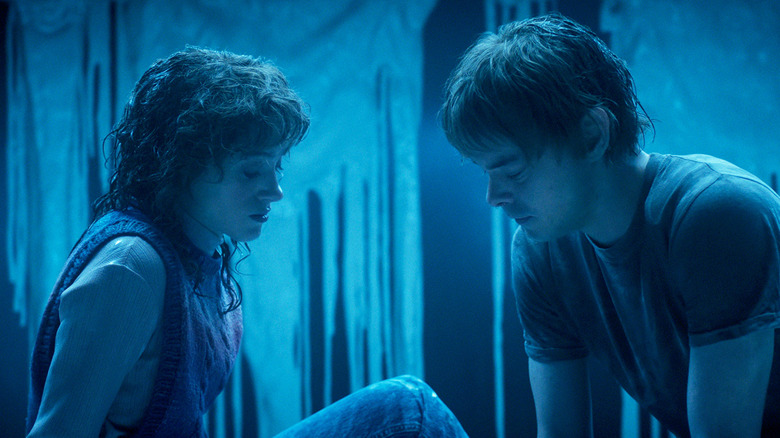
The episode also fumbled the interpersonal relationships that are the show’s heartbeat. The breakup of Nancy Wheeler and Jonathan Byers was handled with such cryptic dialogue and surreal environmental cues (a melting room) that many viewers were unsure if the relationship had actually ended or if they were watching a dream sequence. This lack of narrative clarity is a hallmark of the show’s later-stage struggles.
2. Season 3, Episode 1: "Suzie, Do You Copy?"
While Season 3 is visually vibrant, its premiere marked a jarring shift in tone. The "Hopper Problem" began here. In the first two seasons, Jim Hopper was a stoic, deeply competent, and trauma-scarred lawman. In "Suzie, Do You Copy?", he was transformed into a bumbling, over-the-top caricature of a jealous father.
The episode traded the show’s established atmospheric dread for broad comedy. Subplots involving Dustin’s long-distance girlfriend and Billy’s flirtations at the local pool felt like they belonged in a standard 80s teen comedy rather than a supernatural thriller. This "Farcification" of the characters made it difficult for audiences to take the eventual life-and-death stakes seriously.
1. Season 2, Episode 7: "The Lost Sister"
Nearly a decade after its release, "The Lost Sister" remains the most infamous episode in the series. By removing Eleven from Hawkins and placing her in a "punk-rock" revenge squad in Chicago, the show broke its own momentum just as the Season 2 climax was building.
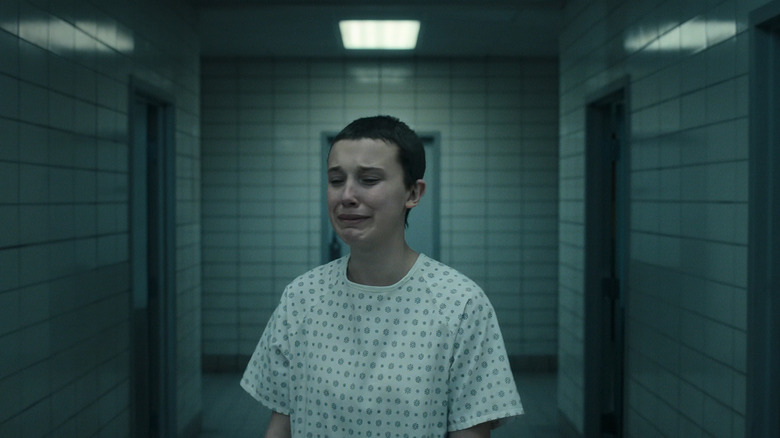
The characters introduced—Kali and her band of outcasts—felt like archetypes from a different show entirely. The episode’s failure was so absolute that the show virtually ignored Kali’s existence for years, only briefly referencing her in the final season to retroactively justify this episode’s inclusion. It stands as a cautionary tale of how not to execute a "departure episode" in a serialized drama.
Supporting Data: The Impact of Narrative Bloat
The evolution of episode lengths provides a window into why these episodes were poorly received.
- Season 1 Average Length: 50 minutes.
- Season 4/5 Average Length: 78 minutes.
Longer runtimes did not always equate to more story. Instead, they led to more "travel time" and "reaction shots," diluting the tension that made the early seasons so effective. Fan sentiment on platforms like X (formerly Twitter) and Reddit during the Season 5 rollout showed a clear trend: viewers were frustrated by the "fragmented" nature of the storytelling, where characters remained separated for 90% of the season’s duration.
Official Responses and Production Context
The Duffer Brothers have been candid about the difficulties of concluding the series. In various interviews, they have defended the "The Lost Sister," claiming it was essential for Eleven to choose Hawkins over a life of revenge. Regarding the finale, the showrunners argued that not every question needed a clinical answer, preferring to leave the "Upside Down" with some of its mystery intact.
However, production insiders have noted that the sheer scale of the production—compounded by pandemic delays and the aging of the child cast—put immense pressure on the writing team to deliver a "spectacle" rather than the intimate character study the show began as.
Implications: The Legacy of Hawkins
The mixed reception of these episodes has significant implications for the future of the Stranger Things franchise. As Netflix looks to develop spin-offs and animated series, the "Lost Sister" and "Camazotz" controversies serve as a roadmap of what to avoid.
The legacy of Stranger Things is secure as a pop-culture titan, but these five episodes serve as a reminder that even the most successful series can lose their way when they prioritize world-building and spectacle over the simple, human stories that captured the world’s imagination in the first place. The lesson for future streaming giants is clear: more is not always better, and the most powerful monsters are often the ones we face in our own small towns, not in sprawling, inter-dimensional labyrinths.