The Emerald Noir: HBO’s ‘Lanterns’ Reimagines the Cosmic Hero as a Gritty Procedural
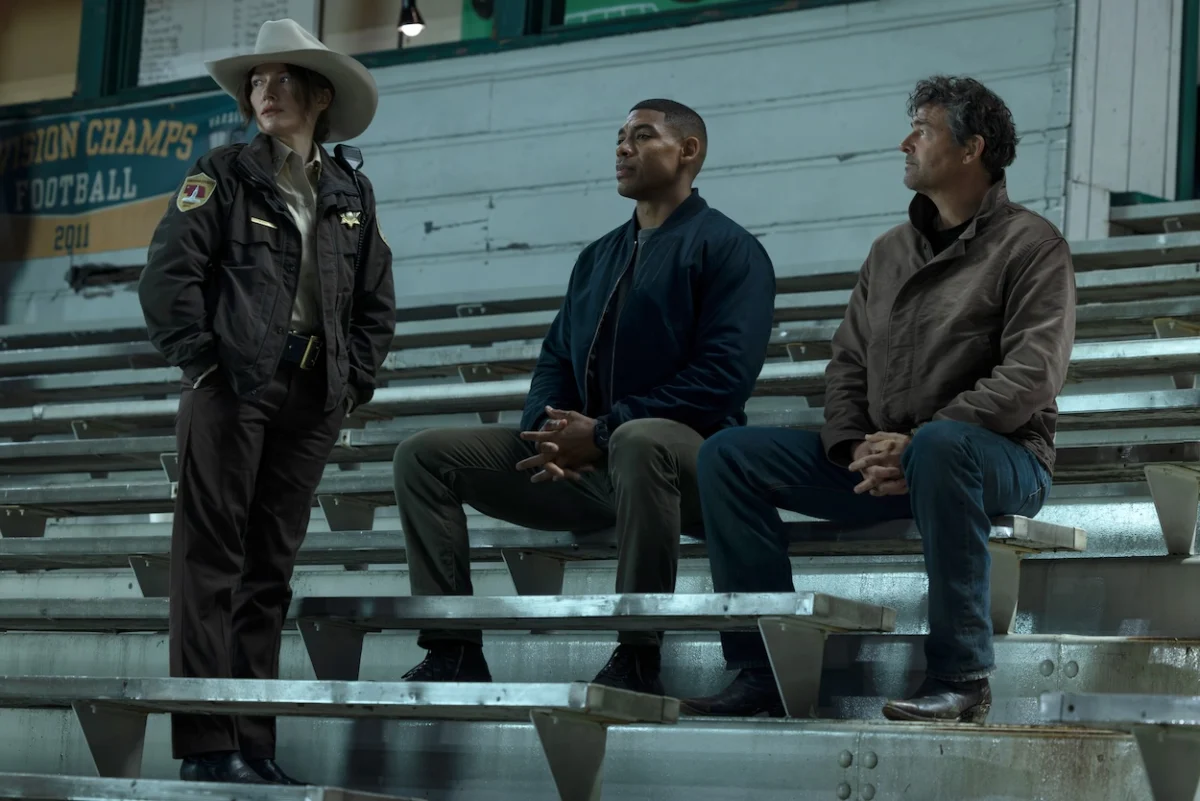
The premiere episode of HBO’s "Lanterns" has sent shockwaves through the DC fandom, not merely for its grounded, "True Detective"-inspired tone, but for a climactic flash-forward that appears to kill off one of the most iconic characters in comic book history: Hal Jordan.
The series, a cornerstone of the newly minted DC Universe (DCU) overseen by James Gunn and Peter Safran, represents a radical departure from previous interpretations of the Green Lantern mythos. Co-written by showrunner Chris Mundy (Ozark), Damon Lindelof (Watchmen, The Leftovers), and celebrated comic author Tom King, the pilot episode, titled "Pilot," eschews the neon-soaked space operas of the past in favor of a rain-slicked, Midwestern mystery. By the time the credits roll, viewers are left grappling with a ten-year time jump and the sight of a frozen, bullet-ridden Hal Jordan (Kyle Chandler), sparking intense debate over the true nature of the series’ timeline and its central mystery.
Main Facts: A New Vision for the Corps
"Lanterns" centers on two intergalactic peacekeepers—the veteran, world-weary Hal Jordan and the disciplined newcomer John Stewart (Aaron Pierre)—tasked with investigating a series of grisly murders in the American heartland. Unlike the 2011 Green Lantern film, which was criticized for its over-reliance on digital effects and cosmic spectacle, the HBO series is firmly rooted on Earth.
The premiere establishes several key narrative pillars:
- The Setting: Rushville, Nebraska, 2016. A town defined by its isolation and a simmering tension between locals and a mysterious, high-security ranch.
- The Incident: A mass shooting at a high school football game that results in four deaths, which Hal Jordan suspects are not what they seem.
- The Twist: A final sequence set in 2026, where a visibly aged John Stewart discovers the body of Hal Jordan.
- The Creative Pedigree: The involvement of Lindelof and Mundy signals a "prestige TV" approach, prioritizing character psychology and atmospheric dread over traditional superhero tropes.
Chronology: From the Football Field to the Frozen Grave
The pilot episode utilizes a non-linear structure, weaving together character backstories with the primary investigation and a haunting future glimpse.

2016: The Rushville Investigation
The story begins with a tragedy that feels all too terrestrial. During a high school football game in Rushville, four people are gunned down. While the local authorities, led by Sheriff Kane (Kelly Macdonald), and John Stewart are inclined to view it as a tragic eruption of local tensions, Hal Jordan’s "Hal-o-gram"—a backup consciousness or sophisticated monitoring system—alerts them to something more sinister.
Hal’s intuition proves correct. Through a tense interrogation of "Waylon Sanders" (Chris Coy), a survivor of the shooting, Hal reveals that the victims were not humans, but extraterrestrials in disguise. The interrogation ends in a literal explosion; Waylon triggers a self-destruct mechanism, but not before mentioning a "war" driven by "vengeance." This incident links back to Hal’s origin: his discovery of the dying alien Abin Sur, whose crash landing occurred near Rushville decades prior.
The Dynamics of Discord
Between the investigative beats, the episode explores the friction between the two leads. John Stewart is introduced as a man of rigid discipline, a trait forged by a traumatic childhood involving a father who forced him to play a terrifying version of William Tell’s "apple trick" with a firearm. In contrast, Hal Jordan is presented as a man who has "nothing left to fear" because he has nothing left to lose. Their partnership is one of necessity rather than camaraderie, defined by a shared duty to the Green Lantern Corps and a mutual distrust of each other’s methods.
2026: The Flash-Forward
The episode’s most controversial moment occurs in its final minutes. The narrative jumps ten years into the future. We see a goateed John Stewart arriving at a snowy location in an SUV—notably not flying with a power ring. He is led by Sheriff Kane to a discovery: the frozen corpse of Hal Jordan. Hal has a single bullet hole in his forehead. His signature power ring is missing. The episode ends on this chilling image, leaving the audience to wonder if the series has genuinely killed its lead or if this is a sophisticated narrative feint.
Supporting Data: Character Psychology and Visual Cues
The "Lanterns" pilot is dense with subtext and visual storytelling that suggests the mystery goes deeper than a simple homicide.

The Loneliness of Fearlessness
A recurring motif in the episode is a 60 Minutes-style interview with Hal Jordan. In it, Hal claims that his lack of fear is what made him eligible for the ring. However, Sheriff Kane provides a more cutting analysis: "Jordan doesn’t care about anybody. And nobody cares about him. He’s not fearless. He’s lonely." This psychological profile suggests that Hal’s eventual "death" in 2026 may be the culmination of a decade of self-imposed isolation.
The Macon Ranch and "Alien Colonization"
The introduction of William Macon (Garret Dillahunt) adds a layer of political and social commentary. Macon, a wealthy rancher protected by ironclad NDAs and a private security force, speaks of "colonization" in a way that mirrors modern xenophobic rhetoric, yet he is specifically referring to extraterrestrial threats. The fact that his wife, Zoe (Poorna Jagannathan), is having an affair with John Stewart adds a personal dimension to the tension between the Lanterns and the local power structure.
The Absence of the Suit
Notably, the episode avoids the iconic green-and-black spandex. By keeping the characters in civilian clothes or tactical gear, the production team emphasizes the "cop" aspect of the "space cop" premise. This grounded aesthetic is a deliberate choice to distance the series from the "cartoonish" CGI of previous DC projects, aligning it more with the visual language of The Wire or True Detective.
Official Responses and Production Context
While HBO and DC Studios have remained tight-lipped about the spoilers in the pilot, the creative team has previously hinted at the show’s direction.
James Gunn, co-CEO of DC Studios, has described Lanterns as a "terrestrial-based mystery" that is "almost like True Detective with two Green Lanterns." This description aligns with the pilot’s focus on a singular, sprawling case rather than a "villain of the week" format.

Industry analysts suggest that the apparent death of Hal Jordan is a bold narrative gambit intended to raise the stakes for the DCU’s television output. By treating a major superhero with the mortality of a prestige drama protagonist, HBO is signaling that no character is safe, and the consequences of the "vengeance war" mentioned by Waylon Sanders will have long-lasting effects on the cinematic universe.
Critics have noted that the involvement of Tom King, known for his deconstructionist approach to superheroes in comics like Mister Miracle and Strange Adventures, is evident in the show’s interest in trauma and the burden of heroism. The "apple trick" backstory for John Stewart is a hallmark of King’s writing style—dark, psychological, and deeply rooted in family history.
Implications: Is Hal Jordan Really Dead?
The ending of the "Pilot" leaves several possibilities for the remainder of the season and the future of the DCU:
- The "Looper" Scenario: The show may spend the season bridging the gap between 2016 and 2026, showing the slow disintegration of Hal Jordan’s life and the events that lead to his execution.
- The Hal-o-gram Theory: Given the presence of the "Hal-o-gram" (a backup consciousness), it is possible the body found in the snow is a construct or a decoy, and the "real" Hal Jordan is operating from the shadows.
- The Multiverse/Alternate Timeline: While James Gunn has emphasized a unified DCU, the mystery could involve temporal anomalies, especially given the "war" mentioned by the alien infiltrator.
- A New Status Quo: If Hal Jordan is truly dead, it cements John Stewart as the primary Green Lantern of Earth for the foreseeable future, a move that would please fans who have long campaigned for Stewart to take center stage.
The "Lanterns" premiere succeeds in doing what few superhero projects manage: it creates a genuine sense of dread and curiosity. By stripping away the capes and the cosmic battles, it focuses on the weight of the ring and the cost of the light. Whether Hal Jordan is truly gone or merely "chilling" in the Nebraska snow, Lanterns has established itself as the most provocative and mature entry in the new DCU.
"Lanterns" airs Sundays at 9 p.m. ET on HBO and is available for streaming on Max.