The Sustainable Revolution Arrives: Fairphone 6+ Officially Enters the U.S. Market
In an era defined by rapid technological turnover and the mounting global crisis of electronic waste, the Dutch social enterprise Fairphone has officially launched its latest flagship, the Fairphone 6+, in the United States. Priced at $649, the device represents more than just a new hardware release; it signifies a pivotal shift in the American consumer electronics landscape. For the first time, U.S. consumers can purchase a Fairphone directly, pre-loaded with a standard Android operating system and optimized for major domestic carriers, marking a significant departure from the company’s previous niche, "de-Googled" offerings.
The Fairphone 6+ arrives at a time when "Right to Repair" legislation is gaining momentum across several U.S. states, and consumers are increasingly wary of the "planned obsolescence" cycles championed by industry titans. By offering a device designed to last until 2033, Fairphone is challenging the fundamental business models of the smartphone industry.
I. Main Facts: Specifications and Market Positioning
The Fairphone 6+ is positioned as a premium mid-range device, balancing modern performance with an unprecedented modular architecture. Unlike traditional smartphones that are sealed with industrial adhesives, the Fairphone 6+ is built to be dismantled by the end-user.
Technical Specifications
At the heart of the device is the Qualcomm Snapdragon 7s Gen 4 processor, a chipset designed for efficiency and reliable mid-tier performance. This is paired with a generous 12GB of RAM, ensuring that the device remains snappy even as Android updates become more resource-intensive over the coming decade.
- Display: A 6.31-inch LTPO OLED panel featuring an adaptive refresh rate of up to 120Hz. This technology allows the screen to scale its power consumption based on content, a feature usually reserved for high-end flagship devices.
- Battery and Charging: The device houses a 4,415 mAh user-removable battery with 30W fast-charging capabilities.
- Camera System: The primary shooter utilizes a 50-megapixel Sony sensor (f/1.88), supported by a 13-megapixel ultrawide lens (f/2.2). For selfies and video calls, a 32-megapixel front-facing camera (f/2.0) is integrated into the display.
- Connectivity: The phone is fully compatible with T-Mobile and AT&T networks at launch, providing the 5G connectivity essential for the North American market.
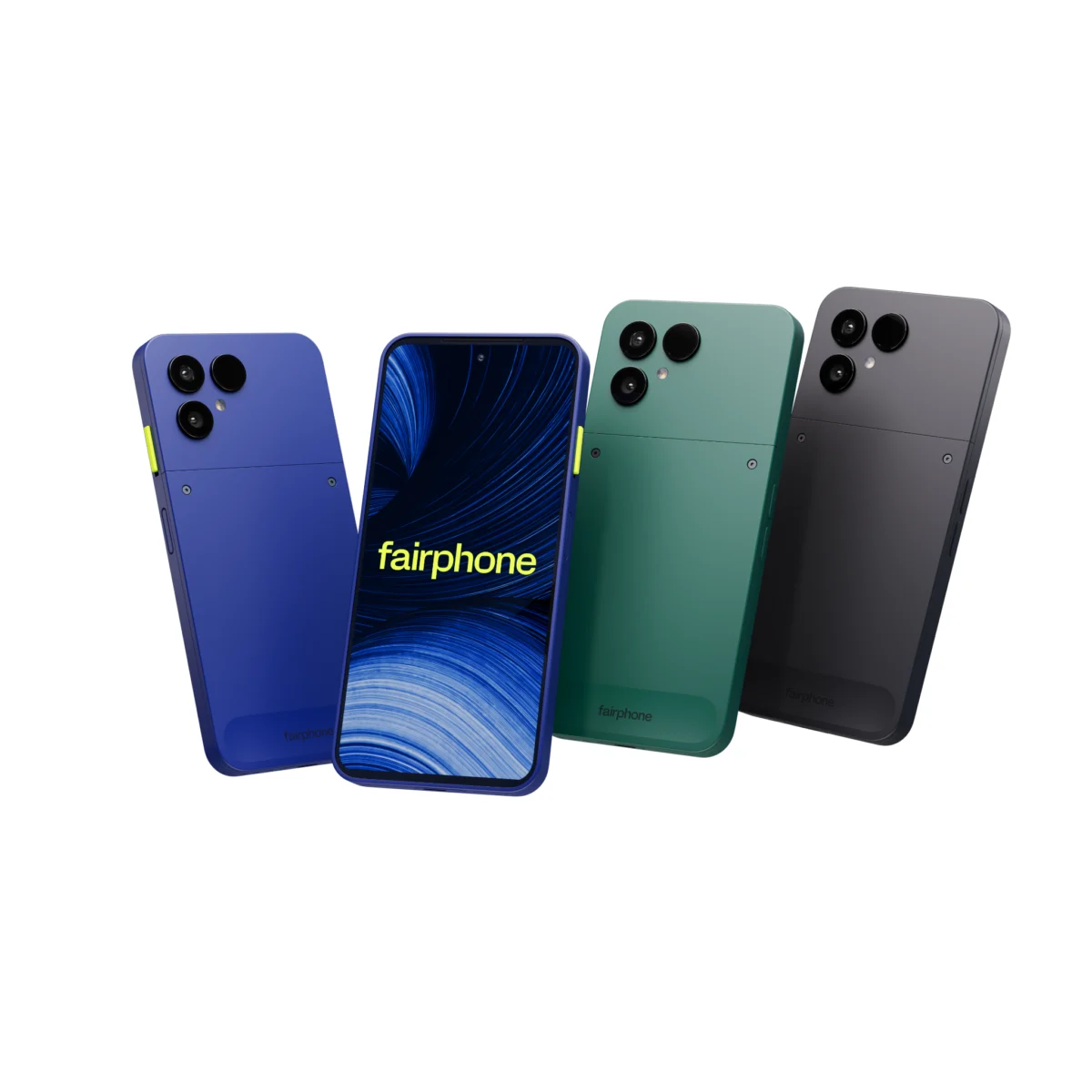
- Aesthetics: The phone is available in three distinct colorways: Forest Green, Horizon Black, and Cobalt Blue.
The $649 Proposition
At $649, the Fairphone 6+ enters one of the most competitive segments of the market. It sits directly between the "budget flagships" like the Google Pixel "a" series and the entry-level models of the iPhone and Samsung Galaxy S-line. However, Fairphone argues that the total cost of ownership is lower over time, as users can repair individual components rather than replacing the entire handset.
II. Chronology: The Long Road to America
The arrival of the Fairphone 6+ in the United States is the culmination of over a decade of evolution for the Amsterdam-based company.
- 2013 – The Genesis: Fairphone began as a campaign to raise awareness about conflict minerals in electronics. The Fairphone 1 was launched as a proof-of-concept, proving that a more ethical supply chain was possible.
- 2015-2019 – Refinement in Europe: With the Fairphone 2 and 3, the company perfected its modular design, becoming the first smartphone manufacturer to receive a 10/10 repairability score from iFixit. These devices were largely restricted to the European market due to differing cellular bands and regulatory hurdles.
- 2023 – The Murena Partnership: Seeking to test the waters in the U.S., Fairphone partnered with Murena to sell a version of the Fairphone 4 and 5. However, these were "de-Googled" devices running e/OS, an open-source operating system aimed at privacy enthusiasts. While successful among a niche crowd, it lacked the mainstream appeal of a standard Android device.
- 2024 – Direct Entry: The launch of the Fairphone 6+ marks the first time the company is selling directly to U.S. consumers with a standard Android experience and full Google Mobile Services (GMS) integration, making it a viable daily driver for the average American user.
III. Supporting Data: The Sustainability Metrics
Fairphone’s mission is rooted in data-driven sustainability. The company tracks the environmental impact of its devices with a level of transparency rarely seen in the tech sector.
Carbon Footprint and Materials
The manufacturing of a typical smartphone accounts for roughly 80% of its total lifetime carbon footprint. Fairphone has aggressively targeted this stage of production. For the Fairphone 6+, the company reported a carbon footprint of just 30 kg of CO2e per device. To put this in perspective, many traditional flagships range from 60 kg to 80 kg of CO2e.
Furthermore, Fairphone integrates "fair materials" into its supply chain. This includes:
- Fairtrade Gold: Ensuring miners work in safe conditions and receive fair pay.
- Recycled Plastics and Minerals: The back cover and internal frame utilize high percentages of post-consumer recycled materials.
- Living Wage Programs: Fairphone pays bonuses to factory workers at its assembly sites to bridge the gap between minimum wage and a living wage.
The 12-Module System
The defining feature of the Fairphone 6+ is its modularity. The device contains 12 replaceable parts that can be swapped out using a standard Phillips #00 screwdriver. These modules include:
- The Display
- The Battery
- The USB-C Charging Port
- The Rear Camera Module
- The Selfie Camera
- The Top Speaker and Vibration Motor
By making the most common points of failure—the screen and the battery—easily replaceable, Fairphone significantly extends the usable life of the hardware.

IV. Official Responses: A Vision for Longevity
The leadership at Fairphone views the U.S. launch as a critical milestone for the "Right to Repair" movement. In a statement accompanying the launch, Fairphone CEO Raymond van Eck emphasized the company’s foundational philosophy.
"We’re delivering a device built from the ground up to be opened, repaired, and kept alive for many years," van Eck stated. "In a world where gadgets are increasingly treated as disposable, we are proving that performance and sustainability are not mutually exclusive. Our goal is to empower the user, giving them back the agency to own their technology rather than just leasing it until the next model comes out."
The company has also doubled down on its software commitments. In an industry where three years of updates is often considered "good," Fairphone is promising software support until 2033. This includes security patches and Android version updates, backed by a five-year hardware warranty. This 9-year software roadmap is currently the most ambitious in the smartphone industry, surpassing even Google and Samsung’s recent 7-year commitments.
V. Implications: Challenging the Status Quo
The entry of the Fairphone 6+ into the U.S. market carries profound implications for consumers, competitors, and the environment.
1. The Right to Repair Movement
The U.S. is currently seeing a legislative surge regarding the Right to Repair. States like California, New York, and Minnesota have passed laws requiring manufacturers to provide parts and manuals to consumers. Fairphone’s presence provides a "gold standard" for what these laws hope to achieve. If a small Dutch firm can create a competitive, modular 5G phone, it weakens the arguments from larger manufacturers who claim that repairability compromises water resistance or sleek design.
2. Consumer Psychology and the "Green Premium"
The Fairphone 6+ tests whether American consumers are willing to pay a "sustainability premium." While $649 is fair for the specs, the Snapdragon 7s Gen 4 is objectively less powerful than the chips found in the iPhone 15 or Galaxy S24, which are often available for similar prices through carrier subsidies. Fairphone is betting that a growing segment of the population values longevity and ethics over raw processing power or brand prestige.
3. The E-Waste Crisis
According to the UN, the world generates over 50 million metric tons of e-waste annually. Smartphones are a massive contributor to this, largely because they are difficult to repair. By normalizing a 10-year upgrade cycle, Fairphone presents a tangible solution to reducing the volume of devices that end up in landfills.
4. Competitive Pressure
While Fairphone is unlikely to unseat Apple or Samsung in terms of market share immediately, its presence forces a conversation about support cycles. We have already seen Google and Samsung extend their update windows to seven years in response to consumer demand for longevity. Fairphone’s 2033 promise sets a new benchmark that may force the industry leaders to further improve their long-term support.
5. Camera Performance: The Achilles’ Heel?
From a journalistic standpoint, the Fairphone 6+ does face challenges. As noted in early hands-on reviews, the lack of a telephoto lens and the reliance on mid-range sensors mean that while daylight photography is competent, low-light performance may struggle against AI-heavy competitors like the Pixel. For many U.S. buyers, camera quality is the primary driver of a purchase, and Fairphone will need to prove that its software optimization can keep pace with its hardware durability.
Conclusion
The Fairphone 6+ is a bold experiment in the American market. It is a device that asks the consumer to think differently about their relationship with technology. It rejects the "buy-break-replace" cycle in favor of a "buy-repair-keep" philosophy. Whether the U.S. market—long dominated by carrier-subsidized flagship cycles—is ready for a modular revolution remains to be seen. However, by providing the hardware, the parts, and a decade of software support, Fairphone has removed every excuse for the industry’s current wasteful trajectory. The screwdriver, it seems, is now in the consumer’s hand.