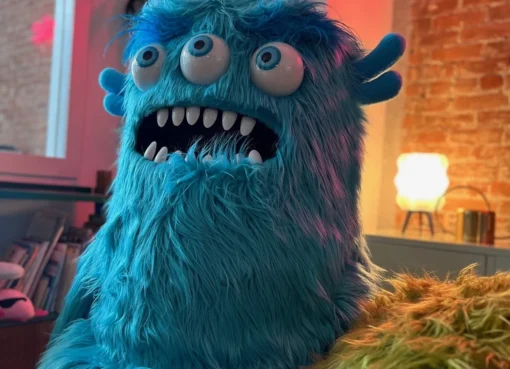
The Tactile Uncanny: How SoHo’s Furry Puppet Studio Redefines Surrealism through Foam and Fiber
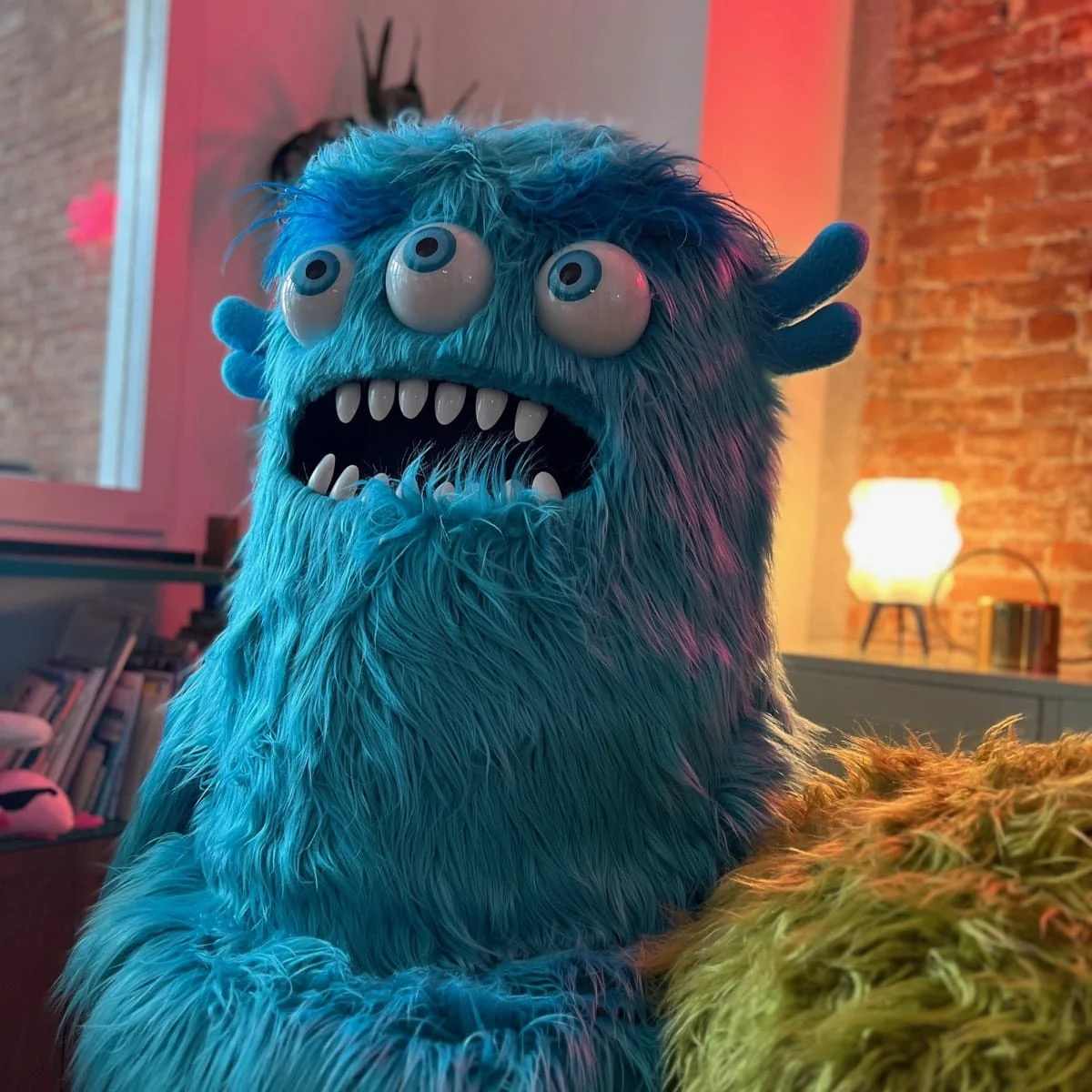
In the heart of Manhattan’s SoHo district, a nondescript design house is quietly bridging the gap between the avant-garde movements of the early 20th century and the high-definition demands of modern media. Furry Puppet Studio, a workshop dedicated to the hand-fabrication of custom creatures, has emerged as a primary practitioner of "tactile surrealism"—an art form that demands the viewer accept the impossible as physically present.
While the broader public often relegates puppetry to the realm of children’s entertainment, the work coming out of SoHo suggests a deeper, more unsettling lineage. By blending the psychological theories of Sigmund Freud with the aesthetic disruptions of André Breton, Furry Puppet Studio and its contemporaries are proving that the most effective way to explore the subconscious is not through a screen, but through objects that can be touched, held, and—most importantly—looked at.
Main Facts: The Architecture of the Impossible
Furry Puppet Studio describes its output as "pretty unusual work," a deliberate understatement for a catalog that features some of the most recognizable and surreal icons of the last decade. Founded by Zack Buchman, the studio operates on a philosophy of "impossible" design. Their work is characterized by a refusal to rely on digital shortcuts, favoring instead the visceral weight of physical materials.

The Surrealist Catalog
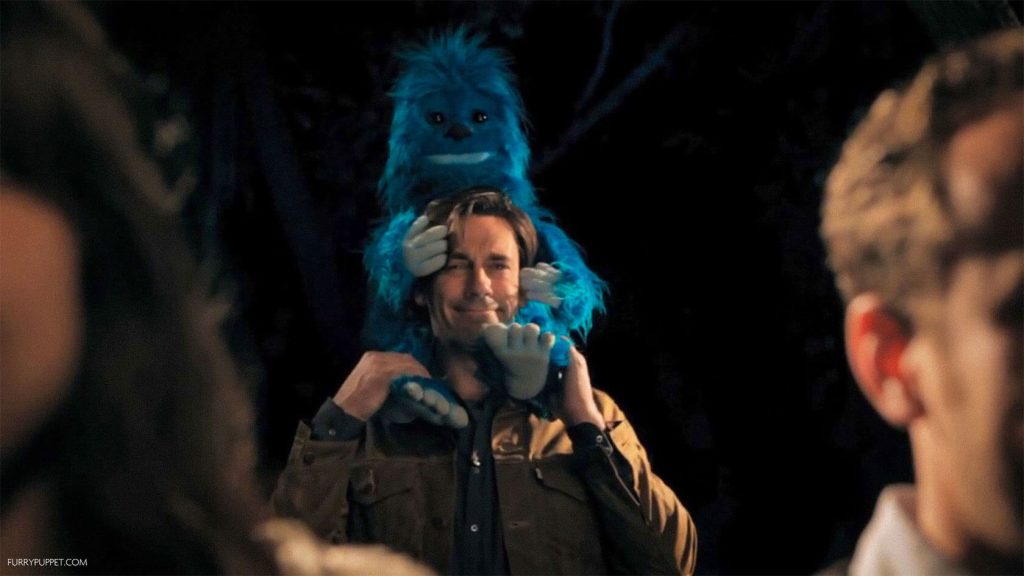
The studio’s portfolio serves as a modern manifesto for surrealist imagery. One of their most evocative pieces is a blue, lovelorn yeti created for a Herman Düne music video. In a scene featuring actor Jon Hamm, the creature stands on a darkened roadside, hitchhiking with a quiet, heavy stillness. This image encapsulates the "marvelous" as defined by André Breton: the insertion of a fantastic element into an ordinary environment, treated with total nonchalance by those within the frame.
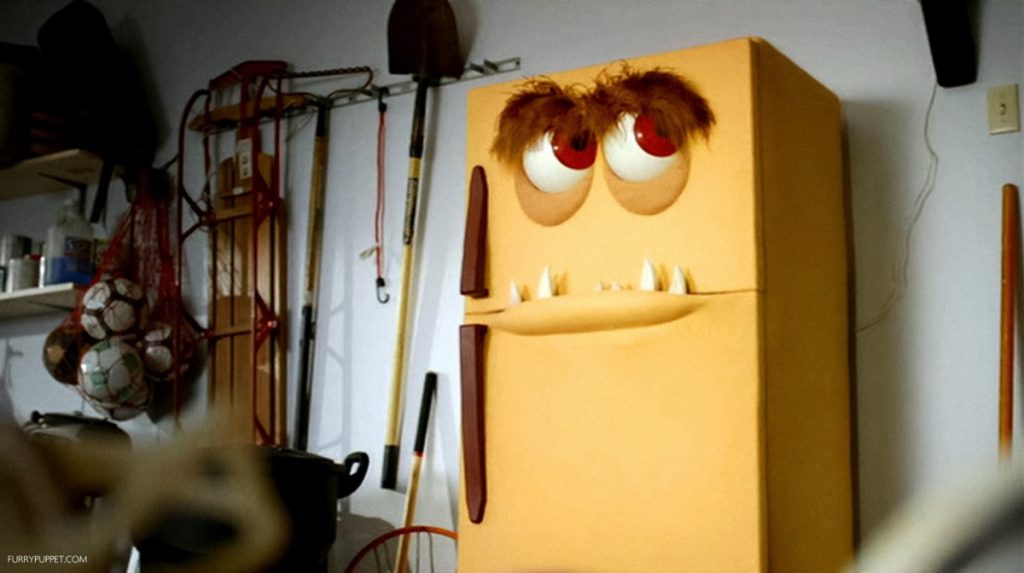
Beyond the biological, the studio excels in the "animated everyday object," a trope perfected by René Magritte and Meret Oppenheim. Their fabrication of a garage refrigerator—complete with heavy eyelids, bushy brows, and a row of fanged teeth along the door seam—transforms a domestic appliance into a sentient, watchful entity. This is not merely a prop; it is an exploration of the secret life of objects.
The Uncanny Double
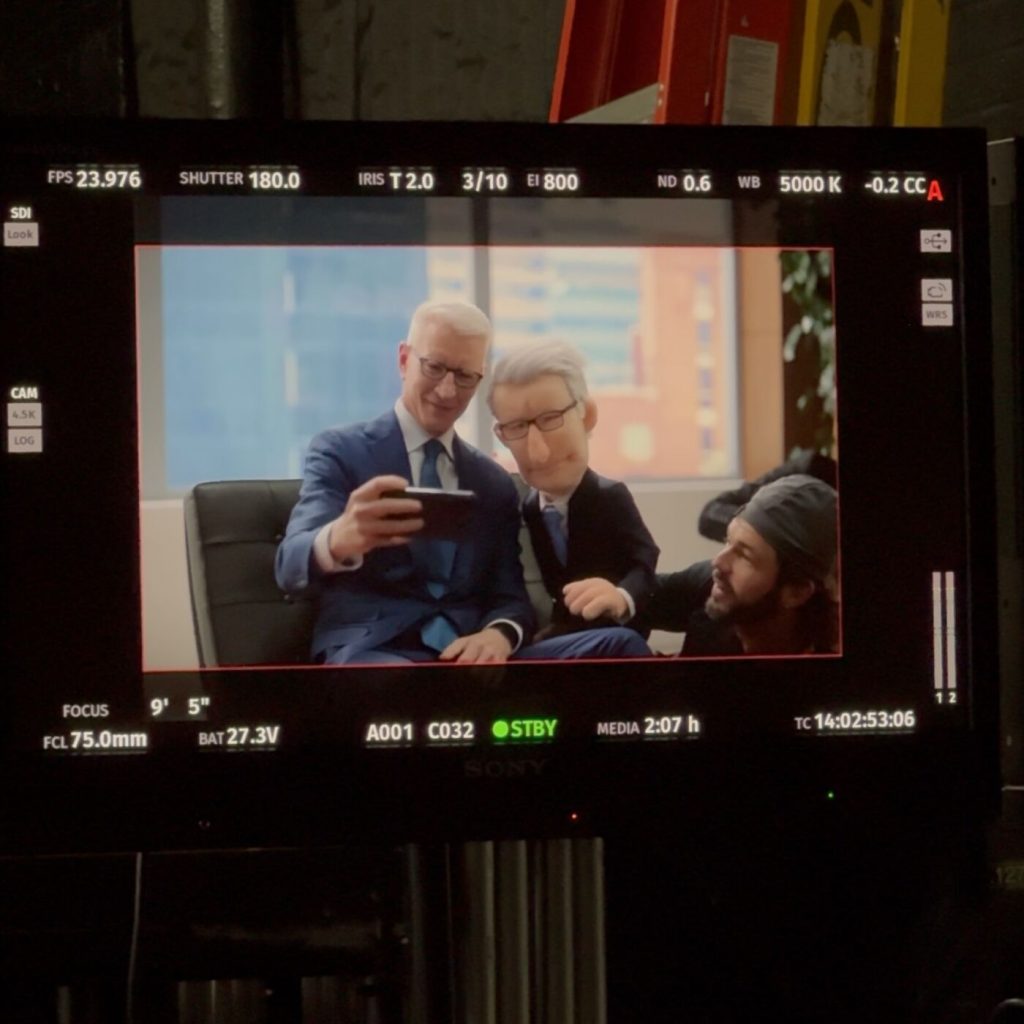
Perhaps their most high-profile work involves the creation of "doppelgängers." For CNN’s New Year’s Eve broadcasts, the studio produced foam versions of hosts Anderson Cooper and Andy Cohen. The resulting images of the men posing with their puppet twins evoke Freud’s "uncanny"—the psychological discomfort caused by something that is simultaneously familiar and alien. This motif was extended to a major Apple campaign in Japan, where puppets modeled after real humans were seated on public benches next to their inspirations, forcing a confrontation between the original and the manufactured copy.
Chronology: A Lineage of the Avant-Garde
The path to SoHo’s modern puppet renaissance is rooted in a history of experimental film and street-level disruption. To understand Furry Puppet Studio, one must look back at the figures who first treated the puppet as an instrument of the avant-garde.
1965: Jim Henson’s Experimental Roots
Before he became a household name through Sesame Street, Jim Henson was an experimental filmmaker. In 1965, he produced Time Piece, a nine-minute short film devoid of puppets and dialogue. Nominated for an Academy Award and screened at the Museum of Modern Art, the film uses associative logic—a man in a hospital bed, a cowboy shooting the Mona Lisa, and a gorilla on a pogo stick—to explore the relentless passage of time. This era established the puppet maker as a serious artist concerned with the surreal.
1982-1986: The Darkening and the Streets
In 1982, Henson pushed the boundaries of the medium with The Dark Crystal, a film so tonally dark and visually strange that he reportedly had to buy the film back from the studio to prevent them from "sanding the weirdness off."
Four years later, in 1986, Erminio Pinque founded Big Nazo in Providence, Rhode Island. A RISD-trained illustrator, Pinque sought to create a "puppet show without a stage." Big Nazo introduced large-scale, wearable foam creatures to street parades and festivals, utilizing "automatism"—the surrealist practice of embracing accidents and chance encounters—to turn public spaces into living dreams.
The Modern Era: The Rise of Furry Puppet
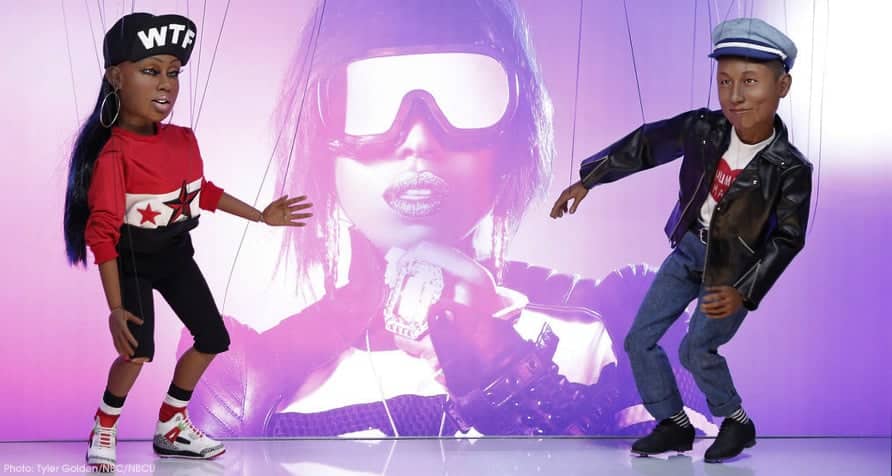
Zack Buchman founded Furry Puppet Studio with an outsider’s perspective, having bypassed traditional collegiate training. By establishing the studio in SoHo, he placed the craft of puppetry back into the context of high art and fashion. Over the last decade, the studio has expanded the medium’s reach, collaborating with artists like Missy Elliott and Pharrell Williams (the "WTF" marionettes) and creating viral cultural moments like Matt Damon’s green mascot suit on Jimmy Kimmel Live!.
Supporting Data: The Mechanics of "Dream Fleece"
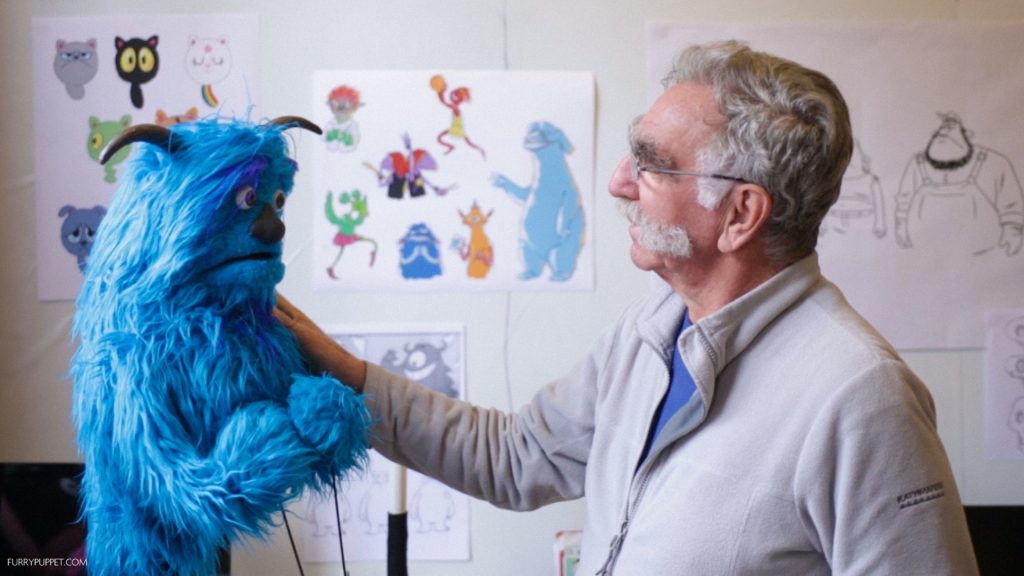
The effectiveness of these puppets relies on a rigorous technical process that balances engineering with fine art. Every creature begins as a solid block of foam. Unlike digital modeling, this process has "no undo." A single errant cut can ruin weeks of work, a high-stakes environment that Buchman says demands absolute confidence and a "real-life Edward Scissorhands" at the carving bench.
Technical Specifications:
- Materials: The studio utilizes a proprietary fabric known as "dream fleece," manufactured in-house to ensure a texture that absorbs light and mimics the warmth of biological skin.
- The Team: The staff includes mechanical engineers, expert foam carvers, and legendary costume designer Polly Smith—the co-inventor of the sports bra—bringing a unique blend of structural integrity and aesthetic finesse to each build.
- The Hinge Point: The placement of the eyes is the final and most critical step. Buchman notes that a fractional shift in an eyeball’s position can change a character’s entire psychological profile, moving it from "approachable" to "menacing" in a matter of millimeters.
Official Responses: The Philosophy of the Makers
The creators behind these objects view their work not as "toy making," but as a sophisticated manipulation of human perception.
Zack Buchman has articulated the studio’s goal as the moment when "disbelief clicks off." He explains, "Everything before [the eyes go on] is fabrication. That single adjustment is where the thing starts looking back at you." For Buchman, the success of a puppet is measured by the brain’s willingness to stop hunting for the control rods and start accepting the entity as a living being.
Erminio Pinque of Big Nazo echoes this sentiment, emphasizing the power of the "wonderful failure." He argues that the accidents inherent in physical performance provide the "good juxtapositions" that defined the original surrealist movement. By moving the art into the street, Pinque believes the uncanny becomes a tool for social disruption.
Implications: The Future of the Tactile in a Digital World
The continued relevance of Furry Puppet Studio and the Henson lineage carries significant implications for the future of visual media and psychological art.
1. The Death of the Uncanny Valley
As CGI continues to struggle with the "uncanny valley"—the point where digital humans become repulsive because they are almost but not quite real—physical puppetry offers a solution. Because a puppet has actual mass, physical weight, and reacts to real-world lighting, the human eye is more forgiving of its "impossible" features. The implication is that as we move further into a digital-first world, the value of the "tangible weird" will only increase.
2. The Commercialization of the Surreal
Furry Puppet Studio has successfully Trojan-horsed surrealism into the mainstream. By producing puppets for Apple, CNN, and global music stars, they have ensured that surrealist motifs—the doppelgänger, the animated object, the misplaced monster—are seen by millions who may never step foot in a gallery. This suggests that surrealism is not a dead movement, but one that has simply changed its delivery vehicle from oil on canvas to foam and fleece.
3. The Psychology of Weight
The "weight" of a puppet—both literal and metaphorical—creates a level of belief that pixels cannot replicate. The knowledge that a person in SoHo carved a yeti out of a solid block with a blade adds a layer of "human-made" authenticity to the image. In an era of AI-generated content, the "made-by-hand" nature of these creatures becomes a radical act of artistic preservation.
Ultimately, Furry Puppet Studio stands as a testament to the enduring power of the object. Whether it is a refrigerator with teeth or a foam version of a news anchor, these creations remind us that the most profound way to explore the human psyche is to build its dreams—and its nightmares—out of something we can touch.