Power on the Go: Unveiling the Top Portable CAD Laptops for Demanding On-Site Work

In the dynamic world of architecture, engineering, and design, the ability to seamlessly transition from the office to the construction site or client meeting is paramount. This necessitates a portable computing solution that doesn’t compromise on the raw power required to run complex Computer-Aided Design (CAD) software. However, the quest for the ideal portable CAD laptop often involves a delicate balancing act: the need for robust processing capabilities and expansive displays versus the imperative of maintaining a lightweight and manageable form factor.
This guide delves into the best portable CAD laptops available, meticulously selected through rigorous testing and real-world CAD workflow simulations. We aim to equip professionals with the knowledge to make an informed decision, navigating the often conflicting demands of high-performance computing and on-the-go usability. While this article focuses on portable solutions, readers may also find value in our comprehensive guides to the best laptops for CAD and the best laptops for 3D modelling.
The Evolving Landscape of Portable CAD Power
Traditionally, high-performance computing for CAD was confined to bulky desktop workstations. The advent of increasingly powerful mobile processors and graphics cards, coupled with advancements in cooling technology, has dramatically shifted this paradigm. Today’s professional can realistically expect to wield a significant portion of their office’s computational might in a device that can be carried in a briefcase.
The key challenge lies in dissipating the heat generated by these powerful components. Overheating can lead to thermal throttling, significantly reducing performance and impacting productivity. Therefore, a successful portable CAD laptop must not only house potent hardware but also incorporate an effective thermal management system. This often translates to larger chassis sizes to accommodate more substantial cooling solutions.
The prevailing trend for professionals seeking a harmonious blend of power and portability gravitates towards 16-inch laptops. This screen size offers a generous workspace for intricate toolbars and detailed designs, while manufacturers are increasingly optimizing these models for slimness and reduced weight, making them more amenable to frequent transport.
How We Test: Rigorous Evaluation for Real-World Demands
At Creative Bloq, our commitment to providing trustworthy recommendations is underpinned by a comprehensive testing methodology. Our expert reviewers dedicate considerable time to hands-on evaluation of products and services, ensuring that our advice is grounded in practical experience. For CAD laptops, this involves a multi-faceted approach:
- Component Synergy: We meticulously assess the balance between the CPU, GPU, and RAM. A powerful processor paired with insufficient memory, for instance, can create a bottleneck, hindering overall performance.
- Performance Benchmarking: We employ industry-standard benchmarks to verify that each component is delivering its full potential. Laptops, unlike desktops, are more susceptible to thermal and power limitations, meaning the same chip can exhibit varying performance levels across different systems.
- Storage Assessment: Manufacturers often omit specific details about SSD performance. We therefore conduct tests to gauge storage speeds, as this directly impacts loading times for large CAD files and projects.
- Display Quality: For CAD work, a high-quality display is non-negotiable. We look for a minimum of 95% DCI-P3 color coverage, which ensures accurate color reproduction crucial for design visualization. High pixel density is also essential for rendering sharp text and intricate design details.
- Build Quality and Usability: Beyond raw power, we evaluate the tactile experience. This includes the sturdiness of the chassis, the responsiveness of the keyboard and trackpad, and the overall user-friendliness of the device.
The Top Contenders: Powerhouses for On-Site Design
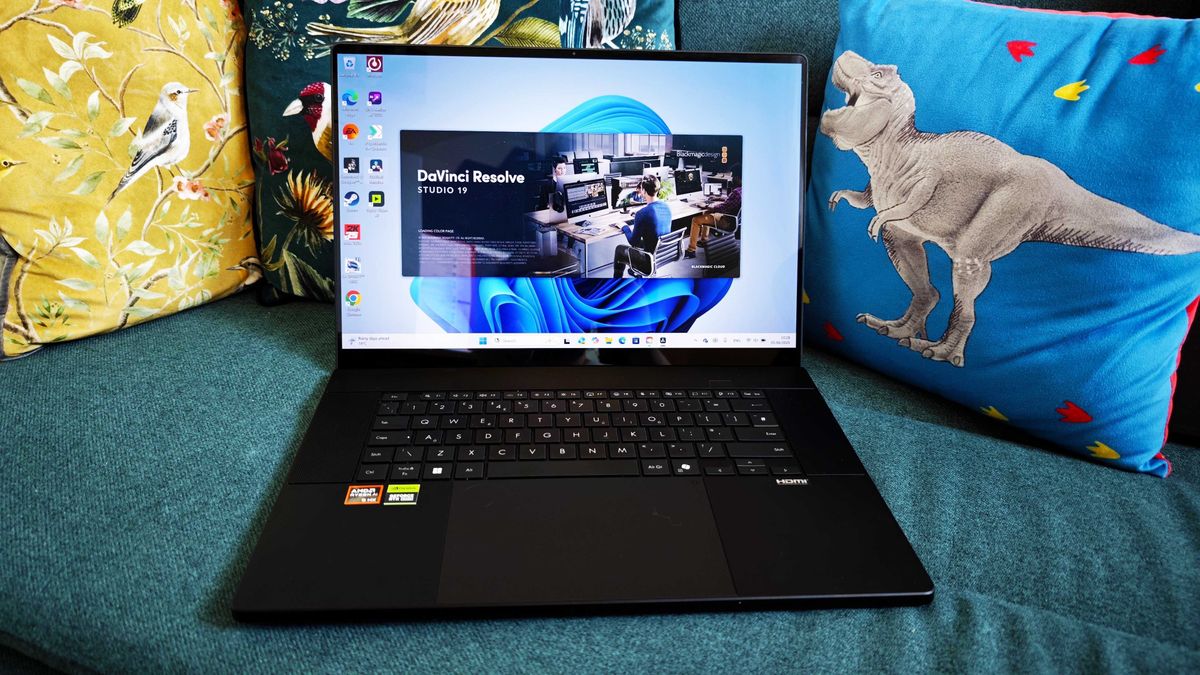
Best Portable CAD Laptop Overall: ASUS ProArt P16
30-Second Review: The ASUS ProArt P16 emerges as the undisputed leader for professionals demanding a portable CAD solution that excels in both power and design. Its expansive 16-inch display and formidable performance are packed into a remarkably sleek and slim chassis. In our real-world testing, it proved to be an exceptional Windows laptop for any creative endeavor, provided your budget can accommodate its premium positioning.

Design: Beyond its svelte profile, the integrated ASUS Dial on the touchpad is a standout feature for CAD workflows. This innovative control offers a precise and intuitive way to navigate complex designs, especially when a mouse is impractical or unavailable on-site. Its customizable functions further enhance its utility for specialized CAD tasks.
Performance: Powered by the cutting-edge AMD Ryzen AI 9 HX 370 processor with an integrated AMD XDNA NPU for AI acceleration, and the formidable NVIDIA GeForce RTX 5070 Laptop GPU, the P16 delivers exceptional graphical processing power. This combination significantly streamlines demanding CAD and AutoCAD tasks. Our testing confirmed that the laptop’s cooling system handles heavy workloads commendably. While some fan noise and heat are unavoidable under extreme duress, performance degradation was minimal, ensuring a consistent workflow.
The ASUS ProArt P16 can be configured with up to a massive 64GB of RAM, more than sufficient to handle even the most intensive CAD projects. For storage, the 2TB PCIe 4.0 SSD provides ample space, with an additional M.2 slot offering further expansion possibilities for users with extensive data storage needs.
While high-performance components often tax battery life, the 2025 ProArt P16 achieves respectable endurance for its class. Our tests yielded approximately 6 hours of continuous video playback, a commendable figure for a Windows laptop of this caliber, though it naturally falls short of the longevity offered by ultraportables or MacBooks.
Price: The P16 commands a premium price, but when compared to the cost of a desktop setup with comparable graphics power (e.g., an RTX 5080/5090), its pricing is highly competitive for a studio-grade laptop engineered for years of professional service.
Specifications:
- CPU: AMD Ryzen AI 9 HX 370 + NPU: AMD XDNA 50 TOPS
- Graphics: NVIDIA GeForce RTX 5070 Laptop GPU
- RAM: 64GB
- Screen: 16-inch OLED, 2880 x 1800 resolution, 120Hz refresh rate, 100% P3 color gamut
- Storage: 2TB SSD
- Weight: 1.85 kg to 1.95 kg (4.08lbs to 4.30lbs)
Reasons to Buy:
- Exceptional processing and graphical power.
- Brilliant, high-resolution OLED touchscreen.
- Integrated ASUS Dial enhances CAD workflow efficiency.
Reasons to Avoid:
- Higher price point compared to some competitors.
- Proprietary power connector may limit charging options.
Expert Insight: "The ASUS ProArt P16 is a truly compelling package for ambitious creative professionals. Its robust configuration, featuring up to 64GB of RAM and a state-of-the-art 50-series graphics card, ensures fantastically smooth operation across demanding applications."
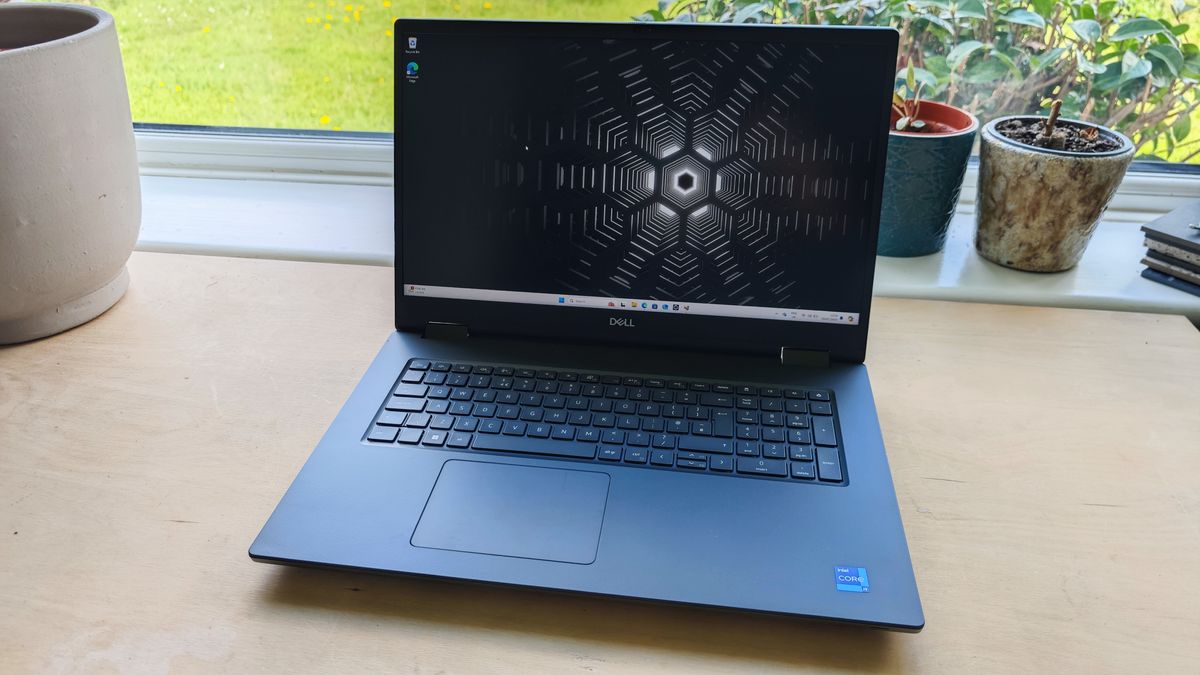
Best Robust Portable CAD Workstation: Dell Precision 7780
30-Second Review: The term "portable" takes on a new meaning with the Dell Precision 7780. While not a travel-friendly ultrabook, this 17-inch mobile workstation is engineered for the most demanding CAD tasks on-site. Its robust construction and modular design, allowing for easy component replacement, provide an unparalleled level of reassurance for professionals working in challenging environments.
Design: The Precision 7780 embodies ruggedness, with a substantial build that belies its "portable" classification. Its thick metal and alloy chassis projects an image of durability, a stark contrast to the slimmer designs of lifestyle laptops. However, this robust construction is built to withstand demanding industrial environments, and both this device and the ProArt P16 share impressive MIL-STD 810H military durability ratings.
The expansive 17.3-inch display offers ample screen real estate, crucial for detailed CAD work, and its 120Hz refresh rate makes it well-suited for motion graphics. A significant advantage of the Precision 7780 is its exceptional repairability. Its modular design allows for straightforward replacement of key components such as CAMM2/SODIMM memory, M.2 SSDs, battery packs, screen assemblies, and keyboards, ensuring longevity and ease of maintenance.
Performance: The powerhouse configuration includes a 13th Gen Intel Core i7-13850HX vPro processor, coupled with an NVIDIA RTX 3500 Ada 12GB GDDR6 GPU. This combination is more than capable of handling virtually any professional creative application. Furthermore, the flexibility for future upgrades is substantial, catering to evolving project demands.
However, the considerable weight and dimensions of the 7780 can limit its true mobility. Battery life is also a notable limitation; the 6-cell, 93 Wh, Lithium Ion Polymer battery managed only around 3 hours of creative work in our tests. This necessitates consistent access to a power outlet or carrying spare batteries and chargers for extended on-site sessions.

Price: Starting at approximately $1,800, the Precision 7780 is a significant investment. Higher configurations can substantially increase the cost. However, this is a laptop built for longevity, with easily replaceable components that mitigate long-term ownership expenses.
Specifications:
- CPU: 13th Gen Intel Core i7-13850HX
- Graphics: NVIDIA RTX 3500 Ada 12GB GDDR6
- RAM: Up to 128 GB
- Screen: 17.3-inch
- Storage: Up to 16 TB
- Weight: 3.02 to 3.05kg (6.66lb to 6.73lb)
Reasons to Buy:
- Exceptional processing and graphical power for intensive tasks.
- Durable solid metal and alloy chassis for demanding environments.
- Modular design simplifies repair and component replacement.
Reasons to Avoid:
- Extremely high cost, especially for advanced configurations.
- While technically portable, its weight is considerable for frequent on-site carrying.
Expert Insight: "The Dell Precision 7780 is a standout choice for creative professionals, including graphic designers, 3D visualizers, and CAD users. Its expansive 17.3-inch display provides ample screen real estate, making detailed work comfortable and allowing for effective side-by-side window management."
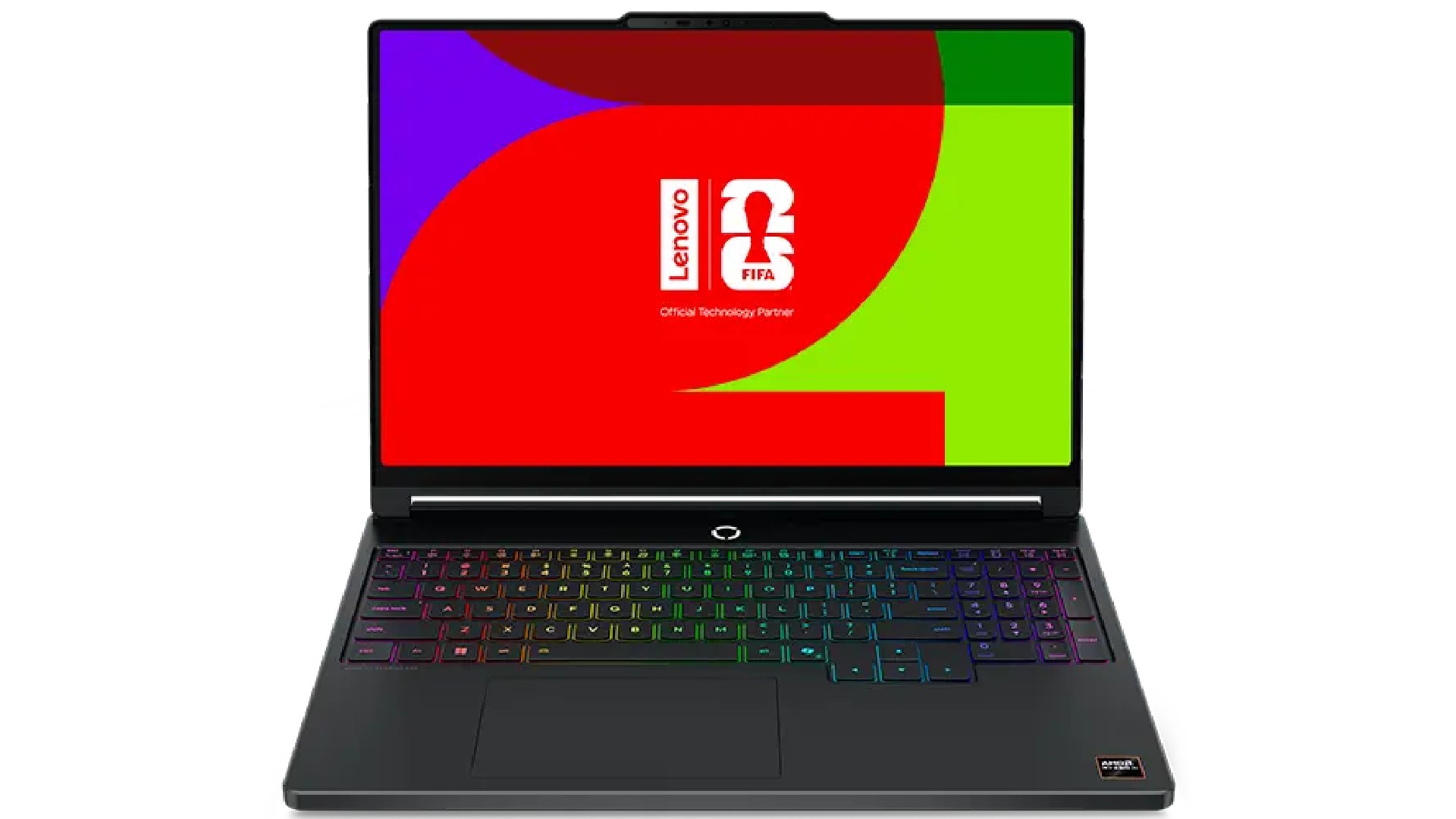
Best Portable CAD for Value: Lenovo Legion Slim 5 (Gen 11, 2026)
30-Second Review: The Lenovo Legion Slim 5 (Gen 11, 2026) offers a compelling blend of performance and affordability, delivering computational power close to that of a $2,500 workstation at a significantly lower price point. Its superior thermal management, outperforming many thin-and-light CAD laptops, minimizes the risk of throttling during prolonged rendering tasks. This makes it an intelligent choice for engineering students and budget-conscious professionals who require robust CAD capabilities without an exorbitant price tag.
Design: Living up to its "Slim" moniker, the Legion Slim 5 features a tapered chassis ranging from 19.9 mm to 25.2 mm. Its design is relatively understated for a gaming laptop; the RGB lighting can be dimmed or deactivated, ensuring a professional appearance on-site. Weighing in at approximately 2kg, it strikes a good balance between portability and power for site visits. The 16-inch QHD+ IPS display provides a sharp, color-accurate canvas ideal for technical drawings.
Performance: The AMD Ryzen 7 9800H processor delivers strong multi-core performance, essential for handling complex assemblies. The NVIDIA GeForce RTX 5060 Laptop GPU competently handles GPU-accelerated rendering in applications like Twinmotion and V-Ray, though not with the same seamlessness as higher-end GPUs. Lenovo’s thermal management system is a key advantage, effectively sustaining performance during extended rendering sessions without thermal throttling – a significant benefit for a laptop at this price point.
In our testing, the battery life ranged from 5 to 7 hours for general use, dropping to 3-4 hours under heavy CAD workloads. While access to mains power is recommended for prolonged rendering, the battery performance is adequate for typical daily use.
Price: With a starting price of $1,349, the Legion Slim 5 Gen 11 represents the most accessible entry point for RTX-powered portable CAD solutions currently available. Its price-to-performance ratio offers exceptional value for money.
Specifications:
- CPU: AMD Ryzen 7 9800H
- Graphics: NVIDIA GeForce RTX 5060 Laptop GPU
- RAM: Up to 32GB
- Screen: 16-inch QHD+ (2560×1600) 165Hz IPS
- Storage: Up to 2TB
- Weight: From 1.87 kg (4.12 lbs)
Reasons to Buy:
- Outstanding price-to-performance ratio.
- Superior thermal management reduces throttling risk.
- Near-workstation level compute power for its price.
Reasons to Avoid:
- The gaming-centric aesthetic might not appeal to all professional environments.
- The IPS display lacks the deep contrast of OLED panels.
- Base RAM configurations may require upgrading for very large assemblies.
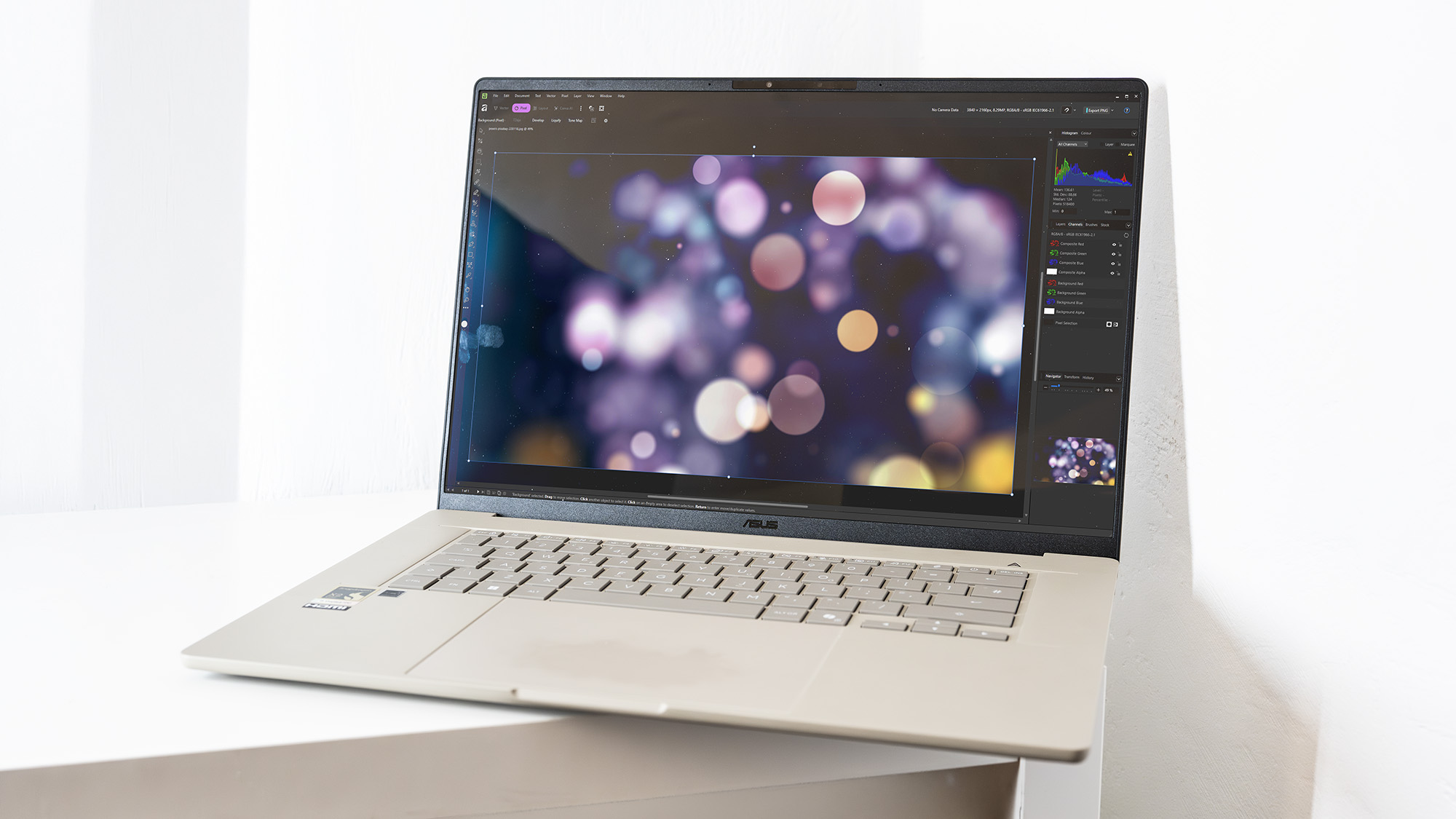
Most Portable CAD Laptop: ASUS Zenbook A16
30-Second Review: The ASUS Zenbook A16 redefines the ultra-lightweight laptop category for CAD professionals. This remarkably thin and light 16-inch machine weighs just 1.2kg, making it a strong contender against even the most svelte MacBooks. Its 18-core Qualcomm Snapdragon X2 Elite Extreme processor provides ample power for demanding CAD tasks, while its OLED display and exceptional battery life make it an ideal companion for extended on-site work.

Design: ASUS has employed "Ceraluminum," an innovative alloy of ceramic and aluminum, to construct the Zenbook A16’s frame. This material contributes to its feather-light yet rigid construction. The laptop embraces a retro aesthetic with a beige finish, a subjective design choice that evokes a sense of classic computing. Regardless of personal preference, the 16-inch 3K OLED screen is undeniably impressive, offering deep blacks, vibrant colors, and precise color accuracy. Connectivity is also robust, featuring 2x USB4 ports, 1x USB-A, HDMI 2.1, and a MicroSD card slot.
Performance: The performance of Snapdragon processors has matured significantly, and the Zenbook A16 is a testament to this. Our benchmark tests revealed single-core Geekbench scores approaching those of MacBooks, with an extraordinary 3,673. The ample RAM (48GB as standard) is well-suited for handling dense datasets. The only minor drawback is the integrated GPU, which is best suited for lighter 3D workloads rather than graphically intensive CAD tasks.
In terms of battery life, ASUS has clearly taken inspiration from Apple. We recorded an astonishing 17 hours of video playback, more than enough to power through a full day of on-site work. A high-wattage charger ensures swift recharges when needed.
Price: Priced around £2,100 / $2,000-$2,200, the Zenbook A16 is competitively positioned for a premium ultraportable. The inclusion of 48GB of RAM as standard makes it a ready-to-go solution for professionals needing to handle large vector files while on the move.
Specifications:
- CPU: Qualcomm Snapdragon X2 Elite Extreme
- Graphics: Qualcomm Adreno (integrated)
- RAM: 48GB
- Screen: 16-inch 3K (2880×1800) 120Hz OLED
- Storage: Up to 2TB SSD
- Weight: 1.20 kg (2.65lbs)
Reasons to Buy:
- Outstanding CPU performance and exceptionally long battery life.
- Remarkably thin and lightweight design.
- Large, bright, and sharp OLED display.
Reasons to Avoid:
- Middling GPU performance limits its capabilities for highly graphical 3D work.
- The beige color scheme may not appeal to everyone.
Expert Insight: "As a thin, light business laptop, the Zenbook A16 is a resounding success. It delivers performance where it truly matters and boasts a screen that can be admired for its entire exceptional battery life."
How to Choose: Navigating the Nuances of Portable CAD
Selecting the optimal portable CAD laptop for on-site work involves a careful consideration of performance, screen real estate, weight, and, of course, budget. While 2D drafting may not demand excessive power, working with 3D models, intricate assemblies, or extensive point clouds necessitates a more capable machine. Generally, the complexity and scale of your projects will dictate the required processing power.
Processor (CPU): For software like AutoCAD, which relies heavily on single-core performance, a clock speed of 3GHz or higher is recommended. Look for high-performance mobile processors such as the latest Intel Core Ultra 7/9, AMD Ryzen 7/9, or Apple Silicon mobile chips.
RAM: Ample RAM is crucial for handling large files and multitasking. 32GB is considered the professional standard for CAD workflows.
Screen Size: While a larger screen might seem to compromise portability, it significantly enhances comfort by reducing eye strain and maximizing workspace. This is particularly beneficial for navigating complex CAD interfaces and visualizing fine design details. Larger devices often incorporate dedicated number pads, which many CAD designers find indispensable for inputting dimensions and coordinates.
Durability and Cooling: For field engineers and architects working in challenging environments (dusty, rugged sites), robust builds, effective cooling systems, and enterprise-grade components are paramount.
Weight: If you’re frequently moving between job sites, weight becomes a critical factor. The ASUS Zenbook A16 exemplifies a lightweight design, while the Dell Precision 7780 offers raw power and ease of repair, albeit with a trade-off in portability.
Battery Life: Some high-performance portable CAD laptops can have limited battery life. It’s essential to consider your typical on-site workflow and whether you can consistently access power sources. Some laptops, like the Dell Precision 7780, offer swappable batteries for extended operation.
ISV Certification: Look for Independent Software Vendor (ISV) certification. This assurance indicates that specific hardware configurations have been tested and approved to run professional software, such as Autodesk or Adobe products, reliably without crashing. Always verify the software requirements before making your purchase.
Frequently Asked Questions (FAQs)
Are 14-inch laptops suitable for CAD?
While a 14-inch laptop can run CAD software if equipped with sufficiently powerful components, the smaller screen size presents challenges. Viewing detailed drawings becomes more difficult, and there is less space for software menus. Additionally, many 14-inch laptops lack a dedicated number pad, which is invaluable for quickly inputting dimensions and coordinates compared to using the top row of numeric keys.
Can AutoCAD run on Mac?
Yes, AutoCAD can run on macOS, but with certain limitations. The native AutoCAD for Mac version performs well on Apple Silicon hardware. However, it omits seven specialized toolsets (Architecture, Mechanical, Electrical, etc.) found in the Windows version, along with some 3D functionalities. For the full feature set, running the Windows version via virtualization software like Parallels is the recommended approach.
What laptop hardware is needed for AutoCAD?
AutoCAD officially recommends a CPU with a minimum clock speed of 2.5GHz (3GHz or higher is strongly advised), 8GB of RAM (though 32GB is recommended for complex projects), and a display resolution of 1920×1080. For anything beyond basic 2D drafting, an NVMe SSD and a dedicated GPU with 12GB or more of VRAM are highly advisable.