The Tactile Frontier: An In-Depth Analysis of the Woojer Vest 4 Haptic System
The trajectory of immersive technology has historically focused on the dual pillars of sight and sound. From the early days of low-resolution virtual reality (VR) to the current era of 4K per-eye displays and spatial audio, the industry has mastered the art of tricking the eyes and ears. However, the third pillar—touch—has often been relegated to the subtle rumble of handheld controllers. The Woojer Vest 4 represents a significant attempt to bridge this sensory gap, transforming auditory data into a visceral, full-body experience.
Main Facts: The Wearable Subwoofer Reimagined
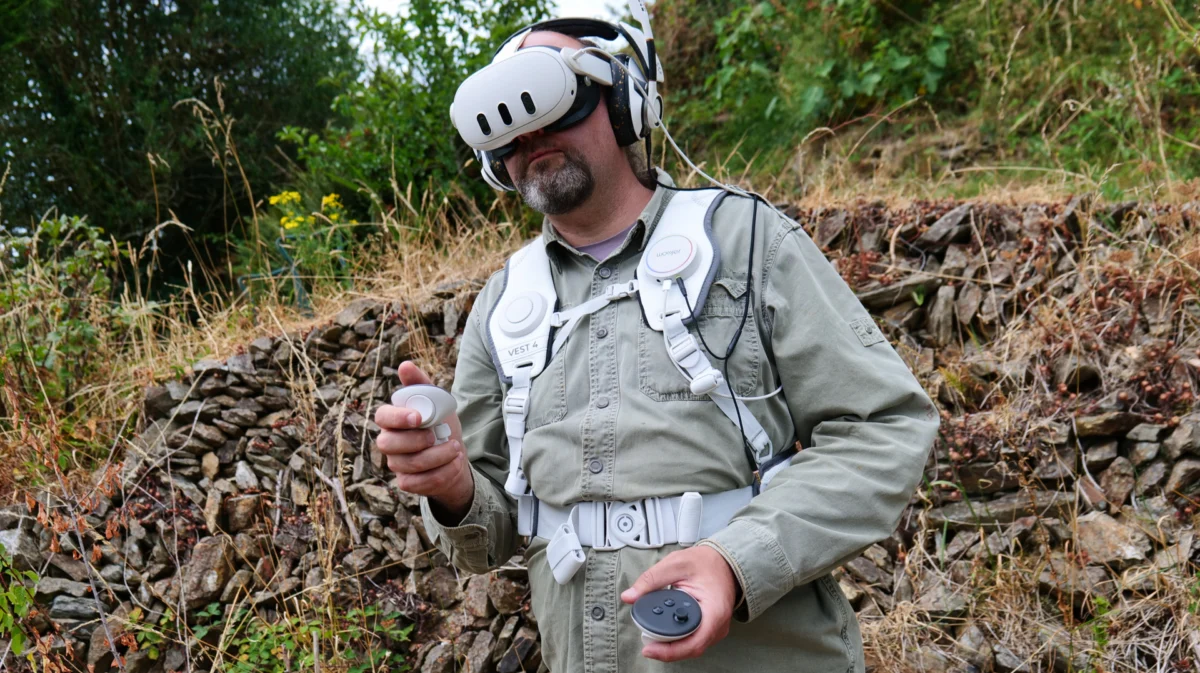
The Woojer Vest 4 is a high-fidelity haptic feedback suit designed to translate low-frequency audio signals into physical kinetic energy. Unlike traditional haptic devices that rely on small eccentric rotating mass (ERM) motors, the Vest 4 utilizes six patented OSR7 high-power transducers. These components act as localized subwoofers, positioned strategically across the torso: two on the chest, two on the back, and two on the flanks.

Technical Foundation
The system operates within a frequency response range of 1Hz to 250Hz. This specific window covers the "sub-bass" and "bass" regions of the audio spectrum—frequencies that humans often feel rather than hear. By mapping these frequencies to powerful physical impulses, the Vest 4 creates a sensation that ranges from the delicate thrum of a violin string to the bone-shaking impact of a cinematic explosion.
Universal Compatibility
A defining characteristic of the Woojer ecosystem is its "plug-and-play" nature. Unlike competitors such as bHaptics, which require developers to integrate specific haptic telemetry into their games, the Woojer Vest 4 is audio-driven. It intercepts any standard audio signal—whether from a PC, PlayStation 5, Meta Quest, or even a smartphone—and processes it in real-time. This ensures that the device is compatible with 100% of existing media, including movies and music, without the need for dedicated software patches.

Chronology: From Sub-Bass Concepts to Gen-4 Sophistication
The evolution of wearable haptics has been a decade-long journey of miniaturization and power management. The Woojer Vest 4 is the culmination of several iterative cycles, moving away from the "blunt force" approach of early haptic backpacks toward a more nuanced, multi-point distribution system.
The Evolution of the Form Factor
Early haptic solutions, such as the original Subpac, relied on a single large transducer. While effective for bass-heavy music, they lacked spatiality. Woojer’s transition to a six-transducer array marked a turning point, allowing for a "surround haptic" sensation. The Fourth Generation (Vest 4) introduces refined materials, including breathable mesh and faux leather, and a significantly slimmed-down profile compared to its predecessor, the Vest Edge.

The Setup Experience
The chronology of the user experience begins with a mandatory digital integration. Upon unboxing, users are directed to the Woojer Device Manager app. Modern haptic hardware is increasingly dependent on firmware; out-of-the-box, the Vest 4 often requires a software update to calibrate the OSR7 transducers and optimize Bluetooth 5.0 stability.
Initial calibration involves balancing three primary inputs: the source volume, the haptic intensity, and the headphone output. This "triangulation" of settings is critical. If the source volume is too low, the transducers lack the data to fire; if too high, they may "clip," resulting in a muddy physical response.

Supporting Data: Performance Metrics and Ergonomic Analysis
To understand the impact of the Woojer Vest 4, one must look at the data regarding latency, battery performance, and thermal management.
Latency and Connectivity
In the realm of high-speed gaming, latency is the enemy of immersion. The Vest 4 offers three primary connection methods:

- Wired (3.5mm/USB-C): Provides near-zero latency, essential for rhythm games like Beat Saber or competitive shooters.
- Bluetooth 5.0: Offers convenience but introduces a measurable delay of approximately 140ms. While the Woojer app allows for latency compensation during movie playback, this delay can be disorienting in fast-paced VR environments where the visual impact must align perfectly with the physical sensation.
Ergonomics and Thermal Load
Weighing in at approximately 3.3 lbs (1.5 kg), the vest is engineered for weight distribution. The adjustable shoulder and waist straps ensure the transducers maintain "skin contact" (through clothing), which is vital for energy transfer. However, data from extended play sessions reveals a "thermal cost." Because the vest acts as an additional insulating layer, core body temperature rises more quickly during active VR sessions. The inclusion of breathable mesh is a mitigation strategy, but it does not entirely eliminate the "sweat factor" inherent in wearable electronics.
Power Consumption
The onboard lithium-ion battery is rated for up to 10 hours of use. However, empirical testing shows that this figure is highly variable. In "Broad Mode" at 100% intensity—simulating a high-action war movie—battery life can drop to roughly 6-7 hours. Conversely, using "Focus Mode" for low-intensity music can extend the life beyond the 10-hour mark.

Official Responses: Market Positioning and Ecosystem Integration
Woojer has positioned the Vest 4 not merely as a gaming peripheral, but as a lifestyle "immersion hub." This is reflected in their official software suite and hardware design choices.
The Software Ecosystem
The Woojer Device Manager provides three distinct processing modes:

- Gaming Mode: Optimized for discrete, high-impact events (gunshots, footsteps).
- Broad Mode: Designed for a full-spectrum response, ideal for orchestral scores and cinema.
- Focus Mode: A narrow-band filter that emphasizes specific low-end frequencies, often used by music producers to monitor bass levels.
Official Design Philosophy
Woojer’s decision to remain audio-agnostic is a strategic response to the fragmented VR market. By not relying on SDK (Software Development Kit) integration, Woojer avoids the "content graveyard" that often plagues specialized hardware. During press briefings, the company has emphasized that the Vest 4 is intended to be "future-proof," as it will work with any console or headset released in the next decade, provided they output a standard audio signal.
Furthermore, the "White Edition" of the Vest 4 was specifically designed to mirror the aesthetic of the Meta Quest 3, signaling a silent partnership in visual language with the world’s most popular VR platform.

Implications: The Future of Sensory Entertainment
The emergence of the Woojer Vest 4 carries significant implications for the future of digital media consumption. It moves the conversation from "watching and listening" to "experiencing."
The "Friction" of Immersion
The primary hurdle for the Vest 4—and wearable haptics in general—is the "friction" of use. To achieve full immersion, a user must put on a VR headset, don the haptic vest, connect headphones, and manage a minimum of two to three cables if they opt for a low-latency wired setup. For the casual consumer, this barrier to entry may be too high. However, for the "prosumer" and enthusiast market, the trade-off is increasingly acceptable.

Accessibility and Inclusion
An overlooked implication of audio-driven haptics is its benefit to the d/Deaf and hard-of-hearing communities. By translating sound into powerful physical vibrations, the Woojer Vest 4 provides a tactile "soundtrack" that allows users with hearing impairments to perceive directional cues and emotional beats in music and film that were previously inaccessible.
Economic Considerations
At a price point ranging from $349 to $499, the Vest 4 is an investment comparable to a mid-range GPU or a standalone VR headset. This positions it as a "luxury tier" peripheral. Its success will likely depend on the continued growth of the simulation market (racing and flight sims) and the "home cinema" enthusiast crowd, where the cost of a high-end physical subwoofer often exceeds the price of the vest.

Conclusion: A Seismic Shift in Haptics
The Woojer Vest 4 is a testament to the power of audio-driven haptics. While it lacks the surgical precision of telemetry-based suits, its sheer power and universal compatibility make it a formidable tool for immersion. It turns the "phantom" sounds of digital worlds into physical realities, proving that in the quest for total immersion, sometimes you have to feel the noise to believe it. As VR and AR continue to evolve, the integration of tactile feedback will likely move from an optional luxury to a fundamental requirement of the digital experience.