The Return of the Mumblecore Architect: Joe Swanberg on ‘The Sun Never Sets’ and the New Indie Frontier
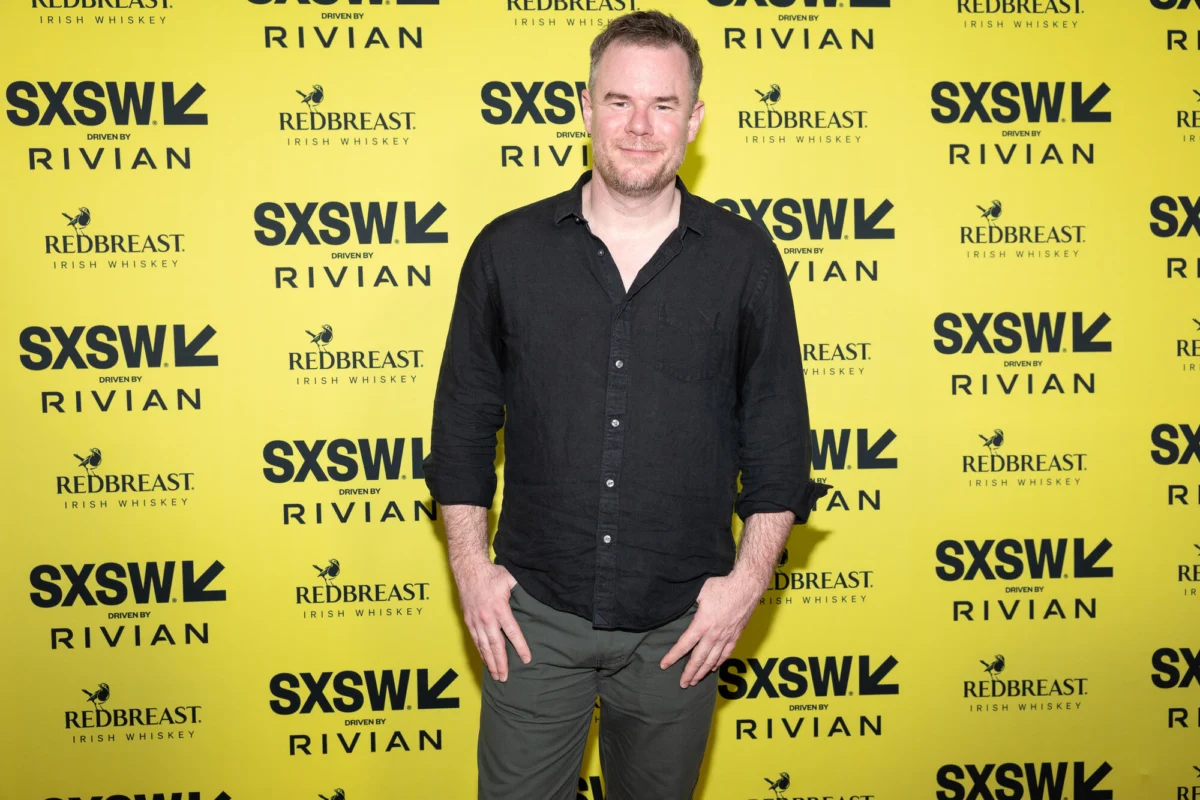
Editor’s Note: This feature is based on an interview originally conducted during the 2026 SXSW Film & TV Festival. "The Sun Never Sets" is scheduled for a limited theatrical release via The Independent Film Company on Friday, August 28, 2026, with a nationwide expansion to follow.
For over a decade, the name Joe Swanberg was synonymous with a specific kind of hyper-prolific, DIY output. Between 2005 and 2015, Swanberg didn’t just make movies; he lived them, often releasing multiple features a year that defined the "mumblecore" movement—a genre characterized by low budgets, naturalistic improvisation, and an unvarnished look at the romantic anxieties of twenty-somethings. However, following the 2017 release of the Netflix original Win It All, the director seemingly vanished from the feature film landscape.
His return at the 2026 SXSW Film & TV Festival with The Sun Never Sets marks more than just a comeback; it is a reassessment of a filmmaker who has matured alongside the industry he helped disrupt. Starring Dakota Fanning, Jake Johnson, and Cory Michael Smith, the film is a bittersweet, 35mm exploration of modern love set against the stark, eternal light of an Alaskan summer.
Main Facts: A Decade in the Making
The Sun Never Sets arrives as Swanberg’s first feature-length directorial effort in nearly ten years. While the director remained active in television and short-form media, the gap between Win It All (shot in 2015) and his latest work represents the longest hiatus of his career.
The film, which has garnered significant critical acclaim following its Austin premiere, centers on Wendy (Dakota Fanning), a young woman caught in a complex emotional triangle. She is currently in an age-gap relationship with Jack (Jake Johnson), a divorced hedge fund manager who, sensing their drift, suggests a "break" so Wendy can explore her needs. This leads her back into the orbit of Chuck (Cory Michael Smith), a "toxic" but magnetic ex-boyfriend.

Produced on location in Alaska, the film eschews the digital grit of Swanberg’s early work for the lush, textured feel of 35mm film. It is a pivot toward a more deliberate, visually composed style of storytelling while maintaining the raw emotional honesty that defined his early career.
Chronology: From Mumblecore to the "Easy" Era and Beyond
To understand Swanberg’s decade-long absence from the director’s chair, one must look at the trajectory of his career and the shifting priorities of the streaming giants that once championed him.
The Rise of a Pioneer (2005–2015)
Swanberg initially gained notoriety with Kissing on the Mouth (2005) and the Greta Gerwig breakout Hannah Takes the Stairs (2007). His work was the vanguard of a movement that included filmmakers like Andrew Bujalski and the Duplass brothers. By 2013, he had transitioned into the indie mainstream with Drinking Buddies, an ensemble comedy featuring Olivia Wilde and Anna Kendrick that proved his improvisational methods could scale with A-list talent.
The Netflix Partnership (2016–2019)
The middle of the last decade saw Swanberg find a home at Netflix. He directed the feature Win It All and created the anthology series Easy. For three seasons, Easy served as a sophisticated laboratory for Swanberg’s interests, exploring sex, technology, and culture in Chicago.
"I was pretty spoiled," Swanberg admits. "Netflix was awesome to work for. My executives loved the show and gave me total freedom. I felt like maybe a wave I’d been surfing for the last 15 years had finally peaked."

The Great Hiatus (2020–2025)
Following the conclusion of Easy in 2019, Swanberg’s output slowed. This period coincided with significant personal changes, including the end of his 20-year marriage to filmmaker Kris Rey. During these years, Swanberg focused on:
- TV Directing for Hire: Taking episodic work to maintain financial stability.
- Analog Video: Opening a subscription-based physical media store in Chicago.
- Acting: Appearing in micro-budget projects for peers.
- Producing: Supporting the work of filmmakers like Alex Ross Perry and the late Lynn Shelton through Forager Films.
Supporting Data: The Shifting Economics of Independent Film
Swanberg’s return highlights a stark reality: the independent film landscape of 2026 bears little resemblance to the one he navigated in 2013. The "middle-class" of indie film—projects budgeted between $2 million and $10 million—has largely been hollowed out.
During the late 2010s, streamers like Netflix and Amazon shifted from an acquisition-heavy model (buying finished films at festivals) to an in-house production model. This change effectively closed the door on the kind of improvised, experimental features Swanberg pioneered.
"By 2019, I went back to my group of investors and said, ‘I don’t know what’s going on out there,’" Swanberg recalls. "It was clear that streamers were going to start producing in-house rather than acquiring at festivals. I purposefully stepped out of the game at that point."
However, the tide may be turning. Industry rumblings suggest that streamers are once again looking toward acquisitions as their in-house "content" plays fail to achieve the prestige or longevity of curated indie hits. The Sun Never Sets entered SXSW as a "for sale" title, a strategic move to test the waters of this revitalized acquisition market.

Official Responses: On Set Ethics and Personal Inspiration
In a candid conversation with IndieWire, Swanberg addressed two of the most significant shifts in filmmaking culture: the rise of intimacy coordinators and the evolution of relationship structures in the post-#MeToo era.
The Intimacy Coordinator Debate
Swanberg’s early films were known for their frank, often graphic depictions of sex and nudity, usually performed by his close friends. In the years since his last feature, the role of the intimacy coordinator has become standard. Swanberg, however, remains a skeptic—a view he says is shared by many of his veteran actors.
"I asked about it on this movie, and my actors did not want that," Swanberg stated. "Some of them were specifically like, ‘I don’t want to work with an intimacy coordinator. It makes me uncomfortable.’"
Swanberg’s critique is rooted in the power dynamics of the studio system. "As long as the intimacy coordinators are being hired by the studio, my view of their role is that their job is to coerce the actors into doing things, as opposed to advocate on their behalf. If that role is to become an advocate for me [as an actor], then I should hire that person, not the studio I’m negotiating against."
Polyamory and Personal Truth
The Sun Never Sets is deeply informed by Swanberg’s life post-divorce. The film explores "polyamory" not as a trendy plot device, but as a complex emotional reality.

"I started kicking this idea around in 2019, post-divorce, as I was dating a younger person and wondering whether our relationship was satisfying, with me being so set in my ways," Swanberg explained. "I came out of the end of my relationship with Kris feeling like I never want to get married again… I was imagining a movie about a woman who was dating someone like me, but also someone younger, and feeling like her life was perfect with both guys in it."
Implications: The Future of the Adult Drama
Swanberg’s return with The Sun Never Sets signals a potential renaissance for the "adult-oriented, introspective drama." While his peers like Greta Gerwig (Barbie) and Adam Wingard (Godzilla x Kong) have moved into the realm of billion-dollar blockbusters, Swanberg has doubled down on the micro-narrative.
The "Stay in Your Lane" Philosophy
Despite being offered $25 million studio romantic comedies in the past, Swanberg famously walked away from them. "I’ve never really been money-driven," he says. "In a marketplace where getting an adult-oriented drama out is already a challenge, I know that unless I am deeply invested, that challenge becomes even harder."
The Legacy of the "Chicago School"
By maintaining his base in Chicago and focusing on his video store, Analog, Swanberg has cultivated a sustainable ecosystem that isn’t dependent on the whims of Hollywood. This localist approach to filmmaking—using local crews and Chicago-based investors—offers a blueprint for how indie directors can survive in an era of corporate consolidation.
Final Thoughts
As The Sun Never Sets prepares for its August release, it serves as a reminder that the "mumblecore" generation hasn’t disappeared—it has simply grown up. The stakes are no longer about where to get a beer or who is sleeping with whom; they are about the calcification of the soul, the complexities of non-traditional families, and the endurance of love in a world that rarely stays still.

For Joe Swanberg, the sun hasn’t set on his career; it’s merely moved into a different, more golden hour.
Film Credits:
- Director: Joe Swanberg
- Cast: Dakota Fanning, Jake Johnson, Cory Michael Smith
- Cinematography: Shot on 35mm
- Release Date: August 28, 2026 (Limited)
- Distributor: The Independent Film Company