The Kinetic Evolution of VR Fitness: FitXR Introduces Knee Strikes and Enhanced Personalization to the Meta Quest Ecosystem
In the rapidly evolving landscape of virtual reality (VR) fitness, the challenge has always been one of physical boundaries—specifically, how to engage the entire body when the hardware is primarily focused on the head and hands. FitXR, one of the premier fitness platforms on the Meta Quest storefront, has taken a significant leap toward solving this "lower-body deficit." The company recently announced and deployed a major update to its Combat and Flow studios, introducing knee strikes as a core gameplay mechanic. This update not only broadens the physical demands of the workouts but also signals a deeper strategic shift toward martial arts authenticity and user-centric personalization.
Main Facts: A New Dimension of Lower-Body Engagement
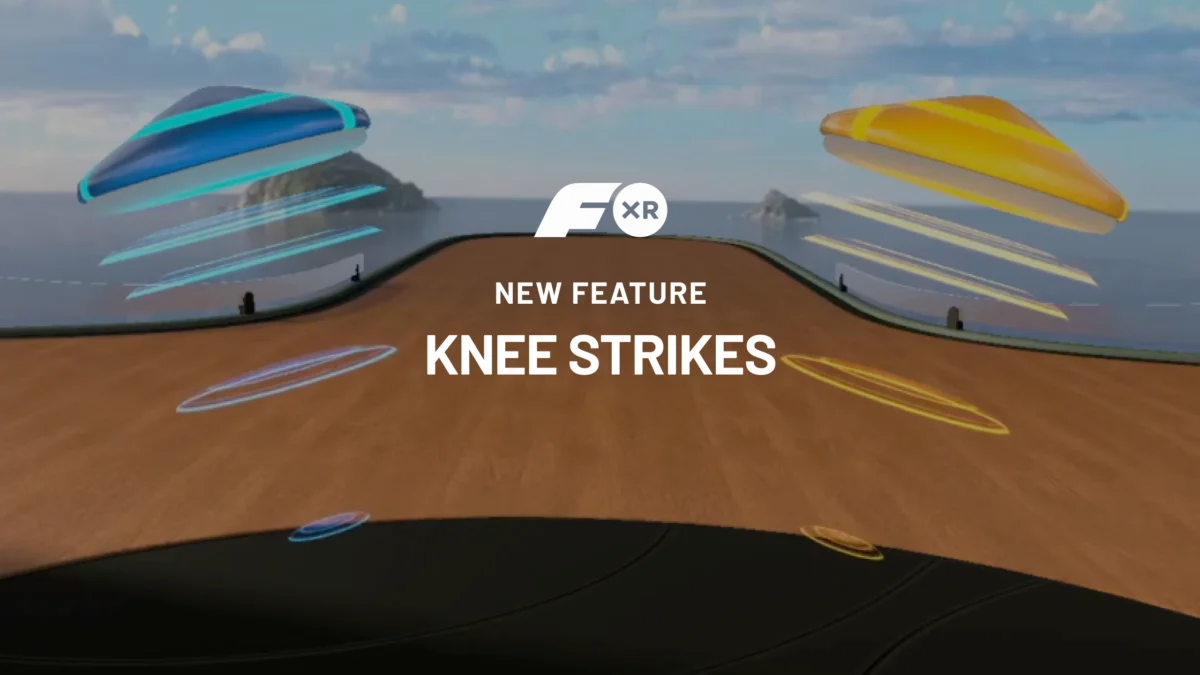
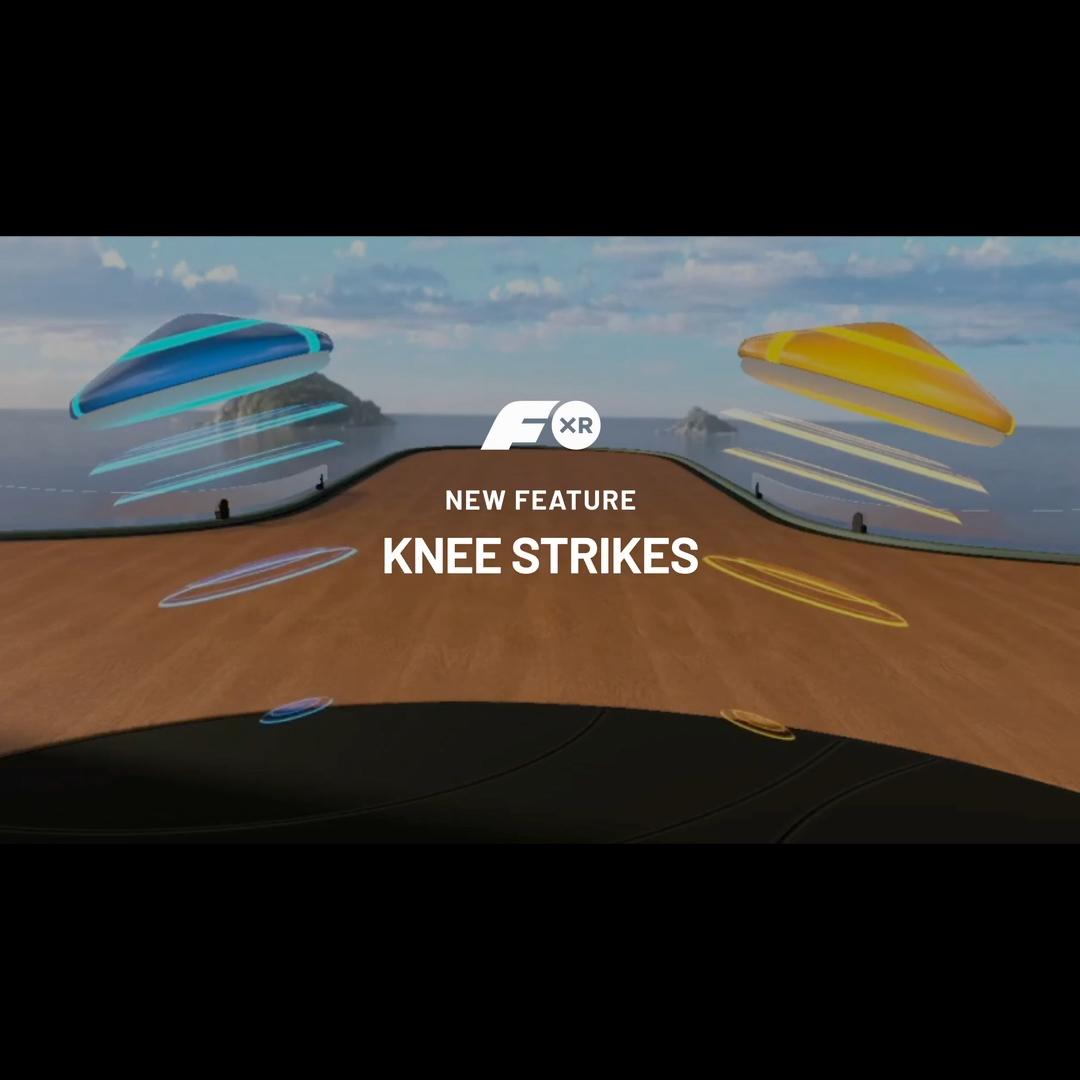
The latest update to FitXR introduces the "Knee Strike" across two of its most popular workout environments: Flow and Combat. This movement is delivered in two distinct variations, each tailored to the specific intensity and rhythm of the respective studio.
In the Flow Studio, which focuses on rhythmic, dance-like movements and active recovery, the knee strike is implemented as a standalone maneuver. It is designed to fit seamlessly into existing choreography, requiring users to shift their weight, stabilize their core, and drive a single knee upward to meet a descending target.
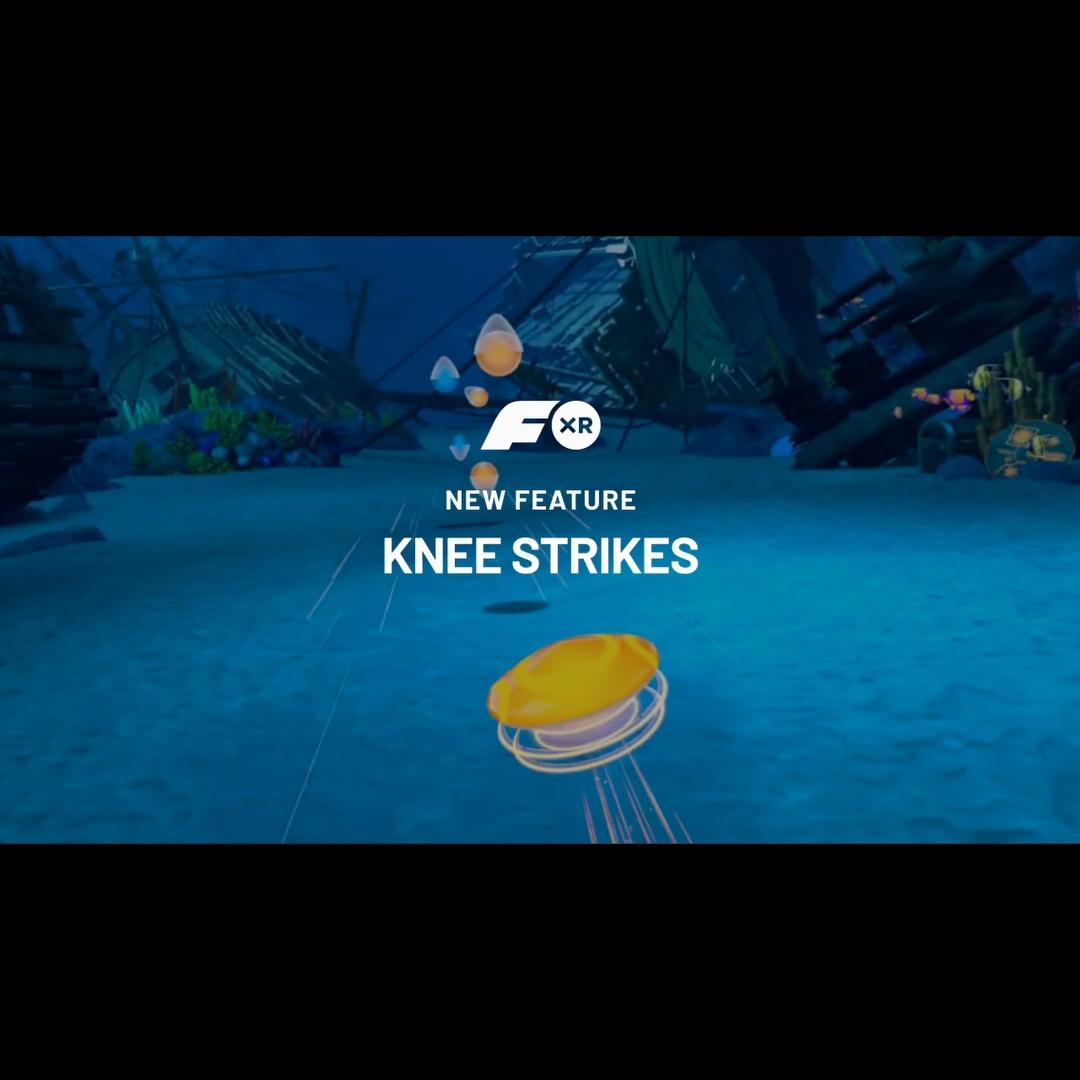
In the Combat Studio, the intensity is dialed up. While the standalone knee strike is present, FitXR has introduced a more aggressive "Grab-to-Knee" movement. This mechanic mimics a classic Muay Thai clinch; the user reaches upward with both hands to "grab" a virtual target and forcefully pulls it down while simultaneously driving their knee upward. This dual-action movement creates a full-body kinetic chain, engaging the shoulders, lats, core, and hip flexors in a single, explosive motion.
Beyond the physical mechanics, FitXR has also updated its "Journey" feature. Users now possess the ability to edit their training plans at specific checkpoints, allowing them to opt-in or out of specific studios (such as Box, HIIT, or Zumba) to better align the app’s AI-driven recommendations with their personal fitness goals.
Chronology: From BoxVR to a Multi-Studio Powerhouse
To understand the significance of the knee strike update, one must look at the trajectory of FitXR. Originally launched as BoxVR, the application was a pioneer in the rhythm-fitness space, focusing almost exclusively on boxing-inspired arm movements and basic squats.
- 2020-2021: The Rebrand and Studio Expansion. The transition from BoxVR to FitXR marked the introduction of a subscription model and a multi-studio approach. The company added HIIT (High-Intensity Interval Training) and Dance studios, recognizing that "fitness" is not a monolith.
- 2022-2023: Sculpt, Combat, and Zumba. FitXR continued to diversify, adding "Sculpt" for low-impact toning and "Combat" to differentiate martial arts from traditional boxing. However, despite the "Combat" branding, the studio remained heavily reliant on hand-based strikes due to the tracking limitations of the Meta Quest hardware.
- Late 2023: The Introduction of Journey. FitXR launched "Journey," a structured, progressive training program designed to move users away from "one-off" workouts and toward long-term habit formation.
- August 2024: The Lower-Body Breakthrough. The current update represents the first time FitXR has successfully integrated complex lower-body strikes that require sophisticated motion analysis, effectively bridging the gap between the app and its primary competitor, Les Mills XR Bodycombat.
Supporting Data: The Technical Logic of Tracking the "Untrackable"
The primary technical hurdle for any VR fitness developer is that the Meta Quest 2, 3, and Pro do not include leg trackers. The cameras on the headset can see the controllers and the user’s torso, but the knees often fall into a "blind spot," especially during high-speed movements.
The "Headset Proxy" System
FitXR’s engineering team developed a sophisticated system that uses the headset’s inertial measurement unit (IMU) and camera data as a proxy for the lower body. When a human being performs a knee strike, their center of mass shifts in a predictable pattern. There is a slight upward and backward tilt of the head, combined with a specific vertical acceleration.
FitXR does not look for a "collision" in the traditional sense (where a virtual knee hits a virtual box). Instead, it analyzes:
- Physical Displacement: The subtle shift in the headset’s position.
- Velocity and Direction: The speed at which the body’s center of mass moves.
- Temporal Correspondence: Whether this movement occurs within the exact millisecond window of the choreographed target.
The "Three-Way Handshake"
For the more complex "Grab-to-Knee" movement, the system utilizes what FitXR calls a "three-way handshake." The software tracks three distinct data points simultaneously:
- Hand Contact: Both controllers must intersect with the "grab" target at the top of the arc.
- Target Trajectory: The user must pull the controllers downward toward the waist.
- Body Impulse: The headset must detect the tell-tale "hop" or weight shift associated with a knee drive.
If all three conditions are met, the strike is registered. This system is intentionally "tolerant," meaning it prioritizes the intent and effort of the movement over surgical precision, ensuring that the flow of the workout isn’t interrupted by minor tracking jitters.
Official Responses: Strengthening Identity and Core Engagement
FitXR’s leadership and design teams have been vocal about the intent behind these additions. According to the company, the goal was twofold: to increase the physiological "burn" and to solidify the branding of their individual studios.
"The introduction of knee strikes is about more than just adding a new move; it’s about the evolution of the Combat studio’s identity," a FitXR spokesperson noted. "We wanted Combat to feel distinct from Boxing. By incorporating the Grab-to-Knee, we are tapping into the authentic mechanics of Muay Thai and MMA, which demand a higher level of core engagement and coordination than standard punching."
The company also emphasized that the Flow studio’s version of the knee strike serves a different purpose. In Flow, the movement is intended to challenge balance. By forcing the user to stand on one leg—even briefly—the app engages the stabilizer muscles in the ankles and hips, providing a functional fitness benefit that goes beyond simple cardio.
Regarding the update to the "Journey" feature, FitXR stated that "personalization is the key to retention." By allowing users to filter their checkpoints to only include the studios they enjoy, the company is moving away from a "one size fits all" approach and toward a bespoke digital personal trainer experience.
Implications: The Future of the VR Fitness Market
The integration of knee strikes by FitXR has several significant implications for the broader VR industry and the health-tech sector.
1. The "Leg Tracking" Arms Race
For years, Les Mills XR Bodycombat was considered the gold standard for "full-body" VR martial arts because of its knee-strike mechanics. FitXR’s successful implementation of a similar (and in some ways, more complex) system levels the playing field. This puts pressure on other competitors, such as Meta’s Supernatural, to find ways to engage the lower body without requiring expensive peripheral hardware like the HTC Vive trackers.
2. Validation of AI-Driven Motion Analysis
FitXR’s ability to detect a knee strike using only a headset and two controllers proves that software can overcome hardware limitations. This "inference-based tracking" is likely to become the standard for VR fitness. We can expect future updates to potentially include "elbow strikes" or "side kicks," using similar predictive algorithms to determine body position.
3. Shift Toward Long-Term Retention
The update to the "Journey" checkpoints reflects a broader trend in the app economy: the move from "gamification" to "habituation." By giving users more control over their training plans, FitXR is acknowledging that the "novelty" phase of VR fitness is over. To survive, platforms must now provide the same level of customization and structure as a high-end physical gym.
4. Physiological Impact
From a fitness perspective, the inclusion of the knee strike significantly increases the metabolic demand of the workouts. The "Grab-to-Knee" movement is essentially a standing crunch combined with a plyometric hop. This increases the heart rate more rapidly than standard boxing, making FitXR a more viable tool for serious weight loss and athletic conditioning.
Conclusion: A More Robust Virtual Gym
With the addition of knee strikes and enhanced Journey personalization, FitXR has addressed two of the most common criticisms of VR fitness: that it is "too focused on the arms" and "too repetitive."
The technical achievement of tracking lower-body movement via headset proxy is a testament to the ingenuity of the FitXR development team. More importantly, the "Grab-to-Knee" mechanic provides a visceral, satisfying feedback loop that makes the workout feel less like a game and more like a training session. As VR hardware continues to shrink and become more accessible, it is software updates like these that will ultimately determine if the "virtual gym" becomes a permanent fixture in the global fitness industry. For now, FitXR has firmly planted its foot—and its knee—in the future of the medium.