The Lingering Spectre of "Indian Burial Grounds": Unearthing a Problematic Pop Culture Trope
In North American popular culture, the phrase "built on an Indian burial ground" has become synonymous with haunted houses and supernatural malevolence. From chilling horror films to cynical comedic memes, this trope has deeply embedded itself in the collective consciousness, often serving as a facile explanation for inexplicable terror. Yet, beneath its pervasive appeal lies a troubling history of cultural appropriation, historical distortion, and the perpetuation of harmful stereotypes against Indigenous peoples. This article delves into the origins and evolution of this pervasive narrative, examining its problematic implications and advocating for a more respectful understanding of Indigenous histories and spiritual beliefs.
The Genesis of a Ghastly Trope: From Horror to Humour
The "Indigenous burial ground" trope, while seemingly ancient, is largely a modern construct, a product of specific cultural anxieties and media narratives. Its trajectory from a spine-chilling horror device to a comedic cliché and internet meme reveals much about settler society’s relationship with Indigenous histories.
Amityville’s Fabricated Foundations: A Bestseller’s Dark Claim
One of the most significant accelerants for the trope’s widespread adoption was Jay Anson’s 1977 bestseller, The Amityville Horror: A True Story. While not the absolute origin, its immense popularity cemented the narrative in the public imagination. Anson’s chilling account claimed the infamous Amityville house was situated on a Shinnecock "enclosure for the sick, mad, and dying," where individuals were left to perish from exposure, their bodies unburied due to the land being "infested with demons." These sensational claims, however, were entirely unfounded.
Later that same year, celebrity TV ghost hunter Hans Holzer, accompanied by medium Ethan Johnson Meyers, further amplified the narrative. Holzer dramatically alleged that an Indigenous chief’s ghost had contacted Meyers, claiming responsibility for possessing Ronald Defeo Jr. and orchestrating the brutal murders of his family. This astonishing twist shifted blame from the actual perpetrator to a spectral Indigenous entity, effectively demonizing a fabricated Indigenous presence. The 1979 Amityville Horror movie adaptation uncritically embraced Holzer’s claims, solidifying this distorted narrative for millions of viewers.
Crucially, numerous statements from the Shinnecock Nation have unequivocally debunked these assertions. The Shinnecock never inhabited the Amityville area, nor was it part of their traditional territory. There is no archaeological evidence or oral history to support the existence of any burial ground or "enclosure for the sick" at the site. Holzer and Meyers had skillfully leveraged a lesser-known but existing vein of "Indigenous burial ground" folklore to lend an air of legitimacy to their ghost-hunting endeavors, building upon Anson’s original, tainted narrative.
Disney’s Mass Market Haunting: A Theme Park’s Broad Reach
Around the same time, Disney theme parks unwittingly became a major vector for the trope’s dissemination. The Big Thunder Mountain Railroad rides, launched in California in 1979 and Florida in 1980, are said to depict a runaway train journeying through a haunted mine and ghost town built upon Indigenous burial grounds. While the precise evolution of the ride’s backstory is elusive, its narrative, as recounted by Disney bloggers and employees, explicitly incorporates the trope. A 2020 Disney blogger even reported an employee claiming Indigenous spirits could be heard chanting within the ride – though the blogger herself only discerned drums. Regardless of the audible elements, hundreds of thousands, if not millions, of park visitors were exposed to this problematic narrative, normalizing the concept of vengeful Indigenous spirits tied to desecrated land.
Stephen King and the Horror Canon: Entrenching the Trope
The trope found its most enduring and impactful literary champion in Stephen King. In his 1983 novel Pet Sematary, King explicitly utilized an Indigenous burial ground as a central plot device, further appropriating a version of the Algonquian wendigo story. The book’s immense success, followed quickly by its film adaptation, cemented the trope within the modern horror genre. Renee L. Berland, in The National Uncanny: Indian Ghosts and American Subjects, notes that while early American writers had a pre-existing fascination with Indigenous ghosts, King’s Pet Sematary became one of the most popular novels to ever explore this theme, granting it unprecedented mainstream visibility.
The trope had also made earlier, albeit more subtle, appearances in adaptations of King’s work, such as Stanley Kubrick’s 1980 film version of The Shining. It was also notably referenced, and then dismissed as the cause of the haunting, in the 1982 film Poltergeist, indicating its growing recognition and almost obligatory inclusion in supernatural narratives.
Pop Culture’s Pervasive Echoes: From Fear to Farce
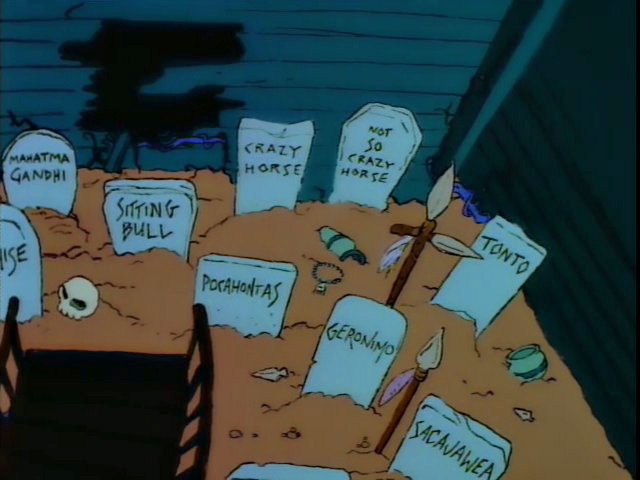
From these foundational works, the "Indigenous burial ground" trope metastasized across popular culture. It has appeared in television series like Buffy the Vampire Slayer and The Real Ghostbusters cartoon, as well as in numerous other books and games. Its ubiquity eventually led to its transformation from a purely terrifying concept to a comedic cliché. Beloved comedy series such as The Simpsons, Friends, South Park, Family Guy, and Parks and Recreation have all satirized the trope, poking fun at its predictability and often absurd application. Seth Grahame-Smith’s satirical guide, How to Survive a Horror Movie, humorously suggests that one way to confirm a house is haunted is by asking, "Are Native Americans constantly showing up to ask, ‘What happened to our cemetery?’" This comedic turn, while highlighting the trope’s over-saturation, also underscores its deep entrenchment in the cultural lexicon.
The Modern Haunting: From Reality TV to Internet Memes
The trope continues to thrive, adapting to new media formats and reflecting ongoing cultural anxieties.
Ghost Hunters and the "Demonic" Narrative: Blaming Non-White Ghosts
Modern North American ghost hunting television shows frequently resort to Indigenous burial grounds as a convenient explanation for alleged "demonic" entities. Programs like Ghost Adventures, in particular, often follow a predictable formula that invariably leads them to conclude that Indigenous ghosts are responsible for paranormal activity. These shows, unlike the comedic adaptations, present their findings with a serious, often fear-mongering tone. This perpetuates Holzer’s original strategy: shifting the blame for malevolent supernatural occurrences onto non-white, often demonized, Indigenous spirits. This narrative is not only disingenuous but also dangerously reinforces colonial prejudices.
Satire and the Meme Machine: Critical Engagement or Further Entrenchment?
The trope’s pervasive nature eventually made it ripe for satire. In 2011, the satirical news source The Onion released a video titled "Report: Economy Failing Because U.S. Built on Ancient Indian Burial Grounds." This brilliant piece of comedy, still available on YouTube, features panelists debating a congressional report that attributes the nation’s problems to its purported foundation on ancient burial grounds. One panelist even suggests Republicans are accusing President Obama of being "soft on poltergeists," demanding a "blood offering." A "voice-of-reason" character attributes issues to the "settling of America’s foundations," while others insist "Indian ghosts" are responsible for every hardship, including poverty.
Since then, thousands of posts on Twitter and threads on Reddit have echoed this sentiment, creating photo memes and videos that humorously—or sometimes cynically—apply the trope to a wide array of modern problems. While some of these memes undoubtedly offer a critical commentary on the trope’s absurdity and its historical context, their widespread sharing also risks inadvertently reinforcing the problematic narrative they aim to critique. Awareness of the trope’s problematic nature has grown, with non-academic sources like Atlas Obscura beginning to critically examine it as early as 2008. However, the original stories and memes that fueled its spread have rarely received the same rigorous scrutiny.
Unearthing the Roots: Folklore, Fear, and Settler Guilt
To truly understand the "Indigenous burial ground" trope, one must examine its complex folkloric origins, which often reveal more about settler fears and anxieties than about Indigenous spiritual beliefs.
Colonial Fears vs. Indigenous Realities: Projecting "Uncivilized" Terrors
The "Indigenous burial ground" trope, as it exists in popular culture, is largely a projection of traditional Christian fears onto "uncivilized" or "pagan" peoples. Settler ideas about consecrated ground, the power of Christ’s name to dispel paranormal activity, and Heaven as an exclusive domain for denominational believers heavily influence these narratives. The underlying implication is that Indigenous spirits, lacking Christian salvation or proper burial rites, are inherently earthbound, vengeful, or even demonic. This contrasts sharply with the diverse and nuanced spiritual beliefs of Indigenous communities, which rarely align with such simplistic and demonizing portrayals.
The Weight of Settler Guilt: Haunted by Historical Injustice
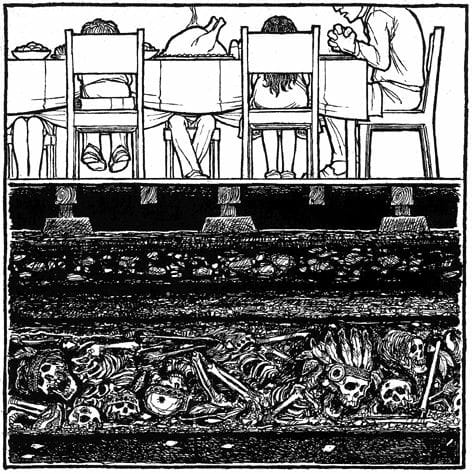
A compelling counter-argument to the "inferior-earthbound ghosts" perspective is the concept of "Settler Guilt." A popular theory about ghosts posits that they are spirits of those wronged in life, sometimes even murdered. If colonial ancestors committed horrific acts against the First Peoples, then perhaps contemporary society is, on some subconscious level, being "haunted" by the repercussions of these injustices. The benefits reaped from resources, food, and trade, built upon a foundation of dispossession and violence, continue to this day in once-colonial countries. Ron Cobb’s powerful 1968 illustration, "Thanksgiving in America," published in the Los Angeles Free Press, poignantly captures this sentiment, depicting a seemingly idyllic Thanksgiving dinner table resting directly atop skeletal remains. This image resonates with the idea that the prosperity of settler societies is built upon—and therefore haunted by—the suffering of Indigenous peoples. Some might believe we are haunted by the "sins of our forefathers and foremothers," a collective guilt manifesting as supernatural unease.
While "Settler Guilt" might explain why some sympathetic individuals continue to spread these memes and stories, it does not absolve the trope of its harmful effects. Claiming all places are Indigenous burial grounds ironically delegitimizes actual sacred sites and minimizes real historical crimes and injustices—from individual acts of violence like the Defeo murders to systemic genocides like those perpetrated in residential schools, where unmarked graves of Indigenous children are a grim testament to colonial brutality.
The Ghost Dance Movement: A Precursor to Colonial Fear
The fear of Indigenous ghosts predates the modern "haunted burial ground" legends. Newspapers in the 1890s, for example, vividly reflected colonist dread as the Ghost Dance movement gained momentum across North America. This ceremonial dance was intended to raise the spirits of recently deceased tribe members, seeking their protection against ongoing settler injustices and violence. The widespread public fear among settlers, fueled by misunderstanding and prejudice, tragically culminated in the Wounded Knee Massacre, where the U.S. Army killed an estimated 150-300 Lakota people, predominantly women, children, and Elders. This horrific event starkly illustrates that settlers feared resurrected Indigenous ghosts, yet showed no compunction in creating new ones through their own violence.
Case Studies from Canada: Local Legends, Global Problem
The trope’s presence is equally strong in Canada, manifesting in local urban legends and shaping regional ghost tourism. The author, based in British Columbia, offers personal insights into its localized impact.
Early Accounts in British Columbia: Whispers in the Wilderness
The earliest report of an Indigenous grave causing a haunting in British Columbia that the author encountered dates back to 1924. The Victoria Daily Times reported that seven road builders were haunted for four nights at their camp. "Whishing" sounds and rapping noises between 8 PM and 2 AM plagued them. Despite searching with lanterns at night and looking for animal prints by day, they found nothing. Concluding their camp was built on the grave of a "Red Indian," they moved. This early account demonstrates the nascent form of the trope, attributing unexplained phenomena to the disturbance of an Indigenous grave.
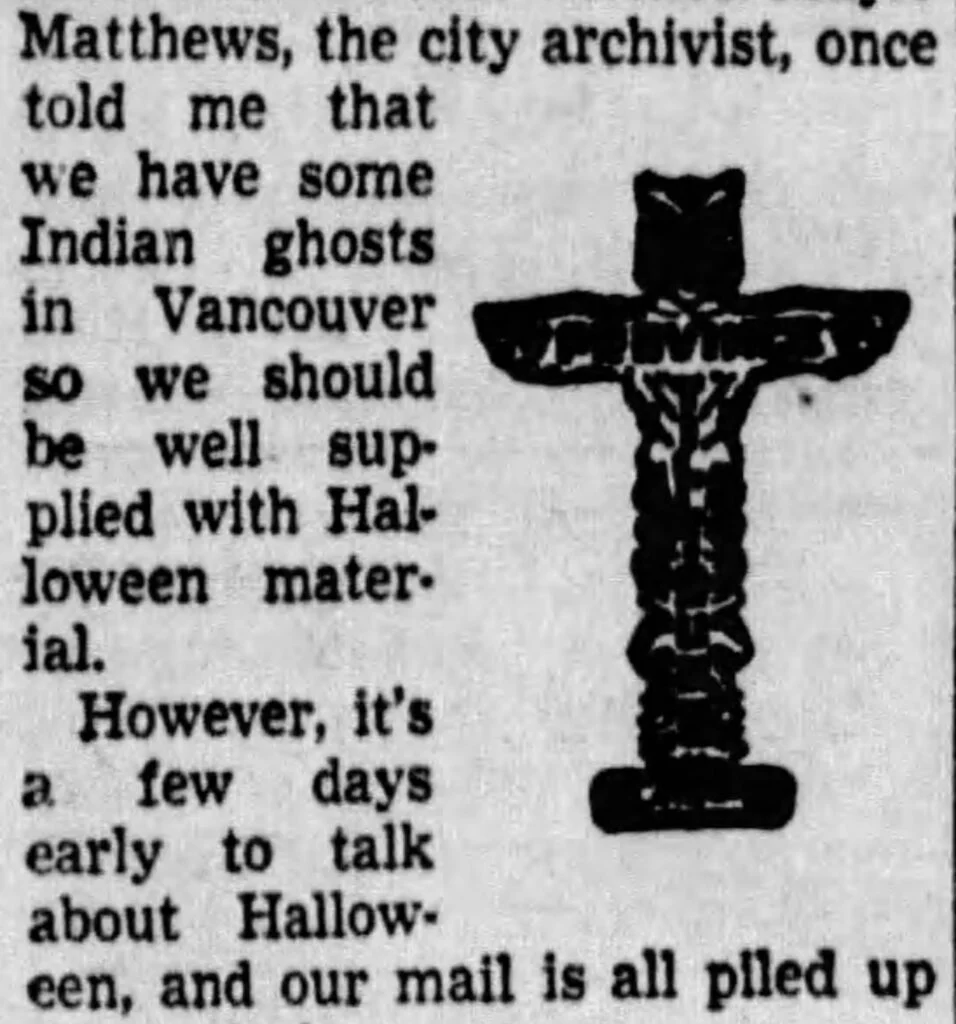
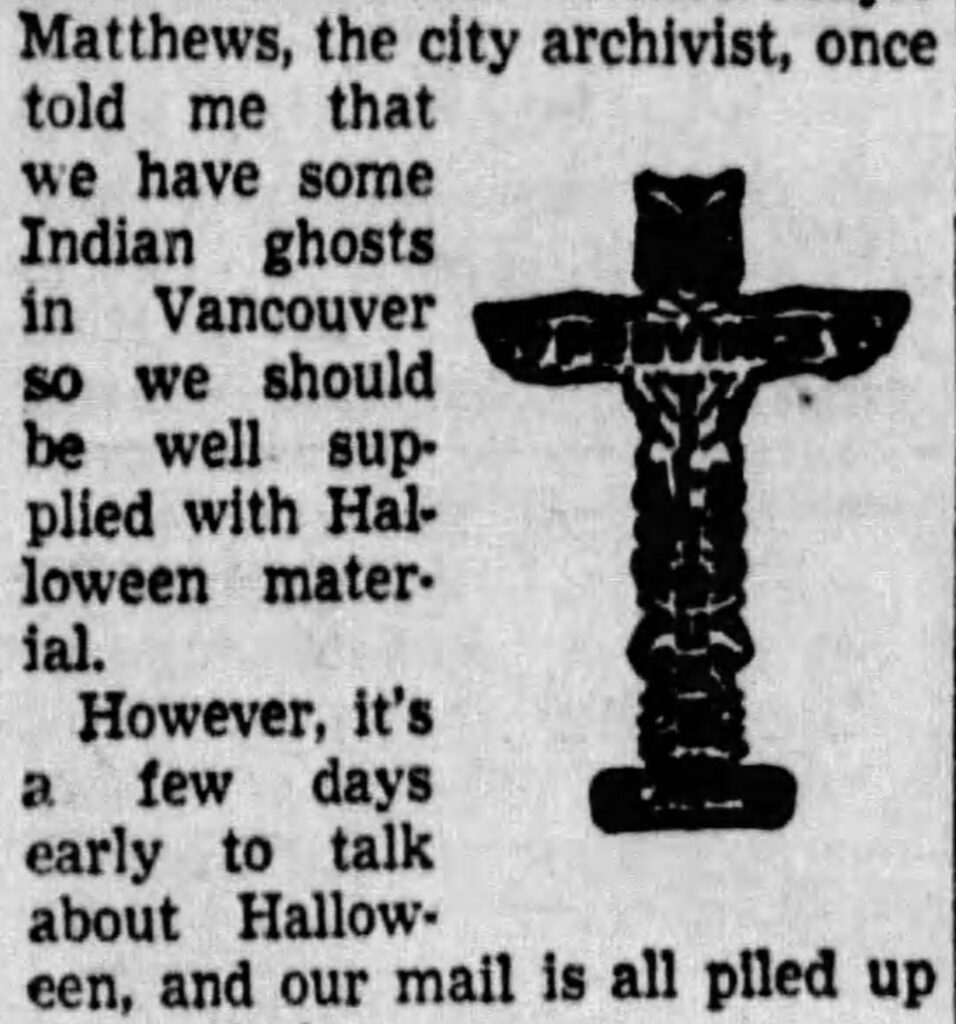
In 1940, City Archivist Major Mathews cryptically informed a Province reporter that Vancouver had "Indian ghosts," offering no elaboration. This single sentence, nestled within a section on Halloween parties for youth, was the only haunting mentioned, suggesting a cultural awareness of the concept, even if undefined.
An intriguing Ontario story appeared in the Vancouver Sun in 1946, describing a headless woman’s ghost seen near the rumored secret burial site of Tecumseh. Tecumseh, a revered chief who sought to unite Indigenous groups against American expansion and allied with the British in the War of 1812, became a romanticized folk hero after his death in 1813. The connection of a haunting to his suspected grave, even if the ghost was not his own, highlights the potency of associating Indigenous historical figures with supernatural occurrences.
In 1950, pulp writer Bjarne Kirchhoff’s story, "The Ghost of Graveyard Flats," published in the Vancouver Sun, featured an Indigenous burial ground haunted by a wendigo—remarkably 33 years before Stephen King’s Pet Sematary appropriated the same concept, demonstrating an earlier, independent strain of this specific narrative.
Comox and Victoria’s Haunted History: Tourism and the Trope
A Comox haunting reported in The Times Colonist in 1966 later found its way into several books. Earlier 1940s versions described a mist-like apparition that one witness claimed transformed into a dancing woman. By the 1960s, this "Bloody Mary" figure had evolved into an "Indigenous woman" described by another witness as "young and well-stacked." Later books renamed her "Dancing Mary," and her story began to include either her grave or a massacre site as the source of the haunting. This confusing narrative, interwoven with unrelated paranormal reports and a settler cemetery, illustrates how easily Indigenous elements were grafted onto existing ghost stories to enhance their allure.
By the 1980s, Victoria, British Columbia’s capital, transitioned from having "few hauntings" (as noted by a 1958 Colonist reporter) to becoming "very haunted," and eventually one of Canada’s most haunted cities, largely thanks to local ghost hunters Robin Skelton and Jean Kozacari, who claimed psychic abilities. Ghost tourism flourished, and the two most common explanations offered for Victoria’s hauntings were its proximity to water and its purported construction on an Indigenous burial ground. While the "water theory" strikes the author as "childlike," the burial ground stories are deeply shameful.
Debunking Local Claims: The Reality of Indigenous Burial Practices
A recent news article, quoting a historian, reiterated the claim of Victoria being built on Indigenous burial grounds, mentioning well-known burial mounds in Beacon Hill Park, around Cadboro Bay, and on Saltspring Island. However, prior to Victoria’s ghost tourism boom, Beacon Hill Park claimed only 23 mounds, none of which were ever built upon. The hundred mounds supposedly in Cadboro Bay are in a neighboring city, not Victoria itself, and Saltspring Island is geographically irrelevant to Victoria’s urban core. Compared to the tens of thousands of non-Indigenous bodies interred in city cemeteries, this narrative assigns a disproportionate, almost mystical, power to a handful of alleged Indigenous graves.
Furthermore, these "burial mound" stories often contradict actual Indigenous burial practices in the region. Local First Nations historically used cairns in ancient times, but for the past 1,500 years, bodies were typically placed in trees, on raised platforms, or inside shoreline caves. Early settlers frequently collected Indigenous bones as souvenirs, further disrupting and disrespecting these sites. While Indigenous remains are indeed occasionally unearthed, the claim that Victoria was built on a "mega burial ground" is unsubstantiated by archaeological evidence or Indigenous oral histories.
"The Indian Inheritance" and Scholarly Endorsement: A Profound Betrayal
Perhaps one of the most egregious examples of the trope’s harmful perpetuation comes from A Gathering of Ghosts, a 1989 book by Robin Skelton and Jean Kozacari. Their chapter, "The Indian Inheritance," falsely attributes a cult’s erratic behavior near Nanaimo to "tainted land." Incorrectly identifying the territory as Kwakiutl [sic] and a "slave-body dump site," the authors assert: "It seems not unlikely that the long history of Indian raids, feasts, and ritual killings accounted in part for the way in which Brother Twelve’s initially peaceful and gentle community became disturbed… The problem was the land and its history. It was crying out for blood. The evil was in the earth itself."
These claims, like those in Amityville, were entirely untrue. Yet, they painted Indigenous people as the culprits, or in this case, their "evil soil" made sentient. The sensationalist accusations of "body dumps," "ritual killings," and "evil feasts" are profoundly hateful. What makes this story particularly brutal is that Skelton was a respected university professor and admired public figure, lending an academic veneer to these racist and fabricated narratives.
Personal Echoes: Urban Legends in Saskatchewan and Beyond
The author’s own experience with Indigenous burial ground urban legends dates back to the 1980s, hearing tales about their home neighborhood of MacArthur Drive in Prince Albert, Saskatchewan, purportedly built on such a site. The source of the rumor changed with each retelling, as did the details, including the ghost of a chief in a headdress appearing to a resident. The frequent appearance of "Indigenous royalty" to "common folk" in these stories is a recurring motif. Beyond Victoria, similar claims have been heard about the South Crescent Neighborhood in Port Alberni, a road in Courtenay, the old Forbidden Plateau ski resort, and many others, most likely without factual basis. These tales, typically shared by people of European background, are textbook urban legends, often attributed to a "friend-of-a-friend" and reinforcing settler anxieties.
The Path Forward: Respect, Representation, and Reconciliation
The widespread acceptance and casual invocation of the "Indigenous burial ground" trope are deeply problematic, undermining genuine efforts towards reconciliation and perpetuating harmful stereotypes.
Official Responses and Indigenous Perspectives: Reclaiming Narratives
While there isn’t a single "official response" to every instance of the trope, Indigenous nations, cultural institutions, and scholars consistently offer powerful counter-narratives and educational initiatives. The Shinnecock Nation’s clear debunking of the Amityville claims is a prime example of Indigenous communities directly refuting false narratives that exploit their heritage. Museums like the Alutiiq Museum provide crucial guidance on ethical engagement with Indigenous oral histories and cultural protocols, emphasizing respect and accuracy.
Indigenous communities typically have designated storytellers and knowledge keepers who are authorized to share specific narratives with outsiders, as many stories are intentionally private or sacred. The settler cliché of "ancient people dancing around in regalia (vs. blue jeans)" stands in stark contrast to the richness and diversity of Indigenous spiritual practices. Furthermore, a widespread traditional belief in many Indigenous cultures is that even talking about a deceased person can cause a haunting, highlighting the profound respect and reverence accorded to the departed, which is utterly misrepresented by the vengeful ghost trope. The lasting trauma of abusive residential schools also plays a role, as children were often taught that Jesus was the only cure for evil, further distorting Indigenous spiritual beliefs.
Navigating Terminology and Appropriation: A Call for Sensitivity
The language used to describe Indigenous cultures is critical. Terms like "Indigenous" are generally preferred over others, though this evolves and varies between countries (even between the U.S. and Canada) and generations within communities. Beyond disrespectful "burial ground" terminology, cultural appropriation is a significant factor in the trope’s harm. The Alutiiq Museum’s chart on cultural appropriation, referenced by the author during field school, serves as a vital guide for respectful engagement. It emphasizes understanding, permission, and proper attribution when engaging with Indigenous cultural elements. Courts have even ruled that petroglyphs are copyright protected, underscoring the legal and ethical imperative to protect Indigenous intellectual and cultural property.
Beyond the Trope: Towards Understanding and Healing
Why are Indigenous burial ground stories so enduringly popular? And what does it say about North American mainstream culture that its go-to explanation for malevolent hauntings is the ghosts of the very people its ancestors profoundly wronged? "Settler Guilt," while a useful analytical framework, is not a sufficient excuse for the continued propagation of these damaging narratives. Indigenous peoples are not inherently evil or demonic. Their traditional spiritual beliefs and versions of the afterlife are often far more beautiful, nuanced, and less judgmental than many settler beliefs have historically been.
Moving forward requires a conscious effort to dismantle this pervasive trope. This involves critical media literacy, challenging unfounded claims, seeking out and amplifying authentic Indigenous voices, and supporting educational initiatives that accurately portray Indigenous histories, cultures, and spiritual practices. By moving beyond simplistic, harmful clichés, North American society can begin to foster genuine understanding, respect, and ultimately, a path toward healing and reconciliation.