The Scaling Manifesto: Sam Altman’s Defiant Stand Against the AI Skeptics
In the rapidly shifting landscape of artificial intelligence, a fundamental schism has emerged among the world’s leading researchers. On one side are the "scaling maximalists," who believe that adding more compute, more data, and larger parameters to Large Language Models (LLMs) is the primary path to Artificial General Intelligence (AGI). On the other side are the "architectural skeptics," who argue that LLMs are hit-or-miss statistical engines that have reached a point of diminishing returns.
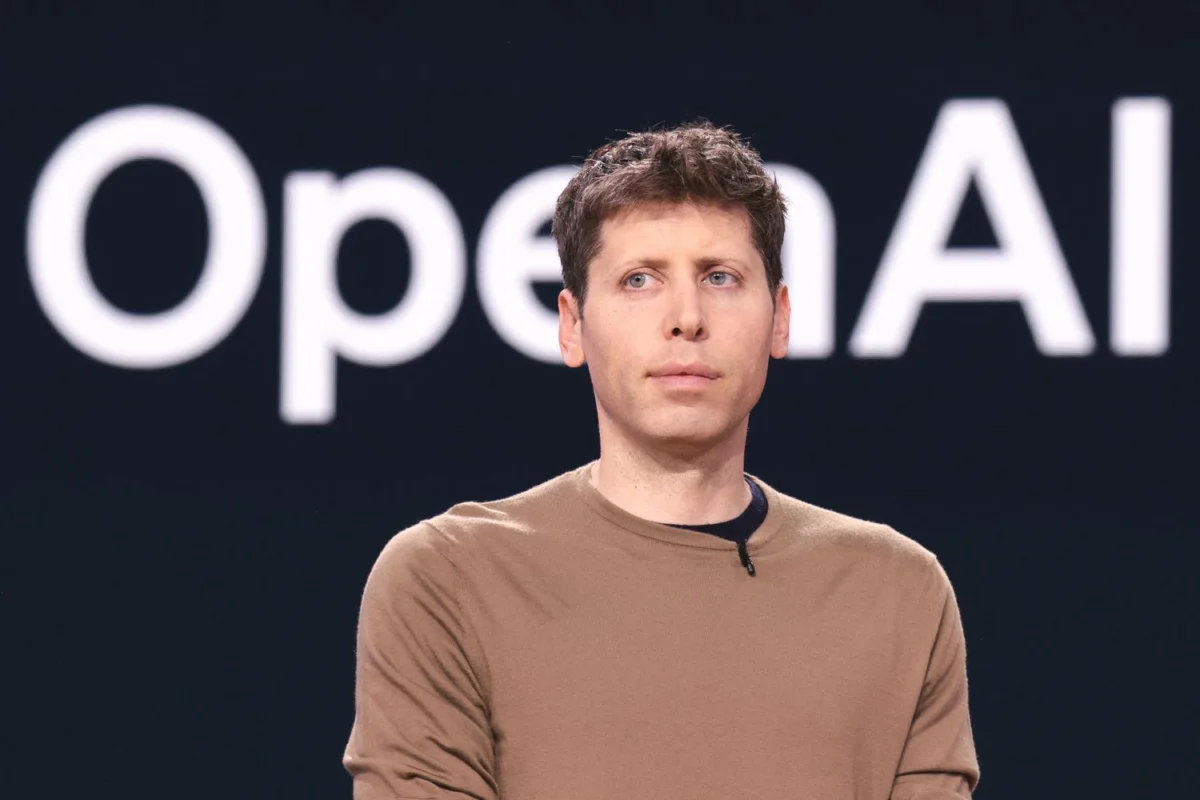
Speaking recently at Stanford University, OpenAI CEO Sam Altman made his position crystal clear. In a forceful defense of his company’s roadmap, Altman pushed back against the narrative that LLMs are a "dead end," characterizing the skepticism as a failure of imagination that has historically plagued the field of AI research. As OpenAI prepares for the release of GPT-5.6—a model specifically designed to tackle scientific reasoning and complex "agentic" tasks—the stakes for this philosophical debate have never been higher.
Main Facts: The Defense of the Scaling Hypothesis
The core of Sam Altman’s argument rests on the "Scaling Hypothesis"—the observation that as models grow in size and are fed more high-quality data and compute, their performance improves in a predictable, power-law fashion. Altman’s recent comments were not merely a defense of current technology but a critique of the academic establishment.
"Betting against LLMs scaling at this point feels quite misguided to me," Altman told the Stanford audience. He suggested that an entire generation of AI researchers may have inadvertently slowed progress because they were "too confident" about the inherent limitations of scaling. According to Altman, these researchers tied their professional identities to the belief that LLMs could never achieve certain milestones, only to be proven wrong as GPT-3, GPT-4, and subsequent iterations shattered those assumptions.
The upcoming launch of GPT-5.6 serves as the primary evidence for Altman’s confidence. Unlike previous iterations that focused heavily on conversational fluidity and creative writing, GPT-5.6 is being positioned as a "science-first" model. Early reports suggest the model excels in:
- Mathematical Proofs: Solving conjectures that have remained open for years.
- Scientific Discovery: Hypothesizing new chemical structures or biological pathways.
- Long-Horizon Reasoning: Executing multi-step plans that require judgment over days or weeks, rather than seconds.
- Coding Proficiency: Moving beyond simple snippets to architectural-level software engineering.
Chronology: The Evolution of the Scaling Debate
To understand why Altman is being so defensive, one must look at the timeline of AI development over the last decade.
2017–2020: The Transformer Revolution
The debate began in earnest with the 2017 paper "Attention is All You Need," which introduced the Transformer architecture. When OpenAI released GPT-2 in 2019 and GPT-3 in 2020, the industry was shocked by the emergent properties—capabilities like translation and basic reasoning that the models weren’t explicitly trained to do.
2021–2023: The Rise of the Skeptics
As LLMs became mainstream, a counter-movement grew. Critics pointed out that while these models were great at "stochastic parroting" (remixing existing text), they lacked a "world model." They couldn’t understand physics, they hallucinated facts, and they struggled with basic logic. During this period, prominent figures like Yann LeCun began arguing that LLMs were an "off-ramp" on the highway to AGI.
2024: The "Wall" Argument
By early 2024, rumors began to circulate that GPT-5 was delayed because OpenAI had hit a "data wall." The theory was that since the models had already consumed most of the high-quality text on the internet, scaling could no longer provide the exponential leaps seen in previous years.

Late 2024–Present: The Counter-Strike
Altman’s Stanford appearance represents the counter-strike to the "wall" narrative. By pointing to GPT-5.6’s ability to generate "new knowledge" (specifically in mathematics), Altman is attempting to prove that scaling hasn’t just hit a plateau—it has evolved.
Supporting Data: The "New Knowledge" Evidence
The most provocative claim Altman made at Stanford was that an internal OpenAI model recently disproved a long-standing mathematical conjecture. This is a critical data point in the debate over whether LLMs are merely "remixing" data or actually "reasoning."
If a model can solve a math problem that does not exist in its training set, it suggests the model has developed an internal logic system—a "latent world model"—that transcends mere pattern matching. This supports the "Bitter Lesson," a famous essay by AI pioneer Rich Sutton, which argues that the only thing that consistently works in AI is leveraging more compute, rather than trying to "hard-code" human-like knowledge into the system.
Furthermore, the shift toward "post-training" and "inference-time compute" provides technical backing for Altman’s optimism. Modern models like GPT-5.6 are not just larger; they use techniques like "Chain of Thought" (CoT) and "Reinforcement Learning from Human Feedback" (RLHF) to "think" longer before they speak. This allows a model of a certain size to punch far above its weight class in terms of reasoning capability.
Official Responses: Rival Philosophies at Meta and Anthropic
The AI industry is currently split into two major philosophical camps, represented by the leaders of the most powerful labs.
The "World Model" Camp: Yann LeCun (Meta)
Yann LeCun, the Chief AI Scientist at Meta, remains the most vocal critic of the LLM-only path. LeCun argues that LLMs are fundamentally limited because they are trained only on text, which is a low-bandwidth representation of human knowledge. He advocates for "Joint-Embedding Predictive Architecture" (JEPA), which aims to teach machines how the physical world works through video and sensory data, much like a human child learns. For LeCun, scaling LLMs is like "building a faster car to get to the moon"—it’s the wrong vehicle for the destination.
The "Scaling Realists" Camp: Dario Amodei (Anthropic)
Dario Amodei, CEO of Anthropic, occupies a middle ground but leans heavily toward scaling. He has noted that while we may eventually hit limits, we are nowhere near them yet. Amodei has spoken about the "Scaling Laws" as a near-universal truth of the current era, suggesting that the industry will continue to see massive gains as long as we can provide the power and the chips.
OpenAI’s Stance
Altman’s response to these rivals is nuanced. He does not dismiss the need for "world models"—especially for robotics—but he maintains that the LLM architecture is much more flexible and capable of "world modeling" than critics give it credit for. He views the skepticism not as a scientific disagreement, but as a psychological one: researchers struggling to accept that their complex theories are being outperformed by simple, massive scale.
Implications: The Trillion-Dollar Gamble
The debate over scaling is not merely academic; it is the most expensive gamble in industrial history. The implications of Altman being right—or wrong—are staggering.

1. The Compute Debt
If scaling continues to yield results, the demand for energy and hardware will be unprecedented. Microsoft and OpenAI are reportedly planning a $100 billion supercomputer called "Stargate." If LLMs are indeed a dead end, this represents one of the largest capital misallocations in history, potentially leaving Wall Street holding trillions in "compute debt."
2. The Shift to "Agentic" AI
If GPT-5.6 succeeds in "long-horizon" tasks, we will move from "Chatbot AI" to "Agentic AI." A chatbot answers a question; an agent completes a job. This has massive implications for the labor market, particularly in high-skill fields like research, law, and engineering. Altman’s focus on scientific discovery suggests that OpenAI is targeting the most valuable segments of the economy first.
3. The Energy Crisis
The "Scaling Manifesto" requires a corresponding revolution in energy. To keep the scaling curve moving upward, AI companies will need gigawatts of power, leading to a renewed interest in nuclear energy and small modular reactors (SMRs). The success of LLMs is now inextricably linked to the global energy grid.
4. The Scientific Frontier
If Altman’s claim about solving math conjectures holds true, AI will transition from a tool for efficiency to a tool for discovery. This could accelerate breakthroughs in fusion energy, longevity, and materials science, effectively acting as a "force multiplier" for human intelligence.
Conclusion: The Wall or the Horizon?
Sam Altman’s remarks at Stanford serve as a pre-emptive strike against the "AI Winter" narrative. By framing scaling as a misunderstood miracle and GPT-5.6 as a scientific powerhouse, he is doubling down on a vision of the future where raw compute and massive data remain the ultimate keys to the kingdom.
However, the "harder question," as the source article notes, is where the physical limits lie. Even if the software can scale, can the planet provide the electricity? Can the economy provide the capital? And most importantly, can the human race keep up with a machine that is no longer just remixing our words, but discovering our world?
As GPT-5.6 prepares for its public debut, the world will soon see if Altman’s confidence is a visionary’s foresight or a pioneer’s hubris. For now, the OpenAI CEO remains undeterred, betting the future of his company—and perhaps the future of technology itself—on the belief that, in the world of AI, bigger is not just better; it is the only way forward.