The Dawn of Spatial Elegance: Meta Unveils "VR Glasses" at Connect 2026

MENLO PARK, CA — At the Meta Connect 2026 keynote, the landscape of wearable technology underwent a seismic shift. Mark Zuckerberg took the stage to announce the Meta VR Glasses, a device that promises to bridge the long-standing gap between high-performance virtual reality and the aesthetic demands of everyday life. Slated for a Spring 2027 release, the Meta VR Glasses represent the company’s most aggressive attempt to date to move spatial computing out of the enthusiast’s basement and into the mainstream public’s living room.
Positioned as a "cinema, workspace, and console in one," the device is a radical departure from the bulky "box-on-face" design language that has defined the Quest lineup for nearly a decade. With a target MSRP of $1,299, Meta is positioning this not just as a successor to the Quest Pro, but as a premium lifestyle accessory capable of replacing multiple screens in a user’s life.
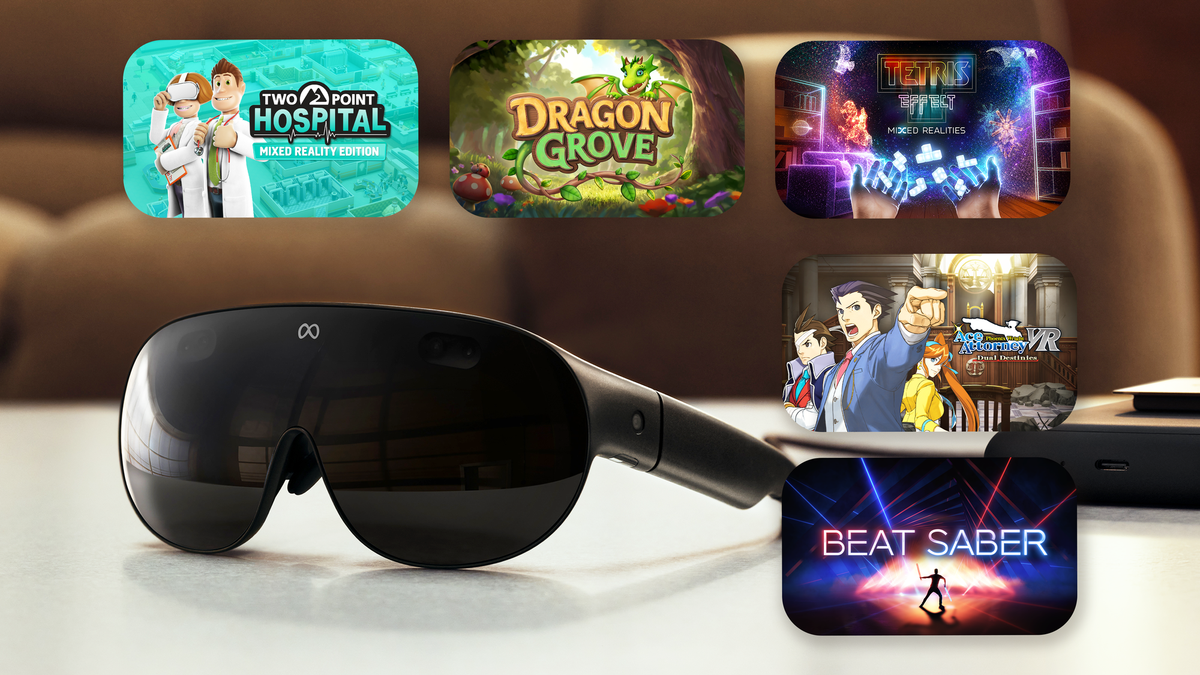
Main Facts: A New Paradigm for Wearable Hardware
The Meta VR Glasses are built on a philosophy of "obvious compromise for maximum comfort." Weighing in at a staggering 100 grams—roughly one-fifth the weight of a standard Quest 3—the device achieves its slim profile by offloading its processing power and battery to a tethered "puck." This puck houses Qualcomm’s latest Snapdragon Reality Elite chipset, ensuring that while the glasses remain light, they do not lack the horsepower required for high-fidelity rendering.
Key technical specifications include:

- Displays: Dual 2.4K micro-OLED panels, offering significantly improved contrast and color gamut over previous LCD models.
- Operating System: A specialized version of the Quest OS, ensuring 100% backward compatibility with the existing Quest library.
- Input: Primarily designed for advanced hand-tracking and voice control; however, it remains compatible with Meta’s Touch Plus controllers.
- Price Point: $1,299 for the base model, positioning it directly against high-end competitors like the newly released Valve Steam Frame.
Chronology: From Concept to Spring 2027
The road to the Meta VR Glasses has been paved with years of R&D under Reality Labs. While the "Orion" project gave the world a glimpse of Meta’s AR future, the 2026 announcement confirms that Meta is doubling down on a hybrid approach—VR and Mixed Reality (MR) in a form factor that mimics traditional eyewear.
- September 2026: Official reveal at Meta Connect. Developers receive the first SDK updates to optimize hand-tracking for the Glasses’ new sensor array.
- October 2026: Open playtests for major titles like PAYDAY: Aces High begin on Quest 3/3S to stress-test the networking infrastructure that will support the Glasses at launch.
- Winter 2026: Independent developers, including the newly divested Supernatural team, finalize "Day One" optimization for the Glasses’ unique micro-OLED displays.
- Spring 2027: Global retail launch of the Meta VR Glasses.
Supporting Data: The Software Revolution
A hardware launch is only as strong as its software library. Meta Connect 2026 served as a showcase for a new era of "controller-optional" gaming, emphasizing hand-tracking and mixed reality.

The Flagship Updates: Beat Saber and Beyond
The crown jewel of the announcement was Beat Saber: Flux. Billed as the largest update in the game’s history, Flux introduces a dedicated hand-tracking mode. Historically, the speed of Beat Saber required the haptic precision of controllers. However, with the improved sensor logic in the VR Glasses, players can now slice through 35 new tracks using only their hands. The update also introduces a overhauled progression system, allowing players to earn cosmetic "sabers" and profile badges, further gamifying the fitness aspect of the title.
Legal Drama in 3D: Phoenix Wright
Capcom’s entry into the space with Phoenix Wright Ace Attorney: Dual Destinies VR signals a major shift in how traditional Japanese IP is being adapted for VR. The game utilizes the Glasses’ voice-activation features, allowing players to physically point at witnesses and shout "Objection!" to trigger in-game events. By moving the classic courtroom drama into a 3D space, players can investigate crime scenes with a level of tactile immersion previously impossible on 2D screens.

The Mixed Reality Push
Several titles are designed specifically to leverage the Glasses’ "room-aware" capabilities:
- Tetris Effect: Mixed Realities: This version uses the geometry of the user’s actual room. Tetriminos may appear to bounce off your coffee table, while the lighting of the "Effect" layers reacts to the physical lamps in your home.
- Two Point Hospital VR: This simulation classic has been re-imagined with a "god-view" hand-tracking interface. Players can literally reach into their hospital to pick up patients or place furniture, turning the floor of their living room into a bustling medical facility.
- Dragon Grove: A cozy, free-to-play 3D puzzler that emphasizes haptic-free interaction, designed to be the "onboarding" experience for new users who may be intimidated by traditional gaming peripherals.
Official Responses: Meta’s Strategic Pivot
During the keynote, Meta executives addressed the "elephant in the room": the lack of bundled controllers. "The Meta VR Glasses are about removing barriers," said one spokesperson. "For a decade, the barrier has been the weight of the headset and the friction of picking up controllers. By making hand-tracking the primary input, we make the digital world as accessible as the physical one."

Meta also addressed its recent divestment from Supernatural. Despite no longer owning the studio, Meta confirmed that the premier fitness app would be a "Day One" flagship for the Glasses. This move suggests a strategic shift toward an open ecosystem where Meta provides the "glasses-as-a-platform" while allowing independent studios to flourish without the stigma of first-party exclusivity.
Industry analysts have noted that the $1,299 price tag is a calculated risk. By pricing it identically to the high-end Valve Steam Frame, Meta is betting that consumers will value the "lifestyle" form factor of glasses over the "raw power" of Valve’s gaming-first headset.

Implications: The End of the "Gamer" Stigma?
The most profound implication of the Meta VR Glasses is the potential erasure of the social friction associated with VR. For years, widespread adoption has been stymied by three factors:
- Ergonomics: Headsets were too heavy for long-term use.
- Aesthetics: Users felt "goofy" wearing a plastic brick on their faces.
- Isolation: The barrier between the user and their physical environment was too thick.
By moving to a 100-gram glasses form factor, Meta addresses all three. The "cinema, workspace, and console" branding suggests that Meta is no longer chasing just the "gamer" demographic. They are chasing the office worker who wants a five-monitor setup in a coffee shop, the movie buff who wants an IMAX experience on an airplane, and the casual user who wants to play a game of Dice Throne Digital while still being present for their family.

Competition and the Market Landscape
The arrival of the Valve Steam Frame ($1,059 for 256GB; $1,299 for 1TB) creates a fascinating market dichotomy. Valve’s device is a "Steam-first" powerhouse aimed at the hardcore library of PC-VR enthusiasts. Meta, conversely, is leaning into the "Spatial Computing" narrative pioneered by Apple, but at a more competitive price point and with a vastly superior gaming library.
The success of the Meta VR Glasses will likely depend on whether the "tethered puck" solution is accepted by consumers. While the glasses themselves are light, the wire leading to a pocketed puck is a reminder of the current limitations of battery technology. However, if the trade-off results in a device that doesn’t "mess up your hair" and can be worn for four hours comfortably, Meta may have finally found the "iPhone moment" for the face.

Final Thoughts
As we approach the Spring 2027 launch, the industry will be watching closely. With a robust lineup of titles like Story of Seasons – Your Wonderful Life, Cardmada, and Dice Throne Digital providing a "cozy" and "social" software foundation, Meta is no longer just selling a gadget. They are selling a vision of a future where the digital and physical worlds are indistinguishable—and they’re doing it through a pair of glasses that you might actually want to wear in public.