The Touring Model: A New Blueprint for Independent Film Distribution
By Investigative Staff
The independent film industry has long been haunted by a singular, sobering question: How do small-budget films actually secure screens in a landscape dominated by blockbusters and streaming giants? According to veteran independent producer Daren Smith, the answer for most is as brief as it is brutal: They don’t.
In the twelfth installment of his "A Producer’s Path" column for IndieWire’s Future of Filmmaking series, Smith outlines a radical departure from the traditional "festival-and-pray" model. Instead of relying on the hope of a distribution deal that may never come—or showtimes that arrive too late to market—Smith is leveraging his background in the music industry to treat film releases like rock tours. This strategy, currently being deployed for his upcoming film Brotherhood, seeks to transform the relationship between filmmakers, audiences, and theater bookers by creating undeniable "proof of concept" through live events and pre-sold tickets.
Main Facts: The "Eventization" of Indie Cinema
The core of Smith’s strategy lies in a fundamental rejection of "hope" as a business plan. Traditionally, indie filmmakers exhaust their resources during production, leaving little for the grueling marathon of distribution. Even when a film finds a distributor, the theater bookers—the gatekeepers of the silver screen—often provide showtimes only days before a release. This leaves producers with a 48-hour window to mobilize an audience, a feat that is nearly impossible without a massive marketing budget.
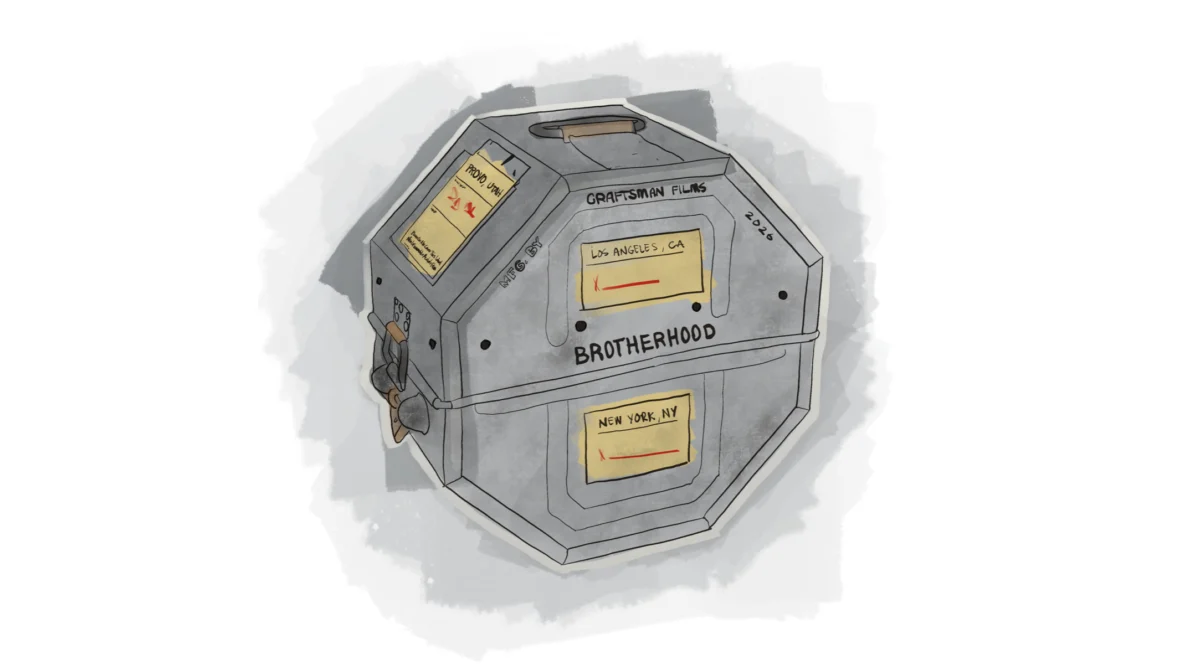
To combat this, Smith and his production company, Craftsman Films, have engineered a 20-city tour across the United States. This is not a traditional roadshow where a film is simply screened in a rented theater. Instead, it is a multi-media event held in non-traditional venues—such as community centers or event halls—featuring live performances by the film’s leads, insights from the director, and discussions on the film’s themes.
Key Components of the Strategy:
- The Leverage of Pre-Sales: The goal is to pre-sell 1,000 tickets per city before approaching theater chains. At 2026 average ticket prices, this represents $12,000 to $15,000 in guaranteed revenue per screen, a figure that would place the film in the top tier of national per-screen averages.
- The "High-Intent" Moment: By creating an emotional connection through live music and storytelling, the tour creates a "high-intent" environment. At the end of the evening, attendees are offered the chance to buy tickets for the upcoming theatrical release immediately.
- Sponsorship-Led Economics: The $120,000 cost of the tour is entirely covered by corporate and local sponsors, ensuring that the production company takes on minimal financial risk while building a massive marketing engine.
Chronology: From Concept to Opening Night
The timeline of the Brotherhood tour demonstrates the long-lead planning required to bypass traditional distribution hurdles.

- November 2025: Planning begins. Cultural consultant Liliana Bolaños is tasked with identifying 20 major U.S. cities and scouting potential partners and venues.
- January 2026: The city list is finalized. Initial conversations with partners reveal a "wait and see" attitude regarding the film’s quality.
- May 2026: Production wraps. A rough edit is quickly assembled to serve as a "proof of quality" screener for potential venue partners and sponsors.
- June – July 2026: The tour route is adjusted based on community engagement. Notably, a planned stop in Los Angeles is scrapped in favor of Twin Falls, Idaho, after a local partner demonstrates a higher level of grassroots enthusiasm and RSVP potential.
- August 2026: The tour officially launches. The first stop on August 29th in Provo, Utah, sells out its 667-seat capacity days in advance.
- September 2026: The 21-event tour (18 stops and three premieres) moves across the country, collecting data and pre-selling tickets.
- October 2026: The film is scheduled for a "narrow" theatrical release, focusing specifically on the cities where the tour has already established an audience.
Supporting Data: The Economics of the Tour
Smith’s model relies on a sophisticated "freemium" approach to audience building. By offering free general admission to the tour events, the team removes the barrier to entry, allowing them to fill large rooms and collect valuable customer data.
Revenue and Cost Breakdown:
- Total Tour Cost: ~$120,000 (Covered by title, regional, and local sponsors).
- VIP Tier: 50 tickets per stop are available at a "pay-what-you-want" rate, starting at $197. All revenue from these sales is funneled directly back into the film’s marketing budget.
- Ticketing Infrastructure: Using platforms like Luma and Stripe, the team bypasses heavy ticketing fees. Customer data is integrated into Kit (formerly ConvertKit) for automated follow-up sequences.
- The Conversion Funnel: The tour aims to reach 10,000 people in person. Based on current engagement metrics, Smith expects to convert these interactions into 25,000 to 30,000 pre-sold theatrical tickets.
The "Narrow" Release Logic:
Smith argues that 50 sold-out screens in 20 cities are infinitely more valuable than 500 screens at 10% capacity. In the modern theatrical ecosystem, a film with high per-screen averages in its first weekend is granted a second week. A film that underperforms, regardless of how many screens it occupies, is usually pulled within six days. By concentrating demand, Smith ensures his film has the "legs" to survive the cut-throat opening weekend.
Official Perspective: The Producer’s Philosophy
Daren Smith’s approach is rooted in his "former life" as a live sound engineer for bands like Imagine Dragons and Neon Trees. He observed that musicians do not wait for radio play to build a career; they go on the road, build a following, and use those numbers to negotiate with labels.
"I wondered what it would take to make it easy for a booker to say ‘yes,’" Smith notes. "If I came to a theater chain and said, ‘We pre-sold 1,000 tickets. Do you want them?’ would that be enough to get us showtimes weeks out from opening weekend rather than days?"
This shift in perspective—from filmmaker to "tour promoter"—is a response to the "visibility crisis" facing modern indies. Smith emphasizes that visibility must come first, not last. By the time the film hits theaters, the audience should already be "warm." The use of Atom Tickets codes allows pre-sell ticket holders to claim the best seats before the general public, rewarding the core community and ensuring a packed house on opening night.
Implications: A New Frontier for the "Far" Bet
The success or failure of the Brotherhood tour will serve as a bellwether for the independent film community. If Smith reaches his goal of 30,000 pre-sold tickets, he will have created a reproducible framework for "faith-based" and "values-based" cinema—genres that already possess strong, organized community structures like churches and non-profits.

However, the implications go beyond niche genres. Smith is already eyeing a "far bet" for future projects: a high-premium tour model.
The $1 Million Experiment:
Smith proposes a future experiment where every seat at a 20-city tour stop is priced at $100.
- The Math: 20 cities x 500 seats per venue x $100 per ticket = $1,000,000 in gross revenue.
- The Value Proposition: This would not be a mere screening, but an exclusive "night out with the creators," including Q&As and meet-and-greets.
If a filmmaker can generate $1 million in revenue before a film ever reaches a theater or a streaming platform, the entire power dynamic of the industry shifts. It reduces the reliance on predatory distribution deals and gives creators the financial independence to fund their next projects.
As the Brotherhood tour begins its journey through the American heartland, the film industry will be watching closely. Smith has promised to report the results in October, whether the film hits his one-million-ticket goal or falls short of his 10,000-ticket minimum. In an era where the traditional theatrical model is under siege, Smith’s "Producer’s Path" may provide the map that many independent creators have been searching for: a way to stop hoping for a screen and start commanding one.