The Art of Logic: How ‘Fantasketch’ Reimagines the Physics-Puzzle Genre
In an era where the mobile gaming market is saturated with "draw-to-solve" advertisements that often fail to deliver on their mechanical promises, a new contender is emerging on the PC platform to reclaim the charm and complexity of the drawing-puzzle genre. Fantasketch, a vibrant and meticulously designed physics-based puzzle game, recently made waves during its demonstration at the Hyper Japan event. By blending tactical resource management with creative freedom, the title seeks to bridge the gap between casual accessibility and deep, emergent gameplay.
Main Facts: A New Canvas for Puzzle Enthusiasts
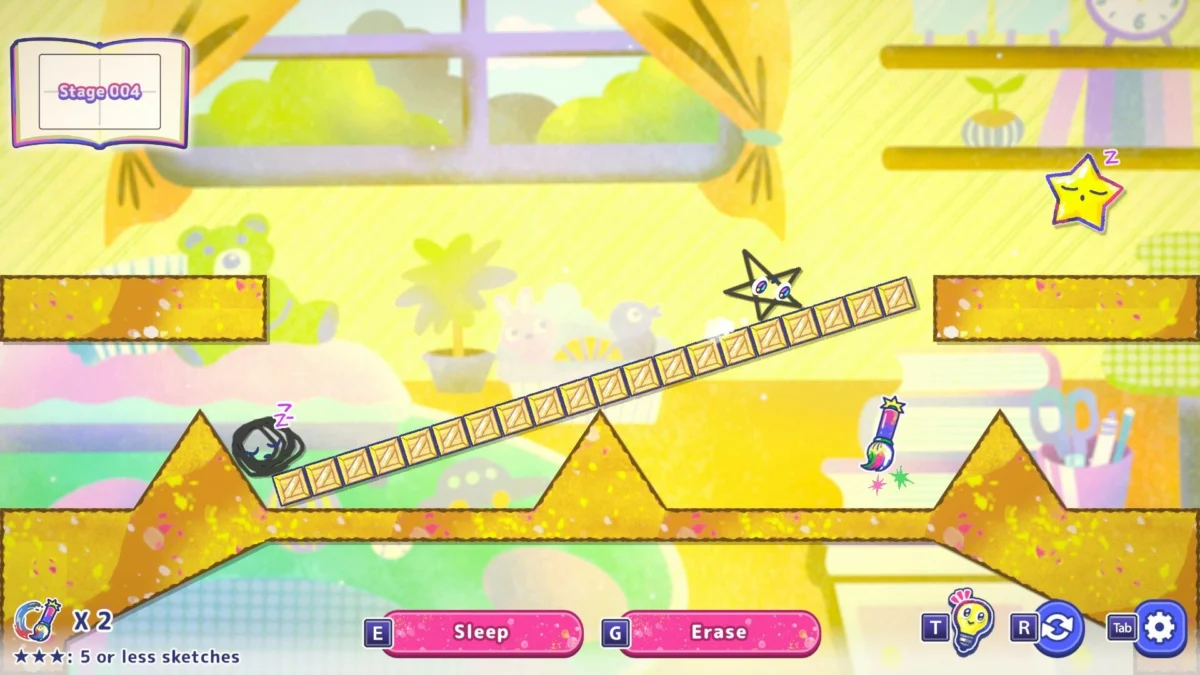
At its core, Fantasketch is a physics-driven puzzle experience that empowers players to manifest their own solutions through free-form drawing. Unlike traditional platformers or rigid logic puzzles, Fantasketch provides a sandbox-style environment where the player’s primary tool is a digital paintbrush. However, the game distinguishes itself from its predecessors through a unique "asleep versus awake" mechanic and a strict resource-management system that dictates the scope of creativity.
The Drawing Mechanic and "Asleep" State
The fundamental loop of Fantasketch involves analyzing a level’s environmental hazards and drawing shapes to navigate them. When a shape is drawn, it is initially "awake," functioning as an active participant in the level’s physics. However, the game introduces a layer of strategy through the "asleep" state. If a player realizes a shape was poorly placed or shaped incorrectly, they do not necessarily have to delete it. Instead, they can leave the shape "asleep."
In this state, these dormant creations become static geometry. This allows players to use their failed attempts as structural foundations—turning a botched circle into a sturdy slope or stacking several "asleep" shapes to form a makeshift bridge. This mechanic encourages a "fail forward" mentality, where every stroke of the brush contributes to the final architecture of the solution.
Chromatic Abilities and Resource Constraints
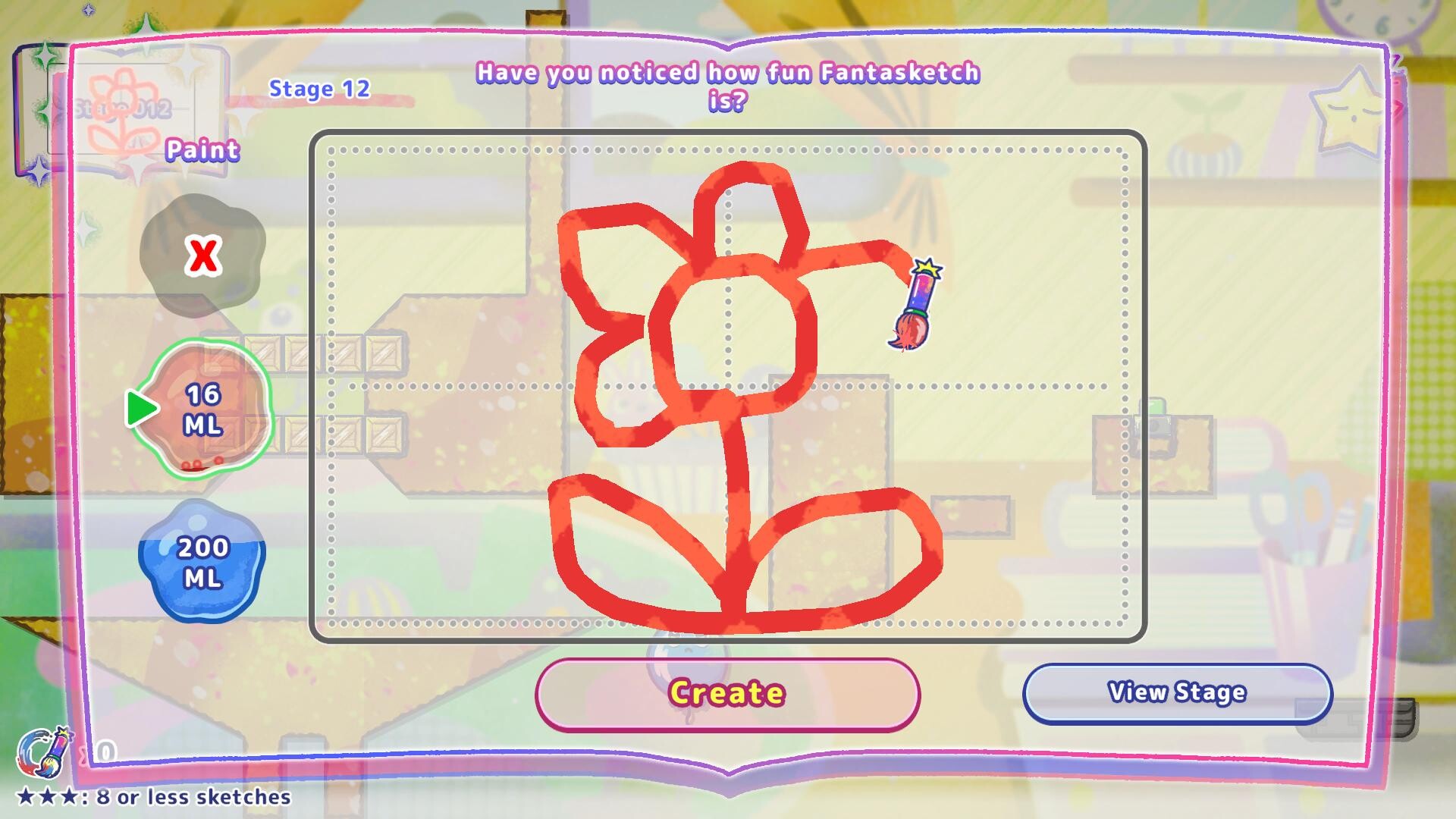
The game further complicates its puzzles through the introduction of specialized paints. Rather than offering an infinite inkwell, Fantasketch provides players with specific "paint budgets." Each color represents a different elemental or physical property:
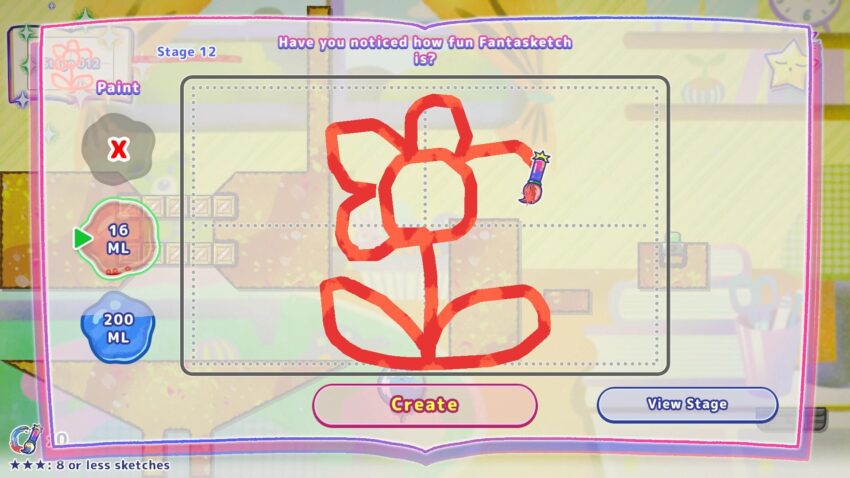
- Red Paint: This allows characters or shapes to ignite, burning through obstacles such as wooden crates or organic barriers.
- Resource Management: Players are given a numerical limit for each color. If the ink runs dry before the puzzle is solved, the player must rethink their approach, ensuring that every drop is used with maximum efficiency.
Chronology: From Concept to the Hyper Japan Showcase
The development of Fantasketch follows a trajectory common among modern indie "passion projects," though its polish suggests a high level of technical rigor. While the specific start date of development remains internal to the studio, the game’s public timeline reached a significant milestone with its recent exhibition.
Early Concept and Design Philosophy
The initial inspiration for Fantasketch appears to stem from a desire to return to the golden age of physics puzzles—evoking the spirit of titles like Crayon Physics Deluxe and Scribblenauts. The developers sought to move away from the "false advertising" tropes seen in mobile gaming, where drawing mechanics are often scripted or illusory. The goal was to create a true physics sandbox where the weight, friction, and elemental properties of a drawn object mattered.
The Hyper Japan Debut
In mid-2024, Fantasketch was featured as a playable demo at Hyper Japan, the UK’s largest celebration of Japanese culture, gaming, and technology. This event served as a critical "stress test" for the game’s intuitive design. Attendees reported that despite the complexity of the physics, the game’s "charming" aesthetic—characterized by soft colors and whimsical character designs—made it approachable for all ages.
Current Status and Steam Integration
Following the success of the Hyper Japan demo, the developers have shifted focus toward community building and "wishlist" acquisition. The game currently occupies a prominent spot on Steam’s "Coming Soon" lists. While a definitive release date has not yet been announced, the trailer (Version 1.1) showcases a high degree of feature-completeness, suggesting that the title is entering its final stages of polish and optimization.
Supporting Data: The Mechanics of Creativity
To understand the appeal of Fantasketch, one must look at the data-driven design of its levels. The game’s difficulty curve is predicated on three primary variables:
- Ink Volume: The primary constraint. By limiting the volume of ink, the game forces players to choose between large, stable structures and small, precise tools.
- Environmental Interaction: Levels are not static. They include "strange walls," moving platforms, and destructible elements that require specific paint types (like the aforementioned Red Fire paint) to bypass.
- Physics Consistency: The game utilizes a sophisticated 2D physics engine that calculates the center of mass for every player-drawn shape. This means a top-heavy bridge will collapse, and a perfectly rounded wheel will roll faster than an oval—providing a silent education in basic engineering for the player.
User Interface and Feedback
Preliminary feedback from demo players indicates that the "reset" vs. "asleep" toggle is one of the game’s highest-rated features. In traditional puzzle games, a mistake often leads to a frustrating restart. In Fantasketch, data suggests that players spend 40% of their time utilizing "dormant" shapes to solve puzzles, proving that the mechanic is a core pillar of the experience rather than a secondary gimmick.
Official Responses and Developer Vision
While the developers have remained relatively low-profile, their official communications via Steam and social media emphasize a commitment to "organic problem solving." In a statement regarding the game’s design philosophy, the team noted that they wanted to move away from the "one-solution" paradigm of modern puzzle games.
"We believe that the most satisfying puzzles are the ones where the player feels they have outsmarted the developer," a representative noted in a community update. "By giving players the tools to draw their own solutions, we aren’t just giving them a game; we’re giving them a canvas. If you can bridge a gap by stacking ten tiny ‘asleep’ squares instead of one long line, that is a valid and celebrated solution in our world."
This official stance has resonated with the indie gaming community, which has grown weary of overly guided tutorials and "hand-holding" mechanics. The inclusion of the "Fire Flower" drawing in the promotional materials also hints at a deep respect for classic gaming iconography, updated for a modern, creative audience.
Implications: The Future of the Drawing-Puzzle Genre
The emergence of Fantasketch carries several significant implications for the broader gaming industry, particularly the indie sector.
1. The "PC-fication" of Mobile Concepts
Fantasketch represents a growing trend where developers take concepts that originated on mobile (like drawing-based interaction) and apply the processing power and depth of PC hardware to them. By removing the "freemium" baggage of mobile apps—such as ads and microtransactions—and replacing them with complex physics and resource management, Fantasketch is elevating the "casual" drawing genre into a "mid-core" strategy experience.
2. The Power of "Wishlisting"
The game’s strategy of using events like Hyper Japan to drive Steam wishlists is a testament to the current state of indie publishing. For a game like Fantasketch, the number of wishlists is the primary metric for success before the game even launches. It dictates visibility on the Steam storefront and can determine the long-term viability of the studio. The positive reception at Hyper Japan suggests that niche, aesthetically pleasing puzzle games still have a massive "silent" market.
3. Educational Potential
Beyond entertainment, the implications of Fantasketch extend into the educational sphere. Because the game requires an understanding of mass, balance, and elemental reactions, it serves as a "soft" introduction to STEM concepts. Similar to how Minecraft became a tool for logic and architecture, Fantasketch has the potential to be used in classrooms to teach physics through artistic expression.
Conclusion
Fantasketch is more than just a charming indie title; it is a sophisticated experiment in player agency. By allowing players to literally draw their way out of trouble, it taps into a primal sense of creativity that many modern games have traded for rigid, scripted sequences. As the game nears its release, it stands as a beacon for the "physics-puzzle renaissance," promising a world where the only limit to a player’s progress is the extent of their imagination—and the amount of paint left in their jar.
For those eager to experience this blend of art and logic, Fantasketch is currently available for wishlisting on Steam, with further updates expected following its successful European demo tour.