HTC’s Strategic Pivot: Can AI Smart Glasses and the VIVERSE Ecosystem Resurrect a Fallen Giant?
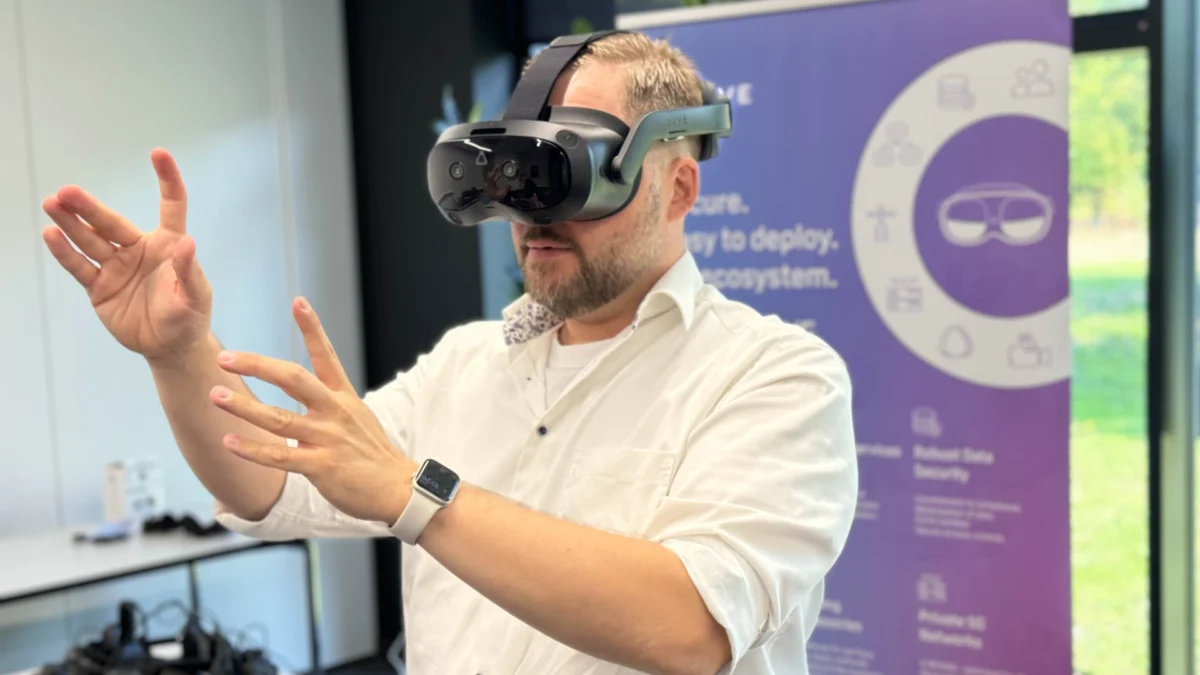
The trajectory of HTC, once the undisputed titan of the early Android smartphone era, has for the past decade been a study in managed decline and industrial survival. However, as the company enters the second half of 2026, there are burgeoning signs that the tailspin is leveling off. HTC is no longer attempting to out-muscle giants like Apple or Samsung in the smartphone arena; instead, it is betting its entire future on a three-pronged strategy: AI-integrated wearables, enterprise-grade Extended Reality (XR), and its proprietary metaverse platform, VIVERSE.
The upcoming launch of the VIVE Eagle smart glasses represents more than just a new product line—it is a high-stakes "hardware reset" intended to carve out a niche in a market currently dominated by Meta’s Ray-Ban collaborations.
Main Facts: The Current State of HTC’s Transformation
In July 2026, HTC released its latest financial performance indicators, revealing a consolidated revenue of NT$292 million (approximately $10 million USD) for June. While these figures represent an 8.5% year-over-year decline, and the first-half revenue for 2026 is down 9.7%, market analysts have noted a significant slowing in the rate of contraction. For a company that has seen its valuation and market share decimated since 2011, "stability at a smaller scale" is the new operational mandate.
The centerpiece of HTC’s 2026 roadmap is the VIVE Eagle, a pair of AI-powered smart glasses slated for a Q3 release in the United States and Europe. Unlike the bulky VR headsets of the past, the VIVE Eagle is designed for daily wear, leveraging artificial intelligence to provide utility rather than just immersive entertainment.
Key pillars of the VIVE Eagle’s value proposition include:
- Multi-Platform AI Integration: Unlike Meta or Google, which tether users to their proprietary ecosystems (Llama and Gemini, respectively), HTC is positioning the VIVE Eagle as an "Open AI" device. It will support multiple Large Language Models (LLMs), including Google Gemini and OpenAI’s GPT-4o, allowing users to choose their preferred assistant.
- Privacy-First Architecture: In a direct challenge to the data-harvesting models of Big Tech, HTC has committed to a policy where user data is not utilized to train AI models.
- VIVERSE Integration: The glasses serve as a lightweight portal into HTC’s spatial computing ecosystem, which currently boasts over 1.7 million monthly active users (MAU).
Chronology: From Smartphone Pioneer to XR Specialist
To understand HTC’s current position, one must look at the sequence of strategic retreats and pivots that have defined the last eight years.
2018: The Great Engineering Transfer
Following years of dwindling smartphone sales, HTC struck a $1.1 billion deal with Google. This agreement saw a massive portion of HTC’s smartphone engineering team and intellectual property transferred to the search giant. This team eventually became the backbone of the Google Pixel hardware division.
2021–2023: The Enterprise Hardening
Realizing that it could not compete with Meta’s subsidized Quest headsets in the consumer market, HTC shifted its focus toward high-end enterprise solutions. It launched the VIVE Focus 3 and later the VIVE XR Elite, targeting training, healthcare, and industrial design.
2024: The VIVE Focus Vision
In September 2024, HTC released the VIVE Focus Vision. Priced at $1,150, the headset was a hybrid device aimed at enthusiasts and professionals. While it offered robust tracking and high-fidelity visuals, it was criticized for its continued reliance on Fresnel lenses—a technology many competitors had abandoned in favor of slimmer "pancake" optics. This reinforced the perception that HTC was prioritizing rugged, reliable business hardware over cutting-edge consumer aesthetics.

2025: The Second Google Acquisition
In a move that surprised many industry observers, Google again tapped HTC’s talent pool in 2025, acquiring a significant portion of its XR engineering team. This fueled rumors that Google was preparing its own return to the AR/VR space, while simultaneously providing HTC with a much-needed cash infusion to sustain its independent operations.
2026: The AI Pivot
By early 2026, Chairwoman Cher Wang confirmed that the company’s focus would shift toward AI. This led to the announcement of the VIVE Eagle, marking HTC’s transition from a "headset company" to an "AI wearables company."
Supporting Data: Revenue, Reach, and the VIVERSE Metrics
While the financial headlines focus on the $10 million monthly revenue, the internal metrics of the VIVERSE platform provide a more nuanced view of HTC’s health.
VIVERSE Growth
Despite the general cooling of "metaverse" hype globally, HTC’s VIVERSE has maintained a steady upward trajectory. As of May 2026, the platform reported:
- 1.7 Million Monthly Active Users (MAU): A significant figure for a platform that does not have the massive social media funnel of Meta.
- 32,000 Pieces of Content: Ranging from virtual art galleries to corporate training modules.
- 14,000 Creators: Indicating a healthy, if niche, developer ecosystem.
Financial Context
The NT$292 million revenue in June 2026 is a far cry from the company’s 2011 peak, where monthly revenues often exceeded NT$30 billion. However, the 8.5% YoY decline is the smallest recorded in several years, suggesting that the company has finally "found its floor." The challenge now is moving from a stable floor to a growth ceiling.
The Hardware Gap
The VIVE Focus Vision’s $1,150 price point remains a barrier to mass-market adoption. In contrast, Meta’s Quest 3S and subsequent models have dominated the sub-$500 market. HTC’s data suggests that their average revenue per user (ARPU) in the enterprise sector is 4x higher than in the consumer sector, justifying their continued focus on high-margin business deployments.
Official Responses: The Vision of Cher Wang
HTC Chairwoman Cher Wang has remained a steadfast advocate for the company’s long-term vision of "VIVE Reality"—the convergence of VR, AR, 5G, and AI. In recent addresses to shareholders, Wang emphasized that the company’s survival is predicated on its ability to anticipate the "AI-First" era of computing.
"AI is not just a feature; it is the fundamental trend that will redefine how humans interact with technology," Wang stated during the most recent shareholder update. She highlighted that the VIVE Eagle is the first step in a broader strategy to decouple AI from the smartphone screen.
Regarding the competitive landscape, HTC executives have been vocal about their "agnostic" approach. "We do not want to build another walled garden," an HTC spokesperson noted during a recent press briefing. "The VIVE Eagle is designed for the user who wants the power of Google’s AI for research, OpenAI’s tools for creativity, and the privacy of an independent hardware manufacturer. We are the ‘Switzerland’ of the AI wearable world."

This positioning is a calculated attempt to appeal to the growing demographic of "privacy-conscious" and "platform-fatigued" consumers who are wary of the data practices of the world’s largest tech conglomerates.
Implications: The High-Stakes Gamble on "Open AI"
The success or failure of the VIVE Eagle and the broader 2026 strategy will have profound implications for the future of the XR industry and the survival of HTC as an independent entity.
1. The "Open AI" Differentiator
If the VIVE Eagle succeeds, it will prove that there is a viable market for hardware that is not tied to a single software ecosystem. This could force Meta and Apple to reconsider their closed-loop strategies. However, if users prioritize seamless integration over choice, HTC’s "open" approach may be viewed as a lack of a cohesive first-party software experience.
2. The Shift from VR to AI Wearables
HTC’s quiet VR roadmap suggests a realization that the "bulky headset" market is reaching saturation or has hit a plateau. By pivoting to smart glasses, HTC is chasing the "all-day wearable" dream. The VIVE Eagle must solve the "social acceptability" hurdle that hampered Google Glass and early AR attempts.
3. The Enterprise Moat
For now, enterprise revenue is keeping the lights on. Companies in the defense, medical, and manufacturing sectors value HTC’s local data processing and privacy guarantees. If HTC can successfully bridge its enterprise expertise into a "prosumer" smart glass product, it may find a lucrative middle ground that Meta and Apple have yet to fully exploit.
4. The Google Relationship
The 2025 transfer of XR engineers to Google raises questions about HTC’s ultimate endgame. Is the company being groomed for a total acquisition, or is it liquidating assets to fund its pivot? If the VIVE Eagle fails to gain traction in Q3 and Q4 of 2026, the company may have no choice but to sell its remaining IP and become a pure software/services firm centered around VIVERSE.
Conclusion
HTC is currently a company in a state of "dynamic equilibrium." It has successfully downsized and stabilized its losses, but it has yet to prove it can grow in the face of modern competition. The VIVE Eagle is more than just a pair of glasses; it is a litmus test for whether a former hardware king can reinvent itself as a privacy-focused AI innovator. As the Q3 2026 launch approaches, the tech world will be watching to see if HTC can finally soar, or if the Eagle will fail to take flight.