The Privacy-First Unicorn: How Even Realities is Challenging Meta’s Smart Glass Dominance
The landscape of wearable technology has long been a battlefield of trade-offs, where designers struggle to balance aesthetic appeal with functional utility. For years, the industry consensus—led by giants like Meta and Snap—has leaned toward "camera-first" devices, prioritizing content creation and first-person capture. However, a new contender has emerged from the hardware hubs of Shenzhen to challenge this paradigm.
Even Realities, a startup founded by former Apple engineers, recently achieved "unicorn" status after securing $150 million in a funding round that valued the company at $1 billion. This milestone marks a significant shift in investor sentiment and consumer demand, signaling that the future of smart glasses may not be about what the glasses see, but what they show the wearer. By stripping away the camera—the very feature Meta and Snap have championed—Even Realities is betting on a "display-first" philosophy that prioritizes privacy, professional utility, and social harmony.
Main Facts: A $1 Billion Bet on "Invisible" Technology
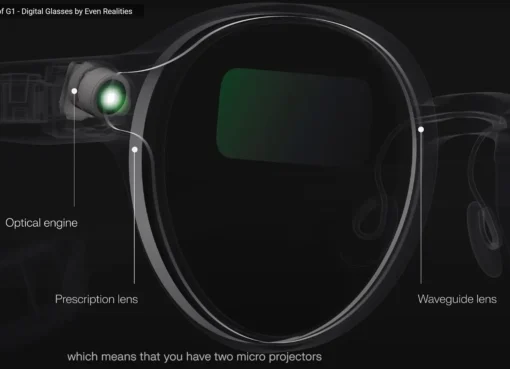
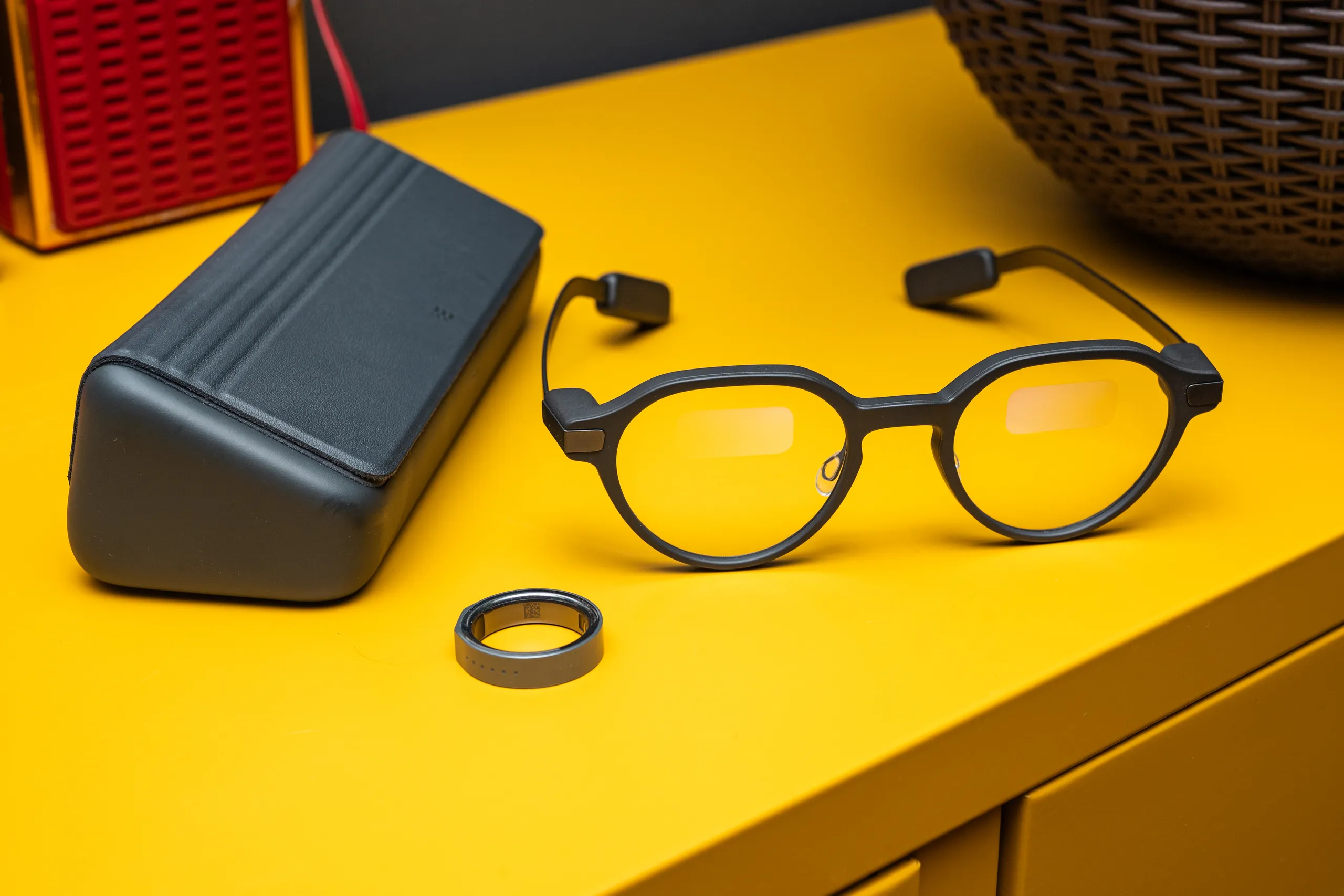
The core of Even Realities’ recent success lies in its latest flagship product, the Even G2. Unlike the Meta Ray-Ban Smart Glasses, which utilize a prominent camera for photo and video capture, the G2 is entirely camera-free. Instead, it focuses on a sophisticated Heads-Up Display (HUD) integrated directly into the lenses, powered by proprietary waveguide technology.
Key Highlights of the Funding and Valuation:
- Funding Amount: $150 million (Series B/Growth round).
- Valuation: $1 billion.
- Lead Investors: Meituan and Tencent.
- Strategic Backing: HSG (formerly Sequoia China).
- Geographic Reach: Though based in Shenzhen, over 50% of its user base is located in the United States, with significant market share in Europe, South Korea, and the Middle East.
The company’s strategy targets a specific, affluent demographic: professionals between the ages of 30 and 50. According to internal surveys, nearly a third of their users are executives. By offering a device that looks like premium traditional eyewear but functions as an AI-powered assistant, Even Realities has found a niche that Silicon Valley’s "social-first" wearables have largely ignored.

Chronology: From Apple’s Design Labs to Global Expansion
The trajectory of Even Realities is a testament to the rapid maturation of the augmented reality (AR) supply chain.
- 2023: The Genesis. Even Realities was founded by a team of veteran engineers, many of whom previously worked within Apple’s rigorous hardware and design ecosystem. Their mission was to solve the "social friction" problem—the awkwardness and privacy concerns associated with wearing cameras on one’s face.
- Late 2023 – Early 2024: The G1 Pilot. The company released its first-generation glasses, the G1. Despite a modest sales target of 10,000 units, the device outperformed expectations, proving there was a hungry market for subtle, non-intrusive smart eyewear.
- Q1 2025 – Q2 2026: Scaling Up. As the global intelligent eyewear market surged by 83% year-over-year, Even Realities ramped up its workforce from a lean team of 40 to nearly 400 employees.
- July 2026: The Unicorn Milestone. The $150 million funding round led by Tencent and Meituan officially placed the company in the top tier of AR hardware manufacturers, providing the capital necessary to scale the G2 and expand its AI software suite.
Supporting Data: Technical Specifications and Market Dynamics
To understand why Even Realities commanded a $1 billion valuation, one must look at the technical hurdles they have cleared. The company’s "Holistic Adaptive Optics" (HAO) is a standout achievement in the field of optical engineering.
Technical Breakdown of the Even G2
| Feature | Specification | Impact |
|---|---|---|
| Optics | Waveguide HUD (HAO) | Merges microchip and lens into a single unit. |
| Input | Dual Microphones & AI | Voice-driven interaction replaces visual sensors. |
| Control | Even R1 Smart Ring | Allows discreet navigation (scrolling/tapping) without touching the frame. |
| Battery Life | Up to 48 hours | Optimized for all-day wear with a charging case. |
| Prescription | -12.00 to +12.00 | High-index support for actual eyewear users. |
| Weight | Comparable to high-end acetate frames | Minimizes "wearer fatigue." |
Market Positioning and Pricing
The G2 starts at $599, but with the addition of prescription lenses and the R1 Smart Ring—a peripheral that allows for gesture control without reaching for the temples of the glasses—the average order value often approaches $1,000. This places Even Realities in the "Prosumer" category, competing more with high-end smartphones and tablets than with entry-level tech gadgets.
The data from Counterpoint Research supports this aggressive expansion. The 83% growth in the intelligent eyewear market in early 2026 suggests that consumers are finally moving past the "novelty" phase of AR and are looking for daily-driver devices.

Official Responses: Privacy as a Product Pillar
The leadership at Even Realities has been vocal about the philosophical differences between their hardware and that of their competitors.
Will Wang, CEO of Even Realities, emphasized that the decision to omit a camera was not a cost-saving measure, but a strategic design choice. "Smart glasses are the most personal computing devices ever created," Wang stated during the funding announcement. "Because they sit on your face and interact with your world, privacy cannot be an afterthought—it must be the foundation. By removing the camera, we remove the social barrier that has prevented smart glasses from entering the office, the restaurant, and the clinic."
The company has also addressed concerns regarding data security. In response to the rigorous privacy standards of the European Union, Even Realities confirmed that its "Conversate" AI features operate on a "transcription-only" basis. Audio is processed into text for real-time translation or summarization, but raw recordings are not stored on the device or the cloud, and all user data is protected by end-to-end encryption.
Investors from Tencent noted that the "display-first" approach aligns with the next wave of productivity tools. They view Even Realities not just as a hardware company, but as an AI interface company that allows professionals to access information without breaking eye contact during meetings.

Implications: The "Glasshole" Rejection and the Future of Work
The rise of Even Realities has profound implications for the broader tech industry, particularly for Meta and Snap.
1. The Rejection of the "Glasshole" Stigma
Since the original Google Glass, "social friction" has been the primary hurdle for smart eyewear. People are inherently uncomfortable around cameras they cannot control. By proving that a $1 billion company can be built on a camera-free model, Even Realities is suggesting that the "always-on" recording future envisioned by social media giants might be rejected by the professional class.
2. The AI Interface Revolution
The G2’s "Conversate" feature—an AI copilot that provides real-time conversation prompts, summaries, and translations—points to a new use case for AR. In professional settings, such as sales negotiations, medical consultations, or international diplomacy, the ability to receive subtle cues without looking at a phone screen is invaluable. This shifts the focus of smart glasses from capturing the world to interpreting it.
3. Hardware Convergence
The inclusion of the Even R1 Smart Ring as a control mechanism suggests that the future of AR might be a multi-device ecosystem. By offloading the "click and scroll" interaction to a ring, Even Realities avoids the awkwardness of users tapping their temples—a gesture that often draws unwanted attention in public spaces.

4. A Challenge to Meta’s Dominance
While Meta has the advantage of massive scale and integrated social ecosystems, Even Realities has the advantage of focus. Meta must balance the needs of teenagers on Instagram with the needs of professionals on Quest. Even Realities is laser-focused on the 30-50-year-old professional. If this demographic continues to adopt camera-free glasses, Meta may be forced to release a "Pro" or "Privacy" version of their Ray-Ban line that ditches the camera in favor of better optics.
Conclusion: Can Utility Outweigh Novelty?
The ultimate challenge for Even Realities remains the same one that plagued its predecessors: retention. While notifications and translations are useful, the company must prove that the G2 provides enough daily value to justify a $600-$1,000 investment. However, with $150 million in new capital and a clear mandate to dominate the professional market, Even Realities is no longer a fringe startup. It is the vanguard of a new movement in wearable tech—one where the most important feature is what the world doesn’t see.