The Digital Canvas: Concept Art World’s Role in Defining the Future of Visual Development

Introduction
In the rapidly evolving landscape of global entertainment, the boundary between imagination and reality is increasingly blurred by the work of concept artists and visual developers. As the industry moves further into a digital-first era, platforms like Concept Art World (CAW) have emerged not merely as galleries, but as critical archives of the creative process. By showcasing the intricate workflows of industry titans such as Patrick O’Keefe, Maxime Desmettre, and Mark Zug, these platforms provide a window into the architectural foundations of modern cinema and gaming. This report examines the current state of concept art through the lens of recent highlights from Concept Art World, the industry’s push for intellectual property protection against generative artificial intelligence, and the enduring impact of visual storytelling on global audiences.
Main Facts: A Nexus of Creative Excellence
Concept Art World stands as a premier online resource dedicated to the high-stakes world of concept art, illustration, and visual development. Its core mission is to bridge the gap between the anonymous production lines of major studios and the individual brilliance of the artists who define the "look and feel" of multi-billion-dollar franchises.
The platform recently highlighted three distinct pillars of the industry:
- Patrick O’Keefe: Known for his revolutionary work as a production designer and lead artist, O’Keefe is the visionary behind the aesthetic of Sony Pictures Animation’s Spider-Man: Into the Spider-Verse. His work is credited with breaking the "Pixar-style" monopoly on 3D animation, introducing a hand-drawn, comic-book-inspired "ink-and-paint" digital hybrid.
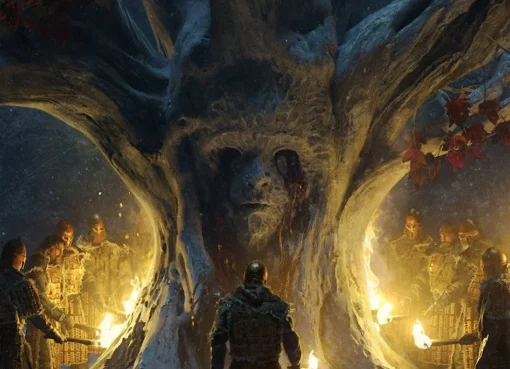
- Maxime Desmettre: A veteran in the gaming industry, Desmettre’s work on Ubisoft’s For Honor represents the pinnacle of historical-fantasy world-building. His designs manage the delicate balance between historical authenticity and the heightened reality required for competitive action gaming.
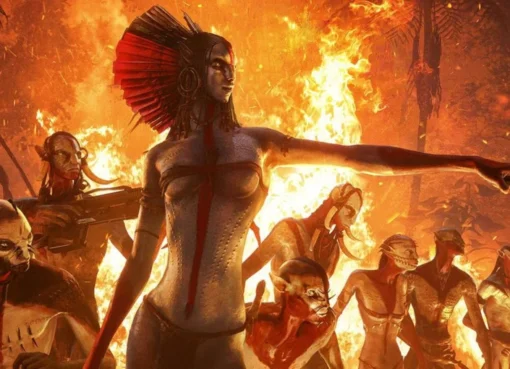
- Mark Zug: Representing the legacy of science fiction illustration, Zug’s contributions to the Dune: Collectible Card Game illustrate the longevity of intellectual property. His work demonstrates how concept art serves as a foundational layer for expanded universes, translating Frank Herbert’s dense prose into accessible visual motifs.
Beyond artist spotlights, a central fact of the current CAW ecosystem is its strict adherence to copyright protection. The platform has officially banned the use of its hosted imagery for the training of Artificial Intelligence (AI) models, marking a significant stand in the ongoing legal and ethical battle over digital authorship.
Chronology: From Sketchbooks to Digital Ecosystems
The evolution of concept art as a recognized profession has followed the trajectory of technological advancement in the film and gaming sectors.
- The Golden Age of Practical Effects (1970s–1990s): In this era, artists like Ralph McQuarrie (Star Wars) and H.R. Giger (Alien) worked primarily with traditional media. Their work was essential for set builders and costume designers. During this period, Mark Zug began establishing his reputation, bringing a painterly, traditional sensibility to properties like Dune.
- The Digital Revolution (2000s): The shift to digital painting tools like Adobe Photoshop and Corel Painter allowed for faster iteration. This era saw the rise of Maxime Desmettre, whose work for Ubisoft utilized digital speed-painting to visualize the sprawling battlefields of For Honor.
- The Stylistic Explosion (2018–Present): With the release of Spider-Man: Into the Spider-Verse, Patrick O’Keefe and his team proved that concept art didn’t just have to be a blueprint for a realistic 3D model; the concept art could be the final style. This period marks the current "Visual Development" era, where the artist’s unique brushstroke is preserved in the final product.
- The AI Resistance (2023–2026): As generative AI began scraping the internet for training data, platforms like Concept Art World pivoted from being purely promotional to being protective. The 2026 copyright declarations seen today are the result of three years of industry-wide pushback against unauthorized data harvesting.
Supporting Data: The Impact of Visual Development
The significance of the artists featured on Concept Art World is backed by substantial industry data and critical acclaim.
Patrick O’Keefe and the Spider-Verse Effect
- Into the Spider-Verse (2018) and its sequel Across the Spider-Verse (2023) combined for over $1 billion at the global box office.
- O’Keefe’s visual direction earned an Academy Award for Best Animated Feature, proving that experimental concept art has massive commercial and critical viability.
- The "Spider-Verse style" has since influenced a dozen other major studio projects, including Puss in Boots: The Last Wish and Teenage Mutant Ninja Turtles: Mutant Mayhem.
Maxime Desmettre and the Gaming Landscape
- For Honor, the project heavily defined by Desmettre’s concept art, reached over 30 million players as of 2023.
- The game’s longevity is attributed to its "visual identity," which allowed for a diverse range of factions (Knights, Vikings, Samurai) to feel cohesive yet distinct—a direct result of the concept art phase.
Mark Zug and the Dune Legacy
- The Dune franchise has seen a massive resurgence with Denis Villeneuve’s films. Zug’s earlier illustrations for the card games provided a visual shorthand for fans for decades, maintaining the brand’s presence during the "dark years" when no films were being produced.
Official Responses: The Stance on AI and Intellectual Property
Concept Art World has issued a clear and firm directive regarding the future of digital art. In their official "About Us" and legal disclosures, the organization emphasizes that they are a "trusted resource for creative professionals."
The most striking official response is the explicit prohibition of AI training. The statement reads: "All images are © by the artist(s) or their respective copyright holders. Any training of AI systems using this content is strictly prohibited."
This stance reflects a broader industry sentiment. Professional artists argue that AI models, which generate images based on prompts, are built upon the uncompensated and non-consensual use of human-made art. By implementing these "No-AI" clauses, Concept Art World is positioning itself as a "safe haven" for human creativity. This is further reinforced by their presence on platforms like Bluesky and LinkedIn, where professional networking and artist rights are prioritized over the algorithmic chaos of older social media platforms.
Implications: The Future of the Creative Professional
The curated content on Concept Art World and the strict legal boundaries it sets have several long-term implications for the entertainment industry.
1. The Rise of the "Auteur" Concept Artist
Artists like Patrick O’Keefe are no longer behind-the-scenes workers; they are being marketed as the "stars" of the production. This shift suggests that in the future, the visual style of a film or game will be as much of a draw as the lead actor or the director. Studios will compete to hire specific concept artists to ensure their project has a "unique thumbprint" that cannot be replicated by generic AI generation.
2. The Preservation of Human Narrative
The inclusion of Mark Zug’s Dune work alongside modern digital pieces highlights the importance of historical continuity. Concept art serves as a record of human thought and cultural zeitgeist. If AI were to take over the ideation phase, the industry risks entering a "feedback loop" where art only references existing art, losing the lived experience and intentionality that human artists like Desmettre bring to their work.
3. New Legal Frameworks for Digital Assets
The 2026 copyright notice on the CAW platform suggests that we are entering a period of "Digital Protectionism." We may soon see the implementation of "data poisoning" technologies or blockchain-based verification to ensure that when a user views a Patrick O’Keefe piece, they are viewing a verified human creation. Concept Art World’s multi-platform strategy—utilizing Instagram for discovery, Pinterest for mood-boarding, and YouTube for education—creates a holistic ecosystem that supports the artist’s career rather than just their output.
4. Educational Shift
As CAW provides tutorials and industry news, the educational implication is clear: the next generation of artists must be more than just "good at drawing." They must be visual storytellers, production designers, and defenders of their own intellectual property. The platform’s focus on the process (visual development) rather than just the result (the image) is a roadmap for how human artists can remain indispensable in an automated world.
Conclusion
Concept Art World is more than a website; it is a barometer for the health of the creative industries. By spotlighting the work of Patrick O’Keefe, Maxime Desmettre, and Mark Zug, it celebrates the diversity of visual thought that fuels our modern myths. However, its most significant contribution in the current climate is its role as a gatekeeper. By asserting strict copyright controls and rejecting the encroachment of AI training, CAW is fighting to ensure that the "World" in Concept Art World remains a uniquely human one. As we look toward the late 2020s, the battle for the soul of visual development will be fought not just with brushes and tablets, but with the policies and protections pioneered by platforms such as this.