All Aboard the Wholesome Express: A Deep Dive into Locomochi and the Evolution of the Cozy Puzzle Genre

The landscape of independent game development has undergone a seismic shift over the last decade. Once dominated by high-octane "twitch" platformers and punishing "soulslike" experiences, the industry has seen a flourishing of the "cozy" genre—games designed to soothe rather than stress. At the forefront of this movement is a new wave of spatial puzzles that prioritize experimentation over execution. The latest title to capture the attention of industry critics and enthusiasts alike is Locomochi, a train-based puzzle game that recently made waves at the Pocket Gamer Connects (PGC) Barcelona conference.
Developed by the creative minds at Gamflix, Locomochi seeks to redefine the "train-sim" subgenre. While titles like Mini Metro focus on high-pressure transit management and Railbound emphasizes pathfinding, Locomochi carves out its own niche by blending tactile locomotive mechanics with a non-verbal, emoji-driven narrative. As the game moves toward its highly anticipated release on Steam, it stands as a testament to the enduring appeal of wholesome aesthetics paired with deep, intuitive mechanics.
Main Facts: Redefining the Locomotive Puzzle
At its core, Locomochi is a game about connection—both literally and figuratively. Players take control of a charming locomotive tasked with navigating a series of increasingly complex rail networks to deliver goods and connect various carriages. However, unlike traditional rail games that treat the engine as a forward-moving entity, Locomochi introduces a bidirectional movement system that forces players to rethink their spatial logic.
Bidirectional Mastery and Carriage Mechanics
The standout feature of Locomochi is the fluidity of its movement. In most rail puzzles, the player is restricted by the "front" of the train. In Locomochi, the engine is versatile. Players can drive backward, utilizing the rear of the engine to hook into wagons and cargo. This removes the "one-way" mindset that often plagues the genre, allowing for a more sandbox-style approach to problem-solving.
The mechanics involve more than just moving from Point A to Point B. Players must interact with track switches, levers, and environmental triggers to open new routes. The challenge lies in the order of operations: Which carriage needs to be picked up first? How do you reposition the engine to push a wagon into a dead-end siding? The game encourages a "tinkering" mindset, where failure is impossible and experimentation is the only path forward.
Communication Through Emojis
In a bold narrative choice, Gamflix has opted to remove text-based dialogue entirely. The world of Locomochi is populated by quirky characters who communicate exclusively through emojis. This design choice serves two purposes:
- Universal Accessibility: By removing language barriers, the game becomes instantly playable for a global audience, regardless of their native tongue.
- Atmospheric Cohesion: The use of emojis reinforces the "wholesome" aesthetic, making interactions feel lighthearted and playful. A station master might display a "package" and a "question mark" emoji, instantly conveying the objective without the need for a localized script.
Chronology: From Concept to PGC Barcelona
The development of Locomochi follows a trajectory common among successful indie titles, yet it is marked by a specific focus on the "mobile-to-PC" bridge that has become a hallmark of modern puzzle design.
The Genesis of Gamflix’s Vision
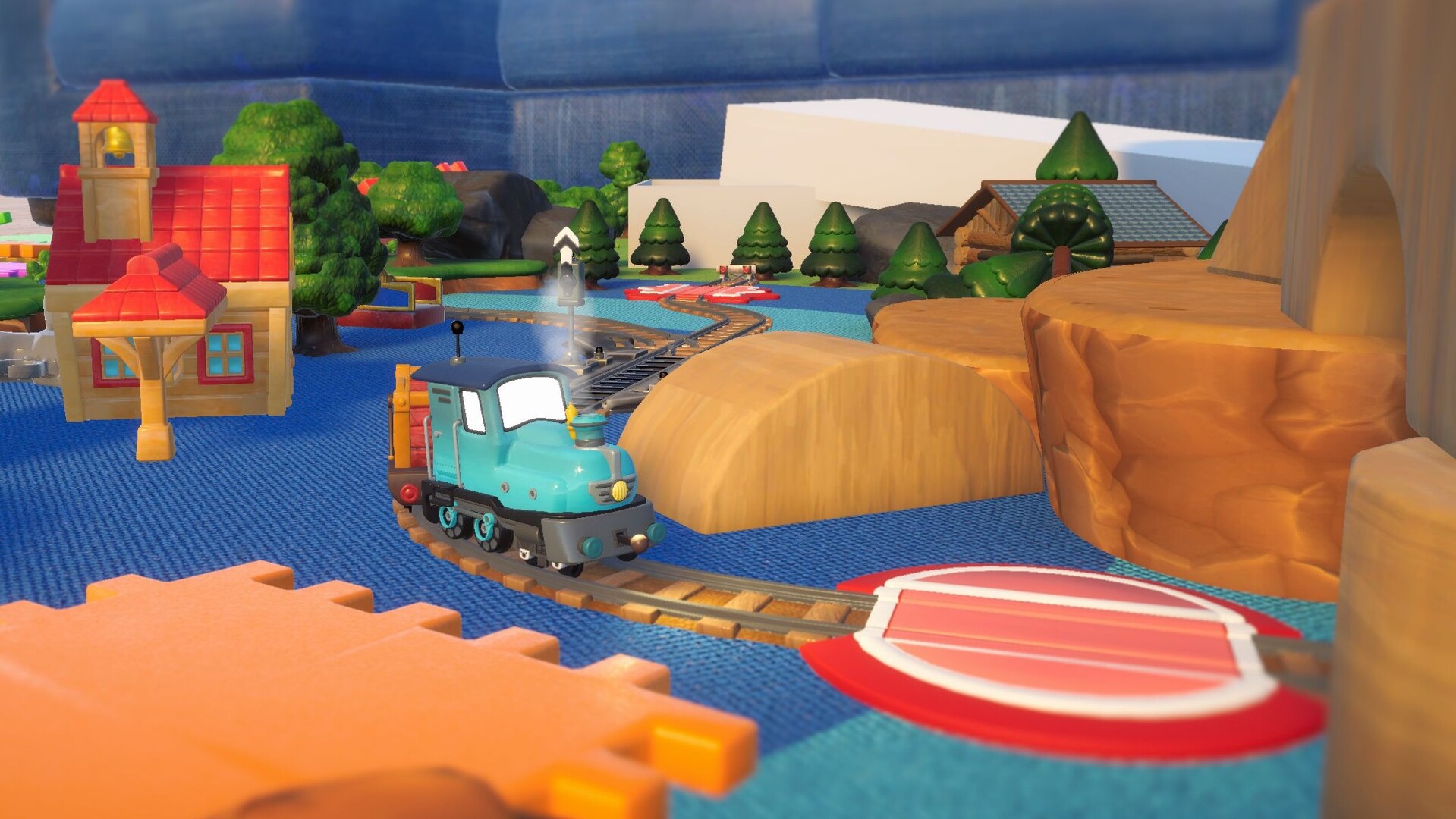
The project began as an exploration of tactile mechanics. The developers at Gamflix wanted to capture the feeling of playing with a physical wooden train set. Early prototypes focused on the "snap" of the magnets connecting the carriages, a sensation that translated well into the digital space.
The Turning Point: Pocket Gamer Connects Barcelona
The real momentum for Locomochi built during the Pocket Gamer Connects event in Barcelona. PGC is a premier conference for the global mobile gaming industry, but it has increasingly become a hub for "cross-platform" indies. When Locomochi was showcased, it immediately stood out for its polished visuals and its departure from the aggressive monetization strategies often seen in mobile-adjacent titles.
During the event, hands-on previews highlighted the game’s lack of a timer—a rarity in the puzzle genre. This feedback loop between developers and industry peers solidified the game’s identity as a "cozy" experience. Following the success in Barcelona, the developers shifted focus toward the Steam release, ensuring that the PC version would offer the high-fidelity visuals and precise controls expected by desktop gamers.
Supporting Data: The Rise of the "Wholesome" Market
To understand why Locomochi is generating such significant buzz, one must look at the broader market data surrounding "wholesome" and "cozy" games.
The "Cozy" Boom on Steam
According to SteamDB and market analysts, the "Cozy" tag has seen a 400% increase in usage over the last four years. Games like Unpacking, A Little to the Left, and Stardew Valley have proven that there is a massive, underserved demographic looking for low-stress gaming experiences.
- Engagement Metrics: Data shows that cozy puzzle games have higher "long-tail" retention rates compared to competitive titles. Players return to these games to relax, often treating them as "digital fidget toys."
- Demographic Shift: The audience for these games is significantly more diverse than the traditional "hardcore" gaming demographic, with a nearly 50/50 split between male and female players.
The Success of Train-Based Puzzles
The subgenre of "Train Puzzles" has its own track record of success. Railbound, released in 2022, received critical acclaim and multiple awards for its design. Locomochi is entering a market that is already primed for its mechanics but hungry for a fresh aesthetic. By removing the "punishment" aspect (timers/score penalties), Locomochi positions itself even further into the relaxation category than its predecessors.
Official Responses and Developer Philosophy
While Gamflix has kept specific release dates under wraps, their public communications and Steam descriptions offer a clear window into their design philosophy.
"No Correct Way to Drive"
In statements provided during the PGC Barcelona showcase, the developers emphasized the "sandbox" nature of their puzzles. "We wanted to abandon the mindset that there is a correct way and an incorrect way to drive around the track," a representative noted. This philosophy is evident in the level design, which often features multiple routes to reach the same objective.
Focus on Wholesome Logic
The developer’s focus on "wholesomeness" isn’t just about the art style; it’s about the player’s emotional state. By ensuring there are no ways to get "fully stuck," Gamflix is prioritizing the "flow state" of the player. If a player makes a mistake, they can simply reverse or flip a switch to reset the board, rather than facing a "Game Over" screen. This "soft" approach to difficulty is a deliberate design choice intended to make Locomochi a "wind-down" game for the end of a busy day.
Implications: The Future of Indie Puzzle Design
The emergence of Locomochi has several implications for the future of the indie gaming industry and the puzzle genre specifically.
1. The Decline of the "Fail State"
Locomochi represents a broader trend where the "Fail State" is being phased out in favor of "Iterative Discovery." This shift suggests that developers are moving away from games as a test of skill and toward games as a medium for interactive storytelling and relaxation. As more titles follow this path, we may see a new standard for puzzle design where the "challenge" is purely intellectual, stripped of any mechanical pressure.
2. Universal Design as a Standard
The success of the emoji-based communication system in Locomochi could lead to more developers experimenting with non-verbal storytelling. This has massive implications for localization costs. By designing a game that doesn’t require translation, indie developers can allocate more budget toward art and sound, potentially leading to higher-quality "AA" indie titles.
3. The "Steam Wishlist" Strategy
The current call to action for Locomochi—encouraging fans to wishlist the game on Steam—highlights the critical importance of the platform’s algorithm. For indie developers, wishlists are the primary metric for success before a game even launches. The buzz generated at PGC Barcelona is being directly funneled into these metrics, showcasing a sophisticated understanding of modern game marketing.
Conclusion: A Bright Future on the Tracks
Locomochi is more than just another puzzle game about trains. It is a carefully crafted experience that sits at the intersection of modern design philosophy and nostalgic play. By embracing bidirectional movement, universal emoji communication, and a non-punitive difficulty curve, Gamflix is poised to deliver one of the most charming titles of the upcoming season.
As the industry continues to evolve, the success of games like Locomochi will likely encourage more developers to explore the "cozy" frontier. For now, players can only wait and wishlist, looking forward to the day they can finally pull the lever, connect the carriages, and embark on a stress-free journey through the whimsical world of Locomochi.
While a firm release date remains elusive, the polish displayed in the reveal trailer and the positive reception at PGC Barcelona suggest that when this train finally arrives at the station, it will be well worth the wait. For those looking to keep an eye on this rising star, the game is currently available for wishlisting on Steam, where it continues to climb the ranks of the most anticipated indie titles.