The Digital Renaissance of Miniature Painting: BrushHammer Brings Mixed Reality Crafting to Meta Quest
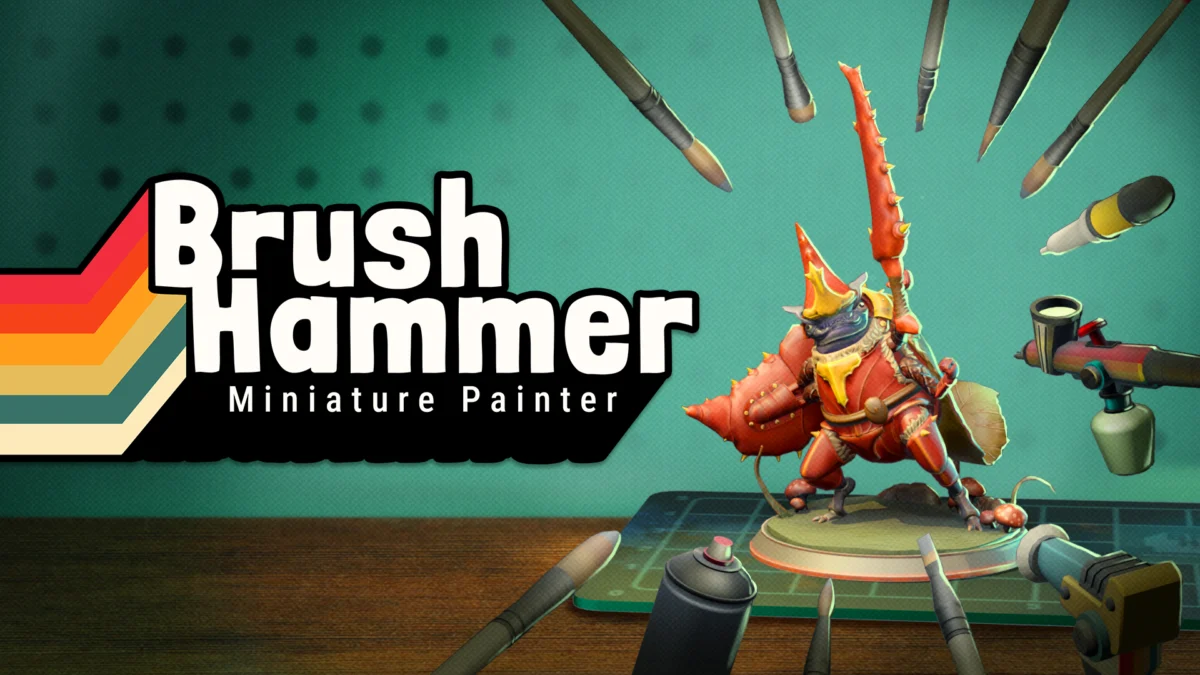
The intersection of traditional hobbyist culture and cutting-edge spatial computing is set to reach a new milestone this month. Soliton Interactive has officially confirmed that its highly anticipated title, BrushHammer: Miniature Painter, will debut on the Meta Quest platform on August 26. Revealed through a comprehensive trailer during the recent VR Games Showcase, the application promises to translate the meticulous, often expensive, and space-consuming hobby of miniature model painting into a seamless, "mistake-proof" mixed reality (MR) experience.
As the virtual reality landscape shifts toward "cozy" gaming and utility-based creative tools, BrushHammer represents a significant step in the evolution of digital craftsmanship. By leveraging the passthrough capabilities of modern headsets like the Meta Quest 3 and Quest Pro, the app allows users to remain grounded in their physical environment while engaging with a virtual workbench that rivals the complexity of a professional studio.
I. Main Facts: A New Frontier for Virtual Artistry
At its core, BrushHammer: Miniature Painter is a specialized creative suite designed for the Meta Quest ecosystem. The primary objective of the software is to replicate the tactile satisfaction of painting small-scale figurines—a hobby popularized by franchises like Warhammer 40,000 and Dungeons & Dragons—without the logistical hurdles associated with the physical craft.
Key Launch Details
- Release Date: August 26, 2024.
- Platform: Meta Quest (supporting Quest 2, Quest 3, and Quest Pro).
- Developer: Soliton Interactive.
- Core Mechanics: High-fidelity painting tools, kitbashing, mixed reality integration, and an "Undo" system.
The application distinguishes itself from general painting apps like Tilt Brush or Vermillion by focusing specifically on the geometry and workflows of miniature modeling. This includes specialized lighting environments to check for "washes" and "highlights," as well as the ability to manipulate models in 3D space with a level of precision that mimics holding a physical object.
II. Chronology: From Concept to Showcase
The journey of BrushHammer reflects a broader trend in the VR industry: the move from pure gaming to "lifestyle" applications.
The Initial Reveal
Soliton Interactive first teased the concept of a dedicated miniature painting simulator earlier this year, tapping into a niche but fervent community of tabletop gamers. The initial pitch focused on solving the "barrier to entry" for miniature painting—namely the cost of paints, the steady hand required, and the permanent nature of mistakes.
The VR Games Showcase Highlight
The definitive timeline for the project was solidified during this week’s VR Games Showcase. The event, which highlights upcoming titles for the Meta Quest and PCVR platforms, featured a one-minute gameplay trailer for BrushHammer. This video demonstrated the fluidity of the interface and, crucially, the integration of Mixed Reality. Unlike previous iterations of digital painting, the trailer showed users painting on their actual coffee tables, with virtual models casting realistic shadows onto real-world surfaces.
The Road to August 26
Following the showcase, Soliton Interactive opened the "Wishlist" page on the Meta Store. The developer has used the weeks leading up to the launch to refine the "Career Mode," a feature intended to give players a sense of progression through specific painting challenges and commissions, though the studio has remained cautious about whether this mode will be fully featured on day one or added via a post-launch update.
III. Supporting Data: The Mechanics of Virtual Craftsmanship
To understand why BrushHammer is generating significant interest, one must look at the specific technical features that differentiate it from real-world painting.
The Toolset: Beyond the Brush
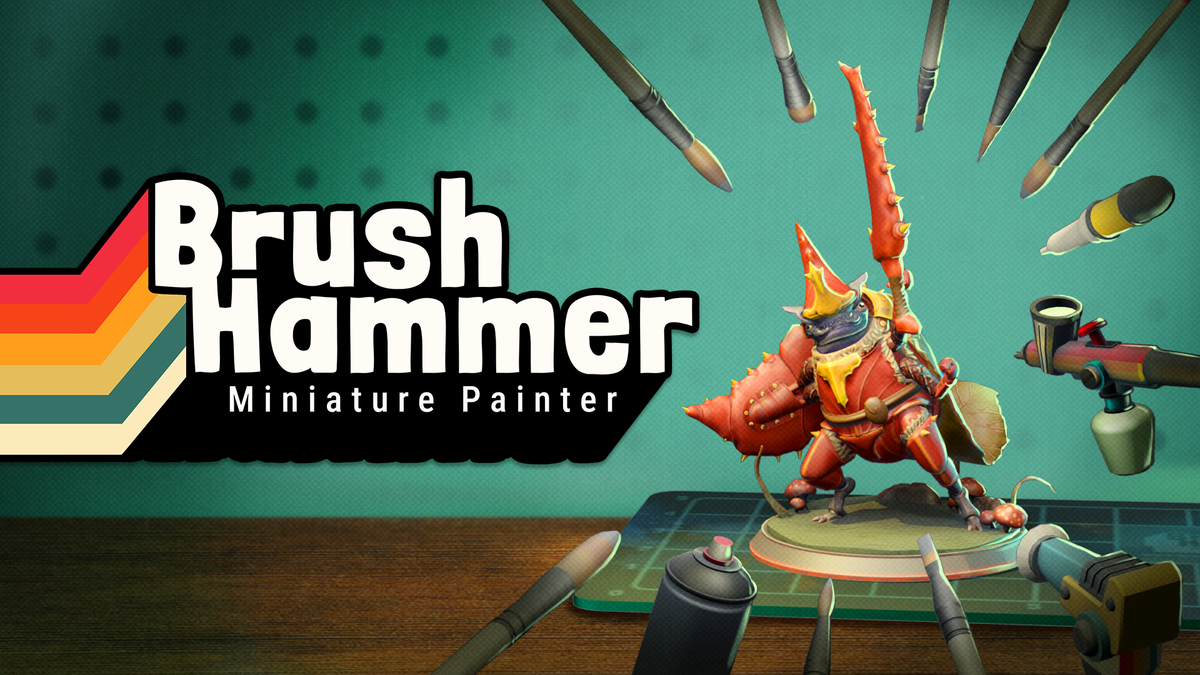
Soliton Interactive has developed a physics-informed painting system. The app includes:
- Traditional Brushes: Varying sizes for base coating and fine detail work.
- Airbrushes: For smooth gradients and large-scale priming.
- Spray Cans: Useful for base-layering and "zenithal" highlighting.
- The "Undo" Safety Net: Perhaps the most significant "data point" for hobbyists is the inclusion of an undo/redo function. In real-world painting, a slip of the hand can ruin hours of work, often requiring the model to be stripped in harsh chemicals. In BrushHammer, the digital nature of the medium removes the "fear of failure," encouraging experimentation.
Kitbashing and Customization
One of the most complex aspects of the miniature hobby is "kitbashing"—taking parts from different model kits to create a unique figure. BrushHammer includes handcrafted collections of models that are designed to be modular. Users can swap heads, weapons, and limbs, creating bespoke characters that can then be "displayed" in their actual room using the Quest’s persistent spatial anchors.
The Economics of Virtual Painting
While the price of the app has yet to be finalized, the economic implications are clear. A standard set of high-quality acrylic paints and a single high-end miniature can easily exceed $100. BrushHammer offers an infinite supply of "paint" and an ever-expanding library of models for a one-time software cost, making it an attractive entry point for curious newcomers or a "sketchpad" for veteran painters to test color schemes before applying them to physical plastic.
IV. Official Responses: The Developer’s Vision
Soliton Interactive has positioned BrushHammer as a "cozy" experience, a term that has become a powerful marketing descriptor in the gaming industry. According to statements accompanying the trailer, the developers intended to create a space that is as much about relaxation as it is about artistic output.
Addressing the "Clumsy" Painter
In their communications, the developers specifically addressed the "clumsiness" factor. A spokesperson for Soliton Interactive noted that the app was designed to democratize a hobby that often feels gate-kept by physical dexterity. "We wanted to remove the mess of supplies and the anxiety of spills," the developer stated. This philosophy extends to the UI, which is designed to be intuitive, allowing players to focus on the art rather than navigating complex menus.
The Future of Career Mode
Regarding the planned "Career Mode," Soliton Interactive has expressed a desire to provide a structured experience for those who need more than just a sandbox. While they have not confirmed if the mode will be available at launch on August 26, they have signaled that long-term support is a priority. The goal is to simulate the experience of a professional "commission painter," where players receive requests to paint models to specific standards, earning rewards and unlocking new tools as they progress.
V. Implications: The Impact on Hobby Culture and MR Technology
The release of BrushHammer: Miniature Painter carries weight beyond its status as a simple creative app. It serves as a case study for the future of Mixed Reality and the digital transformation of physical hobbies.
1. The Democratization of the Hobby
Miniature painting has historically been a high-friction hobby. It requires significant physical space, specialized lighting, ventilation (for airbrushing), and a steady supply of consumables. By virtualizing this, BrushHammer makes the hobby accessible to people living in small apartments, those with physical tremors who benefit from digital stabilization, and those who cannot afford the recurring costs of physical kits.
2. A Benchmark for Mixed Reality Utility
For Meta, BrushHammer is exactly the kind of content needed to justify the Quest 3’s focus on passthrough technology. While "room-scale" gaming is impressive, "desk-scale" utility applications demonstrate how MR can enhance a user’s daily life. Being able to sit at one’s own desk, see their actual hands, but interact with a virtual palette and model, bridges the gap between the digital and physical worlds in a way that feels natural and productive.
3. Environmental and Safety Considerations
From a sustainability standpoint, digital painting eliminates the waste associated with plastic sprues, chemical paint strippers, and aerosol propellants. For parents, it offers a way to let children explore a complex craft without the risk of staining furniture or accidental ingestion of toxic materials.
4. The "Digital Twin" Potential
Looking further ahead, applications like BrushHammer could eventually integrate with 3D printing workflows. While not currently confirmed for this title, the ability to paint a model in MR and then export that texture map for a 3D-printed physical version is the logical next step for the industry. It transforms the app from a standalone game into a professional-grade prototyping tool.
Conclusion
As August 26 approaches, BrushHammer: Miniature Painter stands as a testament to the versatility of the Meta Quest platform. By focusing on the "cozy" and meditative aspects of a traditionally demanding hobby, Soliton Interactive is carving out a unique niche in the VR market. Whether it serves as a training ground for future master painters or a stress-free sanctuary for those who just want to create without the cleanup, BrushHammer is poised to become a staple of the mixed reality creative suite.
The success of the app will likely be measured not just by its sales, but by how effectively it captures the "soul" of the hobby—the quiet, focused joy of watching a gray piece of plastic (or pixels) transform into a vibrant work of art. For the "clumsy" and the "creative" alike, the barrier to entry for miniature painting is about to vanish.