The Shadow Launch: Unpacking the Accidental Leak of Anthropic’s Claude Opus 5
The artificial intelligence sector is currently navigating a period of unprecedented acceleration, where the interval between model iterations has shrunk from years to mere months. In this high-stakes environment, Anthropic, the safety-focused AI firm founded by former OpenAI executives, has found itself at the center of a whirlwind of speculation. A series of digital breadcrumbs, appearing to stem from a glitch in the company’s internal routing systems, has provided the first concrete evidence that "Claude Opus 5"—the successor to the company’s most powerful model tier—is not only functional but is already being integrated into live environments.
The leak, which originated from a technical fallback event, suggests that Anthropic is on the verge of a major release designed to reclaim the "coding king" title from OpenAI’s GPT-5.6. As developers and researchers pore over the leaked screenshots, the incident offers a rare glimpse into the complex scaffolding of safety filters and model hierarchies that power the modern AI experience.
1. Main Facts: The "Opus 5 High" Incident
The catalyst for the current industry frenzy was a screenshot circulated on X (formerly Twitter) and within elite AI developer circles. The image depicts a standard user interaction within the Claude interface, where a user requested research ideas beyond traditional mathematical conjectures. While the AI’s response—covering algorithm discovery, quantum circuit synthesis, and clinical trial reanalysis—was intellectually robust, the real revelation lay in the system status message at the bottom of the interface.
The UI clearly displayed the notification: "Switched to Opus 5."
Further investigation of the model selection menu in the screenshot revealed a tier labeled "Opus 5 High," alongside an option to "Edit and retry with Fable 5." This suggests a multi-layered architecture where "Fable 5" serves as the primary, perhaps more experimental or safety-restricted interface, while "Opus 5" acts as the heavy-duty computational engine.
The leak appears to have been triggered by Anthropic’s sophisticated safety infrastructure. According to a second screenshot attributed to an Anthropic employee, the user’s prompt—which touched upon various scientific research fields—tripped "Fable 5’s" sensitive biology classifiers. In such instances, the system is designed to "drop" or "fallback" the session to a different model tier to ensure the request is handled within safety parameters without outright refusing the user. Traditionally, this fallback has been to Opus 4.8; however, the system instead routed the user to the unreleased Opus 5.
2. Chronology: The Road to the Opus 5 Leak
The timeline of Anthropic’s model evolution explains why this leak is particularly significant. To understand where we are, we must look at the trajectory of the Claude 3 and 3.5 series.

- March 2024: Anthropic releases the Claude 3 family (Haiku, Sonnet, and Opus). Opus 3 becomes the first model to objectively challenge GPT-4’s dominance in complex reasoning and coding.
- June 2024: The release of Claude 3.5 Sonnet shocks the industry. Despite being a "mid-tier" model, 3.5 Sonnet outperforms the original Opus 3, setting a new benchmark for speed and coding capability.
- Late 2024 – Early 2025: Speculation mounts regarding "Claude 4" or "Claude 3.5 Opus." However, internal naming conventions appear to have shifted toward a new numbering system: the 4.8 and 5.0 series.
- The Past 14 Days: Rumors intensified that Opus 5 would launch during the current week. Developers noted "strange routing behavior" in the Claude API and web interface, with some reporting that the model’s "vibe"—its reasoning depth and coding precision—had suddenly shifted.
- The Leak: The "Opus 5 High" screenshot emerges, confirming that the model is live on Anthropic’s servers and being used as a fallback for the "Fable 5" safety layer.
- The Current Delay: Despite the expected launch window, Anthropic has remained silent. Sources suggest a last-minute delay related to scaling costs and the "token-hungry" nature of the new architecture.
3. Supporting Data: Fallback Routing and Technical Specifications
The mechanism of the leak provides technical insight into how Anthropic manages its model fleet. The transition from Fable 5 to Opus 5 is not merely a name change; it represents a strategic shift in how "frontier" models are deployed.
The Role of Classifiers
Anthropic utilizes "Sensitive Area Classifiers" to prevent the misuse of AI in fields like cybersecurity, chemical engineering, and biology. When a prompt is flagged, the system does one of two things: it either refuses the prompt or routes it to a model with a different safety-to-performance ratio. The fact that Opus 5 is being used as a fallback for Fable 5 suggests that Opus 5 has undergone rigorous "Red Teaming" and is considered stable enough to handle sensitive queries that the more volatile Fable 5 cannot.
Performance Indicators
Early testers who believe they were "shadow-routed" to Opus 5 have reported significant leaps in specific domains:
- 3D SVG Generation: Users reported the ability to generate complex, multi-layered vector graphics and 3D visualizations that previously crashed or confused Claude 3.5 Sonnet.
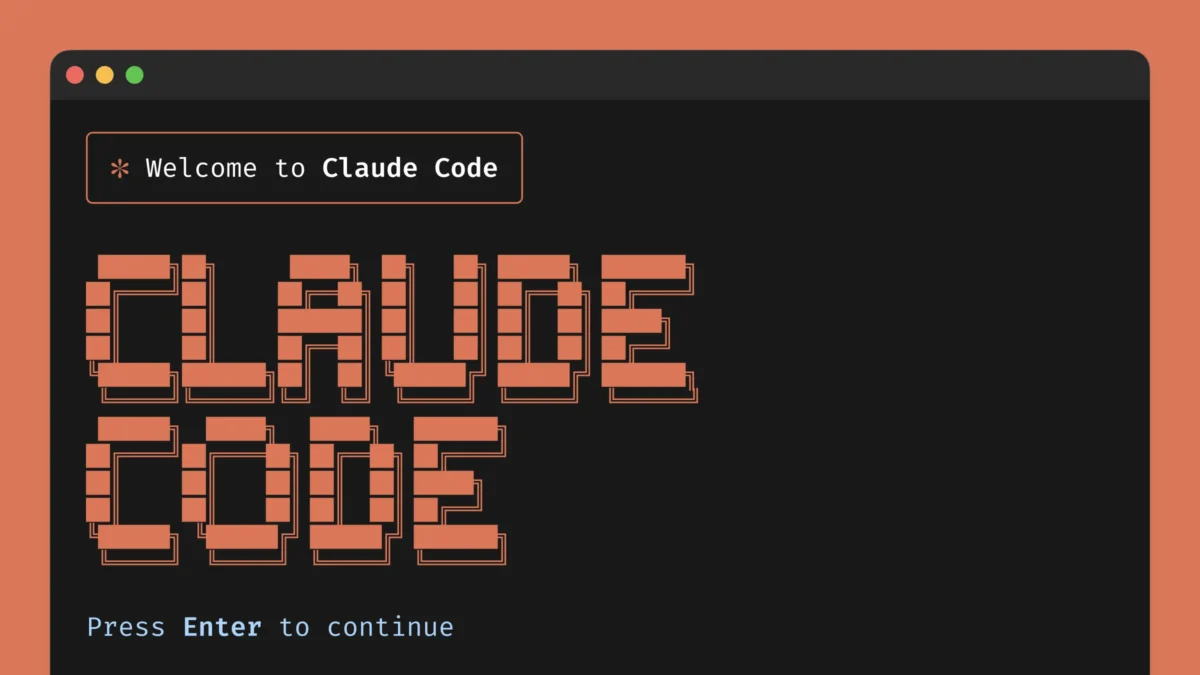
- Recursive Debugging: In coding environments (specifically using "Claude Code"), the model showed a 30-40% improvement in identifying logic errors in large-scale repositories compared to Opus 4.8.
- Context Management: Opus 5 appears to handle near-limit context windows (200k+ tokens) with significantly less "needle-in-a-haystack" loss, a common failure point for current LLMs.
4. Official Responses and the "Silent Testing" Strategy
Anthropic has maintained a policy of "no comment" regarding the Opus 5 leak. This silence is consistent with the company’s historical approach to product launches. Unlike the hype-driven marketing of competitors, Anthropic often prefers "silent testing" or "staged rollouts."
By quietly routing a fraction of 1% of traffic through a new model, Anthropic can:
- Measure Inference Costs: Determine exactly how much compute power a wide-scale release will consume.
- Validate Safety Guardrails: Observe how the model handles real-world "jailbreak" attempts in a controlled environment.
- A/B Test Quality: Compare user satisfaction scores between the current flagship and the upcoming version without the bias of "new model excitement."
The leaked employee post—if authentic—serves as a de facto confirmation. The post explained that the "sensitive biology classifiers" were the culprit, essentially admitting that the infrastructure for Opus 5 is integrated and functional.
5. Implications: The Economic and Competitive Landscape
The leak of Opus 5 arrives at a critical juncture for the AI industry, carrying profound implications for the market, developers, and the global compute economy.

The Battle for Coding Dominance
With OpenAI’s GPT-5.6 reportedly focusing on agentic workflows and "System 2" thinking, Anthropic is positioning Opus 5 as the definitive tool for software engineering. The "Claude Code" ecosystem depends on a model that can not only write snippets but understand entire architectures. If Opus 5 delivers the rumored performance gains, it could cement Anthropic’s status as the preferred provider for the world’s developer workforce.
The Compute Bottleneck and the $11 Trillion Problem
The reported "token-hungry" nature of Opus 5 highlights a growing crisis in the AI sector. As models become more capable, they require exponentially more compute power and energy. This is the "AI compute spending" problem: the industry is currently fueled by massive capital expenditure, with some estimates suggesting an $11 trillion boom that could leave markets holding significant debt if these models do not quickly translate into massive revenue.
Opus 5’s delayed launch is likely a symptom of this. If the model is too expensive to run at the current subscription price of $20/month, Anthropic may be forced to either throttle usage significantly or introduce a new, higher-priced "Pro Plus" tier.
The "Fable" of Safety
The existence of "Fable 5" as a layer above Opus 5 suggests a future where users may not interact with the raw model directly. Instead, we are entering an era of "Model Orchestration," where a supervisor model (Fable) manages the user experience and delegates tasks to worker models (Opus). This adds a layer of safety but also a layer of latency and cost.
Conclusion
The accidental exposure of Claude Opus 5 is more than just a corporate slip-up; it is a signpost indicating the next phase of the AI arms race. While the official launch remains "any moment now," the leak confirms that the technology has moved beyond the lab and into the plumbing of the internet. For users, it promises a model of unprecedented power; for the industry, it signals a deepening of the economic and technical challenges that come with touching the frontier of artificial intelligence. As we wait for the official curtain-rise, one thing is certain: the era of Opus 5 has already begun, whether Anthropic was ready to announce it or not.