From Fleet Street to the Digital Age: Analyzing Danny Boyle’s ‘Ink’ and the Birth of the Tabloid Era
The 2026 Venice Film Festival has long been a bellwether for cinematic heavyweights and political provocations, but few entries this year have sparked as much visceral debate as Danny Boyle’s Ink. A sprawling, high-octane adaptation of James Graham’s acclaimed stage play, the film serves as both a period piece and a frantic warning. It attempts to trace a direct, blood-splattered line from the 1969 relaunch of The Sun newspaper to the modern geopolitical landscape defined by populist uprisings and the dominance of tech moguls.
Directed with the kinetic, "unfettered bravado" that has become Boyle’s trademark, Ink is a maximalist exploration of how the pursuit of "the win" fundamentally reshaped the Western psyche. While critics have noted its occasionally "overcooked" political messaging, the film stands as a significant cultural document, anchored by powerhouse performances from Jack O’Connell, Claire Foy, and Guy Pearce.
Main Facts: The Creative Architecture of ‘Ink’
Ink is a Netflix-backed production that brings together some of the most formidable talents in contemporary British cinema. The film is scripted by James Graham, who adapts his own Olivier Award-winning play. Graham has carved out a niche as the preeminent dramatist of British political history, having previously explored the 1974 hung parliament in This House and the Brexit referendum in Brexit: The Uncivil War.
The film stars Jack O’Connell as Larry Lamb, the ambitious, working-class editor who would become the architect of The Sun’s populist revolution. Opposite him, an almost unrecognizable Guy Pearce portrays Rupert Murdoch, the Australian media scion then on the cusp of global domination. Claire Foy rounds out the lead trio as Jules Davies, a feminist journalist who finds herself caught between her professional ambitions and the decaying ethical standards of her newsroom.
The film premiered in competition at the 83rd Venice International Film Festival, where Jury President Maggie Gyllenhaal and her colleagues were tasked with evaluating a slate that increasingly grapples with the intersection of media and power. Netflix has scheduled a limited theatrical release for December 11, 2026, with the film hitting its streaming platform on January 8, 2027—positioning it as a central player in the upcoming awards season.
Chronology: A Descent into Sensationalism
The narrative of Ink is structured around the pivotal months in 1969 when Murdoch purchased a failing broadsheet and, under Lamb’s editorship, transformed it into a tabloid juggernaut.
The 1969 Relaunch
The film opens in the "Swinging London" of the late sixties—a world of Dexedrine, booze, and shifting social mores. Larry Lamb, portrayed by O’Connell with a "raffish street-wiseness," is an outsider with a chip on his shoulder. He approaches Murdoch with a radical proposition: give the people what they want, not what the establishment thinks they should have. This involves a total rejection of the "if it bleeds, it leads" mentality’s predecessor—the stuffy, educational journalism of the era—in favor of sex, scandal, and sports.

The Rise of the "Red Top"
As the film progresses, we see the editorial room of The Sun become a laboratory for populist manipulation. Boyle’s direction captures this with a relentless, thriller-like energy. The film depicts the introduction of "Knickers Week" and the controversial decision to publish excerpts from Terry Garrity’s The Sensuous Woman, complete with graphic illustrations. The goal was simple: topple The Daily Mirror and become the world’s best-selling newspaper. The cost, however, was the erosion of privacy and the commodification of tragedy.
The McKay Kidnapping
The film’s third act takes a macabre turn with the real-life kidnapping of Muriel McKay (played by Lucy Russell). In a tragic case of mistaken identity, Indo-Trinidadian radicals abducted McKay, believing she was Murdoch’s wife, Anna. Lamb’s decision to turn the daily developments of the kidnapping into a serialized drama for the paper serves as the film’s moral tipping point. As Lamb publishes daily dispatches and ransom demands, the line between reporting the news and inciting a tragedy becomes irrevocably blurred.
The Modern Coda
The film concludes with a montage that has become the most discussed aspect of its Venice premiere. Boyle bridges the gap between 1969 and the present day, flashing forward through decades of media evolution to images of Donald Trump and Elon Musk. The implication is unsubtle: the populist, anti-establishment, "truth-is-relative" framework established by Lamb and Murdoch in the sixties provided the blueprints for the political and digital disruptions of the 21st century.
Supporting Data: Directorial Style and Technical Execution
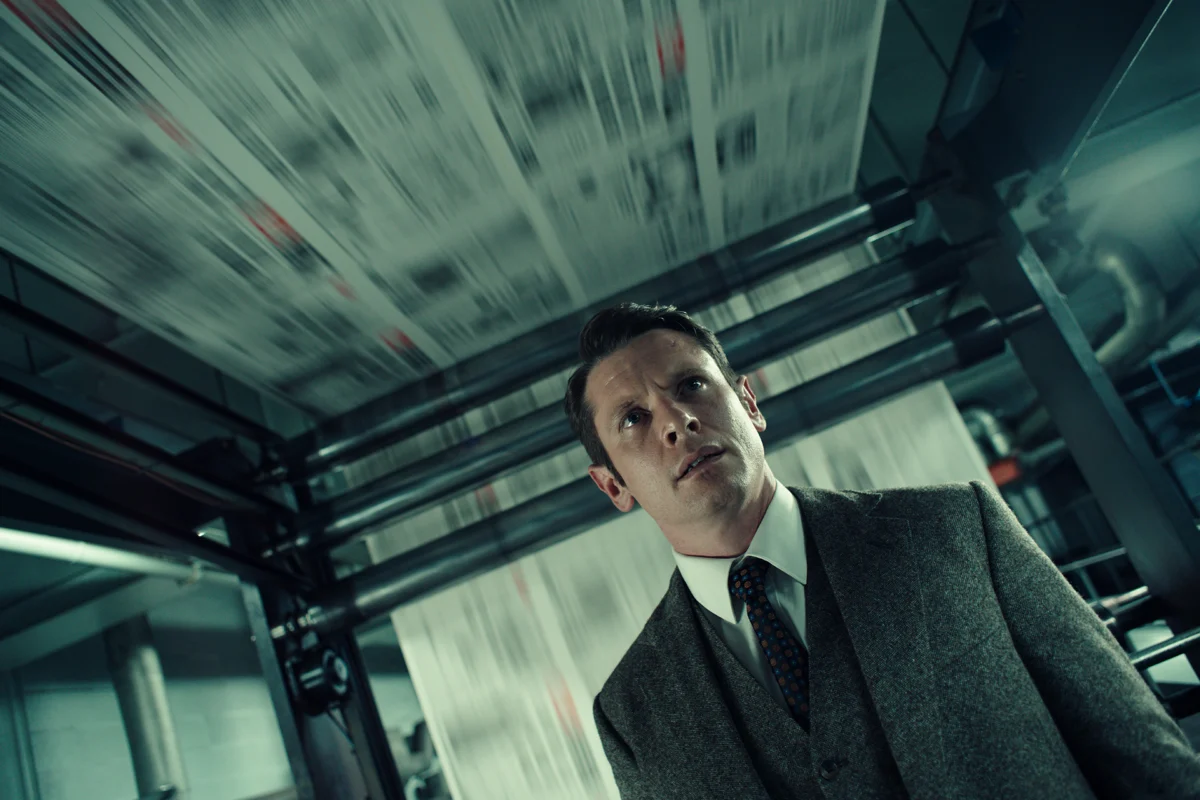
Danny Boyle’s return to the political drama is a far cry from the claustrophobic, stage-bound feel of his 2015 Steve Jobs biopic. In Ink, Boyle utilizes every tool in his cinematic arsenal—Dutch angles, crash zooms, and "cranking, stuttering step-printing"—to convey the frantic, cocaine-adjacent energy of a newsroom on the edge.
Performance Analysis
- Jack O’Connell: Critics have hailed O’Connell’s performance as a career-best. He imbues Larry Lamb with a "slight sociopathy," portraying a man so addicted to winning that he views human lives as mere "copy."
- Claire Foy: As Jules Davies, Foy provides the film’s moral anchor. Her character’s affair with Lamb adds a layer of "messy editorial ethics," though some critics noted that the screenplay leaves this relationship somewhat under-explored.
- Guy Pearce: Pearce’s Murdoch is a study in weary, calculated ambition. Unlike more caricatured versions of the mogul seen in recent media (such as Succession), Pearce plays Murdoch as a man who is almost surprised—and occasionally repulsed—by the monster he has helped create.
Period Detail and Aesthetic
The production design team meticulously recreates 1960s Fleet Street. The "hair, the clothes, and the makeup" are described as "to die for," providing a lush, colorful contrast to the increasingly dark and "inky" nature of the story. In one of the film’s more literal metaphors, Boyle actually "slathers" O’Connell in newspaper ink toward the end of the film, a visual representation of the "blood on his hands."
Official Responses and Critical Reception
The reception at Venice has been largely positive, though not without caveats. The film currently holds a "Grade: B" from major critics, with the consensus being that while the execution is brilliant, the messaging can be "groan-inducingly predictable."
Critical Synthesis
Many reviewers have compared Ink to classics like Network (1976) and Nightcrawler (2014). The critique is that Ink doesn’t necessarily offer a "new take" on the dangers of sensationalist journalism, but rather a more stylized and historically specific one.

James Graham’s screenplay has been praised for its ability to "open up" the play, making it feel like a genuine cinematic experience rather than a filmed stage production. However, some have argued that the film’s attempt to link every modern political ill to The Sun’s 1969 relaunch is "overplayed."
Industry Impact
For Netflix, Ink represents a major prestige play. Following the success of Boyle’s 28 Years Later, the director’s stock is at an all-time high. By securing a December release, Netflix is signaling that it expects Ink to be a major contender for the Academy Awards, particularly in the acting and adapted screenplay categories.
Implications: The Legacy of ‘Ink’ and the Future of Truth
The broader implications of Ink extend far beyond the cinema. The film arrives at a time when the "if it bleeds, it leads" mentality has migrated from newsprint to social media algorithms.
The Tabloidization of Everything
Boyle’s film suggests that the "tabloidization" of the news was the first step toward the "post-truth" era. By prioritizing engagement and outrage over accuracy and ethics, Larry Lamb and Rupert Murdoch didn’t just change the newspaper industry; they changed how the public consumes reality. The film argues that once news becomes entertainment, the path to a "personality-driven" political landscape—typified by figures like Trump—becomes inevitable.
Moral Complexity vs. Narrative Convenience
One of the film’s more controversial elements is its treatment of the Muriel McKay kidnapping. By framing a woman’s murder as a "less morally offensive rock bottom" than the printing of "nudie photos" (the infamous Page 3), the film risks oversimplifying the very ethical quagmires it seeks to explore. It raises the question of whether the film itself is guilty of the sensationalism it purports to criticize.
Conclusion
Ink is a vivid, exhausting, and undeniably fascinating look at the men who broke the news. While its political parables may lack subtlety, its energy is infectious. As the film prepares for its global rollout, it serves as a timely reminder that the headlines of today are printed with the ink of the past. Whether audiences view Larry Lamb as a visionary who democratized the media or a sociopath who destroyed the truth, Boyle’s film ensures that they will not be able to look away.