The Game Developers Conference (GDC) stands as the world’s largest and longest-running professional industry event for game developers. What began as a small gathering of designers in a living room in the late 1980s has evolved into a global institution that dictates the rhythm of the multi-billion-dollar interactive entertainment industry. With the recent confirmation of scheduling through 2026, the GDC timeline offers a unique longitudinal study of how technology, art, and business have converged over three decades.
This report examines the trajectory of GDC from its foundational years in the mid-90s to its projected future, analyzing the strategic shifts that have kept it at the forefront of the global tech landscape.
Main Facts: The Pillar of the Gaming Industry
The Game Developers Conference is more than a trade show; it is a primary hub for technical exchange, creative inspiration, and professional networking. Managed by Informa Tech, the conference serves several critical functions:
Professional Development: Through hundreds of "GDC Vault" sessions, workshops, and tutorials, the event facilitates the transfer of knowledge across disciplines including programming, design, audio, production, and business.
Technological Benchmarking: Historically, GDC has been the site of major hardware and software reveals, from the early days of 3D acceleration to the modern integration of Generative AI.
Industry Recognition: The event hosts the Independent Games Festival (IGF) and the Game Developers Choice Awards (GDCA), often referred to as the "Oscars" of the gaming world.
Economic Engine: For the city of San Francisco, GDC is a vital economic contributor, bringing tens of thousands of high-spending professionals to the Moscone Center annually.
The scheduling of GDC 2025 and 2026 underscores a period of stability and long-term planning for the industry, following the volatility of the early 2020s.
Chronology: Three Decades of Innovation
The history of GDC, as evidenced by its archive of events, can be divided into four distinct eras: the Foundational Era, the Global Expansion, the Virtual Revolution, and the Post-Pandemic Hybrid Era.
The Foundational Era (1996–2005)
In 1996, the event was still known as the Computer Game Developers Conference (CGDC). This period marked the transition from bedroom coding to industrial-scale production.
1996–1998: The conference focused heavily on the transition from 2D to 3D graphics.
1999: A pivotal year where "Computer" was dropped from the title, reflecting the growing importance of home consoles like the Sony PlayStation and Nintendo 64.
2000–2005: The conference moved to San Jose and eventually to San Francisco’s Moscone Center. This era saw the rise of mobile gaming (early WAP/Java games) and the professionalization of game design as an academic discipline.
The Global Expansion (2006–2015)
As the industry’s revenue surpassed the film industry, GDC expanded its footprint to reach developers on every continent.
GDC Europe (2009–2016): Held in Cologne, Germany, this event ran alongside Gamescom, catering to the massive European development community.
GDC China (2009–2015): Recognizing the boom in PC online gaming and mobile development in Asia, GDC established a presence in Shanghai.
GDC Online/Austin (2007–2012): Originally focused on MMOs (Massively Multiplayer Online games), this branch anticipated the "Games as a Service" (GaaS) model that dominates the industry today.
GDC Canada (2009–2010): A short-lived but significant nod to Vancouver and Montreal as global development hubs.
The Technological Pivot: VR and XR (2016–2019)
The mid-2010s saw a massive influx of venture capital into Virtual Reality (VR) and Augmented Reality (AR). GDC responded by launching the Virtual Reality Developers Conference (VRDC).
2016: The "Year of VR." VRDC became a staple, eventually evolving into XRDC (Extended Reality) to include Mixed Reality applications.
2017–2019: These years represented the peak of hardware competition between Oculus (Meta), HTC Vive, and PlayStation VR, with GDC serving as the primary neutral ground for developer support.
The Great Pivot and Recovery (2020–2024)
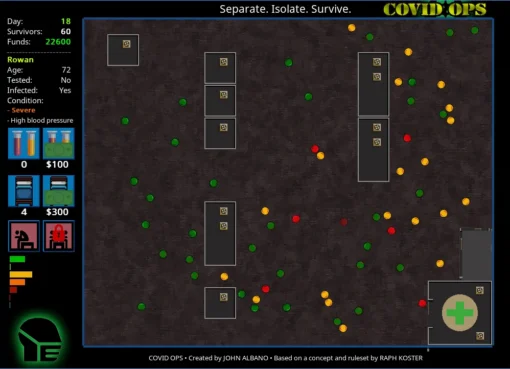
The COVID-19 pandemic forced the first cancellation in the event’s history in March 2020.
Summer 2020 & GDC 2021: The conference successfully pivoted to a fully digital format. The "GDC Showcase" brand was born, providing a mid-year virtual touchpoint for the community.
2022–2023: The return to in-person events at the Moscone Center. While attendance initially dipped, the 2023 event saw a massive resurgence, signaling that physical networking remains irreplaceable for deal-making.
2024: The current year focuses on the "Showcase" model and the integration of AI tools in development pipelines.
Looking Ahead (2025–2026)
The scheduling of GDC 2025 and 2026 suggests a commitment to the physical-first, hybrid-supported model. These future dates are expected to grapple with the long-term implications of AI, the sustainability of large-scale studio models, and the rise of the "Indie-AAA" (IIII) segment.
Supporting Data: The Metrics of Success
While the provided timeline lists the events, the underlying data reveals the conference’s true impact.
Attendance Growth: From roughly 4,000 attendees in the late 90s, GDC peaked at nearly 30,000 attendees in 2019. Post-pandemic recovery saw 2023 attendance exceed 28,000, indicating a near-total return to form.
Content Volume: The GDC Vault now hosts over 12,000 videos and sessions. This repository is considered the most significant historical archive of game development knowledge in existence.
Economic Impact: A typical GDC week generates an estimated $60 million to $70 million in economic activity for the City of San Francisco, supporting thousands of jobs in the hospitality and service sectors.
Diversity and Inclusion: Since 2015, GDC has significantly increased its scholarship programs, providing thousands of passes to underrepresented groups in tech, a move that has been mirrored by other major tech conferences.
Official Responses and Organizational Vision
Informa Tech, the organizing body behind GDC, has consistently emphasized a "community-first" approach. In various official statements over the years, the organizers have highlighted that GDC’s mission is to "champion the developers and the craft."
Following the 2020 cancellation, GDC organizers stated:
"The goal was never just to have a trade show; it was to maintain the connectivity of the global development community. When the physical doors closed, the digital archives became the lifeline for developers stuck in isolation."
Furthermore, the Advisory Board—comprised of industry veterans from companies like Valve, Epic Games, Sony, and Microsoft—has pushed for a curriculum that balances high-end technical "deep dives" with crucial discussions on mental health, burnout, and studio management. This shift in focus is evident in the "GD Talks" and "Showcase" formats, which allow for more nuanced, less product-driven conversations.
Implications: What the Future Holds
The timeline through 2026 carries several significant implications for the broader technology and entertainment sectors.
1. The Resilience of Physical Spaces
Despite the efficiency of Zoom and digital platforms, the continued scheduling of GDC in San Francisco proves that the "serendipity of the hallway" is a tangible asset. For developers, the ability to demo a game in person or negotiate a publishing deal face-to-face remains a cornerstone of the business.
2. The AI Paradigm Shift
As we move toward GDC 2025 and 2026, the primary discourse will likely shift from "how to build a game" to "how to build a game alongside AI." We can expect future conferences to be dominated by sessions on automated asset generation, AI-driven NPCs, and the ethical considerations of machine learning in creative arts.
3. The Democratization of Development
The proliferation of GDC events—from GDC Europe to GDC China and the various "Showcase" events—reflects a world where high-quality game development is no longer localized to Silicon Valley or Japan. The tools (Unreal Engine, Unity, Godot) are global, and GDC’s evolution into a hybrid model ensures that a developer in Lagos or Jakarta can access the same high-level insights as one in Seattle.
4. Industry Maturation
The sheer longevity of GDC (now approaching its 40th anniversary if counting its pre-1996 roots) signifies the maturation of video games as a cultural medium. The conference now deals with complex issues like labor unions (GWU), environmental sustainability in hardware manufacturing, and the preservation of digital history.
In conclusion, the GDC timeline is more than a list of dates; it is a map of human ingenuity in the digital age. As the industry looks toward 2026, the conference remains the essential venue for defining what "play" will look like for the next generation. Through economic shifts, technological upheavals, and a global pandemic, GDC has not only survived but has become the definitive archive and compass for the world of interactive media.
Introduction: The Friction of Digital Proximity In an era where digital content is often perceived as infinite, the technical barriers to professional knowledge serve as a stark reminder of the commod
Six years after the initial shockwaves of the COVID-19 pandemic, the global discourse has largely shifted toward the retrospective analysis of economic fallout and educational gaps. However, a signifi
Main Facts: The Intersection of Digital Rights and Professional Education In the high-stakes world of global game development, information is the most valuable currency. For over three decades, the Ga






.jpg)

.png)



.jpg)