Valve Expands Steam Link Capabilities: Wired USB Streaming Enters Public Beta for Meta Quest Headsets
The landscape of PC-based Virtual Reality (PCVR) is undergoing a significant transition as the boundaries between wireless freedom and wired stability continue to blur. In a move that aligns with recent industry trends and technical advancements within the Meta Horizon OS, Valve has officially introduced wired USB PC streaming support for the Steam Link app on Meta Quest headsets. This update, currently available via the Public Beta channel, represents a pivotal shift for users who demand the low-latency performance of a physical connection without sacrificing the streamlined ecosystem provided by Valve’s dedicated streaming solution.
Main Facts: A New Era for Steam Link Connectivity
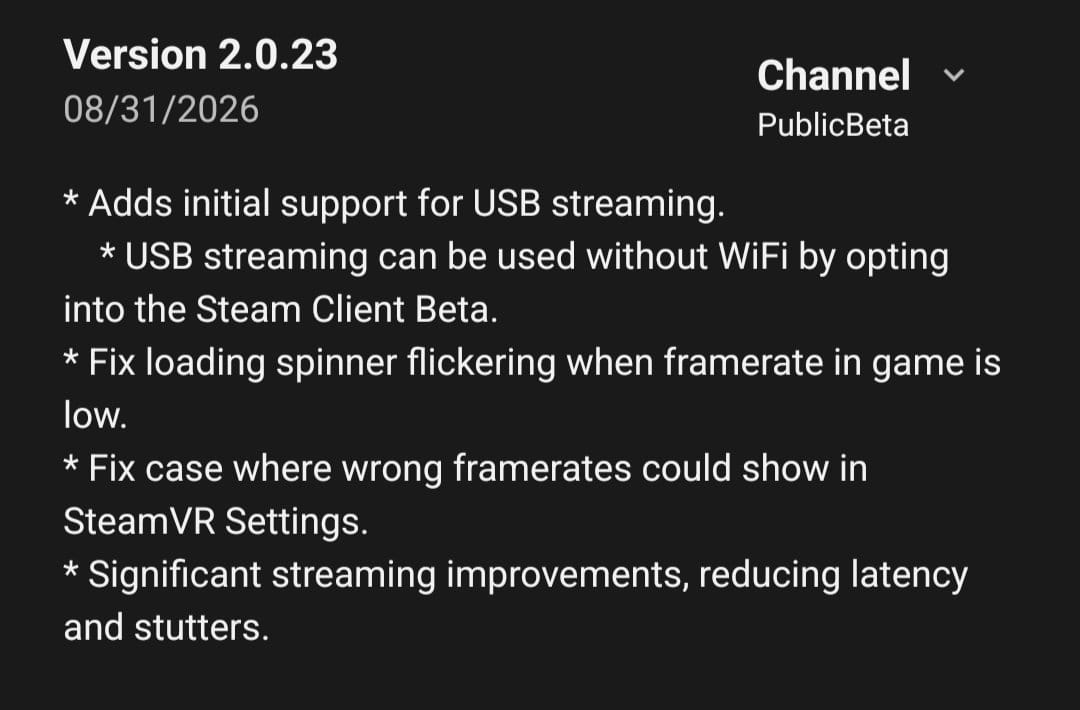
The latest Public Beta release for Valve’s Steam Link on the Meta Quest platform introduces a feature long requested by the community: the ability to stream high-fidelity PCVR content over a direct USB connection. Traditionally, Steam Link was designed as a wireless-first solution, leveraging Wi-Fi 6 and 6E technologies to provide a cable-free experience. However, even the most robust wireless environments are subject to interference, signal degradation, and latency spikes.
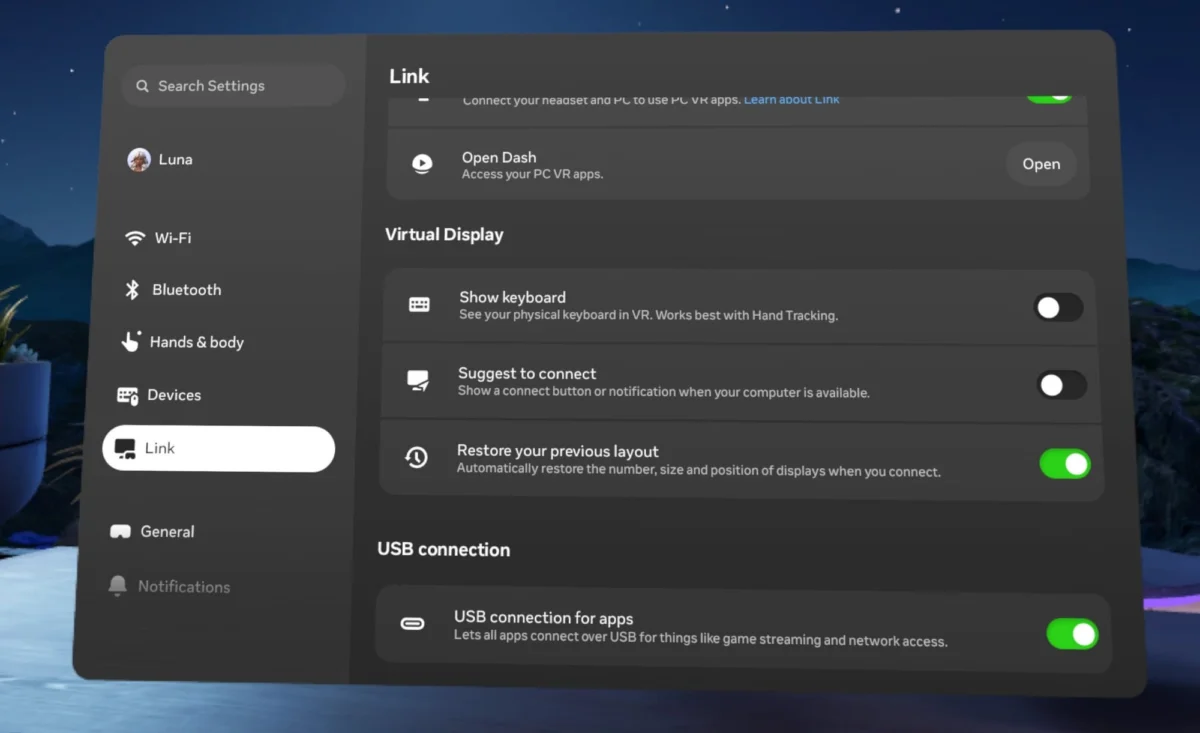
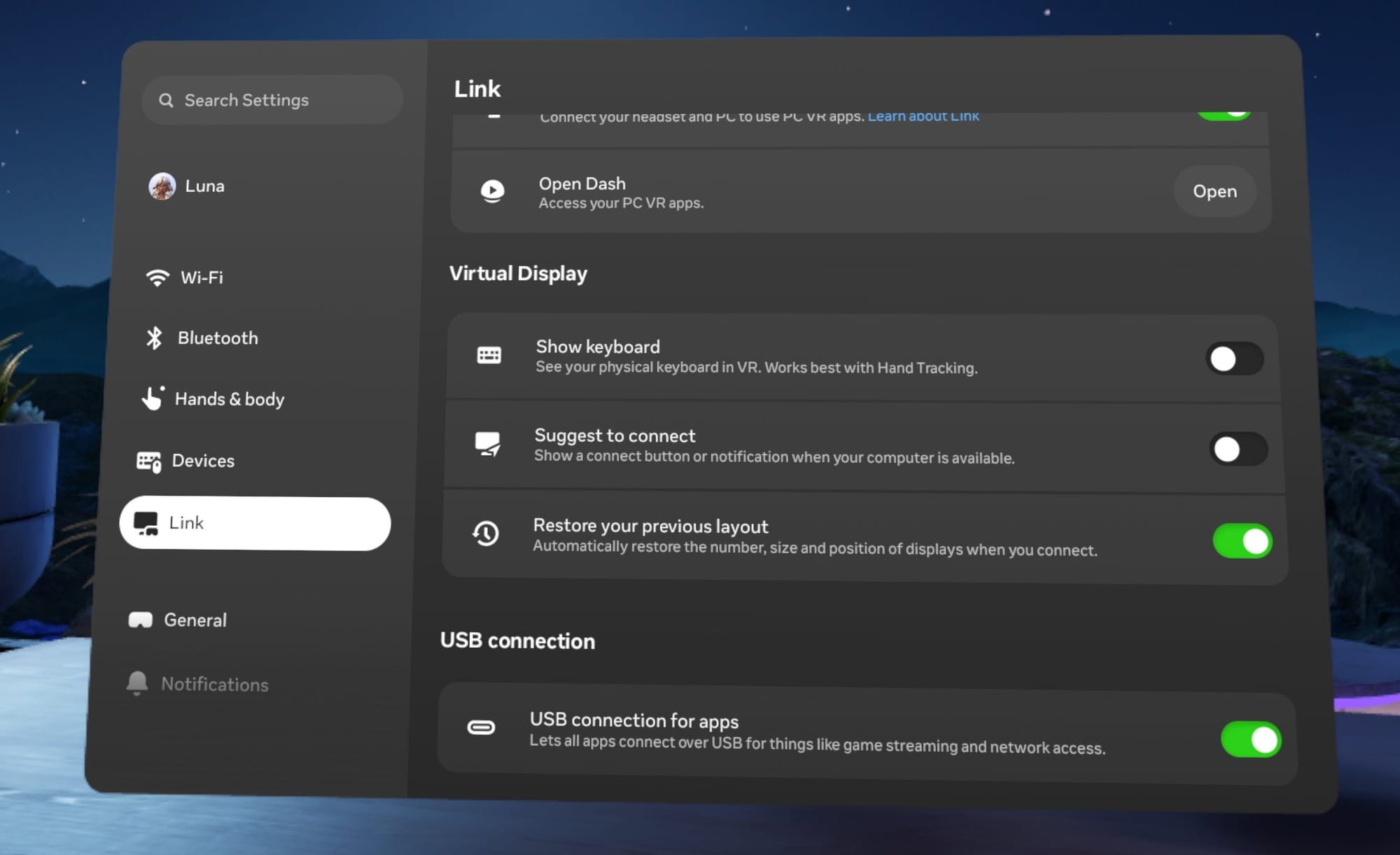
The introduction of wired support is made possible by Meta’s recent updates to Horizon OS (version 2.5 and later), which unlocked Android USB Networking (NCM) support. This protocol allows the headset to treat a USB-C connection as a high-speed network interface. By leveraging this system-level capability, Steam Link can now bypass the vagaries of local Wi-Fi, offering a more stable and potentially higher-bandwidth data pipe between the gaming PC and the Quest 2, 3, or Pro headsets.
To utilize this feature, users must navigate a series of beta enrollments across three different software layers: the Meta Quest Steam Link app, the SteamVR desktop application, and the Steam Client itself. While the feature is functional, early testing indicates it is in a nascent stage, occasionally requiring an initial Wi-Fi "handshake" before the USB data path takes over.
Chronology: The Evolution of PCVR Streaming Protocols
To understand the significance of this update, one must look at the timeline of PCVR connectivity on standalone headsets.
The Wireless Revolution (2019–2022)
When the original Oculus Quest launched, PCVR was largely tethered. Meta (then Oculus) eventually released "Oculus Link," a proprietary wired solution. However, the community gravitated toward "Virtual Desktop," a third-party app that pioneered wireless streaming. Seeing the demand, Meta eventually launched "Air Link." During this era, the focus was almost entirely on cutting the cord, with wired connections viewed as a legacy requirement for high-end "prosumer" experiences.
Valve’s Entry into the Quest Ecosystem (Late 2023)
In November 2023, Valve surprised the industry by launching Steam Link for Meta Quest. This was a significant strategic move, as it allowed users to bypass the Meta Link PC software entirely, connecting directly to SteamVR. Initially, Steam Link was strictly wireless, optimized for Valve’s own streaming protocols to ensure a "one-click" setup for Steam users.
The USB NCM Breakthrough (Mid-2024)
The technical foundation for the current update was laid when Meta updated Horizon OS to include NCM (Network Control Model) support. This opened the door for developers to treat the USB-C port as an Ethernet-over-USB bridge. Virtual Desktop was the first major player to implement this, providing a "wired" mode that functioned through the network stack rather than a proprietary video-over-USB protocol.
The Steam Link Response (September 2024)
Following the success of Virtual Desktop’s implementation, Valve has now integrated similar functionality. This marks the first time Valve has officially supported a tethered connection for its Quest-based app, acknowledging that for many users, the reliability of a cable remains superior to the convenience of Wi-Fi.
Supporting Data: Technical Requirements and Performance Metrics
The shift to wired USB streaming via Steam Link is not merely a "plug-and-play" update; it requires a specific technical environment to function.
Hardware and Software Prerequisites
- Headset Firmware: Must be running Meta Horizon OS v2.5 or higher to support the NCM protocol.
- Cabling: A high-quality USB-C 3.0 or 3.1 cable capable of high-speed data transfer (at least 5Gbps) is recommended. While USB 2.0 cables may work, they often lack the bandwidth required for high-bitrate VR streaming, leading to visual artifacts.
- Beta Enrollment:
- Steam Link (Quest): Users must join the Public Beta via a specific Meta Store invite link.
- SteamVR (PC): The desktop application must be set to the "Beta" branch under properties.
- Steam Client (PC): The main Steam application must also be opted into the Client Beta, as this manages the underlying network handshakes.
The NCM Advantage
Unlike the standard "Oculus Link" method, which uses a proprietary protocol to encode and send video, USB NCM treats the connection as a standard network link. This allows Steam Link to use its existing network-based streaming logic (including its specific foveated encoding and jitter buffers) over a medium with zero packet loss and significantly lower latency than Wi-Fi.
In internal benchmarks and community testing, wired NCM connections typically show:
- Latency Reduction: A decrease of 5ms to 15ms compared to Wi-Fi 6, primarily by eliminating the "airtime" contention found in busy wireless environments.
- Bitrate Stability: The ability to maintain a constant 150-200 Mbps (or higher, depending on software limits) without the "stutter" common when a router handles other household traffic.
Official Responses and Developer Insights
Valve has been relatively quiet regarding a formal press release, choosing instead to let the update speak for itself through the SteamVR Beta patch notes and the Quest Store’s beta channel descriptions. However, the implementation details provide insight into their philosophy.
By requiring the Steam Client Beta, Valve is signaling that this update involves more than just the VR interface; it involves a fundamental change in how the Steam client handles device discovery. In the current release, a known issue exists where the headset may fail to find the host PC if Wi-Fi is completely disabled. Valve’s developers have indicated through support forums that the app currently uses Wi-Fi for the initial "discovery" of the PC on the local network before switching the heavy data lifting to the USB-NCM interface.
Meta, on the other hand, has been increasingly supportive of third-party developers utilizing the USB port for networking. Their developer documentation for Horizon OS highlights that "Android USB networking (NCM) support" was added specifically to enable "high-bandwidth, low-latency applications," a clear nod to the PCVR streaming community.
Implications: What This Means for the Future of VR
The introduction of wired support for Steam Link carries several long-term implications for the VR industry and the end-user experience.
1. The Erosion of Proprietary Software Dominance
For years, Meta Quest users who wanted a wired connection were largely tethered to the Meta Quest Link PC software. This software is often criticized for being resource-heavy and occasionally buggy. By enabling wired support, Valve (and Virtual Desktop) are providing users with an "exit ramp" from Meta’s PC software, allowing them to live entirely within the SteamVR ecosystem.
2. Accessibility for "Non-Optimized" Homes
Wireless VR requires a very specific setup: a dedicated Wi-Fi 6 router, wired via Ethernet to the PC, located in the same room as the headset. For many users—especially those in dorms, apartments with congested airwaves, or homes where the PC is far from the router—wireless PCVR was never a viable option. Wired Steam Link support democratizes high-end PCVR for these users, requiring only a $20 cable rather than a $200 networking overhaul.
3. Sustained Play Sessions
While the primary benefit of the USB connection is data, a secondary benefit is power. Although many PC USB ports do not output enough wattage to fully charge a Quest 3 during active use, a wired connection significantly slows the battery drain, extending play sessions from two hours to potentially six or eight hours.
4. Pressure on Meta to Innovate
Meta’s own "Link" cable solution has remained largely unchanged for several years. With third-party apps now offering wired solutions that utilize modern network protocols like NCM, Meta may be forced to overhaul their own wired streaming stack to remain competitive in terms of visual clarity and latency.
Conclusion
The addition of wired USB support to Steam Link is a landmark update for Valve’s presence in the mobile VR space. While it remains in beta and currently suffers from minor discovery hurdles, the technical foundation is solid. By leveraging the USB NCM protocol, Valve is offering Quest users the best of both worlds: the massive library and user-friendly interface of SteamVR, combined with the rock-solid reliability of a physical tether. As the software matures and the "Wi-Fi handshake" requirement is likely phased out, Steam Link could become the definitive way to experience PCVR on Meta hardware, regardless of whether the user chooses to be corded or cordless.