
The Futility of Valor: Re-evaluating Bernhard Wicki’s 1959 Masterpiece ‘The Bridge’
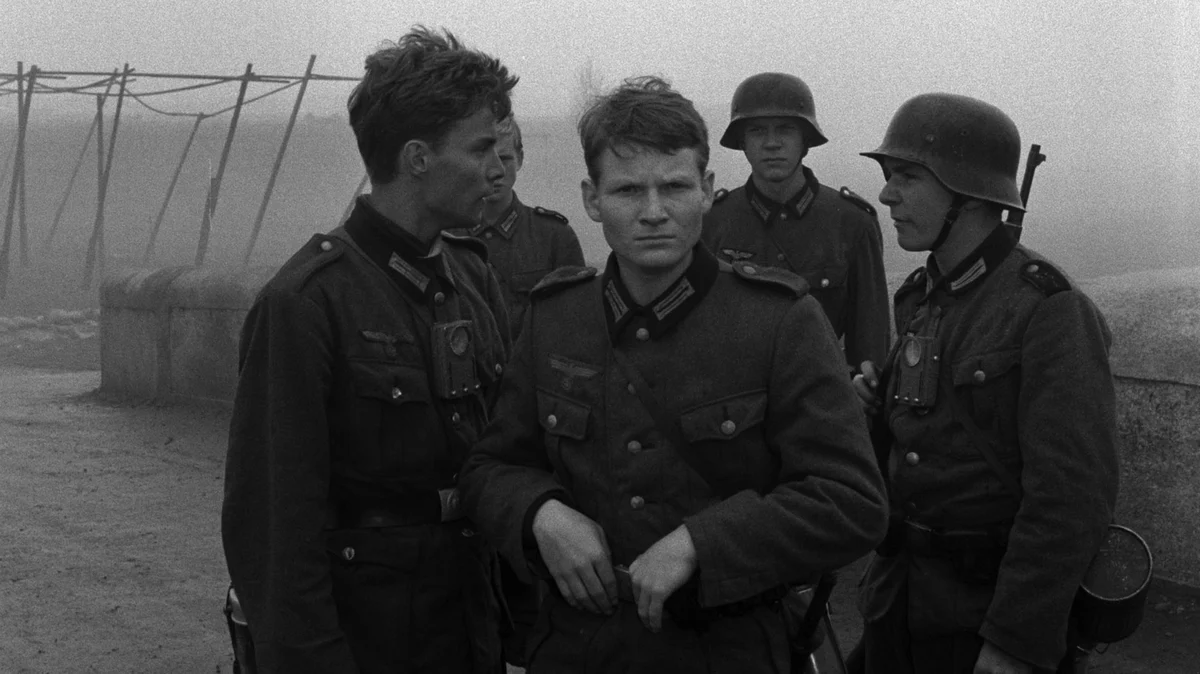
In the pantheon of war cinema, the narrative often tilts toward the heroic—the grand sacrifice, the strategic triumph, or the moral clarity of the "just war." However, Bernhard Wicki’s 1959 West German film Die Brücke (The Bridge) stands as a harrowing monolith of opposition to these tropes. Often cited as one of the bleakest and most powerful anti-war films ever produced, it serves as a visceral autopsy of the "heroic" myth, performed on the bodies of children.
Set during the collapsing final days of the Third Reich, The Bridge is not merely a chronicle of military defeat, but a psychological study of how propaganda poisons the innocent. Decades after its release, it remains a haunting reminder of the emptiness of wartime patriotism and the tragedy of lives discarded for a cause that had already been lost.
Main Facts: A Landmark in German Cinema
Released in 1959, Die Brücke arrived at a pivotal moment in West German history. The nation was in the midst of the Wirtschaftswunder (Economic Miracle), yet it was still grappling with the "silence" of the post-war years. While many films of the era sought to provide escapism through the Heimatfilm (homeland film) genre, Bernhard Wicki chose to look directly into the abyss of 1945.
Based on the autobiographical novel by Gregor Dorfmeister (written under the pseudonym Manfred Gregor), the film tells the story of seven teenage boys in a small German town. With the American army only days away, these boys are drafted into the Volkssturm (National Militia) and assigned to guard a local bridge. The bridge is of no strategic importance; indeed, the German high command intended to blow it up themselves to slow the Allied advance. However, through a series of bureaucratic blunders and the stubborn zealotry of youth, the boys find themselves defending the structure against American tanks.
The film was a critical sensation, winning four German Film Awards and the Golden Globe for Best Foreign Language Film. It was also nominated for an Academy Award for Best International Feature, though it ultimately lost to Marcel Camus’s Black Orpheus. Despite these accolades, the film is frequently overlooked in modern English-speaking film curricula, perhaps due to its uncompromisingly grim portrayal of German teenagers in Nazi uniforms.
Chronology: From the Classroom to the Graveyard
The narrative structure of The Bridge is meticulously paced to emphasize the transition from childhood innocence to mechanized slaughter. The film’s timeline covers approximately 96 hours, a countdown to the end of World War II.
The Shielded Youth
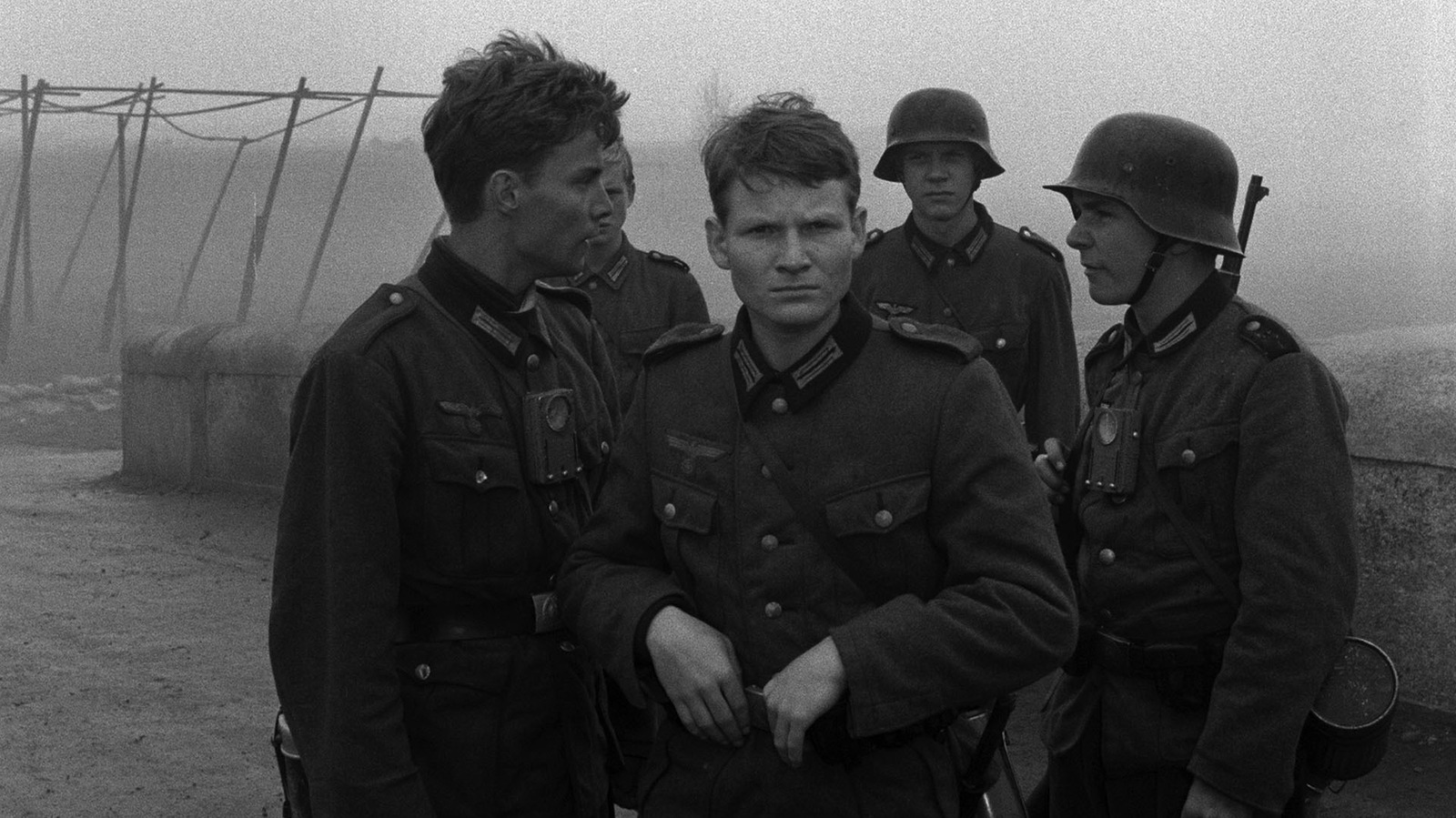
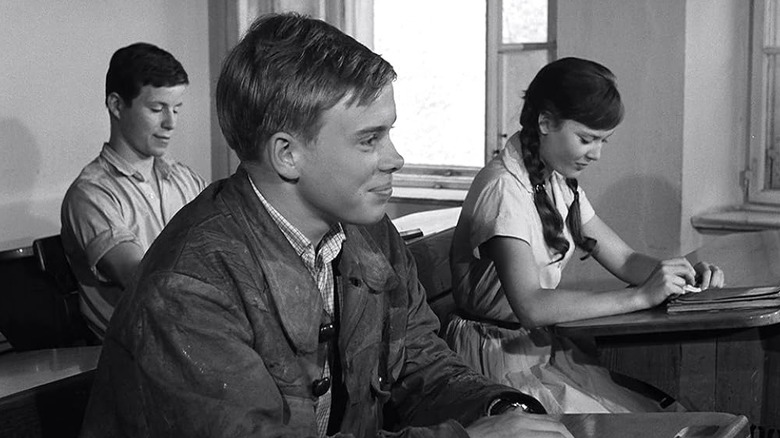
The first act introduces us to seven students: Walter, Jürgen, Karl, Klaus, Hans, Albert, and Sigi. They live in a small, unnamed German town that has, until now, been relatively spared from the direct horrors of the front lines. Wicki spends significant time establishing their domestic lives, revealing a cross-section of German society.
We see the boys as typical adolescents: Karl is infatuated with his father’s assistant; Walter resents his father, a local Nazi official who is secretly preparing to flee; Jürgen seeks to live up to the memory of his fallen father. They are shielded from the reality of the war, yet their minds are saturated with the rhetoric of their teacher, Mr. Stern. Stern has spent years romanticizing "service to the Fatherland," inadvertently preparing these boys to be fodder for a dying regime.
The Call to Arms
As the American forces approach, the drafting of the "Class of 1928" (the 16-year-olds) begins. There is a sickening irony in the boys’ excitement. They view the draft not as a death sentence, but as an opportunity to finally achieve the "nobility" they have been taught to crave.
Recognizing the absurdity of sending children to the front, their commanding officer attempts to protect them. He assigns them to guard the local bridge—a "quiet" post far from the expected action—intending for them to be safely out of the way when the town eventually surrenders. He leaves them under the supervision of a veteran sergeant, but when the sergeant is killed by a stray patrol, the boys are left alone, armed with Panzerfausts and a lethal sense of duty.
The 20-Minute Massacre
The final act of the film is a masterclass in kinetic, claustrophobic filmmaking. When American tanks and infantry appear at the bridge, the boys do not retreat. Influenced by the propaganda they have consumed, they view the bridge as a sacred symbol of German soil.
What follows is a brutal, gory skirmish. One by one, the boys are picked off—not in moments of cinematic glory, but in confused, agonizing flashes of violence. By the time the American soldiers realize they are fighting children and attempt to call out to them to stop, the cycle of violence has become self-sustaining. The film ends with a chilling "chyron" (on-screen text) informing the audience that this event was a true story, so insignificant that it was never mentioned in any official war diary.
Supporting Data: Psychological Drivers of the Tragedy
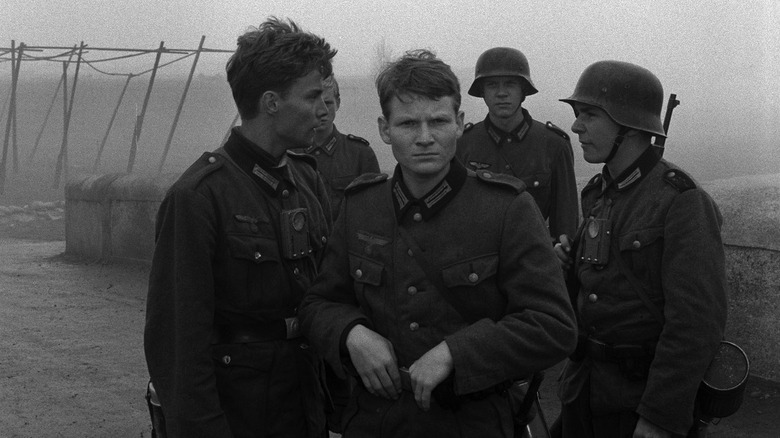
To understand why The Bridge resonates so deeply, one must look at the psychological profiles Wicki builds for his protagonists. The film posits that the desire for combat is rarely about politics and more often about personal deficiency and social conditioning.
- The Father Figure: Many of the boys are driven by a need to replace or surpass failed father figures. Walter’s father is a coward and a hypocrite; by joining the army, Walter attempts to reclaim the "honor" his father discarded.
- Teenage Misogyny and Rejection: Karl’s storyline involves a discovery of his father’s affair, leading to a sense of betrayal that he channels into military aggression. The film draws a sophisticated link between domestic frustration and the externalization of hate.
- The Role of the Educator: Mr. Stern (Wolfgang Stumpf) represents the intellectual betrayal of the youth. His late-movie realization—that his "noble" teachings have led his students to a slaughterhouse—comes too late. This critique of the education system was particularly pointed in 1959 Germany, as many teachers from the Nazi era remained in their positions post-war.
Official Responses and Critical Legacy
Upon its release, The Bridge was recognized as a revolutionary piece of art that broke the German "wall of silence."
The German Reception
The film won the Deutscher Filmpreis (German Film Award) for Best Direction, Best Supporting Actress, and Best Film. For West German audiences, it was a mirror held up to the "lost generation." It forced a national conversation about the Kindersoldaten (child soldiers) of the Volkssturm, a topic that many preferred to forget in the rush to rebuild the country.
International Acclaim
The Criterion Collection, which has preserved the film for modern audiences, describes it as "the first outwardly anti-war film to come out of Germany after the end of World War II." It served as a bridge (pun intended) between the classical war movies of the 1930s, like Lewis Milestone’s All Quiet on the Western Front, and the more visceral, nihilistic war cinema of the late 20th century.
Bernhard Wicki’s work on The Bridge was so technically proficient that it launched his international career. He was famously hired to direct the German-language segments of the 1962 D-Day epic The Longest Day, ensuring that the German perspective was handled with the same gritty realism he brought to his 1959 masterpiece.
Implications: The Enduring Message of Futility
The ultimate power of The Bridge lies in its refusal to offer the audience any catharsis. In most American war films, even if the protagonists die, their death "means" something—a hill is taken, a comrade is saved, or a greater evil is halted. In The Bridge, the deaths mean absolutely nothing. The bridge they die for was scheduled for demolition by their own side. The town they "protected" was captured hours later anyway.
A Warning Against "Meaningless" Patriotism
The film’s central implication is that patriotism, when divorced from reality and fueled by propaganda, is a death cult. Wicki does not portray the boys as villains; they are victims of a system that weaponized their youthful idealism. This makes the film deeply uncomfortable for some viewers, as it asks for sympathy for those wearing Nazi uniforms. However, Wicki’s focus is not on the ideology of the Reich, but on the universal tragedy of children being groomed for death.
The "Forgotten" Status
Why is this film not more widely discussed today? Perhaps it is because The Bridge offers no "safe" side to root for. It depicts the Americans not as liberating heroes, but as a bewildered force forced to kill children, and the Germans as a broken machine consuming its own young. It is a film that offers no comfort, only a stark, black-and-white reminder of the cost of war.
In an era where geopolitical tensions often revive the language of "noble sacrifice," The Bridge remains essential viewing. It is a cinematic scream against the waste of human life, a 103-minute testament to the fact that in war, the greatest casualty is often the future itself. As the final frames fade to black, the viewer is left with the haunting image of a small stone edifice that signifies nothing, and the ghosts of seven boys who died for the privilege of being a footnote that history forgot to write.


Leave a Comment