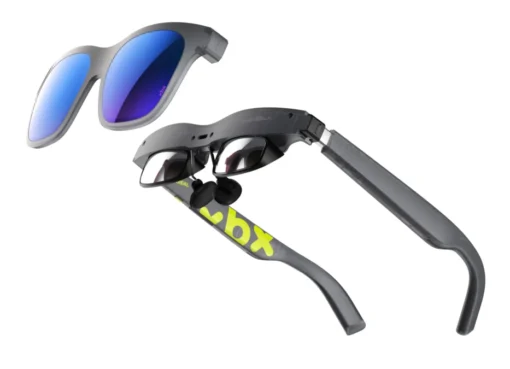
Xreal Signals New Era of Accessible Augmented Reality with $299 ‘xbx a01+’ Launch
The augmented reality (AR) landscape is currently undergoing a significant bifurcation. On one side, tech giants are racing toward high-fidelity, high-cost "spatial computing" headsets like the Apple Vision Pro. On the other, a burgeoning market for "display glasses"—sleek, lightweight wearables focused on media consumption—is rapidly expanding. Leading this charge is Xreal, which today announced a strategic expansion of its portfolio through a new sub-brand, X By Xreal (xbx). The debut product, the xbx a01+, enters the market at a disruptive $299 price point, signaling a concerted effort to move AR technology from a niche enthusiast toy to a mainstream consumer staple.
Main Facts: Breaking Down the xbx a01+ Launch
The xbx a01+ represents a calculated pivot for Xreal. While the company’s flagship "One" and "One Pro" series continue to push the boundaries of spatial tracking and native processing, the xbx sub-brand is designed to strip away complexity in favor of utility, portability, and affordability.
Available immediately in the United States, the xbx a01+ is being distributed through a robust retail network that includes Amazon, Best Buy, B&H, and Micro Center, alongside Xreal’s direct-to-consumer website. At $299, it sits significantly below the $400–$600 range typical of mid-tier AR glasses, positioning it as a direct competitor to traditional gaming monitors and high-end portable displays.
The primary value proposition of the a01+ is the "portable big screen." By tethering the glasses via USB-C to a smartphone, laptop, or handheld gaming console (such as the Steam Deck, ASUS ROG Ally, or Nintendo Switch), users are presented with a virtual 147-inch display perceived as being four meters away. Unlike VR headsets that isolate the user from their surroundings, the a01+ utilizes a transparent optical engine, allowing users to remain aware of their environment while enjoying high-definition content.
Supporting Data: Technical Specifications and Performance
Despite its "budget" classification, the technical specifications of the xbx a01+ suggest that Xreal has not compromised on the visual core of the device. The glasses utilize a dual-layer Micro-OLED display system, which provides the deep blacks and high contrast ratios necessary for cinematic viewing.
Visual Fidelity and Processing
- Brightness and Color: The a01+ boasts a peak brightness of 1,600 nits, which is crucial for maintaining visibility in well-lit environments. It covers 145% of the sRGB color gamut and supports 1.07 billion colors, ensuring vibrant and accurate reproduction of HDR10 content.
- Refresh Rate: A standout feature for gamers is the 120Hz refresh rate. This high temporal resolution reduces motion blur and input lag, making the glasses a viable alternative to dedicated gaming monitors.
- Pixelworks Partnership: Xreal has integrated a dedicated image-enhancement chip co-engineered with Pixelworks. This hardware-level processing enables real-time SDR-to-HDR conversion, effectively upscaling standard content to take advantage of the Micro-OLED’s dynamic range.
Ergonomics and Industrial Design
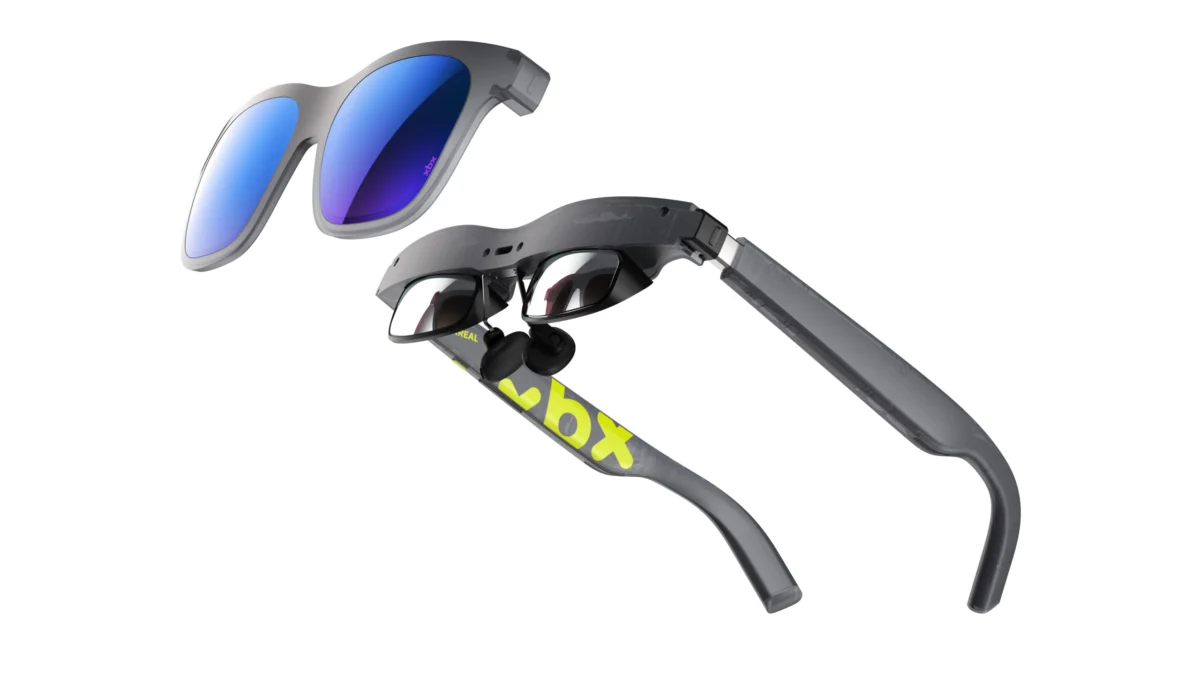
Weight is the historical enemy of wearable tech. At just 62 grams, the xbx a01+ is significantly lighter than its predecessors and competitors. The design language has also shifted; where the Xreal One series opts for a sophisticated, "wayfarer" aesthetic, the xbx a01+ embraces a "sporty and playful" vibe. The translucent chassis and a hidden fluorescent logo cater to a younger, more lifestyle-oriented demographic.

To ensure long-term wearability, Xreal utilized a database of over 2,000 facial profiles to refine the ergonomics. The device features:
- Three interchangeable nose bridge fits.
- Adjustable nose pads and flexible temple arms.
- TÜV Rheinland 5-star Eye Comfort certification, including low blue light and flicker-free ratings to mitigate eye strain during extended sessions.
Chronology: The Evolution of Xreal and the AR Market
To understand the significance of the xbx a01+, one must look at Xreal’s trajectory over the last five years.
- 2019–2022 (The Nreal Era): Originally founded as Nreal, the company gained notoriety for the Nreal Light, one of the first consumer-grade AR glasses. Despite legal battles with Epic Games and Microsoft over the "Nreal" name, the company successfully launched the Nreal Air, which became a sleeper hit among Steam Deck and MacBook users.
- 2023 (Rebranding and Growth): Rebranding to Xreal, the company solidified its lead in the "display glasses" category. The Xreal Air 2 and Air 2 Ultra were released, introducing better comfort and, in the case of the Ultra, 6DoF (Six Degrees of Freedom) tracking for developers.
- Early 2024 (The One Series): Xreal launched the "One" series, featuring the X1 chip. This allowed for native 3DoF (Three Degrees of Freedom) tracking, meaning the virtual screen could "pin" itself in space rather than following the user’s head movements—a key requirement for "spatial computing."
- Mid 2024 (The Beam Pro Launch): Xreal introduced the Beam Pro, an Android-based companion device with dual cameras for capturing 3D spatial video. This device serves as the "brain" for Xreal glasses, providing a dedicated spatial UI.
- Present (The xbx Pivot): Recognizing that many consumers simply want a "dumb" monitor on their face for a lower price, Xreal branched off with the xbx sub-brand. The a01+ serves as the entry point, while the flagship series continues to chase the high-end spatial computing market.
Official Responses and Market Positioning
Xreal’s leadership has consistently messaged that their goal is not to compete directly with the Apple Vision Pro on raw power, but on "usage minutes." By making the glasses light enough to wear for hours and cheap enough to buy on a whim, Xreal is betting on frequency of use.
While Xreal has not issued a specific "manifesto" for the xbx brand, the product’s marketing material emphasizes "democratization." A company spokesperson noted that the xbx a01+ is intended to remove the "price barrier" that has kept many gamers and commuters from trying AR. By focusing on a plug-and-play experience, Xreal is distancing this specific product from the "spatial computing" jargon that often confuses casual consumers.
Furthermore, the inclusion of 3D-printable frame designs on MakerWorld suggests a community-centric approach. Xreal is encouraging users to customize their hardware, a move that aligns with the "xbx" brand’s more expressive and youthful identity.
Implications: What This Means for the Industry
The launch of the xbx a01+ at $299 has several far-reaching implications for the technology sector:

1. The Commodore 64 Moment for AR
Just as the Commodore 64 brought computing to the masses by being "good enough" and affordable, the xbx a01+ could do the same for head-mounted displays. At $299, the device is an "impulse buy" for many tech enthusiasts. If successful, it will force competitors like Viture, Rokid, and even Meta to reconsider their pricing structures for non-VR wearables.
2. The Rise of the "Second Screen" Economy
As remote work and "digital nomadism" become permanent fixtures of the global economy, the demand for portable productivity tools is surging. The a01+ allows a traveler on a cramped airplane to have a dual-monitor setup using only their laptop and a pair of glasses. This "privacy-first" display method is becoming increasingly attractive for professionals handling sensitive data in public spaces.
3. The Gaming Handheld Synergy
The explosion of handheld gaming PCs (Steam Deck, Lenovo Legion Go) has created a secondary market for AR glasses. These handhelds often have small screens and limited battery life when driving high-brightness displays. By offloading the visual output to a high-efficiency Micro-OLED pair of glasses, users get a better visual experience and potentially better battery longevity on their primary device.
4. Strategic Alliances and the Road to "Project Aura"
The xbx a01+ is only one piece of the puzzle. Xreal’s ongoing collaboration with Google on "Project Aura"—an Android XR-powered device—suggests that Xreal is playing both sides of the field. They are building a low-cost hardware ecosystem today (via xbx) while preparing for a high-end, software-integrated future with Google tomorrow.
Conclusion: A Pragmatic Approach to the Future
The xbx a01+ is perhaps the most pragmatic AR device released in recent years. It does not promise to replace your laptop or revolutionize how you interact with the physical world through complex AI overlays. Instead, it promises to give you a better way to watch Dune on a bus or play Elden Ring in bed.
By separating "Spatial Computing" (the Xreal One series) from "Personal Cinema" (the xbx series), Xreal is showing a maturity in market segmentation that is often lacking in the "hype-heavy" XR industry. At $299, the xbx a01+ isn’t just a new product; it’s a challenge to the rest of the industry to make augmented reality accessible, comfortable, and, above all, affordable.