Nvidia’s DLSS 5: A Technological Leap or an Artistic Compromise? The Doom 3 Controversy Ignites Debate

Nvidia’s forthcoming Deep Learning Super Sampling 5 (DLSS 5) technology is poised to become one of the most divisive innovations in the gaming landscape since the introduction of real-time ray tracing with its RTX 20-series GPUs. While the full capabilities and official release of this advanced neural rendering technology remain under wraps, an early, unfinished iteration has already surfaced. This leaked build has ignited a fiery debate among gamers and developers alike, with comparisons to "on" and "off" states of the technology fueling arguments that its AI-powered redraw capabilities might be over-processing character models, a phenomenon colloquially termed "yassification," and potentially undermining the carefully crafted artistic visions of game creators.
The controversy gained a tangible, visual focal point with the recent emergence of a YouTube video showcasing an experimental mod of Doom 3, updated with real-time path tracing and an early implementation of DLSS 5. This demonstration, while highlighting the raw potential of the technology, has inadvertently become a battleground for the very arguments surrounding its impact on visual fidelity and artistic intent.
The Genesis of the Controversy: A Leaked Glimpse
The controversy surrounding DLSS 5 began to brew long before any official unveiling. The leak of an incomplete version of the technology sent ripples through the gaming community. Early impressions, often shared through social media and gaming forums, focused on the perceived visual alterations. While some lauded the enhanced detail and smoother performance, a significant contingent expressed concern over what they saw as an unnatural, almost artificial beautification of game assets, particularly character models. This led to the emergence of the term "yassification," a critique that the AI is applying an overly idealized, smoothed-out aesthetic that deviates from the original artistic intent.
This sentiment is not entirely new to AI-driven graphical enhancements. Similar debates have previously surrounded AI upscaling techniques that, while improving resolution, could sometimes introduce artifacts or a "plastic" look to textures and character faces. However, DLSS 5, with its focus on neural rendering and a more holistic approach to image generation, has amplified these concerns due to its deeper integration into the rendering pipeline. The fear is that instead of simply upscaling existing pixels, DLSS 5 might be actively reconstructing elements in a way that prioritizes a certain aesthetic over fidelity to the original design.
A Glimpse into the Future: The Doom 3 Path Tracing Demo
The leaked demonstration, which surfaced on YouTube courtesy of user ruisu_enjeru, offers a compelling, albeit unfinished, case study of DLSS 5’s potential and its perceived pitfalls. The modded version of Doom 3 BFG Edition features a completely revamped rendering engine, meticulously rebuilt from the ground up. Crucially, it incorporates support for both DLSS Ray Reconstruction and the experimental DLSS 5. This combination aims to push the boundaries of visual realism by integrating advanced ray tracing techniques with the AI-powered enhancements of DLSS.
The video showcases Doom 3 bathed in the sophisticated lighting of real-time path tracing, a more advanced form of ray tracing that simulates light behavior with greater accuracy. This, combined with DLSS 5’s neural rendering capabilities, aims to produce incredibly detailed and realistic visuals. However, it is precisely this enhanced realism, and the AI’s role in achieving it, that has drawn both praise and criticism.
The modder, ruisu_enjeru, has been commendably transparent about the experimental nature of the project. They emphasize that the work is far from complete, with a significant amount of content still needing to be ported, reworked, or fixed. This includes numerous systems, materials, lighting setups, character models, and visual effects. Despite these caveats, the demonstration serves as a potent illustration of the core debate: does DLSS 5 enhance the artistic vision, or does it impose its own, potentially undesirable, interpretation?
The "On" vs. "Off" Debate: Subjectivity and Artistic Integrity
The most frequently cited criticism of the leaked DLSS 5 iteration revolves around the perceived "on" versus "off" visual states. When DLSS 5 is enabled, users have reported that character models, in particular, appear to undergo a transformation. Features are often smoothed, skin textures can become unnaturally flawless, and facial expressions can sometimes appear more generic. This is where the "yassification" critique gains traction. The AI, in its attempt to reconstruct and enhance the image, may be applying a standardized set of "beauty" filters that strip away the unique character and imperfections that contribute to an artist’s original design.
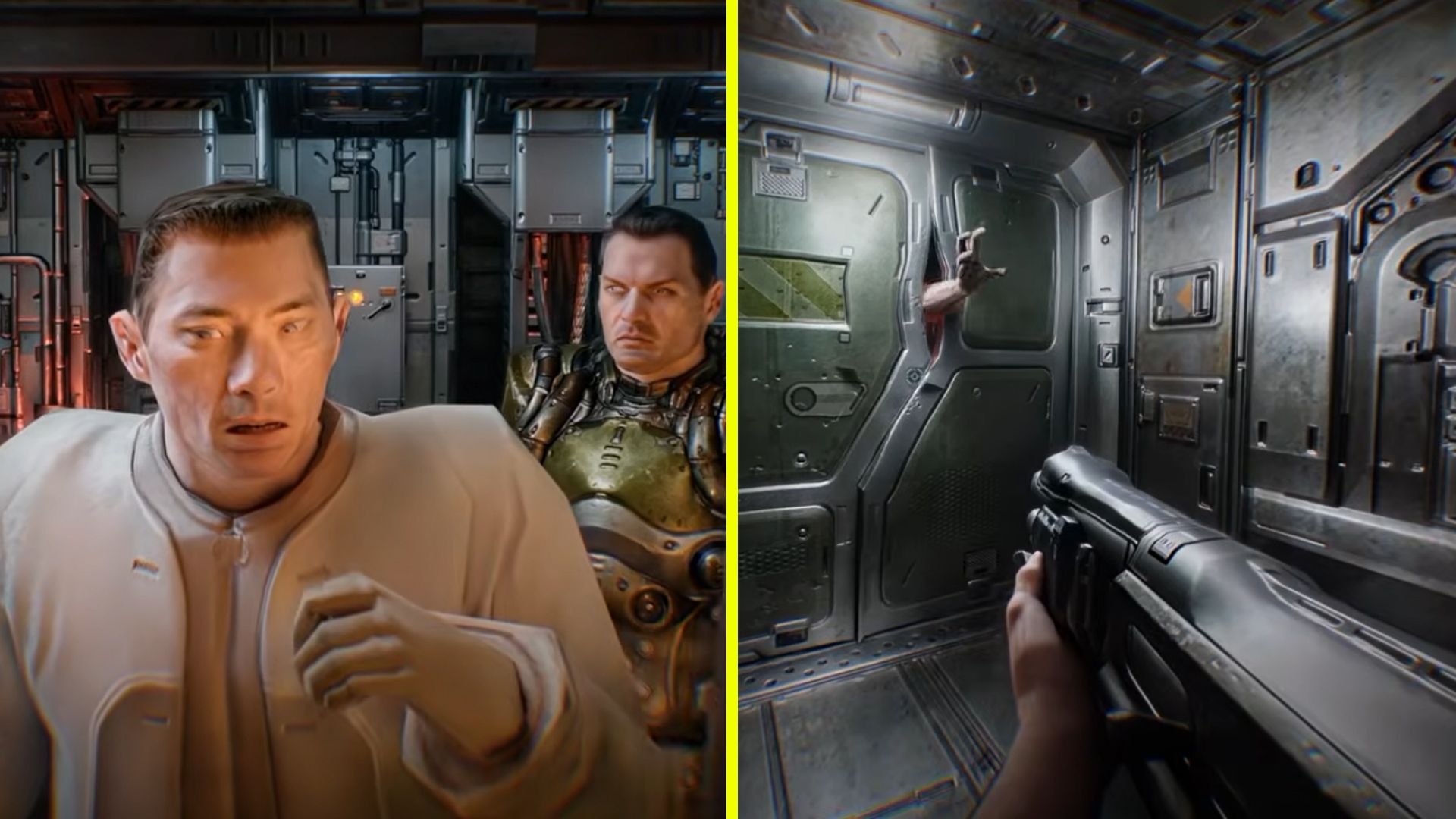
For instance, a gruff, battle-worn marine might appear with unnaturally smooth skin and perfectly sculpted features, losing the visual cues that communicate their harsh experiences. Similarly, monstrous enemies might be rendered with an uncanny polish that diminishes their terrifying presence. This is not to say that DLSS 5 is inherently flawed; rather, it highlights the inherent subjectivity in defining what constitutes "better" graphics.
Developers spend countless hours meticulously crafting the visual identity of their games. Every character model, every texture, every lighting choice is made with a specific artistic intent. The concern is that a technology like DLSS 5, if not carefully implemented and controlled, could inadvertently overwrite these artistic decisions with an algorithmically generated aesthetic that prioritizes a perceived universal appeal over the developer’s unique vision.
Supporting Data: Performance Gains and Visual Enhancements
Despite the concerns, it’s crucial to acknowledge the potential benefits that DLSS 5 aims to deliver. The core promise of DLSS technology has always been to provide significant performance improvements without a proportional decrease in visual quality. DLSS 5, with its advanced neural rendering, aims to take this a step further.
- Performance Boost: By rendering games at a lower resolution and then using AI to upscale and reconstruct the image, DLSS 5 can significantly boost frame rates. This allows for more demanding graphical settings, such as higher resolutions, more complex lighting, and advanced effects like path tracing, to be utilized on existing or less powerful hardware.
- Enhanced Detail and Fidelity: Neural rendering techniques are capable of intelligently reconstructing fine details that might be lost in traditional upscaling methods. This can lead to sharper textures, more intricate geometry, and a generally more refined visual experience.
- Ray Tracing Synergy: DLSS 5 is designed to work in tandem with ray tracing technologies. Ray tracing, while visually stunning, is computationally expensive. DLSS 5 can help mitigate this performance cost, making real-time ray tracing more accessible and practical for a wider range of games and hardware.
- Potential for Artistic Enhancement: While the "yassification" critique is valid, there’s also potential for DLSS 5 to enhance artistic vision in ways that are not immediately apparent. For example, it could be used to intelligently add subtle details to textures or improve the realism of complex materials like water or fire, all while staying true to the original artistic intent.
The Doom 3 demo, while a source of controversy, also implicitly showcases these performance benefits. Running a complex path tracing implementation in a game like Doom 3 would typically be unplayable on most hardware without significant optimization. The fact that DLSS 5 enables such a demonstration, even in an unfinished state, suggests its potential to unlock new levels of visual fidelity and performance.
Official Responses and Future Implications
As of this report, Nvidia has not issued a formal statement addressing the leaked iteration of DLSS 5 or the specific criticisms it has generated. However, the company’s history with DLSS technology suggests a commitment to refinement and addressing community feedback. Previous iterations of DLSS have seen continuous improvements based on user input and technological advancements.
The implications of DLSS 5, if it lives up to its potential, are far-reaching.
- Democratization of High-Fidelity Graphics: DLSS 5 could make incredibly detailed and realistic gaming experiences accessible to a broader audience. This could level the playing field, allowing players with mid-range hardware to enjoy visuals previously only achievable on high-end systems.
- Evolution of Game Development: Game developers will need to consider how AI-driven rendering technologies like DLSS 5 will impact their workflows. This might involve new considerations for asset creation, with a focus on ensuring that assets are robust enough to withstand AI reconstruction without losing their artistic integrity.
- The Future of Visual Realism: DLSS 5 represents a significant step towards achieving photorealistic graphics in real-time. The technology’s ability to intelligently reconstruct and enhance images could blur the lines between rendered graphics and reality, pushing the boundaries of what is visually possible in interactive media.
- Ongoing Debate on AI and Art: The controversy surrounding DLSS 5 is symptomatic of a larger societal conversation about the role of artificial intelligence in creative fields. As AI becomes more sophisticated, questions about authorship, artistic intent, and the definition of art will continue to be debated.
Ultimately, the success and reception of DLSS 5 will depend on Nvidia’s ability to strike a delicate balance. The technology must offer tangible performance and visual benefits without compromising the artistic integrity that lies at the heart of game development. The Doom 3 leak, while sparking controversy, has served as a crucial catalyst, ensuring that this conversation about the future of graphics and artistic vision is happening now, before DLSS 5 is fully unleashed upon the gaming world. The coming months will be critical in observing how Nvidia addresses these concerns and how DLSS 5 ultimately shapes the visual landscape of interactive entertainment.