The Vanguard of Visual Development: Concept Art World and the Fight for Human Creativity

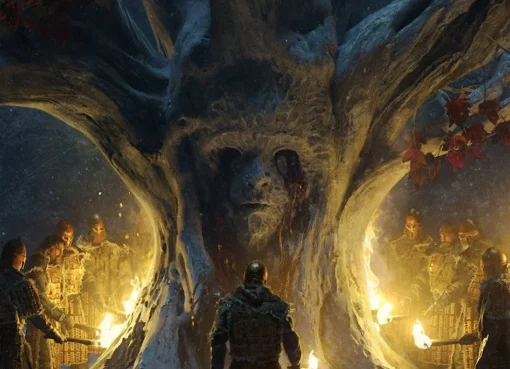
In an era defined by the rapid encroachment of generative technology, the preservation of human-led visual storytelling has become the primary mission of the industry’s most influential platforms. Concept Art World (CAW), a premier online resource for the entertainment industry, has recently reaffirmed its position as a critical bastion for professional illustrators and visual development artists. By showcasing the work of industry titans such as Florian de Gesincourt, Laurel D. Austin, Karl Simon Gustafsson, and Matt Codd, the platform not only highlights the technical evolution of digital media but also draws a firm line in the sand regarding the ethical use of artistic intellectual property.
As the digital landscape shifts toward 2026, the role of the concept artist is being redefined from a mere "content creator" to a "visual architect." The following analysis explores the current state of the industry through the lens of these featured artists, the technical milestones of the projects they represent, and the broader implications of the "No AI" movement within the creative professional sphere.
Main Facts: The Pillars of Modern Visual Development
Concept Art World serves as a curated gallery and professional hub for artists working in film, gaming, and animation. The recent spotlighting of several key figures provides a snapshot of the diversity within the field:
- The Division and Environmental Realism: The work of Florian de Gesincourt on Tom Clancy’s The Division remains a gold standard for environmental storytelling. His ability to render a decaying, post-pandemic New York City showcases the intersection of architectural accuracy and atmospheric mood.
- Stylized Innovation in Brink: Laurel D. Austin’s contributions to the game Brink are cited as pivotal moments in character design, where exaggerated silhouettes and bold color palettes were used to create a distinct, recognizable aesthetic that influenced a decade of hero shooters.
- The Veterans of Film and Beyond: Artists like Matt Codd represent the bridge between traditional cinematic production design and modern digital concept art. Codd’s career, spanning decades of blockbuster cinema, underscores the longevity and adaptability required in the industry.
- The Ethical Mandate: Central to CAW’s current operations is a strict prohibition against the training of Artificial Intelligence (AI) systems using the site’s hosted content. This policy reflects a growing industry-wide movement to protect "human-in-the-loop" creativity.
Chronology: From Digital Revolution to the AI Friction Point
The evolution of the concept art industry can be traced through the careers of the artists featured on the platform.
The Mid-2000s: The Rise of Stylization
During the development of Brink (released in 2011), Laurel D. Austin and the team at Splash Damage moved away from the "brown and gray" realism that dominated the era. This period marked a chronological shift where concept art began to drive the marketing and identity of a game as much as the gameplay itself. Austin’s work proved that concept art was not just a blueprint for 3D modelers, but a standalone art form.
The 2010s: The Era of "Lived-In" Worlds
By the mid-2010s, the focus shifted toward hyper-realism and "environmental narrative." Florian de Gesincourt’s work on The Division (2016) epitomized this era. The demand was no longer just for "cool environments," but for worlds that felt historically and geographically grounded. This required concept artists to study urban planning, decay patterns, and sociology to create believable ruins.
2020–2024: The Digital Renaissance and the AI Crisis
The early 2020s saw a massive influx of talent into the digital art space, facilitated by platforms like Concept Art World. However, the emergence of Large Image Models (LIMs) created a paradox: while digital tools became more powerful, the value of the individual artist’s "hand" was challenged. By 2024, the industry reached a tipping point, leading to the strict copyright notices and anti-scraping measures now seen on CAW’s official portals.
Supporting Data: Technical Excellence and Industry Impact
To understand the weight of these artists’ contributions, one must look at the technical requirements of the projects they facilitated.
Environmental Storytelling in The Division
Florian de Gesincourt’s work utilized a blend of photobashing, 3D block-outs, and digital painting to achieve a level of detail that could be translated into the Snowdrop Engine. The data requirements for these environments were staggering; every street corner in the concept art had to convey a story—a discarded suitcase, a makeshift barricade, or the specific way snow accumulates on a derelict taxi. This level of intentionality is what CAW argues cannot be replicated by algorithmic generation.
Character Logic in Brink
Laurel D. Austin’s work on Brink is often studied in art schools for its "shape language." Supporting data from industry workshops suggests that Austin’s use of the "triangle, circle, square" foundation for character silhouettes helped players identify classes (Tank, Operative, Medic) instantly during high-speed gameplay. This functional aspect of concept art—where design meets UI/UX—is a cornerstone of professional visual development.
The Portfolio of Matt Codd
Matt Codd’s portfolio serves as a database of Hollywood’s visual evolution. Having worked on projects ranging from Men in Black to Transformers and The Chronicles of Narnia, Codd’s work provides data on how conceptual designs are adapted for practical sets versus CGI-heavy environments. His involvement in a project often signals a high level of "world-building" integrity.
Official Responses: The Stand Against Algorithmic Scraping
Concept Art World has issued a clear directive regarding the intellectual property of its featured artists. The official stance, as reflected in their latest platform updates, is one of total protectionism for human creators.
"All images are © by the artist(s) or their respective copyright holders," the organization stated. "Any training of AI systems using this content is strictly prohibited."
This response is part of a broader legal and ethical framework being adopted by professional guilds and digital galleries. The "Official Response" from the community at large suggests several key reasons for this hardline stance:
- Economic Viability: If AI models can replicate an artist’s style by training on their lifetime of work without compensation, the economic incentive for new artists to enter the field vanishes.
- Creative Integrity: Concept art is about solving specific design problems. Industry leaders argue that AI produces "averages" of existing images rather than "solutions" to unique narrative challenges.
- Copyright Law: There is an ongoing global debate regarding "Fair Use." CAW’s explicit prohibition is a proactive legal measure to ensure that their database remains a safe haven for human talent rather than a data-mining farm for tech corporations.
Implications: The Future of the Creative Professional
The current trajectory of Concept Art World and its featured artists suggests a bifurcated future for the entertainment industry.
The Premium on Human Intuition
As AI tools become more ubiquitous, the "human touch" of artists like Karl Simon Gustafsson—whose work is known for its evocative mood and subtle lighting—will likely command a premium. The implication is that AAA studios will continue to hire top-tier concept artists to provide the "soul" and "originality" of a project, while AI may be relegated to low-level asset generation or mood-boarding.
The Rise of "Protected" Platforms
We are seeing the emergence of "walled gardens" in the art world. Platforms like CAW are evolving from public galleries into protected ecosystems. This could lead to a future where professional artists only share their work on platforms that can guarantee "poisoning" technology (like Nightshade or Glaze) or strict legal firewalls against web-crawlers.
Educational Shifts
The inclusion of tutorials and industry news on CAW indicates a shift in how artists are trained. The focus is moving away from just "making a pretty picture" toward understanding the pipeline of film and game production. Aspiring artists are being taught to be "directors of imagery" who can navigate both traditional skills and the ethical complexities of modern technology.
Conclusion: The Human Element as the Ultimate Resource
The features on Karl Simon Gustafsson, Laurel D. Austin, Florian de Gesincourt, and Matt Codd are more than just portfolio highlights; they are a testament to the depth of human imagination. Concept Art World’s commitment to showcasing these individuals while simultaneously fighting for their right to own their labor marks a pivotal moment in digital history.
As we look toward the 2026 horizon, the message from the concept art community is clear: technology should be a tool for the artist, not a replacement for them. The intricate streets of a ruined Manhattan, the bold characters of a futuristic ark, and the cinematic vistas of a fantasy epic are all products of human experience, suffering, and joy—elements that no algorithm can truly simulate. Through its curated excellence and defiant legal stances, Concept Art World remains the lighthouse for those navigating the turbulent seas of the modern creative economy.