Virtual Serenity: Color-A-Cube and Walkabout Mini Golf Launch Landmark Four-Week Voxel Art Collaboration

The intersection of meditative gameplay and iconic virtual environments marks a new chapter for the "cozy gaming" genre on Meta Quest and Pico platforms.
The landscape of virtual reality is often characterized by high-octane action, immersive first-person shooters, or complex social simulations. However, a growing sub-sector of "cozy games"—experiences designed for relaxation, mindfulness, and low-stress engagement—is carving out a significant niche. At the forefront of this movement is Color-A-Cube, a voxel-based 3D coloring game that has recently announced a high-profile, four-week collaboration with one of VR’s most beloved titles: Walkabout Mini Golf.
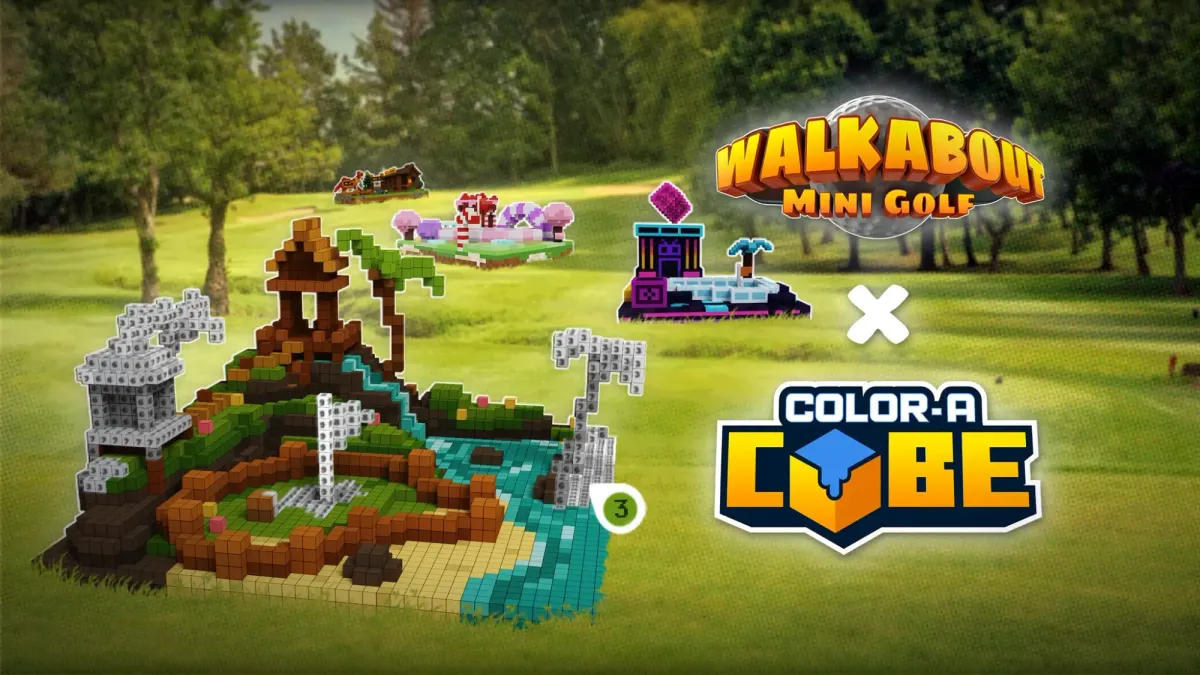
This partnership brings the meticulously designed, thematic environments of Walkabout Mini Golf into the tactile, cube-by-cube world of Color-A-Cube. Over the course of a month, players are being invited to reconstruct and recolor iconic mini-golf landmarks, blending the satisfaction of a completed puzzle with the nostalgia of virtual tourism.
Main Facts: A Synergy of Voxel Art and Mini-Golf Mastery
The collaboration, which officially launched earlier this month, centers on a series of "Weekly Drops." Each week, a new three-dimensional voxel map inspired by a specific Walkabout Mini Golf course is released within Color-A-Cube.
Color-A-Cube operates on a simple but deeply satisfying "color-by-number" mechanic. Instead of a 2D canvas, players are presented with a grayscale 3D model composed of thousands of individual cubes (voxels). By selecting the corresponding colors and pointing their controllers at the numbered voxels, players slowly breathe life and vibrancy into the scene.
The first featured course in this collaboration is the fan-favorite Tiki à Coco. Known in Walkabout Mini Golf for its lush tropical atmosphere, volcanic backdrops, and Polynesian-inspired architecture, the course has been reimagined as a complex voxel model. This allows players to not just play on the course, but to essentially "build" its visual identity through the coloring process.
The event is available to players on both the Meta Quest ecosystem and Pico headsets, ensuring a wide reach across the standalone VR market. This collaboration serves as a strategic bridge between two different types of "relaxing" VR: the social, light-competitive nature of mini-golf and the solitary, meditative nature of digital coloring.
Chronology: From Early Access to Weekly Content Milestones
The path to this collaboration began with Color-A-Cube’s steady rise through the VR ranks. Understanding the timeline of the game’s development provides context for why this partnership with a titan like Walkabout Mini Golf (developed by Mighty Coconut) is so significant.
1. The Early Access Foundation
Color-A-Cube spent a significant portion of its early life in Early Access. During this phase, the developers focused on refining the "haptics of coloring." In VR, the sensation of "clicking" a color into place needs to feel tactile and rewarding. The developers utilized this time to build a library of basic voxel models, ranging from simple animals to complex household objects.
2. Full Release and Critical Acclaim
Earlier this year, Color-A-Cube officially exited Early Access. The transition was marked by a surge in positive reviews from both users and critics. Journalists noted that the game filled a void in the VR market for "low-stakes" entertainment. It was during this period that the "Weekly Drops" series was conceptualized—a live-service model intended to keep the community engaged by providing fresh content every seven days.
3. The Expansion into Themed Content
Before the Walkabout collaboration, Color-A-Cube experimented with seasonal content and minor indie crossovers. These "Weekly Drops" included holiday-themed puzzles and abstract geometric challenges. The success of these smaller drops paved the way for more ambitious partnerships.
4. The Walkabout Mini Golf Partnership (Current)
The current four-week event represents the game’s most significant content update to date. By partnering with Mighty Coconut, Color-A-Cube is tapping into one of the largest and most dedicated fanbases in VR. The event is structured as follows:
- Week 1: Launch of Tiki à Coco (Currently live).
- Weeks 2–4: Subsequent releases of three additional iconic Walkabout courses, each transformed into a 3D coloring project.
Supporting Data: The Mechanics of "Cozy" Success
The success of Color-A-Cube and the excitement surrounding this collaboration can be quantified through the lens of player psychology and VR market trends.
The Appeal of Voxel Art
Voxels (volume pixels) offer a unique aesthetic that is both nostalgic and technically efficient for VR. Because voxel models are composed of uniform blocks, they provide a clear, grid-based logic that is perfect for color-by-number mechanics. For the player, there is a measurable sense of progress; as the "gray" areas of the map disappear, the dopamine reward of completion is high.
Market Positioning
While VR is often marketed toward "gamers," data suggests a growing demographic of "lifestyle users." These are individuals who use VR for fitness (e.g., Supernatural), meditation (e.g., TRIPP), or creative outlets. Color-A-Cube sits firmly in this creative/meditative bracket. By integrating Walkabout Mini Golf—a game that already has a reputation for being "the ultimate chill VR experience"—the developers are effectively doubling down on their core demographic.
Platform Availability and Accessibility
By supporting both Meta Quest and Pico, the developers have ensured that the collaboration isn’t siloed within a single hardware ecosystem. This is crucial for "Weekly Drop" models, which rely on a critical mass of active players to maintain momentum and social media visibility.
Official Responses and Critical Reception
The industry response to Color-A-Cube has been remarkably consistent, focusing on the game’s ability to strip away the "noise" of modern gaming in favor of a singular, well-executed idea.
James Tocchio of UploadVR, a leading voice in virtual reality journalism, highlighted the game’s strengths following its full release. He noted:
"Ultimately, Color-A-Cube succeeds by embracing simplicity. Rather than burying players beneath complicated systems, it builds around one central idea and executes it with confidence."
This sentiment is echoed by the player community, where the game is frequently cited as a "palate cleanser" between more intense VR sessions. The collaboration with Walkabout Mini Golf has been seen as a natural evolution. While Mighty Coconut (the creators of Walkabout) has not released a formal statement on the specific voxel designs, their history of allowing their IP to be used in creative ways—such as their recent Meow Wolf and Exploding Kittens courses—suggests a commitment to expanding the "Walkabout Universe" beyond the putter and the ball.

The "Tiki à Coco" map has already received praise for its scale. Unlike the smaller objects found in the base game, the Walkabout maps are expansive, requiring players to physically move around the 3D space (or use teleportation) to reach every nook and cranny of the voxelated island.
Implications: The Future of Cross-IP Synergy in VR
The Color-A-Cube x Walkabout Mini Golf collaboration is more than just a temporary event; it serves as a case study for the future of the VR content ecosystem.
1. The "Metaverse" of Aesthetics
This collaboration demonstrates a form of "soft interoperability." While you cannot play mini-golf inside Color-A-Cube, you can engage with the aesthetic of the mini-golf world. This suggests a future where successful VR IPs don’t just exist as standalone games, but as "visual brands" that can be exported to other experiences. We may soon see Walkabout environments appearing in VR home design apps, puzzle games, or social spaces.
2. Sustaining Indie Longevity
For indie developers like those behind Color-A-Cube, "Weekly Drops" are a vital tool for retention. In a market where users often play a game once and never return, providing a reason to log in every week is essential. Partnering with established brands provides the "hook" necessary to convert casual players into long-term subscribers or fans.
3. The Maturation of "Cozy VR"
The prominence of this collaboration signals that "cozy" is no longer a fringe category. As the VR hardware becomes lighter and more comfortable (with the advent of the Quest 3 and future iterations), the demand for "lean-back" experiences will only grow. Color-A-Cube is positioning itself as the "coloring book of the future," proving that the most engaging VR experiences don’t always require a sword or a gun.
4. Community and Creativity
Finally, this event encourages a different kind of community interaction. Players often share screenshots of their completed works, and the Walkabout maps provide a shared language for these players. It turns the act of coloring into a shared celebration of a beloved virtual world.
As the four-week event continues, the VR community will be watching to see which Walkabout courses make the transition to voxels next. Whether it’s the eerie depths of Gothic or the whimsical heights of Sweetopia, the collaboration has already proven that in the world of virtual reality, sometimes the most satisfying thing you can do is simply pick up a brush and fill in the blanks.
Color-A-Cube is available now on the Meta Quest Store and Pico Store. The Walkabout Mini Golf collaboration runs throughout the current month, with new maps dropping weekly.