The Beacon in the Dark: An In-Depth Analysis of ‘The Lightkeepers’ on Meta Quest 3

The virtual reality landscape is increasingly defined by its ability to merge disparate genres into cohesive, immersive experiences. This week, Spectral Games—the studio behind the well-received Medieval Dynasty: New Settlement—has launched its latest ambitious project: The Lightkeepers. Releasing exclusively for the Meta Quest 3 and 3S, The Lightkeepers is a co-operative survival tower defense title that attempts to bridge the gap between high-stakes scavenging and frantic, wave-based combat.
While individual elements of the game—ranging from its visual fidelity to its gunplay mechanics—may appear rudimentary when isolated, the title achieves a rare synergy. It is a game where the "loop" is the star, creating a "sum is greater than its parts" phenomenon that has already begun to capture the attention of the VR community.
I. Main Facts: The Core of the Experience
To understand the positioning of The Lightkeepers within the current VR market, one must look at its foundational data. Spectral Games has opted for a mid-tier price point and a focus on the latest Meta hardware to ensure a stable, social-forward experience.
Technical and Commercial Overview
- The Lightkeepers
- Developer/Publisher: Spectral Games SA
- Platform: Meta Quest 3, Meta Quest 3S (Optimized for Quest 3 hardware)
- Release Date: September 10, 2026
- Price Point: $19.99 USD
- Genre: Co-op Survival / Tower Defense / Roguelite
- Player Count: Solo or Co-operative (Multiplayer focused)
The Premise
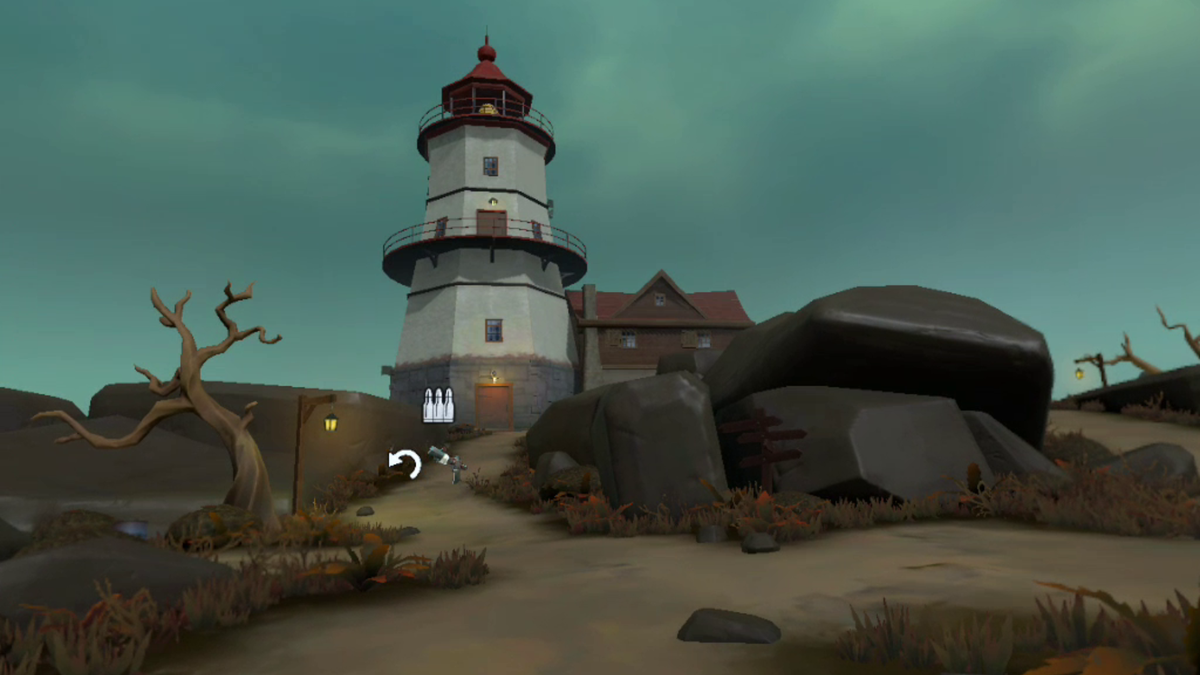
Set on a desolate, fog-shrouded archipelago, players take on the role of "Lightkeepers." Your primary objective is the maintenance and defense of a central lighthouse. This structure is not merely a landmark; it is the only thing standing between a small pocket of humanity and an onslaught of Lovecraftian horrors that emerge from the sea once the sun dips below the horizon.
II. Chronology: The Rhythms of Survival
The gameplay of The Lightkeepers is dictated by a strict diurnality. The game operates on a relentless clock, forcing players to balance the need for long-term upgrades with the immediate necessity of short-term survival.
Phase One: The Scavenger’s Morning
As dawn breaks, the immediate threat of monsters recedes, giving players a window of safety. This time is spent scouring the primary island for four essential resource categories: Fuel, Scrap Metal, Cloth, and Wood.
Drawing inspiration from the looting mechanics of The Walking Dead: Saints & Sinners, players must physically interact with the environment, rummaging through abandoned crates and structures. The primary island offers enough resources for basic repairs, but players soon find that the "base" resources are insufficient for the escalating difficulty of the nightly waves.
Phase Two: The High-Seas Expedition
Mid-day presents a tactical choice: stay safe on the home island or take the boat to a secondary, remote island. This remote location offers high-tier loot and rare crafting components but introduces a significant risk. Unlike the home island, the remote island is infested with monsters even during the day.
The boat mechanic itself is a unique, if polarizing, addition. The driver operates the vessel from an overhead, "God-eye" perspective. While this shift in perspective can be jarring for players accustomed to first-person immersion, it provides the tactical clarity needed to navigate treacherous waters and avoid environmental hazards.
Phase Three: The Nightfall Transition
As the sun sets, a foreboding tone resonates across the map—a final warning delivered via a wrist-mounted watch. This is the "return or perish" moment. Players must race back to the lighthouse, use their gathered materials to craft ammunition, reinforce barricades, and set up automated defenses. The transition from a slow-paced scavenger hunt to a high-octane shooter is the game’s defining mechanical pivot.
Phase Four: The Nocturnal Siege
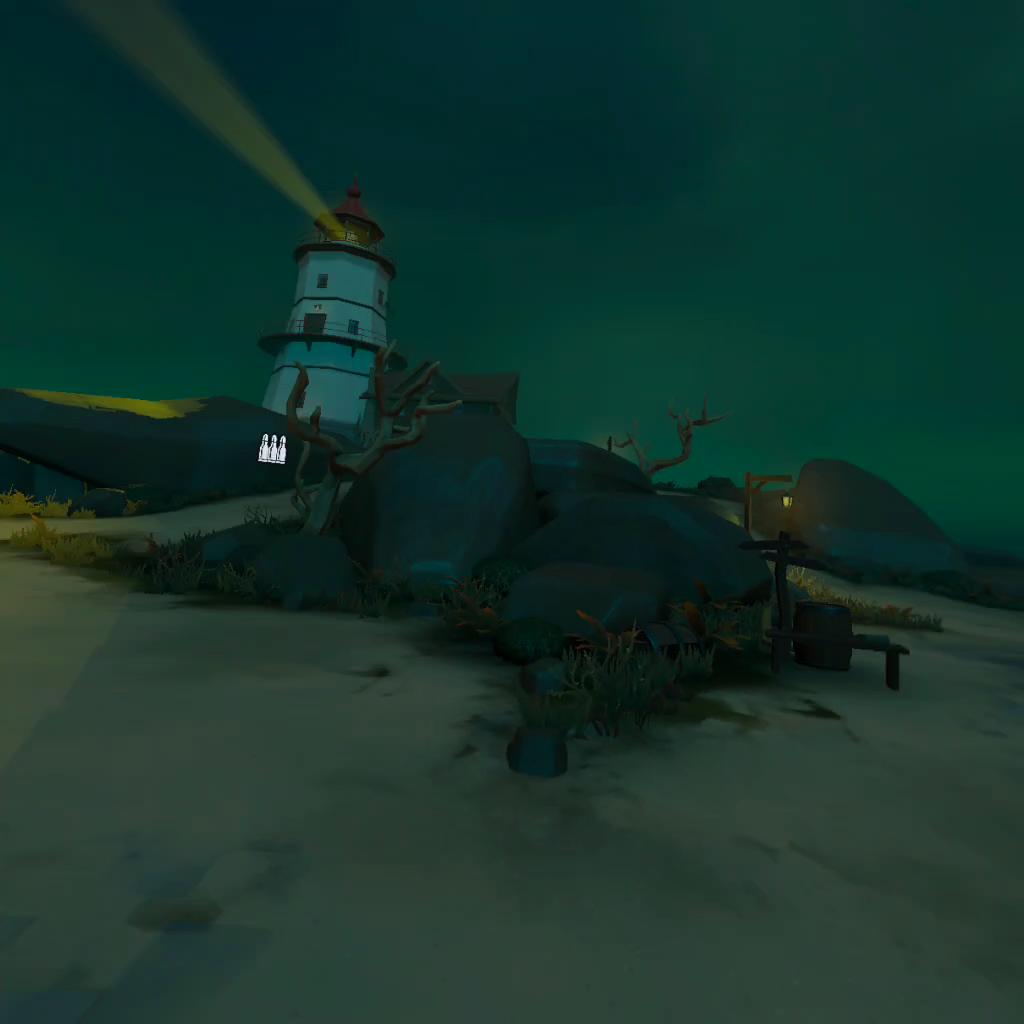
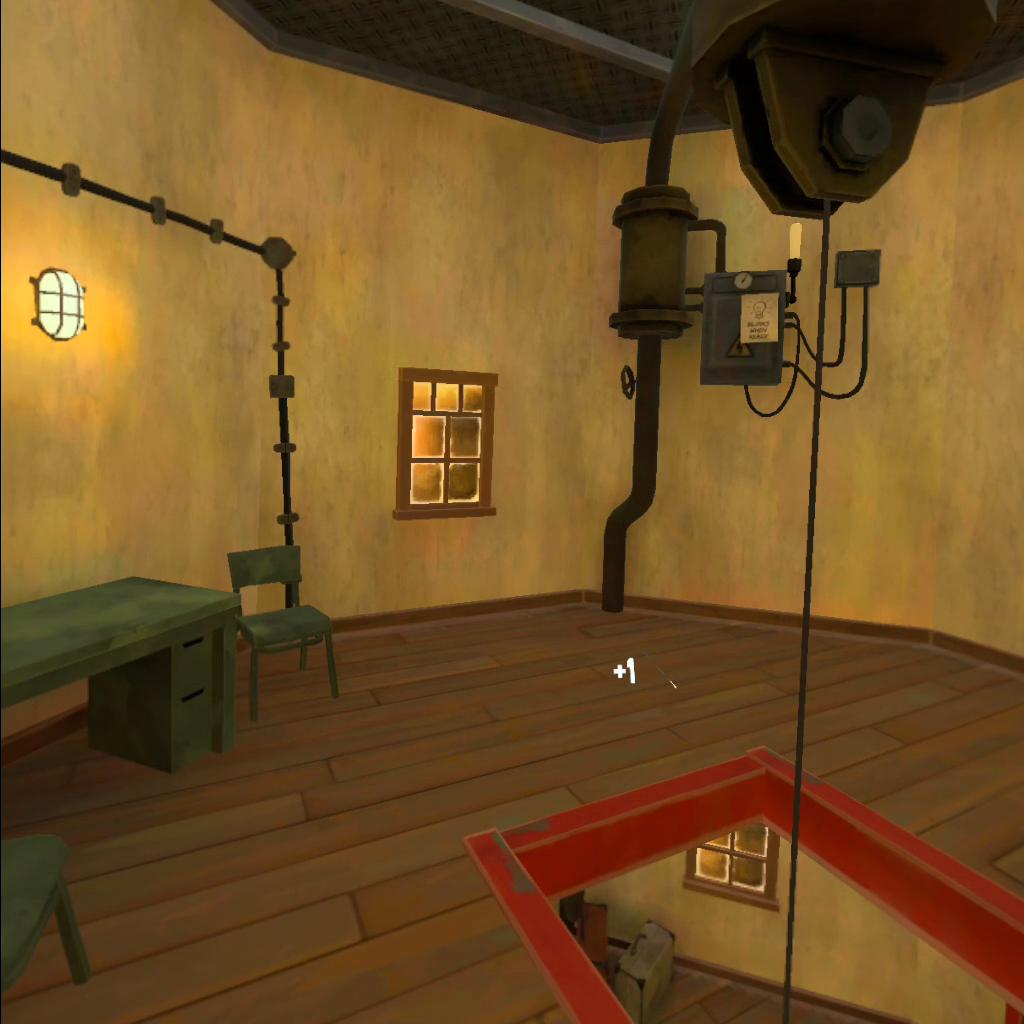
At night, The Lightkeepers transforms into a pure tower defense game. Grotesque, eldritch creatures assault the lighthouse from multiple vectors. Players must utilize a mix of manual gunplay, melee combat, and strategic placement of traps. The lighthouse is multi-leveled, featuring ziplines and verticality that require players to remain mobile. Success is measured by the lighthouse’s integrity at dawn, at which point the cycle begins anew with increased difficulty.
III. Supporting Data: Mechanics, UI, and Technical Performance
While the gameplay loop is compelling, a deeper dive into the technical execution reveals a game that prioritizes functionality over flourish.
Inventory and Ergonomics
Spectral Games has implemented a complex, gesture-based inventory system that utilizes the player’s shoulders and hands in a quadrant-based logic:
- Right Hand to Left Shoulder: Draws the primary firearm (e.g., the starting single-shot pistol).
- Right Hand to Right Shoulder: Equips the melee weapon (essential for conserving ammo).
- Left Hand to Left Shoulder: Pulls the backpack into view for resource management.
- Left Hand to Right Shoulder: Activates the lamp, a critical tool for navigating the pitch-black nights.
Initial testing suggests a steep learning curve for this system. During high-stress combat, "fumbling" for the correct item is common, though the system becomes intuitive after several hours of play.
Visual and Audio Fidelity
In terms of aesthetics, The Lightkeepers does not push the boundaries of the Quest 3’s chipset. When compared to the lush, photorealistic environments of Bootstrap Island, The Lightkeepers appears somewhat dated. The textures are functional, and the character models for the monsters lean into a stylized, grotesque look rather than high-fidelity realism.
The audio design follows a similar "serviceable" path. While the environmental cues (the nightfall tone, the sound of approaching waves) are effective, the weapon haptics and impact sounds are noted as being "floaty." The lack of "crunch" in the combat physics may be a deterrent for players who prioritize the tactile realism found in titles like Blade & Sorcery.
The Progression Meta-Game
To ensure longevity, the game employs a robust "grind" system. Progression is tracked through three primary avenues:
- Stat Compiling: Unlocking gear by completing specific challenges (e.g., 100 kills with a specific weapon type).
- In-Game Currency: Accrued through successful runs and used to buy permanent upgrades.
- Microtransactions: A system for cosmetics and potentially accelerated progression, similar to the models seen in After the Fall.
IV. Official Context: The Spectral Games Philosophy
While Spectral Games has not released a formal "Post-Mortem" or detailed developer diary for The Lightkeepers, their design philosophy can be inferred from their previous work on Medieval Dynasty: New Settlement.
The studio appears to focus on systems-heavy VR. Rather than focusing on a single "gimmick" (like ultra-realistic reloading or advanced physics), they aim to create a "World of Tasks." In The Lightkeepers, the developer’s response to the potential "clunkiness" of individual mechanics is to keep the player so busy that they don’t have time to dwell on them. By layering scavenging, boating, crafting, and defending, Spectral Games creates a state of "flow" that masks the technical limitations of the individual parts.
This approach targets a specific segment of the VR market: the "Hobbyist Survivor." These are players who enjoy the "work" of survival—the sorting of scrap, the planning of routes, and the steady accumulation of better gear.
V. Implications: The Future of Mid-Tier VR
The release of The Lightkeepers carries several implications for the broader VR industry and the Meta Quest ecosystem.
The Quest 3/3S Hardware Shift
By targeting the Quest 3 and the newly announced 3S, Spectral Games is signaling a move away from the limitations of the aging Quest 2. This allows for larger enemy counts on screen and more complex co-op synchronization, even if the graphical "coat of paint" remains modest. As more developers follow suit, we can expect a "baseline" of complexity in VR games to rise.
The "Service" Model in VR
The inclusion of deep progression trees and microtransactions suggests that Spectral Games views The Lightkeepers as a long-term platform rather than a "one-and-done" experience. This mirrors a growing trend in VR where developers seek to create "forever games" (like Ghosts of Tabor or Population: One) that sustain a community through seasonal updates and social play.
Conclusion: A Calculated Trade-off
Ultimately, The Lightkeepers represents a calculated trade-off. It sacrifices the "wow factor" of high-end visuals and physics for a rock-solid gameplay loop and a compelling co-operative hook. For $19.99, it offers a depth of content that rivals more expensive titles, provided the player is willing to look past its unpolished exterior.
As the VR market matures, games like The Lightkeepers will likely become the backbone of the industry: reliable, system-driven experiences that prioritize "the fun of the grind" over the spectacle of the tech demo. For those with a group of friends and a penchant for Lovecraftian survival, the lighthouse is calling.