The Eclipse Pivot: Meta’s Strategic Decoupling of Horizon Worlds and the Move Toward a Mobile-First Future

In the rapidly evolving landscape of social virtual reality and user-generated content (UGC) platforms, Meta appears to be executing its most significant strategic pivot since the rebranding of Facebook. Recent data-mining efforts and internal leaks suggest that the tech giant is preparing to spin off Horizon Worlds—its flagship metaverse environment—into a standalone mobile application. Internally codenamed "Eclipse" and currently appearing in pre-release builds as "Horizon Create," this move signals a definitive shift in Meta’s philosophy: the transition of Horizon Worlds from a VR-centric social space into a mobile-first, AI-driven gaming platform.
This development follows a tumultuous year for Meta’s Reality Labs division, characterized by organizational restructuring, shifting priorities, and a clear attempt to streamline the user experience for Meta Quest owners while simultaneously chasing the lucrative mobile gaming market dominated by the likes of Roblox and Fortnite.
Main Facts: The Emergence of "Eclipse"
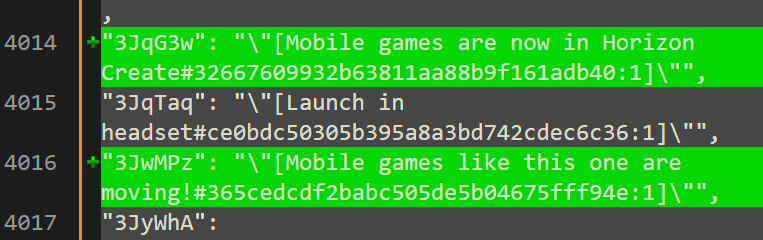
The primary evidence for this transition comes from assets and strings discovered within the August 2026 updates of the Meta Horizon mobile app. Dataminer and programmer Nori identified specific code and hidden pages referencing a new standalone entity.
The Standalone "Horizon Create" App
According to the leaked data, "Horizon Create" is designed as a dedicated environment for playing, building, and "remixing" mobile-game worlds. Unlike the current integrated experience, this standalone app aims to lower the barrier to entry for creators by utilizing integrated AI tools. These tools reportedly allow users to personalize existing environments or generate entirely new ones through simple text or voice prompts—a move that aligns with Meta’s broader corporate push into generative AI.
Migration Strings
The August 25th build of the Meta Horizon app contains explicit strings of text meant for end-users. These strings inform players that to continue accessing mobile-focused "Worlds," they will need to migrate to the new Horizon Create app. This suggests that the existing Meta Horizon app will be stripped of its world-building and social-gaming components to focus on its original purpose: headset management and VR software discovery.
The AI-Driven Creative Suite
A central pillar of the Eclipse project is the democratization of game design. By shifting the focus to "remixing," Meta is looking to tap into the "modding" culture. The inclusion of AI-assisted workflows suggests that Meta has recognized the difficulty of building complex 3D environments on a mobile screen. AI acts as the bridge, allowing mobile users to compete with PC-based creators by automating the more technical aspects of world construction.
Chronology of a Shift: From VR Pillar to Mobile Contender
To understand why Meta is spinning off Horizon Worlds, one must look at the sequence of events over the last eighteen months, which reveals a company struggling to find the right balance between high-end VR and mass-market accessibility.
Late 2025: The Foundation of Horizon Studio
At Meta Connect 2025, the company announced "Horizon Studio," a set of professional-grade creation tools. At the time, the narrative was focused on empowering high-end creators to build more immersive VR experiences. However, as 2026 progressed, silence fell over these professional tools, suggesting a pivot toward simpler, more accessible mobile tools.
March 2026: The Great Reorganization
The most pivotal moment occurred in March 2026. Meta’s Reality Labs underwent a "far-reaching" reorganization accompanied by significant layoffs. During this period, Meta CTO Andrew Bosworth hinted that VR growth was "less quick" than the company had hoped.
Shortly thereafter, Meta made a controversial declaration to "explicitly separate" Horizon Worlds from the Quest platform. For a few days, the official stance was that Horizon Worlds would drop VR support entirely to focus on mobile. While this was partially reversed—clarifying that only specific "Horizon Engine-based" worlds would be deprecated on VR—the message was clear: Horizon Worlds was no longer the exclusive "killer app" for the Quest headset.
GDC 2026: The Redesign Hint
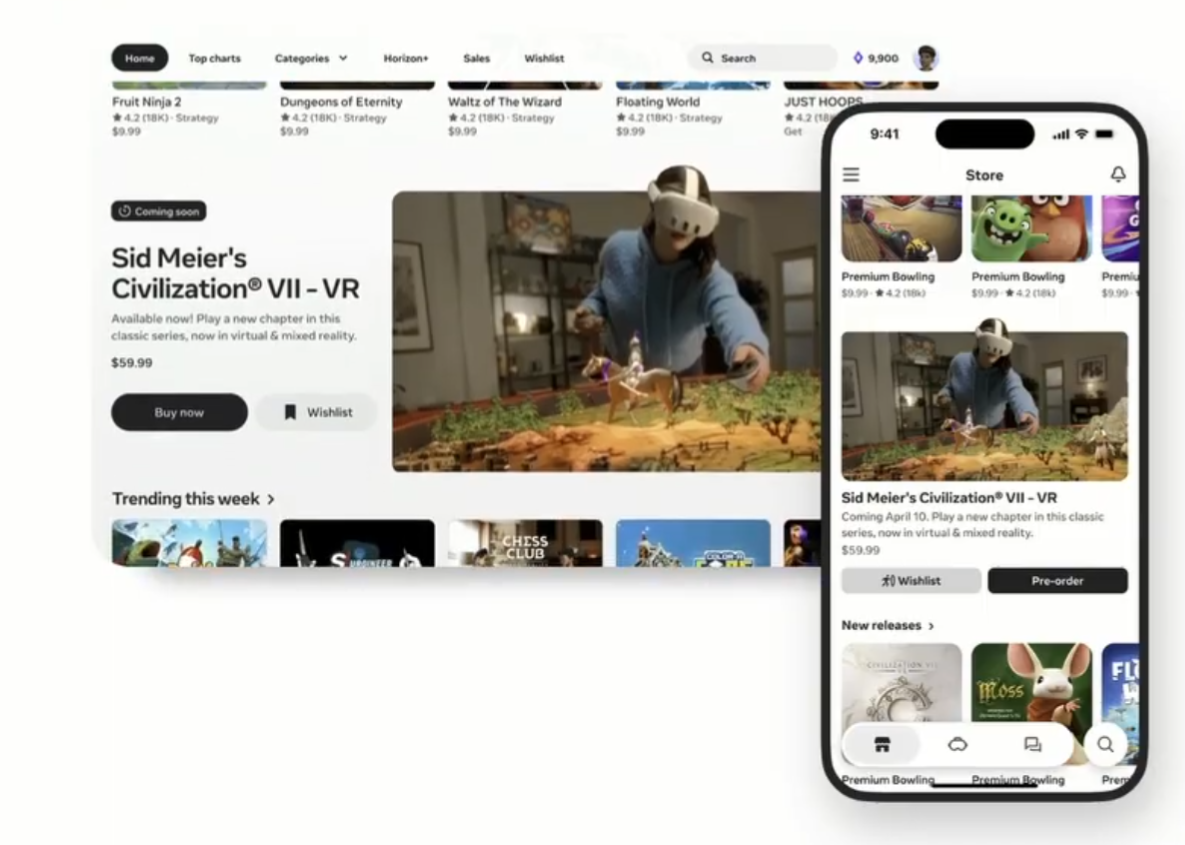
During the Game Developers Conference (GDC) in early 2026, Meta showcased a new design for the Meta Horizon Store. Notably, the mockup shown for the mobile app was dramatically simplified. It removed the "Worlds" recommendations that currently clutter the home screen, focusing instead on a clean interface for managing the Quest headset, messaging friends, and buying VR games. At the time, observers wondered where the "Worlds" content had gone; the discovery of project "Eclipse" provides the answer.
August 2026: The Leak
Throughout August, successive updates to the mobile app’s codebase revealed the "Eclipse" codename and the "Horizon Create" branding. The inclusion of migration instructions indicates that the launch of this standalone app is likely imminent, potentially coinciding with the upcoming Meta Connect 2026 conference.
Supporting Data: The Mobile vs. VR Divide
Meta’s decision to bifurcate its ecosystem is supported by the diverging needs of its user base. Data suggests that the overlap between "hardcore VR gamers" and "social UGC mobile players" is smaller than Meta initially anticipated.
- User Experience Friction: Currently, the Meta Horizon app serves two masters. It is a utility for Quest owners (changing settings, casting gameplay) and a portal to a social world. This creates a cluttered UI. By moving "Worlds" to "Horizon Create," Meta can provide a streamlined "companion app" experience for Quest users while offering a "Roblox-like" immersive experience for mobile gamers.
- The Power of AI: The integration of AI tools in project Eclipse is not merely a trend-chase. Building in 3D on a 6-inch touchscreen is notoriously difficult. By leveraging the Llama-based AI models, Meta can allow a mobile user to say, "Give this world a cyberpunk aesthetic and add a racing mechanic," effectively bypassing the need for complex manual editing.
- Market Share: Roblox currently boasts over 70 million daily active users, the vast majority of whom are on mobile. Horizon Worlds, in its VR-first iteration, struggled to reach even a fraction of that. A standalone mobile app allows Meta to bypass the $500 entry fee of a VR headset.
Official Responses and Corporate Silence
Despite the mounting evidence found in the app’s code, Meta has remained officially tight-lipped regarding project "Eclipse."
The company’s public communications have recently shifted almost entirely back to VR developer tools and hardware. In a July 30, 2026, post from the Meta Horizon Developers account, the company promised updates at Meta Connect 2026 regarding "SDK updates, AI development workflows, and controller-free interactions." Noticeably absent from the announcement was any mention of Horizon Worlds or Horizon Studio.
This silence is interpreted by industry analysts as a "reboot" phase. Meta likely wants to avoid the "metaverse" stigma that plagued earlier iterations of Horizon Worlds. By rebranding the mobile experience as "Horizon Create" and focusing on the "Create" aspect rather than the "Metaverse" aspect, they are attempting to reset public expectations.
When questioned about the GDC 2026 app designs that showed a simplified interface, Meta representatives stated that they are "constantly iterating on the user journey to ensure Quest owners can find their next favorite game as quickly as possible." This non-committal response aligns with the strategy of quietly removing the "Worlds" bloat from the core headset management app.
Implications: What This Means for the Future of Meta
The spinoff of Horizon Worlds into the Eclipse/Horizon Create app has profound implications for the company’s long-term strategy and the broader VR industry.
1. The "Roblox-ification" of Meta
Meta is no longer trying to make the "Metaverse" happen through VR headsets alone. They are entering a direct confrontation with Roblox, Fortnite, and Minecraft on their home turf: the smartphone. By making the creation tools AI-driven and mobile-native, Meta is betting that they can capture a younger demographic that views "Horizon" as a game engine rather than a social VR space.
2. A Cleaner Quest Ecosystem
For the VR enthusiast, this is largely a positive development. For years, Quest users complained that the Horizon mobile app was too focused on pushing social "Worlds" that they had no interest in. By offloading these to a separate app, the Meta Horizon app can return to being a high-performance utility for VR gaming and hardware management.
3. The Death of the "Single App" Vision
This move signals the end of the "One App to Rule Them All" philosophy for the metaverse. Mark Zuckerberg’s initial vision of a singular, seamless transition between mobile, web, and VR is being replaced by a fragmented, specialized approach. VR will be for high-end immersion; mobile will be for quick-hit UGC and creation.
4. AI as the Great Equalizer
If Horizon Create successfully implements AI-driven world building, it could disrupt the UGC market. If a teenager can build a functioning game on their phone in thirty minutes using Meta’s AI, the competitive advantage of platforms that require manual coding or complex 3D modeling will diminish.
Conclusion: All Eyes on Meta Connect 2026
As we approach the Meta Connect 2026 conference, the tech industry is waiting to see if Mark Zuckerberg will officially unveil "Eclipse." The move to spin off Horizon Worlds is a pragmatic admission that the previous strategy—forcing a VR-first social world onto a mobile audience—was not working.
Whether "Horizon Create" can successfully compete in the crowded mobile UGC market remains to be seen. However, by leveraging AI and finally separating its VR utility from its social gaming experiments, Meta is positioning itself for a more focused, and perhaps more sustainable, future in both the virtual and mobile realms. The "Eclipse" may represent the darkening of the original Horizon vision, but it could also be the dawn of a more realistic and commercially viable approach to the digital world.