The Morbid Alchemy of Survival: An In-Depth Look at ‘Fowl Scourge’

The independent gaming landscape has long been a fertile ground for titles that push the boundaries of genre, blending traditional mechanics with provocative themes. Among the most recent and intriguing entries to emerge from this space is Fowl Scourge, an action-driven RPG that positions players at the intersection of medical ethics and supernatural combat. Developed with a distinct focus on body horror and tactical progression, the game offers a grim yet captivating vision of a world besieged by a biological apocalypse.
Following a successful showcase at Game Con Canada, Fowl Scourge has garnered significant attention for its unique "plague doctor" protagonist and its uncompromising approach to character customization through genetic manipulation. As the title moves closer to its eventual release, it stands as a testament to the evolving sophistication of indie RPGs.
Main Facts: A Dark Synergy of Combat and Biology
At its core, Fowl Scourge is an action RPG that prioritizes atmospheric storytelling and high-stakes combat. The player assumes the role of a plague doctor—not a healer in the traditional sense, but a mercenary operating within a world ravaged by the titular "Fowl Scourge." The game’s structure revolves around a central hub—a tavern—where players accept "odd jobs" that lead them into perilous caverns and dungeons.
The primary gameplay loop is defined by several key pillars:
- Contract-Based Exploration: Players venture into diverse dungeons to eliminate specific threats, ranging from legless aberrations to amorphous, gelatinous entities.
- Visceral Combat: Each encounter requires a deep understanding of enemy patterns and environmental hazards, with a heavy emphasis on movement and positioning.
- The Surgery System: Perhaps the most distinctive feature of the game is its progression system. Rather than traditional leveling, players undergo "surgeries" to alter their genetic makeup, gaining power at the potential cost of biological stability.
- Environmental Puzzling: Beyond combat, the game challenges players with puzzles that are intricately tied to their movement capabilities and physical attributes.
Chronology: From Concept to the Showfloor
The development of Fowl Scourge has followed a path familiar to many ambitious indie projects, marked by a steady buildup of community interest and successful public demonstrations.
- Initial Reveal and Steam Listing: The game first appeared on the radar of RPG enthusiasts with its listing on Steam (App ID: 1996680). Early trailers showcased a gritty, stylized aesthetic that blended gothic horror with fluid action mechanics. The initial reception focused on the game’s unique take on the "plague doctor" archetype, which has seen a resurgence in popular culture over the last decade.
- The Development Phase: Throughout its development, the creators of Fowl Scourge have emphasized the variety of the bestiary. The "Scourge" itself is presented not as a single disease, but as a catalyst for wild, unpredictable mutations. This period of development focused on refining the "Surgery" mechanic, ensuring that player choices felt impactful and permanent.
- Game Con Canada Showcase: A pivotal moment in the game’s timeline occurred recently at Game Con Canada. This event provided the first hands-on opportunity for the public and press to experience a demo. Reports from the floor highlighted the game’s "vibe"—a mixture of dread and curiosity—and the surprising depth of its movement-based puzzles.
- Current Status: As of late 2024, Fowl Scourge remains in active development. While a definitive release date has not been announced, the game has been made available for "wishlisting" on Steam, a move that allows the developers to gauge market interest and secure a following ahead of the final launch.
Supporting Data: Mechanics of the Mutation
To understand the appeal of Fowl Scourge, one must look at the data-driven mechanics that govern its world. Unlike many action RPGs that rely on "loot drops" for power scaling, Fowl Scourge focuses on internal growth—literally.
The Anatomy of the Enemy
The variety of monsters in Fowl Scourge is not merely cosmetic; it is functional. Observations from the demo reveal several distinct classes of enemies:
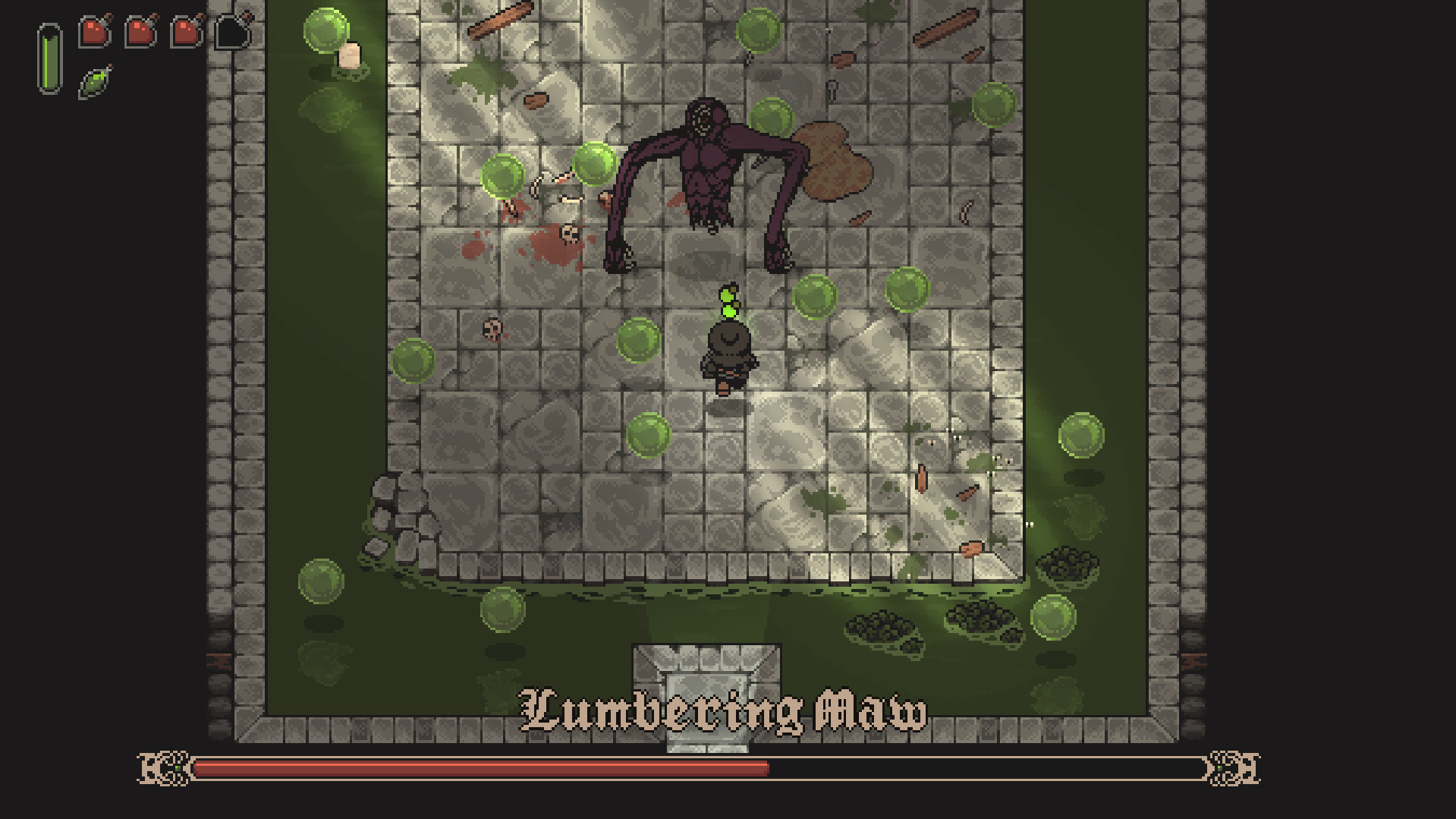
- The Legless Stalkers: These creatures rely on dragging themselves through environments, forcing players to manage low-angle attacks and ground-based hazards.
- Jelly Creatures: Amorphous enemies that utilize bounce mechanics and AOE (Area of Effect) splashes. These require the player to master verticality and timing.
- Plague-Infused Sentinels: More traditional bipedal foes that use weaponry, representing the "humanity" lost to the scourge.
The Cost of Surgery
The genetic modification system in the tavern is the game’s mechanical heart. Data from early playtests suggests a "Risk vs. Reward" balance. A player might choose to graft a "Sprinting Sinew" onto their legs to increase dodge speed, but this might come with a "Brittle Bone" debuff, making them more susceptible to fall damage. This system forces players to specialize their "build" not just through gear, but through their very biology.
Movement as a Puzzle
The integration of movement-based puzzles is a significant departure from standard "hack-and-slash" tropes. Players must often use their modified physical traits—such as increased jump height or dash distance—to navigate environmental obstacles that are as deadly as the monsters themselves. This creates a synergy between the player’s character build and their ability to progress through the story.
Official Responses and Developer Philosophy
While the development team has remained relatively lean, their communication through platforms like Steam and at conventions provides insight into the philosophy behind Fowl Scourge.
In various developer logs, the team has expressed a desire to move away from the "invincible hero" trope. Instead, they want the player to feel like a "desperate survivor in a dying world." The choice to make the protagonist a mercenary doctor is intentional; it frames the act of killing as a business transaction, adding a layer of cynical realism to the high-fantasy setting.
The response from the community following the Game Con Canada demo has been overwhelmingly positive regarding the game’s atmosphere. Players have praised the "unsettling" nature of the tavern base, which serves as a sanctuary that feels almost as dangerous as the dungeons due to the experimental surgeries taking place within its walls. The developers have responded to this feedback by promising even more "bizarre and unsettling" mutations in the final version of the game.
Implications: A New Era for Body Horror in RPGs
The emergence of Fowl Scourge carries several implications for the broader gaming industry and the evolution of the RPG genre.
1. The Subversion of the "Healer" Archetype
Traditionally, plague doctors in games are either villains or support characters. Fowl Scourge subverts this by making the doctor the primary agent of violence. This shift reflects a growing trend in gaming where "professional" roles (doctors, researchers, merchants) are reimagined through the lens of survival and combat.
2. Narrative through Biology
The game suggests a future where narrative is told through the player’s physical state. In Fowl Scourge, your character’s body is a map of your journey—the scars, grafts, and mutations tell the story of the battles you’ve won and the prices you’ve paid. This "biological storytelling" could influence how other RPGs handle character progression, moving away from abstract "XP points" toward more tangible, visual changes.
3. The Strength of the "Mid-Tier" Indie
The success of the Fowl Scourge demo at a major convention like Game Con Canada underscores the continued vitality of mid-tier indie games. These are titles that may not have the budget of a "Triple-A" blockbuster but possess a clarity of vision and a willingness to experiment that larger studios often avoid. By focusing on a niche—body horror action RPG—the developers are carving out a dedicated space in a crowded market.
4. Ethical Engagement in Gameplay
By attaching "bad effects" to genetic surgeries, the game introduces a light layer of ethical and tactical dilemma. Players must decide how much of their humanity they are willing to trade for the power to complete a contract. While primarily a gameplay mechanic, it mirrors real-world anxieties about biotechnology and enhancement, albeit in a fantastical, gothic setting.
Conclusion: The Path Ahead
Fowl Scourge represents a compelling fusion of dark fantasy and innovative RPG mechanics. By centering the experience on the grotesque reality of a plague-stricken world and the desperate measures required to survive it, the game offers something distinct from the standard "save the world" narrative.
As the gaming community waits for an official release date, the current build of the game—as seen at Game Con Canada—suggests a polished, atmospheric, and deeply challenging experience. For those who find beauty in the macabre and satisfaction in complex character builds, Fowl Scourge is a title that demands attention. It is a reminder that in the world of independent development, the most horrifying plagues can often lead to the most creative breakthroughs.
For now, the tavern remains open, the surgical tools are being sharpened, and the monsters in the cavern await. Prospective doctors are encouraged to add the game to their Steam wishlists to stay updated on the next stage of this biological evolution.