The Scaling Sovereign: Sam Altman Defends the Future of Large Language Models Amid GPT-5.6 Anticipation
In the rapidly evolving landscape of artificial intelligence, a fundamental schism has emerged among the world’s leading researchers: is the current path of Large Language Models (LLMs) a highway to Artificial General Intelligence (AGI), or a dead end that will eventually hit a wall of diminishing returns?
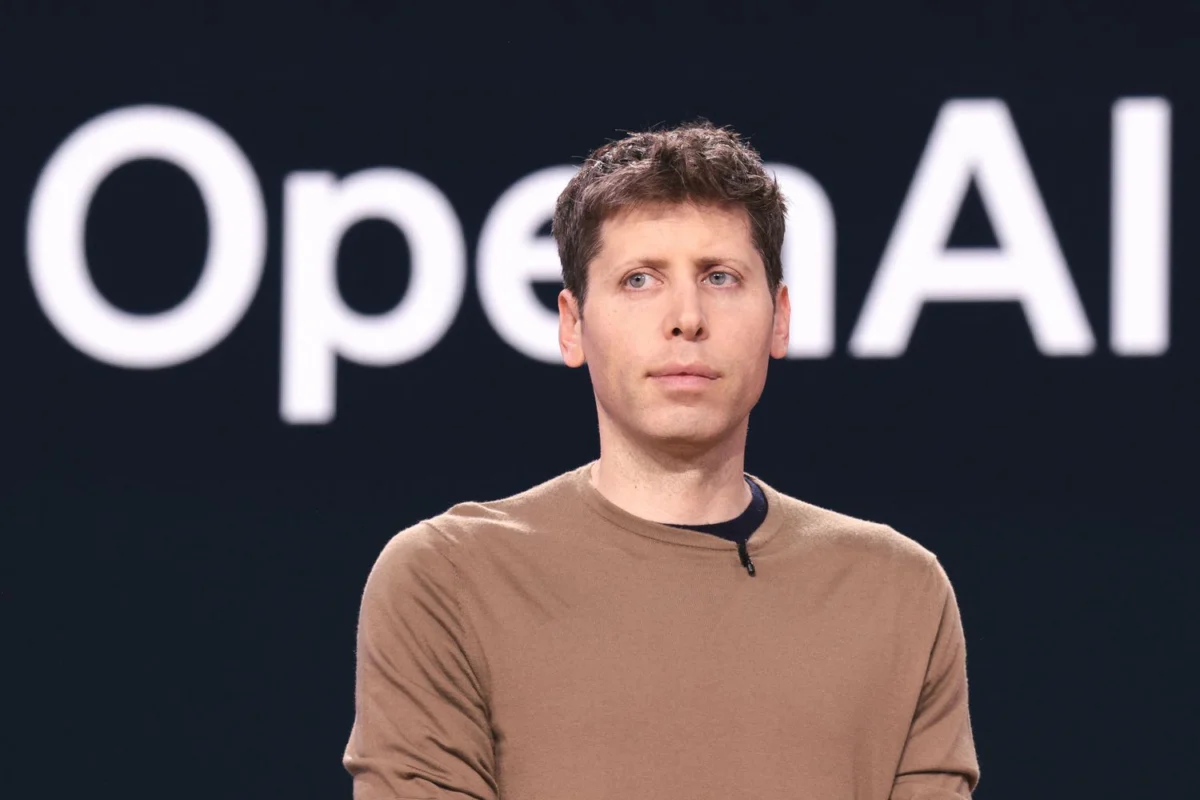
Speaking recently at Stanford University, OpenAI CEO Sam Altman firmly planted his flag in the "scaling" camp. Addressing a room of students and researchers, Altman pushed back against a growing chorus of skeptics who argue that the industry’s reliance on massive compute and data—often referred to as the "Scaling Hypothesis"—is nearing its expiration date. Altman’s defense comes at a critical juncture for OpenAI as it prepares for the launch of GPT-5.6, a model family designed to transition from simple text generation to complex scientific reasoning and long-horizon autonomy.
Main Facts: The Scaling Hypothesis and the Stanford Proclamations
At the heart of Sam Altman’s argument is a critique of what he describes as "misguided" skepticism. For years, critics have argued that LLMs are merely "stochastic parrots"—highly sophisticated statistical engines that remix existing human knowledge without truly understanding the underlying logic of the world.
Altman’s rebuttal at Stanford focused on three core pillars:
- The Persistence of Scaling: Altman argued that many researchers have historically underestimated the power of adding more compute and data. He suggested that a "whole generation" of AI scientists held the field back by being too certain about the limitations of scaling, only to be proven wrong as models like GPT-4 exhibited emergent properties that were not predicted by smaller-scale experiments.
- Creation of New Knowledge: In perhaps his most provocative claim, Altman revealed that an internal OpenAI model recently solved a mathematical conjecture that had remained unsolved for a significant period. This, he argues, is definitive proof that LLMs are capable of generating "new knowledge" rather than just synthesizing existing data.
- The Shift to Reasoning: While acknowledging that LLMs currently struggle with "long-horizon tasks"—complex problems that require sustained judgment over days or weeks—Altman hinted that the next generation of models (specifically the GPT-5 series) is being architected to bridge this gap through enhanced reasoning capabilities.
Chronology: The Evolution of the Scaling Debate
To understand Altman’s current stance, one must look at the timeline of the "Scaling Laws," a concept popularized by OpenAI researchers (and later Anthropic founders) around 2020.
- 2020: The Kaplan Paper: Researchers at OpenAI published a seminal paper suggesting that model performance improves predictably as a power-law function of three variables: the number of parameters, the amount of compute, and the size of the dataset. This became the "North Star" for the industry.
- 2022: The Chinchilla Pivot: DeepMind researchers released the "Chinchilla" study, arguing that most models were actually "under-trained." They suggested that for every doubling of model size, the data size should also double. This led to a rush for high-quality data.
- 2023: The GPT-4 Milestone: The release of GPT-4 proved that massive scale could lead to human-level performance on professional benchmarks (like the Uniform Bar Exam). However, it also sparked the "plateau" debate, as some users felt the jump from GPT-3.5 to GPT-4 was the last "easy" leap.
- 2024: The Reasoning Era (o1/Strawberry): OpenAI introduced the "o1" series, which utilized "inference-time compute"—allowing the model to "think" before it speaks. This marked a shift from just scaling the training to scaling the thinking process.
- The Horizon: GPT-5.6: The upcoming launch of GPT-5.6 is positioned as the culmination of these efforts, focusing on "agentic" behavior where the AI can perform multi-step scientific and coding tasks with minimal human intervention.
Supporting Data: The Trillion-Dollar Compute Boom
Altman’s confidence is backed by unprecedented financial and infrastructural investments. The "Scaling Hypothesis" is no longer just a research theory; it is the most expensive industrial project in human history.

- The Stargate Project: Reports indicate that Microsoft and OpenAI are planning a $100 billion supercomputer named "Stargate," designed specifically to provide the compute power necessary for the next generation of LLMs.
- Energy Requirements: Current estimates suggest that by 2030, AI data centers could consume as much as 3.5% to 4% of global electricity. Altman himself has noted that the future of AI progress is inextricably linked to breakthroughs in energy, such as nuclear fusion.
- The Math Breakthrough: While the specific mathematical conjecture solved by OpenAI remains confidential, the claim aligns with a broader trend. In 2023, Google DeepMind’s "FunSearch" used an LLM to find a new solution to the "cap set problem," a long-standing puzzle in mathematics. These data points suggest that LLMs are moving into the realm of "zero-shot discovery."
Official Responses: The Great Schism in AI Philosophy
Altman’s comments at Stanford do not exist in a vacuum; they are a direct response to rival philosophies in the AI community.
The LeCun Critique
Yann LeCun, Meta’s Chief AI Scientist and a Turing Award winner, remains the most prominent critic of the "scaling-only" approach. LeCun argues that LLMs lack a "World Model." According to LeCun, because LLMs are trained only on text, they lack an understanding of physical reality, causality, and common sense. He has famously stated that "AI will not be human-level until it can learn like a baby," through observation of the physical world rather than just reading tokens.
The Anthropic Alignment
Conversely, Dario Amodei, CEO of Anthropic and a former OpenAI executive, largely agrees with Altman. Amodei has frequently discussed the "exponential curve" of AI capabilities, suggesting that we are still in the early stages of what scaling can achieve. Anthropic’s "Claude" models have followed a similar trajectory to OpenAI’s, prioritizing massive scale combined with "Constitutional AI" to ensure safety.
The "Dead End" Argument
Other researchers, such as Gary Marcus, have argued that LLMs are hitting a "wall of reliability." They point out that while LLMs are brilliant at prose, they are prone to "hallucinations" and fail at basic logic when the parameters of a problem are slightly shifted. For Marcus, the path forward requires "Neuro-symbolic AI"—a marriage of LLMs with traditional, rule-based logic.
Implications: The Future of Agents and the Global Economy
If Altman is correct and LLMs are not hitting a dead end, the implications for the global economy and the future of labor are profound.
From Chatbots to Agents
The launch of GPT-5.6 represents a shift from "Generative AI" to "Agentic AI." A chatbot answers questions; an agent completes tasks. If scaling enables an LLM to handle "long-horizon tasks," we move into a world where AI can manage entire software projects, conduct scientific research independently, and manage supply chains. This transition is what Altman refers to as "the real leap."

The "Compute Wall" vs. The "Data Wall"
The two biggest threats to the scaling hypothesis are the "Compute Wall" (the physical limit of how many chips we can build and power) and the "Data Wall" (the limit of high-quality human-generated text). OpenAI’s strategy for the latter involves "synthetic data"—using current models to generate high-quality reasoning chains to train the next generation. If this "self-play" mechanism works, the data wall may effectively vanish.
The Geopolitical Stakes
The belief in scaling has turned AI into a geopolitical arms race. If scaling continues to yield results, the nation with the most GPUs and the cheapest electricity wins. This has led to aggressive export controls on Nvidia chips and a massive push for domestic semiconductor manufacturing in the U.S. and Europe.
Conclusion: The Gamble of a Generation
Sam Altman’s defense of LLMs at Stanford is a declaration of intent. He is betting that the criticisms of today will look as short-sighted as the criticisms of 2018, when many claimed that language models would never be able to write a coherent paragraph.
However, the "harder question," as noted in the original report, remains: how much more can scaling deliver before the laws of physics and economics intervene? As GPT-5.6 nears its public debut, the world will soon see if Altman’s "new knowledge" claims are the beginning of a scientific revolution or the final peak of a scaling bubble. For now, OpenAI is moving full steam ahead, operating on the conviction that in the world of AI, bigger isn’t just better—it is the only way forward.