The Paradox of the Law: A Deep Dive into the Film Adaptation of ‘Prima Facie’
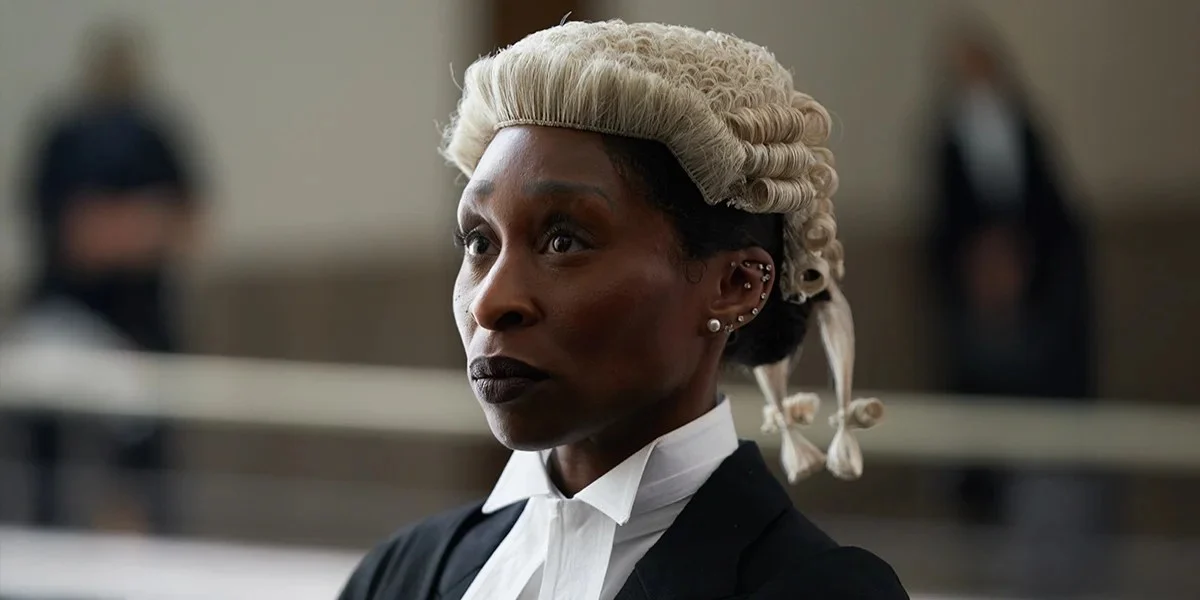
The transition from a celebrated stage production to a feature film is a journey fraught with aesthetic and narrative perils. When the source material is Suzie Miller’s Prima Facie—a play that became a global phenomenon and a searing indictment of the British legal system—the stakes are exceptionally high. Premiering at the 2026 Toronto International Film Festival (TIFF), the film adaptation, directed by Susanna White and starring Academy Award nominee Cynthia Erivo, seeks to translate the claustrophobic intensity of a one-woman show into a sprawling cinematic experience.
However, as the film begins its search for U.S. distribution, early critical assessments suggest a project at odds with itself. While it aims to expand the conversation around sexual violence, class, and race, the adaptation struggles to move beyond its rhetorical roots, resulting in a production that often feels more like an illustrated lecture than a visceral drama.
Main Facts: The Narrative and Its Execution
At the heart of Prima Facie is Tessa Ensler (Cynthia Erivo), a "thoroughbred" defense barrister who has clawed her way from working-class roots to the upper echelons of London’s legal elite. Tessa is a specialist in defending men accused of sexual assault, a role she performs with clinical, almost bloodless, efficiency. To her, the law is not about morality or objective truth; it is a "game with rules," a contest of evidence where the burden of proof—the prima facie case—is everything.
The narrative arc is famously divided into two halves: the "before" and the "after." In the first half, we see Tessa at the height of her powers, dismantling witnesses and celebrating the "game." In the second, the tables turn. Tessa becomes a victim of sexual assault by a colleague, Julian Brooks (Daniel Ings), and is forced to navigate the very system she once weaponized.
Key Production Details:
- Director: Susanna White
- Screenwriter: Suzie Miller (adapting her own play)
- Lead Cast: Cynthia Erivo, Daniel Ings, Noma Dumezweni, Toheeb Jimoh
- Cinematic Style: Features heavy use of voiceover, tonal shifts, and experimental interstitials.
- Current Status: Seeking U.S. distribution following its TIFF 2026 premiere.
- Critical Consensus: Grade C-. Cited for being "tonally confused" and "over-explained."
Chronology: From Stage Phenomenon to Screen Adaptation
The journey of Prima Facie began long before the 2026 film. To understand the weight of this adaptation, one must look at the timeline of its development:
- 2019: The Australian Debut: Suzie Miller, a former human rights and criminal justice lawyer, premiered the play at the Griffin Theatre Company in Sydney. Its raw look at the "rules of the game" immediately garnered acclaim.
- 2022: The West End Explosion: The play moved to London’s Harold Pinter Theatre, starring Jodie Comer. It became a cultural sensation, highlighting the staggering statistics of sexual violence in the UK and the low conviction rates for rape.
- 2023: Broadway and Global Recognition: Comer reprised the role on Broadway, winning a Tony Award. The play was simulcast in cinemas worldwide via National Theatre Live, reaching millions.
- 2024–2025: Film Production: Director Susanna White was brought on to helm the cinematic version. The decision was made to expand the cast from a monologue to a full ensemble and to cast Cynthia Erivo, a move intended to add layers of racial complexity to the existing class-based narrative.
- September 2026: TIFF Premiere: The film debuted to mixed reviews, with critics questioning whether the "rhetorical architecture" of the stage play translated effectively to the screen.
Supporting Data: The Statistical and Social Context
The film positions itself as a "teaching tool," a choice supported by the grim realities of the global legal landscape. During the film’s promotional cycle and within the script itself, several key data points are emphasized to ground the fictional narrative in reality:

- Prevalence of Violence: According to global health data, nearly one in three women worldwide will experience physical or sexual violence in their lifetime.
- The Attrition Rate: In many jurisdictions, including the UK and the US, the "justice gap" is profound. Only a small fraction of reported rapes result in a police charge, and an even smaller percentage lead to convictions.
- The "Male" Law: The film argues that the legal system was built by men, for men, based on a "reasonable man" standard that fails to account for the neurobiology of trauma or the reality of female experiences.
Critics of the film adaptation argue that while these statistics provide a necessary foundation, the film relies too heavily on them. By employing constant voiceover to explain Tessa’s internal state and the systemic failures she encounters, the film risks alienating an audience that might have preferred to "feel" the injustice rather than be "told" about it.
Official Responses and Creative Intent
Director Susanna White has been vocal about the creative choices that have sparked debate among critics. In interviews surrounding the TIFF premiere, White addressed the film’s "tonal dislocation"—the way it shifts from a workplace comedy reminiscent of The Devil Wears Prada into a psychological thriller and, finally, a somber courtroom drama.
"The shift is intentional," White stated. "We wanted the audience to feel the same rug-pull that Tessa experiences. Her life is glossy, fast-paced, and successful until it isn’t. The visual language had to evolve with her trauma."
However, critics have pointed to specific visual choices—such as the recurring, "superfluous" interstitials of horses and the use of staged broken glass—as elements that distract rather than deepen the narrative. Furthermore, the technical execution of the film has come under fire. One of the most significant critiques involves the lighting and cinematography. Critics noted that the "care required to render melanated skin with dimension" was often missing, particularly in the darker, more pivotal scenes, leaving Erivo’s performance obscured by poor technical choices.
Suzie Miller, who transitioned from lawyer to playwright to screenwriter, has defended the film’s explicit nature. For Miller, the goal was to ensure the message remained "unmissable," even if that meant retaining the "theatrical" nature of the dialogue.
Implications: Race, Class, and the Future of the Legal Drama
The most significant departure from the stage play is the casting of Cynthia Erivo. By placing a Black woman in the role of Tessa Ensler, the film implicitly promises a deeper exploration of how race intersects with the British class system and the law.

The Missed Opportunity of Intersectionality
While the film highlights Tessa’s working-class background—showing her mother June (Noma Dumezweni) as a cleaner and her brother Johnny (Toheeb Jimoh) as a struggling laborer—it has been criticized for adopting a "colorblind" approach. Despite the change in casting, the script reportedly fails to acknowledge how Tessa’s Blackness would realistically impact her trajectory in the conservative, historically white world of London’s Inns of Court.
The implications of this are twofold:
- Representational Gaps: By ignoring the racial dimensions of the character’s experience, the film misses a chance to provide a truly contemporary critique of the legal system.
- Stereotyping: Some critics noted that the film’s attempt to show Tessa’s "rough" background occasionally veered into stereotype, particularly in the portrayal of her brother Johnny as prone to aggression.
Comparisons to ‘She Said’
The film’s struggle to depict sexual violence effectively has led to unfavorable comparisons with other recent works like She Said (2022). That film, which chronicles the New York Times investigation into Harvey Weinstein, was praised for its restraint. By focusing on the telling of the story and the emotional weight of the survivors’ testimonies rather than the visual reenactment of the crimes, She Said achieved a level of power that Prima Facie’s more graphic approach arguably misses.
The "Teaching Tool" Dilemma
Ultimately, Prima Facie raises a vital question for modern cinema: Can a film be an effective "teaching tool" if it fails to trust its audience? The reliance on over-explanation suggests a fear that the audience will not "get it" without being guided. In an era of sophisticated viewers, this pedagogical approach can feel patronizing.
As Prima Facie moves toward a broader release, its legacy will likely be defined by the tension between its noble intent and its flawed execution. It stands as a reminder that in both law and film, the way a story is told is just as important as the story itself. While Erivo’s performance—particularly her searing final monologue—offers moments of brilliance, the film as a whole serves as a cautionary tale about the difficulties of adapting a masterpiece of the stage into a masterpiece of the screen.