The Anatomy of a Millennial Meltdown: Matt Barats’ ‘Anchors Aweigh’ and the Evolution of the ‘Schmuck’ Persona
The landscape of contemporary independent cinema is often defined by its relationship to the past—not just in terms of homage, but in terms of the physical media that captured our collective youth. In his second feature film, Anchors Aweigh, writer-director Matt Barats explores this intersection with a caustic, self-deprecating wit that asks a provocative question: What if the poetic, personal documentary style of Ross McElwee were filtered through the brain of a modern-day "cretin"?
Premiering at the Oak Cliff International Film Festival and later screening at the prestigious Midnight Madness section of the Toronto International Film Festival (TIFF) 2026, Anchors Aweigh is a micro-budget triumph of "cringe" aesthetics. It is a film that functions as both a parody of the "personal essay" documentary and a sincere, if painful, excavation of millennial malaise.
Main Facts: A New Chapter in Alt-Comedy Cinema
Anchors Aweigh stars Matt Barats as a fictionalized, unnamed version of himself—a nebulously employed New York City creative who finds himself at a personal and professional crossroads. The film’s production pedigree is a "who’s who" of alternative comedy, with Tim Heidecker and Eric Wareheim’s Abso Lutely Productions serving as a primary backer. This association places the film firmly within a lineage of "cringe" masterpieces like Nathan For You and Tim and Eric Awesome Show, Great Job!
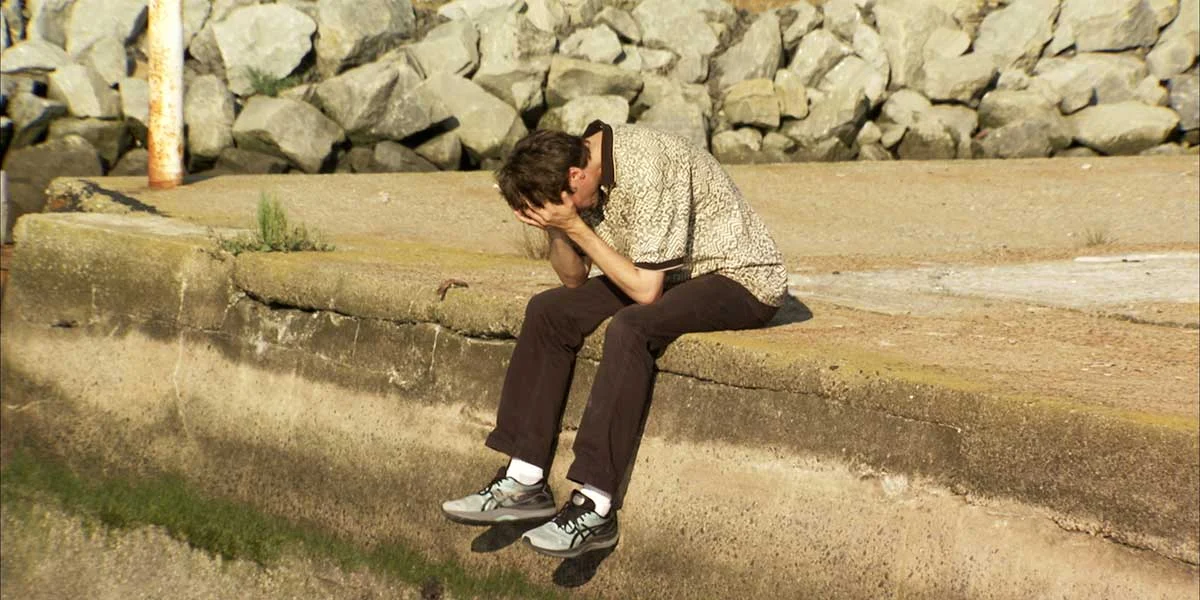
The film is a tight 71 minutes, a runtime that sits on the edge of "feature-length" but feels intentionally lean. It utilizes a hybrid format, blending modern-day digital footage with "found" archival DV tapes from Barats’ actual youth. The narrative engine is fueled by a breakup: after his much wealthier, 25-year-old girlfriend, Megan (played by Serena Profaci), rejects his marriage proposal, Barats moves into the cheapest housing he can find—a derelict rental sailboat.
From this nautical purgatory, Barats attempts to salvage his life by editing together a film he describes as a "loose series of vignettes." The result is a meta-cinematic exercise in self-flagellation, where the protagonist realizes that his past self was just as much of an "idiot" as his present self.
Chronology: From ‘Sherman’s March’ to the Sailboat
To understand the structural ambitions of Anchors Aweigh, one must look back to 1986. Ross McElwee’s Sherman’s March revolutionized the documentary form by turning the camera inward. Originally intended to be a historical look at General Sherman’s scorched-earth march through the South, the film became a diary of McElwee’s own romantic failures and existential anxieties.
Barats adopts this framework but strips away McElwee’s Southern gentility. Where McElwee used a "hapless" persona to gain the trust of his subjects, Barats uses a "schmuck" persona to alienate them.

The chronology of the film’s internal narrative follows a downward spiral:
- The Rejection: The film opens with Barats’ character basking in the "win" of dating a "dimepiece" a decade his junior, only to have his ego shattered when she refuses to marry him.
- The Exile: Lacking the funds to stay in his NYC social circle, he retreats to a sailboat. This setting allows the script to indulge in—and simultaneously mock—hackneyed metaphors about being "at sea" or "adrift."
- The Archival Deep-Dive: In an attempt to find meaning, he begins reviewing DV tapes from his college years (circa the mid-2000s).
- The Realization: Instead of finding a narrative of growth, he finds a consistent record of stupidity, ranging from inchoate political rants to the documented trauma of early internet "shock" videos.
- The Synthesis: The film concludes with Barats attempting to package this "wasted life" into a marketable piece of art, mirroring the very film the audience is watching.
Supporting Data: Media Archeology and the "Schmuck" Aesthetic
The film’s effectiveness relies heavily on its "format fetishism." By using lo-fi digital cameras for the present-day segments, Barats creates a visual bridge to his archival footage. This isn’t just a budget-saving measure; it is a conceptual choice that suggests the protagonist is "stuck" in a specific era of media.
The Influence of the "Stupid" Persona
The film draws a direct line to the literary strategy described by David Foster Wallace, who often constructed a non-fiction persona that was "a little stupider and schmuckier" than the actual author. Barats takes this to the extreme. In voiceovers, he praises himself for dating a 25-year-old, leaning into the "dimepiece" vernacular with a sincerity that makes the audience squirm.
This persona is a direct descendant of other McElwee-inspired creators:
- Michael Moore: Adopted a "naive" persona to confront corporate giants.
- John Wilson: Uses a halting, observational style in How To with John Wilson to uncover the eccentricities of urban life.
- Matt Barats: Uses the persona to turn the mirror on himself, exposing the "physical unimpressiveness" of comedy writers and the intellectual hollowness of his own youth.
Cultural Touchstones
The film acts as a time capsule for a specific subset of the Millennial generation.
- Radiohead: The film opens with an epigraph from "Pyramid Song," a choice that Barats’ on-screen text immediately calls out as a cliché of his demographic.
- The Bush Years: Archival footage shows a younger Barats driving a pickup truck, rambling incoherently about not supporting the George W. Bush administration. The present-day Barats deadpans, "Yup, those were the Bush years all right," capturing the impotent frustration of that era.
- Digital Trauma: The inclusion of a reaction video to "Two Girls, One Cup" (2007) serves as a reminder of the "wild west" era of the early internet, where shared trauma was a primary form of social currency.
Official Responses and Critical Reception
Anchors Aweigh has garnered a positive, if specialized, critical response. IndieWire assigned the film a Grade: B, noting that while 71 minutes is a long time to spend in such a "narrow comic lane," the laughs are continuous and the conceptual framework is "airtight."
Critics have praised Barats for his ability to balance the "intelligence of the person making the film" with the "dumber version he’s externalizing." The technical execution—specifically the use of anachronistic audio equipment like the large shotgun microphone Barats carries in present-day scenes—serves as a physical manifestation of his character’s "homage to a film way above [his] pay-grade."

At TIFF 2026, the film was a standout in the Midnight Madness section, a slot usually reserved for horror or high-concept genre films. Its inclusion there suggests that "cringe comedy" has become its own form of psychological horror for the modern age. As of late 2026, the film is seeking U.S. distribution, with industry insiders suggesting it is a natural fit for boutique streaming services like MUBI or Criterion Channel’s "New Auteurs" section.
Implications: The Failure of the "Growth" Narrative
The most profound implication of Anchors Aweigh lies in its rejection of the standard "coming-of-age" or "personal growth" arc. Most documentaries or memoirs seek to show how the subject has evolved. Barats’ film posits a much bleaker, and perhaps more honest, reality: sometimes, we don’t change; we just get older and better at documenting our failures.
The Stagnation of the Creative Class
The film reflects a broader anxiety among the "nebulously employed" creative class in cities like New York. The protagonist’s move to a sailboat isn’t a grand adventure; it’s a symptom of being priced out of adulthood. His reliance on "archaic media formats" is a form of "nostalgic malaise," where the past is more comfortable than a precarious future.
The Future of the "Micro-Budget" Feature
Barats proves that a compelling feature can be made from "scraps"—old tapes, a cheap boat, and a willingness to be the butt of the joke. In an era of $200 million blockbusters, Anchors Aweigh is a reminder that the most visceral cinema often comes from a single person with a camera and a deep sense of embarrassment.
As Barats concludes in the film, "Damn, I’ve been an idiot for so long!" It is a realization that is both a punchline and a tragedy. By embracing the "schmuck" within, Anchors Aweigh manages to say something more profound about the millennial experience than many films with ten times its budget. It is a "loose series of vignettes" that, through sheer comedic persistence, coalesces into a definitive portrait of a generation still trying to find its sea legs.