The Production Paradox: Pacing Failures and Poignant Wins at the 78th Primetime Emmy Awards
The 78th Primetime Emmy Awards, held on September 14, 2026, at the Peacock Theater in Los Angeles, will likely be remembered less for its historic wins and more for its baffling temporal mismanagement. In a medium defined by the precision of the "clock," the NBC telecast—produced by Jesse Collins Entertainment—stumbled into unprecedented territory: finishing its primary content with significant time to kill.
The ceremony, hosted by Law & Order: SVU icon Mariska Hargitay, concluded with a desperate display of "filibustering" by A-list presenters and a series of redundant highlight reels that left critics and audiences questioning the fundamental architecture of modern awards shows. While the evening celebrated a roster of undeniably deserving winners—including long-overdue recognitions for Rhea Seehorn and Matthew Rhys—the production itself frequently worked against the very artistry it sought to honor.
Main Facts: A Night of Temporal Turmoil
The 2026 Emmys were defined by a stark contrast between the high quality of the nominees and the low efficiency of the broadcast. Despite a star-studded guest list featuring cameos from Taylor Swift and Nicole Kidman, the show suffered from a "C-" grade production effort that prioritized advertising and "spon-con" (sponsored content) over the emotional core of the event: the acceptance speeches.
Key highlights of the event included:
- Host Performance: Mariska Hargitay’s debut as host was a mixture of rehearsed charm and awkward scripted misfires, including a widely panned joke regarding Law & Order creator Dick Wolf.
- The "Filibuster" Ending: Presenters Woody Harrelson and Matthew McConaughey were forced to improvise for several minutes to fill a gap before the final award, leading to "peculiar" banter about their parents’ romantic history.
- The Winner’s Circle: Widow’s Bay took home the night’s top comedy prize, while Rhea Seehorn (Pluribus) and Matthew Rhys secured major acting honors.
- Production Decisions: Jesse Collins Entertainment faced immediate scrutiny for moving six major categories to the Creative Arts Emmys, only to end the main telecast with nearly ten minutes of filler content.
Chronology of the Telecast: From High Notes to Dead Air
The Opening Act: "I Love TV Screens"
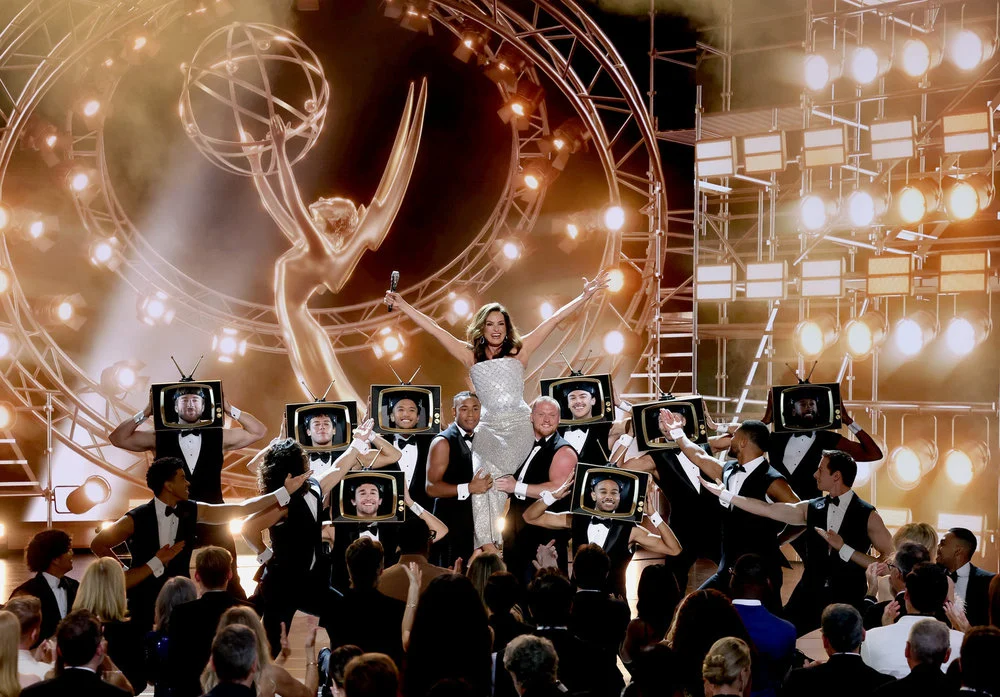
The evening began with a mandatory nod to the "host-must-sing" trope. Hargitay performed a rendition of "I Love TV Screens," a parody of Joan Jett’s "I Love Rock and Roll." While the performance featured a high-energy cameo from New York Knicks star Jalen Brunson and nods to nominees like Jean Smart, it was heavily criticized for its overt product placement and a "Law & Order" pop-up advertisement for Peacock subscribers that appeared mid-song.

Hargitay’s opening monologue made the tactical error of mentioning absent comedy legends Tina Fey and Amy Poehler. This was immediately highlighted when Poehler herself took the stage to present the first award, delivering a sharp, efficient set of jokes that momentarily eclipsed the host’s energy.
The Rushed Middle: The 90-Minute Sprint
By the 90-minute mark of the three-hour broadcast, the production had already exhausted nearly all the major acting categories. This scheduling choice created a "front-heavy" show where the most emotional and recognizable stars—the primary draw for viewers—were shuffled off-stage before the midway point.
During this segment, winners like Rhea Seehorn and Jean Smart were visibly rushed. Seehorn, winning for her work in Pluribus, barely had time to thank her family before the orchestra began its "play-off" music. This trend continued throughout the night, as the production prioritized pre-taped sketches—including a Law & Order parody featuring a brief Taylor Swift appearance—over the live reactions of the victors.
The Final Descent: The Fillers and the Filibuster
As the show entered its final half-hour, the pacing issues became undeniable. After a tribute to deceased TV stars featuring a song for Dolly Parton and speeches for legends like Catherine O’Hara and Rob Reiner, the producers realized they had finished the scheduled segments too early.
What followed was a masterclass in awkward live television. Hargitay re-emerged for an impromptu recap of the night’s "highlights," followed by Woody Harrelson and Matthew McConaughey taking the stage to present Best Comedy Series. The duo, sensing the need to stall, engaged in a rambling dialogue about their parents getting "horizontal," a moment that felt more like a late-night green room conversation than a prestigious awards presentation.

Even after the final award was handed to the team behind Widow’s Bay, the credits refused to roll. The audience watched a series of silent clips of Hargitay’s earlier segments, followed by lingering shots of celebrities standing up and exiting their tables, as the producers scrambled to reach the three-hour mark.
Supporting Data: Winners, Losers, and Missing Categories
The frustration surrounding the telecast was exacerbated by the fact that the actual awards were widely praised. The 78th Emmys saw a blend of veteran dominance and fresh discoveries.
Major Winners of the Night
- Outstanding Comedy Series: Widow’s Bay
- Outstanding Lead Actress in a Drama Series: Rhea Seehorn (Pluribus)
- Outstanding Lead Actor in a Drama Series: Matthew Rhys
- Outstanding Writing for a Comedy Series: Katie Dippold (Widow’s Bay)
- Surprise Wins: Sally Field and Allison Janney provided the night’s most genuine shocks, proving that the Academy still values veteran powerhouse performances.
The "Creative Arts" Controversy
To save time for the main telecast, producers relegated six categories—including Best Supporting Actor and Actress in a Limited Series—to the previous week’s Creative Arts ceremony. This decision backfired significantly; by removing these dramatic categories, the show lost the "pulse" required to sustain a three-hour block, leading directly to the need for the Harrelson/McConaughey filibuster.
Production Metrics
The broadcast featured a record number of "integrated brand moments." From the Peacock subscription prompts to a blatant advertisement for Apple TV’s upcoming slate positioned immediately before the Best Comedy announcement, the commercialization of the event reached a tipping point. Critics noted that the "spon-con" felt more rehearsed than the host’s interactions with the nominees.
Official Responses and Critical Reception
The immediate aftermath of the 78th Emmys saw a wave of critical disappointment directed at Jesse Collins Entertainment and NBC.

Industry Critics:
The consensus among television critics was that the production "killed a good time from start to finish." While Hargitay was praised for her effort and her ability to handle "crowd-work" (notably a bit with Nicole Kidman reenacting her AMC Theaters speech), the writing was described as "half-assed." The joke regarding Dick Wolf’s name was singled out as a low point for the telecast’s standards.
Social Media Reaction:
Online discourse focused heavily on the "horizontal" banter by Harrelson and McConaughey, which quickly became a viral meme. Fans of Rhea Seehorn expressed outrage over her speech being truncated, contrasting her 15 seconds of spotlight with the five minutes of "meaningless words" manufactured by the host at the end of the night to fill time.
Production Defense:
While Jesse Collins Entertainment has not issued a formal apology, sources close to the production suggested that the early finish was due to winners keeping their speeches unexpectedly brief. however, this defense has been met with skepticism, given that the "play-off" music was notably aggressive from the very first category.
Implications: The Future of the Awards Show Format
The failures of the 78th Emmy Awards offer a cautionary tale for the future of live televised ceremonies. As ratings for traditional awards shows continue to fluctuate, the tension between "entertainment value" (sketches, cameos, musical numbers) and "honoree recognition" (speeches, tributes) has never been higher.
The Crisis of the "Clock"
The 2026 ceremony proved that cutting categories does not necessarily result in a tighter show; it often results in an empty one. By moving acting categories to the Creative Arts ceremony, the Emmys stripped away the emotional stakes that keep viewers engaged. The implication for future shows is clear: the "pulse" of an awards ceremony is the human element of the acceptance speech. Without it, the show becomes a hollow marketing vehicle.

The Advertising Threshold
The 78th Emmys may represent the limit of how much "spon-con" an audience is willing to tolerate. When the host’s opening number feels like a commercial for the streaming service airing the show, the prestige of the "Emmy" brand is diluted. Moving forward, the Television Academy may need to reassess its partnership with producers who prioritize brand integration over the celebration of television excellence.
The "TV Family" Connection
Despite the production’s flaws, the success of winners like Rhea Seehorn and Tom Pelphrey (Task) underscored why people still watch. The "family member" connection—where viewers feel a personal stake in an actor’s win after spending years watching their work—is the secret sauce of the Emmys. If the telecast continues to shuffle these winners off-stage to make room for silent highlight reels and improvised banter, it risks alienating the very "true TV fans" who are the ceremony’s last remaining loyal audience.
In summary, the 2026 Emmy Awards were a night of spectacular talent trapped inside a failing vessel. While the trophies found their way to the right hands, the ceremony itself lost its way, proving that in the world of television, timing isn’t just everything—it’s the only thing.