The End of the Screen Era: Max Hodak and the Biohybrid Revolution at TechCrunch Disrupt 2026
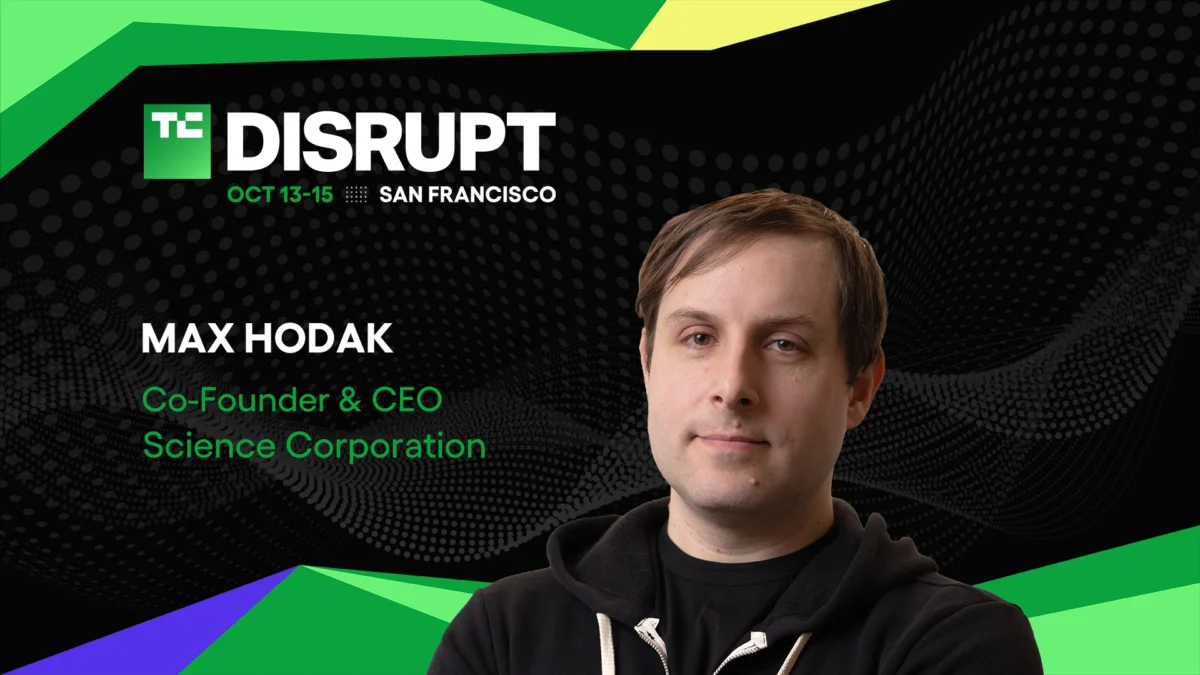
For decades, the human-computer interface has been defined by the physical: the tactile click of a mechanical keyboard, the haptic slide of a thumb across glass, and the visual tether of the glowing LED screen. However, according to Max Hodak, the CEO of Science Corporation and a pioneer in the field of neural engineering, we are standing on the precipice of a fundamental shift. The next era of computing will not be held in our hands; it will be integrated into our biology.
As Science Corporation prepares for its inaugural U.S. human trials for its "biohybrid" brain-computer interface (BCI), Hodak is set to take the stage at TechCrunch Disrupt 2026 in San Francisco. His session, titled "Beyond Screens," promises to offer a glimpse into a future where the boundary between biological thought and digital execution becomes indistinguishable.
Main Facts: A New Paradigm for Human Augmentation
The core of the announcement surrounding Science Corporation involves the transition from experimental laboratory success to regulated human clinical trials in the United States. While the field of BCI has been dominated in the headlines by companies like Neuralink, Science Corporation has quietly carved out a specialized niche focusing on "biohybrid" systems—interfaces that combine synthetic electronics with biological tissues to achieve higher fidelity and better long-term biocompatibility.
The company’s flagship project, the PRIMA implant, has already demonstrated remarkable success in international contexts, particularly in restoring functional "form vision" to patients suffering from severe geographic atrophy (GA) and advanced dry age-related macular degeneration (AMD). By utilizing a sophisticated subretinal chip paired with a set of camera-equipped glasses, Science Corp has effectively bypassed damaged photoreceptors to communicate directly with the optic nerve.
Now, with a Series C funding round of $230 million and a valuation hovering at $1.5 billion, Hodak is moving the company toward a broader mission: treating Parkinson’s disease, managing epilepsy through seizure prediction, and eventually, redefining how healthy individuals interact with the digital world.
Chronology: From Duke University to the Biohybrid Frontier
To understand the trajectory of Science Corporation, one must look at the evolution of Max Hodak himself. His career is a roadmap of the BCI industry’s development over the last two decades.
The Academic Roots (Early 2000s)
Hodak’s fascination with the intersection of biology and code began early. A self-taught programmer from the age of six, he pursued biomedical engineering at the Duke Pratt School of Engineering. It was here that he entered the laboratory of Miguel Nicolelis, a world-renowned neurobiologist credited with some of the first successful BCI experiments in primates. This academic foundation provided Hodak with a fundamental understanding of how neural signals can be decoded into digital commands.
The Entrepreneurial Pivot (2012–2016)
Before diving fully into implants, Hodak co-founded Transcriptic (now Strateos), a robotic cloud laboratory. This venture was crucial as it demonstrated his belief that biology should be treated as an information science—programmable, scalable, and accessible via the cloud.
The Neuralink Era (2016–2021)
In 2016, Hodak co-founded Neuralink alongside Elon Musk and served as its first president. During his tenure, Neuralink moved from a secretive startup to a global phenomenon, bringing the concept of "neural lace" and high-bandwidth brain implants into the public consciousness. Hodak was instrumental in building the initial engineering teams and navigating the early regulatory hurdles that defined the company’s public-facing identity.
The Birth of Science Corporation (2021–Present)
Following his departure from Neuralink in 2021, Hodak founded Science Corporation. While Neuralink focused on a "link" that sits on the skull with threads into the cortex, Science Corp took a more diversified approach. By acquiring the PRIMA retinal implant technology from Pixium Vision and focusing on different neural pathways, Hodak positioned his new firm as a multi-modal powerhouse capable of addressing vision, motor control, and cognitive health simultaneously.
Supporting Data: Financials and Clinical Milestones
The momentum behind Science Corporation is backed by significant capital and validated clinical data. The BCI market is no longer a speculative "moonshot" industry; it is a rapidly maturing sector with clear regulatory pathways.
Funding and Valuation
Science Corporation’s most recent financial milestone—a $230 million Series C—brings its total capital raised to a level that rivals the industry’s most well-funded players. With a valuation of $1.5 billion, the company is categorized as a "Unicorn," a rare feat for a medical hardware firm that has yet to reach full commercialization in the U.S. market.
Clinical Success: The PRIMA Results
The PRIMA system consists of a 2×2 millimeter, 30-micron thick chip containing 378 electrodes. In European clinical trials, patients who were legally blind were able to recognize shapes, letters, and even read sequences of text. Unlike traditional implants that require invasive brain surgery, the PRIMA chip is placed under the retina in a procedure that is relatively minimally invasive compared to cortical implants.

The US Human Trials
The upcoming U.S. trials, led by a team of top-tier neurobiologists, will focus on safety and efficacy under FDA guidelines. These trials are the final gatekeepers before the technology can be prescribed as a standard medical treatment. The expansion into U.S. trials signals that Science Corp has moved past the "proof of concept" phase and into the "productization" phase.
Official Responses: The "Beyond Screens" Vision
At TechCrunch Disrupt 2026, Hodak is expected to argue that the current obsession with "screen time" is a symptom of an inefficient interface. In his view, screens are a bottleneck.
"We spend our lives looking at rectangles," Hodak noted in a preliminary statement regarding his Disrupt session. "But our brains don’t think in pixels or 2D planes. The biohybrid approach allows us to speak the language of the nervous system. When we can do that, the ‘computer’ isn’t a tool you use; it’s an extension of your own perception."
Industry analysts suggest that Hodak’s appearance at Disrupt is a strategic move to court not just medical investors, but the broader tech community. By positioning BCI as the "next platform" after the smartphone, Science Corp is inviting developers and founders to imagine a software ecosystem that doesn’t rely on eyes or hands.
Implications: A Post-Screen Society
The implications of Science Corporation’s success extend far beyond the medical recovery of sight or mobility. If Hodak’s vision of a post-screen world comes to fruition, the societal shifts will be seismic.
1. The End of the Digital Divide in Disability
The most immediate implication is the potential eradication of certain forms of blindness and paralysis. By treating the brain as a high-bandwidth input/output device, Science Corp aims to turn "permanent" disabilities into "addressable" engineering challenges. This would not only improve the quality of life for millions but also significantly reduce the long-term healthcare costs associated with chronic neurological conditions.
2. The Evolution of Work and Productivity
If BCIs move into the consumer space—a goal Hodak has hinted at—the nature of work will change. The "Beyond Screens" session suggests a future where information is "felt" or "known" rather than read. This could lead to a massive increase in the speed of human-machine collaboration, allowing engineers, artists, and data scientists to manipulate complex digital structures using thought alone.
3. Ethical and Security Concerns
With the brain becoming a node on the network, the "biohybrid" model introduces unprecedented ethical questions.
- Neural Privacy: How do we protect "thought data" from being harvested by corporations?
- Neural Security: Can a brain implant be hacked?
- Cognitive Inequality: Will those who can afford neural enhancement have an insurmountable advantage over those who cannot?
4. The Future of Sustainable AI
TechCrunch Disrupt 2026 is placing a heavy emphasis on sustainable AI. Science Corporation’s work fits into this narrative by proposing an AI that is integrated with human consciousness rather than one that operates in a vacuum. A biohybrid interface could theoretically allow AI to act as a "coprocessor" for the human brain, augmenting our natural intelligence rather than replacing it.
Conclusion: The October Milestone
As the tech world descends upon Moscone West this October, all eyes will be on the "Beyond Screens" session. Max Hodak is not just presenting a new gadget; he is presenting a new way of being human.
For the 10,000+ founders and investors in attendance, the message is clear: the era of the keyboard and the touchscreen is the twilight of a primitive age. The dawn of the biohybrid era is here, and if Science Corporation’s U.S. trials succeed, the next time you "log on," you might not even need to open your eyes.
The deadline for Disrupt tickets is September 25, and as the industry gears up for this pivotal moment, the conversation is no longer about if we will merge with our machines, but how and when. Max Hodak seems to have the answer, and he is ready to share it with the world.