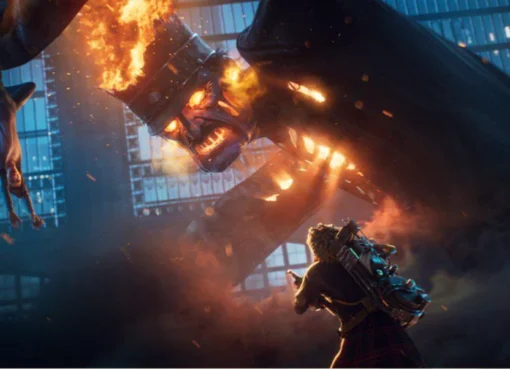
Celestial Weapon Turned Mortal Forges New Destiny Amidst Ancient Wars
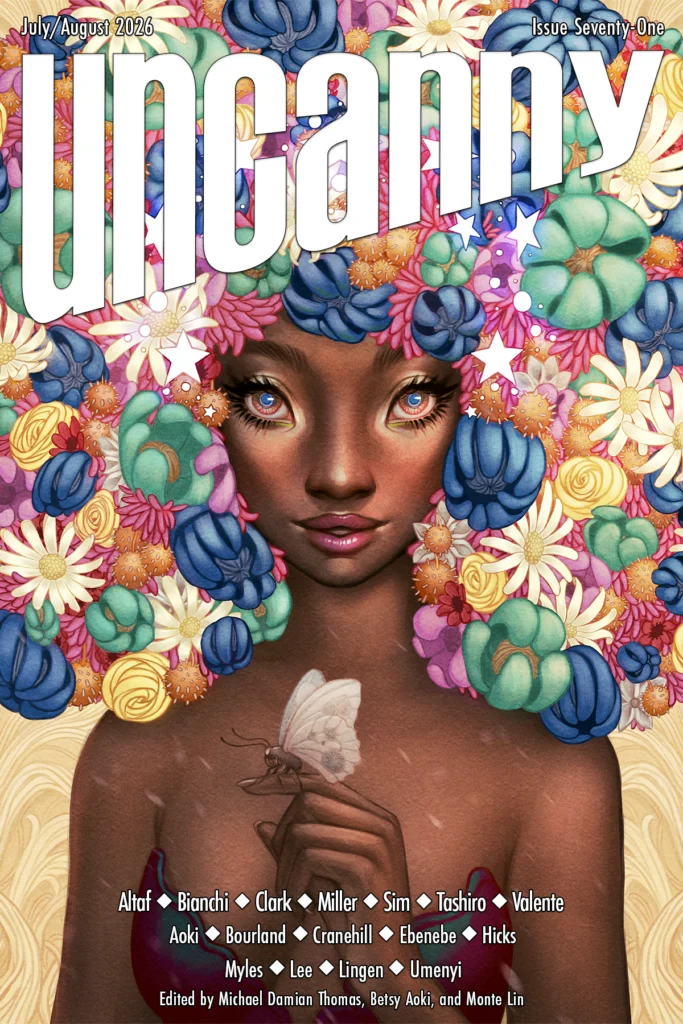
A being once forged for divine combat, known only as "Okono" among mortals, has defied millennia of celestial conflict and the machinations of powerful deities to choose a path of self-determination. Her extraordinary journey began with a catastrophic fall from the gods’ realm, leading to an unexpected awakening in a secluded mortal village and culminating in a profound rejection of inherited purpose and even offered godhood.
The entity, whose true name remains unrevealed, was once a formidable weapon in the hands of Raka, the Hidden One, a deity embroiled in an eternal war among immortals. Now, having navigated the complexities of mortal life and faced direct challenges from both her creator’s followers and the very goddess who reshaped her, Okono stands as a unique nexus between the divine and the mundane, embarking on an uncertain future.
Okono’s Unlikely Origin Story
The narrative of this remarkable individual begins not in the annals of mortal history, but in the ethereal battlegrounds of the celestial realm. Forged from the very essence of Raka, the Hidden One, the being was engineered for a singular, brutal purpose: to be a weapon in the unending wars of the gods. Accounts from the entity’s own recovered memories describe a past where seas of divine blood were spilled across cosmic landscapes, a testament to its efficacy in its creator’s service. This existence, though devoid of mortal emotion or choice, was one of clear purpose and formidable power, shaping it into a "blade" capable of immense destruction.
The pivotal turning point in this weapon’s existence came during a fateful clash with Kal, the Mistress of Battle, a formidable deity born from the fires that consumed older gods. Described with skin like blood, hair like serpents, and eyes like burned-out stars, Kal was a formidable adversary. The weapon, sent by Raka, was utterly defeated, humiliated, and broken. In an act of profound transformation, Kal stripped the entity of its original form, reshaped it, and poured its essence into a fragile mortal vessel. Sealed with powerful magic, the newly ensnared consciousness was then flung from the gods’ realm, plummeting towards an unknown destiny in the mortal world.
A Fall from Grace: Weapon to Mortal
The initial moments of this enforced mortality were marked by profound disorientation and pain. The being, now occupying a human body, awoke to an unfamiliar face – that of a young girl named Akili – and a world entirely alien. The sensations of hunger, weakness, and physical pain were entirely new, described by the entity as unwelcome intrusions. This forced transition from an immortal, formless weapon to a vulnerable, flesh-and-blood being represented a complete existential crisis.
The entity’s first days were fraught with confusion. It struggled with basic bodily functions, the demands of a physical form, and the overwhelming array of new sensations and emotions. The realization that it was now "mortal as well" was a crushing blow, leading to what it would later identify as profound sadness and tears – emotions previously unknown. The concept of "purpose," once clearly defined by its role as a weapon, dissolved into a terrifying void, replaced by a sense of being "adrift" and "lost."
The Crucible of Mortality: Life in the Secluded Village
Found by hunters amidst the aftermath of a "night fire that fell from the sky," the entity was brought to a small, isolated village. Here, under the care of the local priestess, Nanya, and mentored by the young Akili, the being began its arduous journey into understanding mortality.
Embracing the Human Condition
The village, a collection of ochre mud dwellings and thatched roofs, became the reluctant classroom for this former celestial weapon. The pervasive scent of dried earth, the dancing motes of dust in sunlight, and the constant rhythm of mortal life were stark contrasts to its previous existence. Akili, a girl of fourteen turns, became its primary guide, patiently teaching it the fundamental aspects of human existence: eating, bathing, dressing, and even the nuances of social interaction. The entity, given the name "Okono" – "the girl who was lost until she found her way home" – by Akili, observed these simple acts with a mixture of curiosity and disdain.
The initial despair and suicidal ideation were potent. Okono grappled with the thought of ending this "limited life," convinced that a return to the Great Essence or its maker was the only reprieve. However, a newfound "mortal doubt" clouded its once-clear conviction. The fear of oblivion, of becoming prey in the Abyss, or of discovering it possessed no soul, presented a terrifying unknown, a vulnerability never before experienced. This primal fear, a hallmark of mortal consciousness, became an unexpected anchor, compelling it to "bide its time for deliverance" and cling to the hope of Raka’s retrieval and vengeance against Kal.
The Enigma of Nanya and the Loom
A significant aspect of Okono’s integration into village life involved its interaction with Nanya, the village’s wise woman and priestess. Nanya, whose stern demeanor and "unnerving glare" were initially intimidating, became a central figure in Okono’s re-education. She credited Okono’s survival to Lilia, the Goddess of the Loom, the village’s patron deity, who supposedly "wove the pattern" that led hunters to find her. Okono, recalling the vast pantheon of immortals, dismissed Lilia as a "simple deity" for a "simple village," viewing the concept of a god weaving patterns for mortals as "nonsensical."
As payment for its rescue, Nanya decreed that Okono would learn the loom. This mandate was met with bitter internal resistance. For a being that had once been a "slayer of immortals," the prospect of weaving cloth under the tutelage of an old woman and a "thread-bearing goddess" was a profound humiliation, a symbol of its utter degradation. The loom itself, a "confusing bit of wood and thread," became a tormentor, resisting Okono’s attempts to "master" it through brute force. Its initial failures at this intricate task only deepened its sense of "worthlessness" in this new, alien context.
First Steps into Connection: Akili’s Influence
Despite its internal turmoil, Okono’s time in the village fostered unexpected connections. Working in the fields alongside the women, it began to internalize their rhythms, their songs, and their conversations about children, hopes, and dreams. What it initially perceived as "yielding" behavior, it slowly re-evaluated as strength and resilience. The women’s protective nature and their subtle authority within their households revealed a depth it had not anticipated.
The relationship with Akili deepened, evolving into a bond that transcended mere mentorship. Akili’s mischievous spirit and gentle affection introduced Okono to the complexities of mortal intimacy. A first kiss under a blood-orange sunset ignited a new spectrum of sensation and desire, a profound departure from the distant, master-to-creation touch of Raka. This physical and emotional connection to Akili became a powerful force, revealing a "beauty beyond the flesh" that far surpassed the "flawless cosmic symmetry" of any god. This burgeoning rapture, however, would soon be tested.
A Test of Newfound Principles: The Makambo Incident
The fragile peace Okono found in the village was shattered during an encounter with a Makambo beast. Accompanying Akili and a younger boy, Tebo, on a foraging trip, Okono’s ingrained instincts for combat took over when the massive creature charged. Drawing a knife, it struck the beast in the eye, believing it was protecting its companions.
Old Instincts vs. Mortal Empathy
The outcome of the Makambo incident was a stark demonstration of the chasm between Okono’s past and present self. While Tebo was injured by the beast’s tail, Akili’s reaction was not gratitude, but horror and dismay. She revealed that Makambo were "all show," and that holding ground would have caused them to flee without injury. Akili’s anguished question, "You don’t even shed a tear! What are you? Don’t you feel?" struck Okono deeply, highlighting its emotional disconnect and the inadequacy of its old ways in this new world.
Consumed by guilt and confusion, Okono sought solace, inexplicably finding itself drawn back to Nanya’s home and the loom it had previously despised.
Re-engagement with the Loom: A Path to Understanding
In a moment of profound vulnerability, Okono confessed its fault in Tebo’s injury to Nanya. The priestess’s response was incisive, pointing out Okono’s default to "beat a thing into submission." This observation, coupled with the lingering sting of Akili’s disappointment, spurred Okono to request another chance at the loom.
Nanya’s words, "When you first sat here you were a tangled pattern… Perhaps time has loosened your knots and will allow the goddess to guide your hands," marked a turning point. This time, instead of fighting the machine, Okono drew upon its new mortal experiences – the songs, the revelry, Akili’s kisses – and allowed its hands to move with a newfound rhythm. The resulting pattern, though simple, was "beautiful," marking a significant shift in its understanding of purpose beyond violence. The loom, once a symbol of humiliation, became a source of "contentment in exile," a metaphor for its evolving self.
Echoes of War: Raka’s Minions Threaten Peace
The fragile peace of the village was abruptly shattered by the arrival of Raka’s warriors. Forty strong, these grim men, bearing the banner of a black circle shrouded in tendrils – Raka’s symbol – thundered into the village, demanding tribute.
The Demand for Tribute
The leader, a scarred and cynical man, scornfully addressed Nanya, the village elder. While offering to spare bloodshed for provisions, his true demand was chilling: a third of the village’s children. These children, he declared, would either be conscripted into Raka’s armies, sent to fight in "the Third Heaven," or sold into slavery in distant markets. His casual cruelty and the explicit threat of razing the village if his demands were not met underscored the ruthless nature of Raka’s followers.
A Village in Despair
The soldiers’ pronouncement plunged the village into uproar. Parents, gripped by anger and fear, instinctively reached for weapons, ready to defend their children despite the overwhelming odds. Nanya, however, stood as a barrier, her "wise" words echoing the brutal truth: a direct confrontation would lead to annihilation. Her counsel to "feel sorrow… for the brave children who will save us all" and her pronouncement that "The weave is woven" left the villagers in anguished despair, forced to consider the unthinkable sacrifice. Akili, too, declared her intention to go with the other older children, to spare the youngest.
Witnessing this profound suffering, Okono found itself on the "outskirts" of their communal grief, yearning to join their "bond" but unsure how. The sight of Akili preparing for sacrifice ignited a fierce new emotion – a protective rage. The realization that it did not want these people, its newfound family, to be "made over as something cruel, something cold and hard" like its former self, spurred a decisive internal shift.
Okono’s Decisive Intervention
Driven by this new sense of care, Okono departed before dusk, armed only with a broad curved sickle – a farming tool that now felt "much more like a weapon." It confronted Raka’s soldiers alone, identifying itself as a former combatant in Raka’s war and pleading for the village’s children to be spared. The leader’s mocking response and an attempt to disfigure Okono, however, reawakened the dormant power within.
In a brutal display, Okono dispatched the leader and twelve of his men with chilling efficiency. The remaining soldiers, witnessing the transformation from "boy" to something far more lethal, stammered, "You are no boy! You are a demon!" Okono’s chilling reply, "Not a boy and not a demon… I am a blade," marked a definitive return to its inherent combat prowess, yet now wielded with a newly informed purpose. The act of violence, though swift and deadly, was not born of obedience to Raka, but of a fierce, self-chosen protection.
The Grand Revelation: A God’s Deception and a Weapon’s Choice
Returning to the village under the cover of darkness, Okono cleansed itself of the night’s gore. It was Nanya who appeared in its doorway, offering a gourd to remove the "stench" and revealing a startling awareness of Okono’s actions.
Nanya Unmasked: The Identity of Kal, Mistress of Battle
Okono, no longer surprised by Nanya’s insight, confessed the slaying of the soldiers. Nanya’s calm acceptance and her cryptic comment, "Certainly little golem, you have dealt with worse," triggered a memory. "Little golem." The term, used by Kal in its recurring dreams, suddenly connected the dots. As Okono uttered the name "Kal," the simple mud dwelling dissolved, replaced by a grand hall of stone, with tapestries depicting gods in battle, and before it, the towering figure of Kal, Mistress of Battle, revealed in her full divine majesty.
The realization that Nanya, the village priestess, was none other than Kal, the goddess who had defeated and reshaped it, plunged Okono into a maelstrom of humiliation, anger, and disbelief. The entire mortal experience, it seemed, had been a meticulously orchestrated deception.
Raka’s Betrayal: A Premeditated End
Kal, speaking in the booming "godstongue" of her true form, revealed the full extent of Raka’s treachery. Okono’s defeat was not merely a consequence of battle; it was Raka’s calculated design. Okono, forged from Raka’s essence, had grown too powerful, too close to becoming a sentient entity capable of independent thought. Each god slain by Okono had transferred power not only to Raka but also back into the weapon itself. Fearing a weapon that might "grow beyond him," Raka had sent Okono to face Kal, hoping that its death would reclaim the gifted power and eliminate a potential threat. "I was sent to lose," Okono whispered, the "betrayal" cutting deeper than any physical wound. The bond it once held with its maker, once imbued with such meaning, was now exposed as a cold, manipulative strategy.
Kal’s Weariness and the Offer of Godhood
Kal further revealed her multifaceted nature: she was also Lilia, the Matron of Weaves, and had taken the form of Nanya to walk among mortals. She, too, expressed weariness with the "senseless conflict" of the Elder Gods, a war without end or resolution. In the "simplicity of the loom and that little village," she had found a "serenity" long denied to her.
Her ultimate revelation was a shocking proposition: she desired to shed her warring aspect, Kal, and remain solely Lilia. To achieve this, she needed a slayer of gods. She offered Okono a knife – a blade whose purpose, Okono instinctively knew, was to end its maker. In return, Okono would gain all of Kal’s immense power, enough to become a god, "our first newborn," capable of ending the futile divine wars. Kal’s true intention, it became clear, was to test Okono – to see if it was merely an "empty golem" or a being capable of independent thought, feeling, and, most importantly, choice. Okono’s actions in saving the village, driven by a newfound "care for mortals," had proven its worth.
Forging a New Destiny: The Refusal of Immortality
Faced with the enormity of Kal’s offer – godhood, immense power, and the chance to end the cosmic war – Okono found itself at a crossroads, confronted with the ultimate choice.
The Power of Choice: Rejecting the Cycle
The internal struggle was intense. To accept would be to fulfill a destiny as a "slayer of gods," to become an equal with its own maker, to wield celestial power. Yet, the thought of joining the ranks of "undying beings, of barren souls and desiccated hearts" who grew "tired of immortality" and sought their own demise, filled Okono with dread. Was this its fate? To perpetuate the cycle of eternal, meaningless struggle?
In a moment of profound clarity, Okono understood the meaning of "choice" – a concept alien to its creation. Taking a deep breath, it made its decision. "No," it declared, firmly rejecting the offered godhood. When Kal, in a burst of divine fury, challenged its rejection of "a gift of immortality," Okono retorted, "What you call a gift, sounds more like a prison."
Defying the full force of Kal’s "godstongue," Okono stood its ground. It declared itself no longer a weapon for Raka or Kal, but "my own being," worthy of more, a lesson learned from its "brief imprisonment in a mortal body." With a decisive clatter, it cast away the knife, asserting its autonomy and challenging Kal to make her own choice to become Lilia.
A Hybrid Existence: More Than Mortal, Less Than God
Kal, surprised by Okono’s unexpected defiance and profound wisdom, acknowledged that Okono had learned in a lifetime what had taken her a gods’ lifetime to understand. Okono was not to be destroyed; its life was its own. Though it had denied godhood, it was also "no simple mortal either," but "something different." Okono could still feel the power it once held, now beneath its mortal frame, a latent force awaiting its command.
A Protector’s Path: Departure and Future Implications
The implications of Okono’s choice were immediate and far-reaching. The use of its power against Raka’s men would "ripple across the gods’ realms," drawing the attention of other deities, including its maker. To protect the village, Okono had to leave.
Embracing its new identity, Okono chose the wide world. Rejecting a golden, curved sword offered by Kal, it chose the familiar weight of the sickle – a symbol of its time among mortals, transformed into an instrument of defense. As it prepared to depart, Kal, now in the form of Nanya, posed one final question: "When my siblings ask after you, who shall I tell them you are now?"
Okono’s answer resonated with its journey of transformation: "Tell them I am Okono. The girl who was lost but found her way." With that, the former weapon, the fallen star, stepped out into the dangerous, wide world, a hybrid being, neither fully god nor fully mortal, but a "blade" and a "girl… rising," ready to face whatever lay ahead on its self-chosen path. Its journey stands as a testament to the unforeseen power of empathy, the profound value of choice, and the possibility of forging a new destiny, even when cast from the highest heavens.