Unearthing the Mycelial Network of Myth: Zoe Gilbert and the Enduring Spirit of Folklore
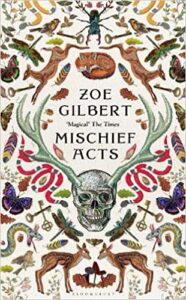
London, UK – Folklore, a vast and intricate tapestry woven through the fabric of human cultures, is far more than a collection of isolated tales. It is, as author Zoe Gilbert eloquently posits, analogous to the subterranean mycelial network of fungi: an expansive, living web that silently connects, feeds, and informs the diverse narratives that sprout above ground, much like trees and plants in a forest. This profound metaphor forms the conceptual bedrock of Gilbert’s latest novel, Mischief Acts, which delves into the shadowy, enduring figure of Herne the Hunter, revealing the deep, interconnected roots of our shared mythologies.
While we admire the distinct forms of an English oak or a sessile oak in a woodland, appreciating their individual beauty and shade, the intricate mycorrhizal network beneath our feet often remains invisible. Similarly, the stories and songs that emerge from our cultural commons, though enjoyed in their unique manifestations, are often underpinned by a vast, unseen system of kinship and influence. For those who, like Gilbert, are compelled to dig beneath the surface of familiar narratives, tracing the threads of this folkloric mycelium offers a profound and exhilarating journey into the very heart of human storytelling.
Main Facts: Folklore as a Living, Interconnected System
Zoe Gilbert’s exploration into the origins and evolution of Herne the Hunter for Mischief Acts was not her first encounter with the deep interconnectedness of folklore. Seasoned readers of folk tales frequently uncover surprising kinships, tracing ancestral lines and progeny among seemingly disparate narratives. However, Herne, a character who traverses centuries, proved to be an exceptionally rich vein, revealing a labyrinthine web of connections that underscores the dynamic, regenerative nature of myth.
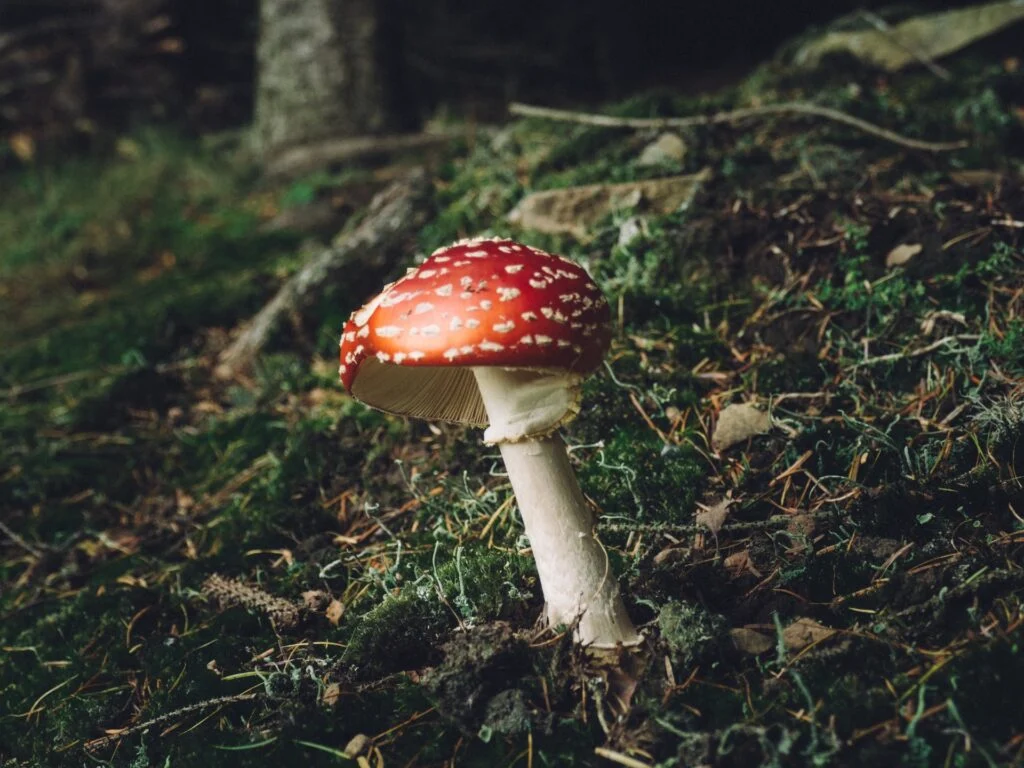
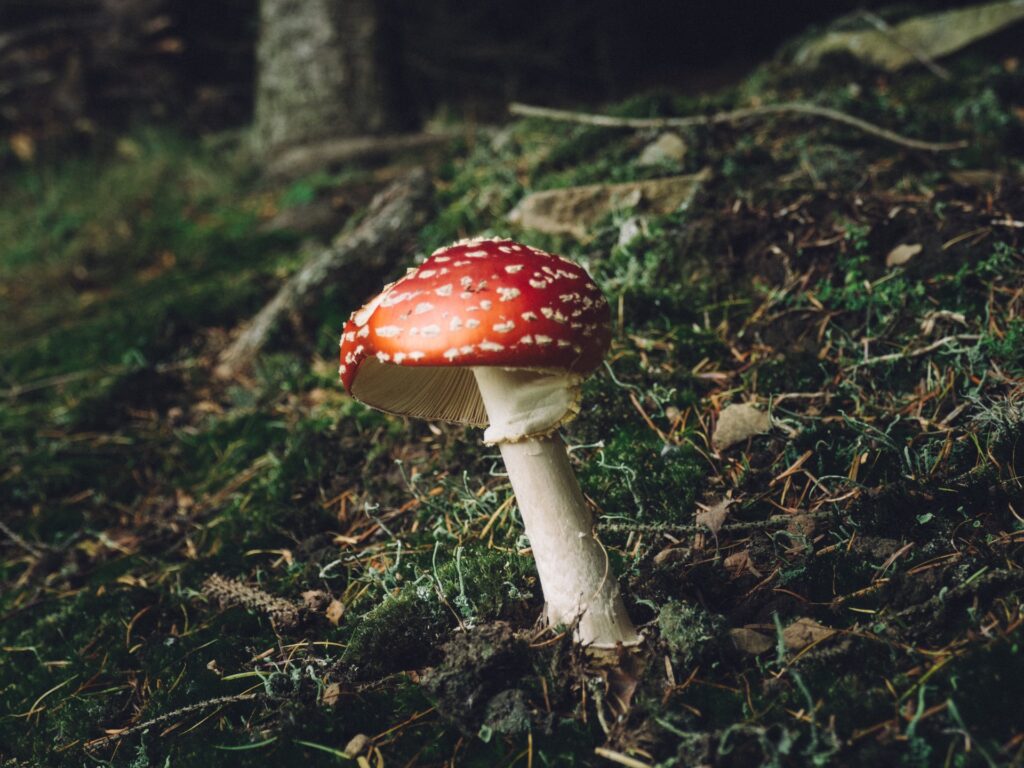
Herne the Hunter, in many respects, embodies the very essence of this "mushroomy" character within the folkloric landscape. He is present if one looks closely, yet rarely occupies the central stage in a woodland diorama. For many writers and readers, Herne has long lingered on the periphery of their folkloric vision, often appearing as a supporting character in tales belonging to others. This elusive presence, much like a striking fly agaric mushroom, is arresting when spotted—gorgeous, potentially dangerous, and often found along human pathways—but rarely sought to fill an entire foraging basket. He symbolizes a powerful, wild force that exists just beyond the immediate focus, waiting to be rediscovered and reinterpreted.
Chronology: Herne’s Literary Lineage and Mythic Evolution
Herne’s appearances in literature offer a fascinating timeline of his evolving presence in the collective imagination, a testament to how folklore is continually shaped and reshaped by creative minds.
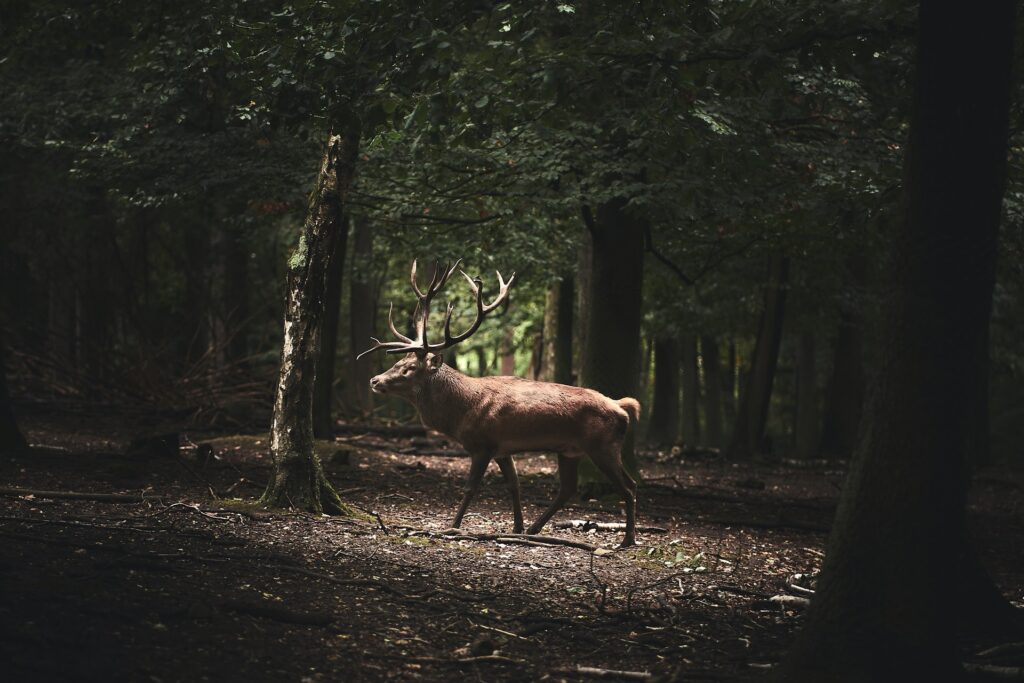
His most famous moment arguably arrived with William Shakespeare’s The Merry Wives of Windsor. In this comedic play, Herne is invoked as a horned spirit, haunting Windsor Forest, whose spirit is used as part of a scheme to trick Sir John Falstaff. While Shakespeare provides Herne with a theatrical stage, his origin story was significantly embellished and solidified by William Harrison Ainsworth in his 1842 novel, Windsor Castle. Ainsworth’s romanticized historical fiction painted Herne as a royal huntsman who, after falling out of favour and committing suicide by hanging himself from an oak tree, became a spectral figure with antlers, cursed to lead the Wild Hunt through Windsor Forest. This narrative offered a potent, if fictional, genesis that profoundly influenced subsequent interpretations.
Beyond these foundational texts, Herne continued to "pop up" in a diverse array of literary works, showcasing his adaptability and the enduring power of his archetype:
- John Masefield’s The Box of Delights: Here, Herne assumes the role of a wise, ancient mentor to the young protagonist, Kay Harker, guiding him through magical adventures. This portrayal shifts Herne from a purely menacing figure to one of benevolent, albeit wild, wisdom.
- Susan Cooper’s The Dark is Rising: In this beloved fantasy series, Herne reappears as a more ominous presence, menacing the protagonist Will Stanton with his piercing "owl eyes," reaffirming his connection to primal, untamed forces.
- Nick Hayes’ The Book of Trespass: Hayes invokes Herne as a symbol of ancient common rights and the wild spirit of the land, contemplating the transgression of law to touch Herne’s Oak, a potent symbol of defiance against enclosure and privatization.
These varied portrayals demonstrate Herne’s remarkable elasticity, allowing him to be adapted to serve different narrative functions across centuries, from a figure of local legend and theatrical trickery to a symbol of ecological protest or spiritual guidance. This continuous re-imagining is crucial to the vitality of folklore, preventing it from becoming a static relic of the past.
Supporting Data: The Proliferating Mycelial Network of Myth
Gilbert’s deeper research into Herne revealed that beneath the surface of his individual appearances lay a sprawling, interconnected web of mythic figures. Her initial expectation was to find strong links to Odin, the Norse god who famously hung himself from Yggdrasil, the World Tree, and who is often associated with leading the Wild Hunt. This connection indeed emerged, affirming Herne’s ties to this powerful, ancient motif of a spectral procession tearing through the night sky, often a harbinger of change or doom.
However, the mycelial network rapidly proliferated far beyond this anticipated link. Gilbert discovered not just dozens of Wild Hunt leaders across various European traditions—from King Herla, riding through the Herefordshire sky, to Gwynn ap Nudd of Welsh mythology—but also a fascinating array of characters who had carved out their own distinct "ecosystems of lore." These figures, though seemingly disparate, shared common threads of wildness, mischief, and a connection to the liminal spaces between human civilization and untamed nature:
- Harlequin (Arlecchino): This iconic figure, originating from the familia herlechini (a medieval spectral host) and evolving into the diamond-patterned character of Commedia dell’arte in Italy and beyond, embodies trickery, chaotic energy, and a theatrical flair for transgression. His journey from a demonic figure to a comedic servant highlights the transformative power of folklore.
- The Erl-king: Looming from the shadows of German folklore and popularized by Goethe’s chilling poem, the Erl-king is a malevolent, seductive fairy king who preys on children, a dark echo of the untamed forest’s dangers.
- The Green Man: An ancient pagan motif, the Green Man, with his leafy grin, represents the spirit of vegetation, rebirth, and the raw, untamed power of nature. He is often found carved into churches, a pagan survival within Christian architecture, signifying the enduring power of older beliefs.
As Gilbert delved deeper, the threads of folkloric mycelium led her into diverse realms: the enchanting yet perilous world of Fairyland, the intricate political and social landscape of Tudor history, and the foundational narratives of Roman mythology. Figures like Oberon (King of the Fairies), Robin Goodfellow (Puck, the mischievous sprite), the Woodwose (the wild man of the woods), and the Lord of Misrule (a figure of festive chaos and temporary social inversion) emerged, laughing from the earth, each contributing to the unruly and widespread nature of the familia herlechini. These characters collectively embody a spectrum of mythic symbolism: life, death, freedom, lust, wildness, and, crucially, mischief. Their presence underscores a universal human need for figures that challenge order, embody primal forces, and offer an escape into the fantastical.
The question then arises: is there a singular, ultimate horned god, perhaps Cernunnos, at the very center of this wood-wide web, with all mycelial threads knotted about his impressive horns? Cernunnos, the Gaulish-Celtic deity often depicted with antlers, associated with animals, fertility, and the underworld, holds a special and significant place in much contemporary pagan and Wiccan practice. While a powerful archetype, Gilbert found that such a simple, singular solution did not feel compatible with the inherently unruly and multifaceted nature of Herne and his family of rascally, woodsy hunters and seducers. The sheer range of form and territory occupied by Herne’s multitudinous counterparts, from King Herla riding through Herefordshire to Arlecchino on an Italian stage, suggests a more decentralized, adaptive network rather than a single, all-encompassing origin point. Their wildness and mischief, Gilbert concludes, seem to erupt wherever and whenever people need it, adapting to local contexts while retaining core archetypal functions.
Official Responses: Academic Perspectives and Creative Reinterpretations
From an academic perspective, Gilbert’s metaphorical approach aligns with contemporary folkloric scholarship that views folklore not as a static, archaic collection but as a dynamic, living tradition. Folklorists recognize that tales are constantly being told, re-told, adapted, and reinterpreted across generations and cultures. The "mycelial network" metaphor beautifully encapsulates this adaptive capacity, demonstrating how core archetypes and narrative structures persist and evolve, often below the surface of conscious awareness.
The creative act of transplanting a figure like Herne from his traditional haunt in Windsor to a new, urban landscape—the Great North Wood in South London—is not a deviation from folkloric practice but an extension of it. Folklore has always been rooted in place, providing a "genius loci" or protective spirit for specific landscapes. However, it also possesses a universal resonance. By moving Herne, Gilbert is engaging in a process akin to how folk tales themselves travel and adapt to new environments, absorbing new meanings and defending new territories. This act of "transplanting" acknowledges that while local lore can profoundly reconnect us with specific landscapes, the fundamental human need for mischief, transgression, and wildness—both in the external world and within the human soul—is universal.
Critics of Mischief Acts have lauded Gilbert for her "intoxicating, chameleonic voice" and "boundless imagination," recognizing her ability to weave together the ancient and the contemporary in a way that is "dangerous, sexy, troubling, daring, savage." This reception validates the idea that such creative reinterpretations are not merely literary exercises but vital contributions to the ongoing life of folklore, making these ancient narratives relevant and resonant for modern audiences. The novel serves as an "official response" from the creative community, demonstrating how folklore continues to inspire and shape contemporary storytelling.
Implications: The Enduring Relevance of Wildness and Storytelling
The implications of viewing folklore through Gilbert’s "mycelial" lens are profound for understanding our cultural heritage and its role in modern society. This perspective challenges the notion of folklore as merely quaint stories from a bygone era, instead presenting it as a foundational, continuously regenerating system that informs our contemporary narratives, art, and even our psychological landscapes.
The act of transplanting Herne to the fragmented remnants of the Great North Wood in South London is a powerful statement. Gilbert, living near this "slender, seductive strip of woodland," recognized that even in an urbanized setting, the need for a protective spirit, a genius loci, persists. The wood, whether ancient or urban, large or small, retains its wild essence, a place where civilization gives way to something older, untamed. Herne, as the wildman, the spirit of the forest, the hooligan, and the trickster, is precisely the figure needed to defend such spaces and embody the enduring human desire for a connection to the primal.
This creative liberty highlights a crucial tension: while folklore is deeply rooted in specific places, its archetypal themes of mischief, transgression, and wildness are universal. Gilbert’s decision to borrow Herne and ask him to defend a modern, urban wood underscores the idea that these ancient figures are not confined to historical texts or pristine wildernesses. They are needed wherever the boundary between order and chaos, known and unknown, is blurred – a frequent occurrence in our rapidly changing world.
Ultimately, fiction has always played a symbiotic role in extending and morphing folklore, even as lore feeds fiction. This dynamic ensures that, much like the real mycorrhizal network beneath our feet, the edges of Herne the Hunter’s folkloric web will never be fully discovered. New connections will always emerge, new interpretations will sprout, and the forest of stories will forever renew itself. Just as velvet shank and amethyst deceivers wait quietly near the fly agaric, and beech mast sprouts into new saplings while wood anemones expand their territory, so too does the world of folklore continuously evolve, offering endless possibilities for discovery and reinvention. Zoe Gilbert’s Mischief Acts stands as a vibrant testament to this beautiful symbiosis, inviting readers to dig beneath the surface and explore the thrilling, interconnected wilderness of our shared cultural inheritance.
Mischief Acts by Zoe Gilbert
“Herne the hunter, mischief-maker, spirit of the forest, leader of the wild hunt, hurtles through the centuries pursued by his creator. A shapeshifter, Herne dons many guises as he slips and ripples through time — at candlelit Twelfth Night revels, at the spectacular burning of the Crystal Palace, at an acid-laced Sixties party. Wherever he goes, transgression, debauch and enchantment always follow in his wake. But as the forest is increasingly encroached upon by urban sprawl and gentrification, and the world slides into crisis, Herne must find a way to survive — or exact his revenge. With its intoxicating, chameleonic voice and boundless imagination, Mischief Acts is British folklore as you’ve never read it before: dangerous, sexy, troubling, daring, savage, an exhilarating race through time and space, weaving together the ancient and the contemporary.”

Mischief Acts, by Zoe Gilbert, is available from Bloomsbury books.
The book can be purchased here.
Folk by Zoe Gilbert
“The remote island village of Neverness is a world far from our time and place. The air hangs rich with the coconut-scent of gorse and the salty bite of the sea. Harsh winds scour the rocky coastline. The villagers’ lives are inseparable from nature and its enchantments. Verlyn Webbe, born with a wing for an arm, unfurls his feathers in defiance of past shame; Plum is snatched by a water bull and dragged to his lair; little Crab Skerry takes his first run through the gorse-maze; Madden sleepwalks through violent storms, haunted by horses and her father’s wishes. As the tales of this island community interweave over the course of a generation, their earthy desires, resentments, idle gossip and painful losses create a staggeringly original world. Crackling with echoes of ancient folklore, but entirely, wonderfully, her own, Zoe Gilbert’s Folk is a dark, beautiful and intoxicating debut.”
Folk, by Zoe Gilbert, is available from Bloomsbury books, or as a special edition with sprayed edges from Goldsboro books.
The book can be purchased here.