
Unmasking the Primal: Charles Fréger’s "Wilder Mann" and Europe’s Enduring Connection to the Wild
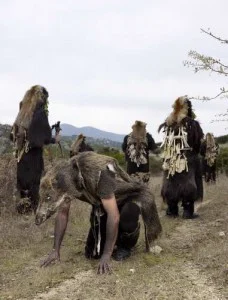
Strasbourg, France – In an age increasingly defined by digital landscapes and urban sprawl, a profound photographic series by French artist Charles Fréger invites us to journey back to the elemental heart of Europe. Titled Wilder Mann (German for "Wild Man"), this stunning collection documents the enigmatic, often unsettling, and deeply resonant traditional costumes that transform their wearers into folkloric, half-human beasts. Far more than mere anthropological records, Fréger’s photographs serve as a powerful meditation on identity, our evolving relationship with the natural world, and the enduring pull of primal rituals.
First gaining widespread acclaim upon its initial exhibitions and subsequent book publication, Wilder Mann has captivated audiences globally, challenging viewers to confront their preconceptions of wilderness, humanity, and the thin veil between the two. Through his meticulous lens, Fréger captures figures that seem to emerge from the mists of ancient forests or the snow-laden peaks of remote mountains, embodying spirits of the land that have been revered, feared, and invoked for millennia.
Main Facts: A Glimpse into the Heart of the Wild
Charles Fréger’s Wilder Mann project is an ambitious and visually arresting photographic series that meticulously chronicles the myriad forms of "Wild Man" figures across 18 European countries. From the snowy reaches of Scandinavia to the sun-drenched valleys of the Balkans, Fréger embarked on a two-year journey (2010-2011) to capture these extraordinary, often ancient, masquerades. The core subject matter revolves around traditional costumes crafted from organic materials like straw, animal furs, horns, bells, and branches, which are donned during seasonal rituals, typically in winter, to mark transitions, ward off evil spirits, or ensure fertility.
The project’s central premise is to explore the concept of the "Wild Man" archetype – a universal folkloric figure representing humanity’s untamed, primordial self and its inextricable link to nature. Fréger’s photographs are characterized by their formal rigor and striking aesthetic, presenting each costumed figure in a stark, often natural, setting that emphasizes their sculptural quality and the profound transformation of the wearer. The resulting images are deeply moving, at times humorous, and frequently haunting, prompting viewers to ponder fundamental questions about human identity, our collective past, and the ongoing tension between civilization and wilderness.
Wilder Mann is not merely a documentation of quaint customs; it is an artistic inquiry into the very essence of what it means to be human in relation to the "more-than-human world." The series asks whether these costumes are simply theatrical relics, anachronistic performances for an age disconnected from its roots, or if they tap into something essential and perhaps forgotten within the human psyche – a primal connection to the earth that modern society has consciously sought to suppress in its quest to define itself in opposition to "nature." The project has been widely exhibited in major galleries and museums across Europe and North America, solidifying Fréger’s reputation as a photographer of profound cultural insight.
Chronology: Tracing the Journey of the Wild Man
Charles Fréger’s artistic journey leading to Wilder Mann is marked by a consistent fascination with uniforms, social groups, and the visual codes that define collective identity. Born in 1975, Fréger’s earlier works, such as Portraits of Young Skiers (1999) and Flanders Fields (2000), hinted at his developing interest in the relationship between individual and collective identity through specific attire. Projects like Luxembourg (2005) and Majorettes (2006) further explored group dynamics and the theatricality of social roles.

The genesis of Wilder Mann can be traced to Fréger’s growing curiosity about European folklore and the increasing globalization that threatened to homogenize local traditions. He identified the "Wild Man" archetype as a potent symbol that transcended national borders while retaining intensely local expressions. The idea for Wilder Mann began to solidify around 2008-2009, driven by a desire to explore this specific facet of European cultural heritage.
The active photographic expedition for Wilder Mann commenced in late 2010 and continued rigorously through 2011. Fréger embarked on extensive travels across Europe, visiting numerous remote villages and communities where these ancient rituals are still practiced. His journey was a meticulous undertaking, requiring careful research, local contacts, and often navigating challenging geographical and social landscapes. He visited 18 countries, including Austria, Bulgaria, Croatia, Finland, France, Greece, Italy, Macedonia, Portugal, Romania, Slovenia, Spain, Switzerland, and the UK, among others.
The sheer volume of material collected during this period necessitated a careful editing and curatorial process. The first significant public exposure of Wilder Mann came in 2012 with exhibitions in prominent galleries, drawing immediate critical attention. The series culminated in the publication of the accompanying book, Wilder Mann: The Identity of a Beast, which was released in 2012 by Dewi Lewis Publishing. This comprehensive volume allowed for a deeper appreciation of the project’s scope and the intricate details of Fréger’s work. Since its debut, the series has continued to tour internationally, reinforcing its status as a significant contemporary photographic project.
Supporting Data: Anatomy of the Beast and the Ritual
The richness of Wilder Mann lies in its intricate details, both artistic and anthropological. Fréger’s work provides a unique lens through which to examine the "Wild Man" phenomenon.
The "Wild Man" Archetype in European Folklore
The "Wild Man" is a pervasive figure in European folklore, appearing in various guises from ancient times to the present day. This archetype embodies a being that is half-human, half-beast, dwelling in the wilderness, often hairy, strong, and associated with untamed nature. Its manifestations range from benevolent forest spirits to terrifying winter demons.
- Krampus and Perchten (Alpine Regions): Perhaps among the most recognizable, these figures in Austria and southern Germany appear during winter festivals (Nikolaus/St. Nicholas Day for Krampus, and Rauhnächte for Perchten). They are often terrifying, covered in fur, horns, and bells, punishing naughty children and driving away winter evils.
- Kukeri (Bulgaria): These elaborately costumed men perform rituals to scare away evil spirits and bring fertility and good harvest. Their costumes are made of animal hides, bells, and towering, often grotesque, masks.
- Zvončari (Croatia): Known as "bellmen," these figures from the region of Rijeka wear sheepskins and large bells around their waists, parading in groups to ward off winter and evil. Their loud ringing symbolizes the awakening of spring.
- Bear Men (Romania): In some Romanian traditions, men dress in real bear hides, often accompanied by musicians and dancers, performing a ritualistic "death and resurrection" of the bear to symbolize the cycle of seasons.
- Moss Men / Straw Bears (Germany, UK): Simpler, yet equally symbolic, figures made entirely of straw or moss, often associated with agricultural fertility rites and the arrival of spring.
These figures are not static relics; they are living traditions, adapting and evolving while retaining their ancient core. They represent a liminal space, a bridge between the human and animal, the cultivated and the wild, the ordered and the chaotic.

Fréger’s Artistic Process and Methodology
Fréger’s approach to Wilder Mann was methodical and deeply respectful. He typically photographed his subjects in their own environment, often against stark, natural backdrops – snow-covered fields, dense forests, rocky outcrops, or desolate landscapes. This choice of setting amplifies the figures’ otherworldliness and their connection to the land.
His lighting is often natural or subtly enhanced, creating a soft yet dramatic effect that highlights the textures of the costumes – the shaggy furs, the intricate straw weaves, the gleam of horns. The compositions are typically frontal or slightly angled portraits, emphasizing the sculptural quality of the costumes and the direct gaze (or obscured gaze) of the wearer. This deliberate framing elevates the subjects from mere folk performers to almost monumental figures, stripping away the celebratory context of the rituals to focus on the individual transformation. Fréger avoids capturing the dynamic chaos of the festivals, instead opting for a stillness that allows for contemplation of the figures themselves.
Costumes and Transformations: More Than Mere Attire
The costumes themselves are central to the Wilder Mann narrative. They are not simply clothes but elaborate constructions that physically and symbolically transform the wearer.
- Materials: Predominantly natural – animal furs (sheep, goat, bear), straw, hay, moss, branches, leaves, feathers. These materials directly link the wearer to the raw elements of the wilderness. Bells, chains, and wooden masks add auditory and visual impact.
- Physicality: Donning these costumes is often a demanding physical act. They are heavy, cumbersome, and sometimes uncomfortable. The weight and bulk contribute to the wearer’s altered gait and presence, enhancing the illusion of a non-human entity. The transformation is not just visual but also sensory and performative.
- Psychological Aspect: For the wearers, putting on the costume is an act of stepping out of their everyday identity and embodying something ancient and powerful. It can be a liberating experience, allowing for expressions of primal energy, mischief, or menace that are suppressed in daily life. The anonymity of the mask frees the individual to become the archetype.
Photographic Style and Aesthetic Choices
Fréger’s distinctive photographic style is crucial to the series’ impact. His use of natural light, often overcast or diffuse, creates a painterly quality, emphasizing texture and form. The subjects are presented with a quiet dignity, even when their appearance is fearsome. The absence of overt theatricality in the staging allows the viewer to focus on the intricate craftsmanship of the costumes and the profound presence of the figures. Each photograph is a carefully constructed portrait, inviting prolonged engagement and reflection. The consistent aesthetic across diverse geographic locations unites the disparate traditions under a singular artistic vision, highlighting their shared spiritual and cultural threads.
Official Responses: Voices from the Creator and Cultural Stewards
The reception of Wilder Mann has been overwhelmingly positive, both from the art world and from the communities whose traditions it documents.
Charles Fréger’s Own Statements
Fréger has consistently articulated his motivations for the project, emphasizing a deep respect for the traditions and a curiosity about the human condition. He often speaks of the project not as a definitive anthropological study, but as an artistic exploration of archetypes.
"My initial interest was purely aesthetic," Fréger has noted in interviews. "I was drawn to the sculptural forms, the incredible creativity of these costumes. But as I travelled and spent time with the communities, it became much more profound. I started to understand the deep connection these figures represent – the connection to nature, to the seasons, to a past that we, in modern society, often try to forget."
He has also highlighted the universal nature of the "Wild Man" figure: "Despite the vast geographic distances and cultural differences, there is a striking commonality in these figures. They all represent a threshold, a moment where the human touches the non-human, where the civilized confronts the wild. It’s a primal human need to engage with these forces." Fréger often expresses his hope that his work will encourage viewers to reflect on their own relationship with nature and their cultural heritage.

Curatorial and Institutional Perspectives
Art institutions and curators have lauded Wilder Mann for its artistic merit, cultural significance, and ability to bridge contemporary photography with ethnographic inquiry. Museums like the Musée de la Chasse et de la Nature in Paris, the Photographers’ Gallery in London, and various institutions across Europe and North America have hosted exhibitions of the series.
Curators often praise Fréger’s ability to imbue his subjects with a powerful, almost mythical presence. They note how his formal photographic style elevates folk traditions to the realm of high art, inviting a sophisticated dialogue about representation, identity, and the power of ritual. The series is frequently contextualized within discussions of contemporary portraiture, documentary photography, and the artistic exploration of cultural anthropology. Its interdisciplinary appeal has made it a favorite for both art and cultural studies programs.
Community Reactions
Crucially, the communities whose traditions are featured in Wilder Mann have generally responded with appreciation. Fréger’s respectful and non-intrusive approach, coupled with the dignity he lends to his subjects, has fostered a sense of pride rather than exploitation. For many practitioners of these ancient rituals, Fréger’s work offers a valuable contemporary record and brings international attention to traditions that might otherwise be overlooked or considered niche.
In some instances, the photographs have even spurred renewed interest in local traditions among younger generations, providing a visual testament to the power and beauty of their heritage. The series acts as a powerful cultural mirror, reflecting the vitality and resilience of these practices back to their originators and a wider global audience.
Implications: Echoes of the Wild in a Modern World
The enduring impact of Wilder Mann extends far beyond its artistic and documentary achievements, resonating with profound implications for contemporary society.
Preservation of Cultural Heritage
In an era of rapid cultural globalization, many traditional practices are at risk of fading into obscurity. Wilder Mann serves as a vital photographic archive, meticulously documenting customs that are often orally transmitted or only sporadically recorded. By capturing these rituals with such artistic reverence, Fréger contributes significantly to their preservation, ensuring that future generations have a rich visual record of Europe’s diverse folkloric heritage. His work highlights the importance of cultural continuity and the unique identities forged within specific communities. It underscores the value of maintaining a connection to the past as a way of understanding the present and shaping the future.
Reconnecting with Nature: The Lost Wilderness Within
One of the most profound questions posed by Wilder Mann is whether modern humanity, in its relentless pursuit of progress and technological advancement, has severed an essential connection to the natural world. The "Wild Man" figures, emerging from forests, mountains, and snowscapes, embody a symbiotic relationship with nature – one of respect, fear, and integration.
The series implicitly critiques the anthropocentric worldview that places humanity in opposition to, and dominant over, nature. Instead, it suggests an older, perhaps wiser, understanding where humanity is an integral part of the ecosystem, drawing power and meaning from its wild surroundings. The costumes, made of natural elements, serve as a potent reminder of our shared material origins with the earth. In a world grappling with ecological crises, Fréger’s work subtly advocates for a re-evaluation of our place within the natural order, suggesting that perhaps we have lost a vital "wildness" within ourselves that these rituals seek to reclaim, even if temporarily.
Identity in a Globalized World
In an increasingly homogenized global culture, Wilder Mann champions the power of local, deeply rooted identities. These "Wild Man" traditions are fiercely particular to their regions, reflecting unique histories, mythologies, and ecological contexts. The series demonstrates that even as global influences permeate every corner of the earth, there remains a powerful human need to express and celebrate distinct cultural identities.
The transformation enacted by the costumes speaks to the fluidity of identity – the ability to shed one’s everyday self and embody something archetypal and collective. It highlights how community and shared ritual play a crucial role in shaping and affirming individual and collective selfhood, offering an antidote to the often isolating pressures of modern individualism. These figures represent a connection to a collective memory, a shared past that transcends national borders but reinforces local belonging.

Artistic Legacy and Influence
Wilder Mann has cemented Charles Fréger’s position as a significant voice in contemporary photography. Its unique blend of documentary precision, artistic vision, and thematic depth has inspired subsequent photographic projects exploring similar themes of folklore, identity, and the human-nature relationship. The series has contributed to a broader appreciation for the intersection of art, anthropology, and cultural studies, demonstrating how visual arts can illuminate complex societal questions. Its enduring popularity ensures its place as a seminal work that continues to provoke thought and inspire wonder.
Broader Societal Relevance: The Primal and the Sacred
Ultimately, Wilder Mann taps into a fundamental aspect of the human psyche: our enduring fascination with the primal, the monstrous, and the sacred. These figures, whether terrifying or comical, benevolent or malevolent, allow communities to confront and integrate the chaotic forces of existence. They provide a space for catharsis, for fear, for celebration, and for the negotiation of the unknown.
In a world often stripped of ritual and collective meaning, Fréger’s photographs remind us that these ancient practices offer profound psychological and social functions. They are not merely archaic curiosities but living embodiments of humanity’s ongoing dialogue with its own wild nature and the mysteries of the cosmos. Wilder Mann is an invitation to look beyond the surface, to recognize the echoes of the wild within ourselves, and to appreciate the profound richness of Europe’s hidden, untamed heart.

Leave a Comment