The Dark Side of Discipline: Saoirse Ronan and the Absurdist Brilliance of ‘Bad Apples’
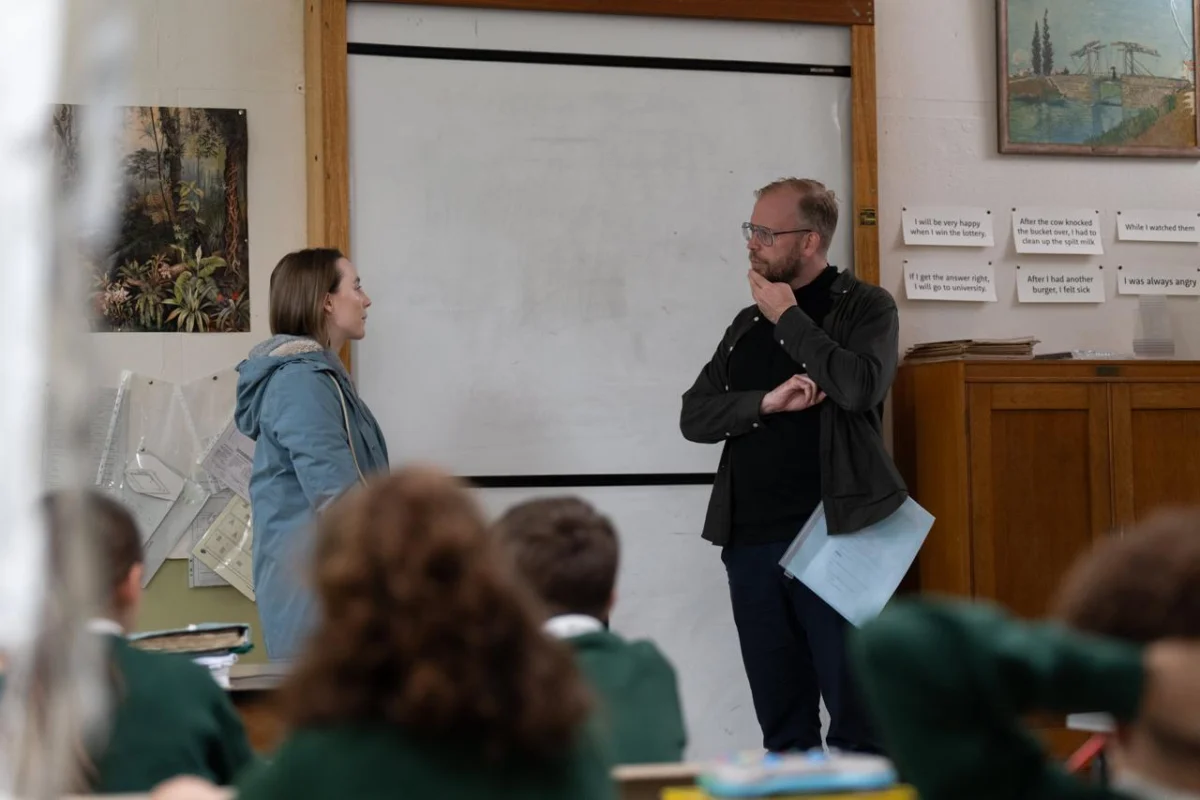
The trajectory of a prestige actor is often predictable: a series of period dramas, a few Shakespearean adaptations, and perhaps a gritty survivalist epic. However, for four-time Academy Award nominee Saoirse Ronan, the path to creative fulfillment has recently taken a turn toward the "nutty," the "zany," and the profoundly uncomfortable. Her latest project, Bad Apples, the English-language debut of Swedish director Jonatan Etzler, represents a startling departure from her recent heavy-hitting dramas like The Outrun and Blitz.
Premiering at the 2025 Toronto International Film Festival (TIFF), Bad Apples is a pitch-black comedy that explores the breaking point of a primary school teacher pushed to the brink by a sociopathic student. Republic Pictures is set to release the film in U.S. and UK theaters on Friday, September 18, 2025, bringing to audiences a side of Ronan that many have suspected existed but few have seen fully unleashed: a master of the comedic grotesque.
Main Facts: A Bold Experiment in Black Comedy
At its core, Bad Apples is a high-concept satire that dares to ask a forbidden question: What happens when a "good person" decides to solve an impossible problem through a criminal act? Ronan stars as Maria, a dedicated but beleaguered primary school teacher in England. Her life is made a living hell by Danny (played by newcomer Eddie Waller), a student whose foul-mouthed, violent, and disruptive behavior isn’t just a nuisance—it’s a systemic failure.
The film’s central conceit—Maria locking Danny in her basement after a series of escalating altercations—serves as the catalyst for a narrative that is as much a psychological thriller as it is a comedy of errors. The film is based on the 2020 debut novel De Oönskade (The Undesirables) by Rasmus Andersson. Adapted for the screen by Jess O’Kane, the film shifts the setting from Sweden to Britain, leaning into the UK’s rich tradition of dark, cynical humor and its rigid, often stifling, social structures.

Produced by Oskar Pimlott and Pulse Films, the project has been described by its creators as a "marriage" of dark comic writing and a uniquely European directorial style. For Ronan, the appeal was the sheer singularity of the script. "There’s kind of nothing out there like it," she noted in her first interview regarding the film.
Chronology: From Swedish Novel to Global Premiere
The journey of Bad Apples began with the publication of Andersson’s novel in 2020. The book caught the attention of Jonatan Etzler, whose background as a former teacher gave him a visceral connection to the material’s depiction of the "loss of control" inherent in the profession.
2020–2022: Development and Adaptation
Etzler initially considered writing the screenplay himself but recognized the need for a British voice to capture the specific cultural nuances of the UK school system. He teamed up with producer Oskar Pimlott and screenwriter Jess O’Kane, the latter of whom also shared a background in teaching. This "insider knowledge" of the education system provided the script with its "raw, close-to-the-bone" authenticity.
October 2023: Casting the Lead
The search for Maria was brief. While Ronan is primarily known for her dramatic prowess, Etzler was inspired by a 2017 episode of Saturday Night Live that Ronan hosted. Specifically, a sketch in which she played a high-strung flight attendant convinced Etzler that she possessed the "authority" and "comedic timing" necessary for Maria. Ronan signed on in late 2023, immediately becoming a champion for the project’s unorthodox tone.

2024: Production and Finding "Danny"
Filming took place throughout 2024. The most significant production hurdle was casting the children, particularly the role of Danny. After reviewing over 2,000 auditions, the team discovered Eddie Waller in the north of England. Production concluded as Ronan’s career reached a fever pitch with the dual release of The Outrun and Blitz.
September 2025: World Premiere
The film debuted at TIFF to significant buzz, highlighted by Ronan’s absence due to her pregnancy—a personal milestone that coincided with the culmination of one of her most daring professional risks.
Supporting Data: The Logistics of Absurdity
To ground a film where a teacher kidnaps a student, the production relied on a foundation of realism. The casting of the classroom was handled by Fiona Weir, the legendary casting director behind the Harry Potter franchise. The goal was to find children who felt "human" rather than "stage-trained."
- Audition Statistics: Over 2,000 children were screened for the role of Danny to find a specific "uncontrollable anger" that felt authentic rather than theatrical.
- Creative Backgrounds: Director Jonatan Etzler and screenwriter Jess O’Kane both served as teachers before entering the film industry, a factor that Ronan cited as crucial to the film’s "realistic" depiction of workplace burnout.
- Genre Positioning: While marketed as a black comedy, the film intentionally blurs lines. Early audience feedback from TIFF suggested that the "discomfort" was a primary driver of the humor, with a 90-minute runtime designed to keep the audience in a state of perpetual surprise.
Official Responses: Insights from the Set
The creative team has been vocal about the film’s intent to provoke. In interviews with IndieWire, both Etzler and Ronan emphasized that the film’s success depends on the audience’s willingness to empathize with a protagonist who commits an unthinkable act.

Director Jonatan Etzler on Saoirse Ronan’s Talent:
"She got it immediately. She was our top choice, and she got on board quite early. She has such a comedic talent that we don’t see too much of, but she also finds moments where she can be very human and a little bit weird." Etzler explained that the "SNL" flight attendant sketch was the "smoking gun" that proved Ronan could play a person of authority who is simultaneously falling apart.
Saoirse Ronan on the Nature of the Role:
"I’d never read anything quite like that… I responded to the material because that’s my sense of humor as well," Ronan said. She described the physical altercations with the character Danny as "close to the bone," noting that the more "dark and twisted" the scenes became, the more engaged she felt. "We are all a lot more awkward and dark and twisted and funny and caring and all of these contradictory things… this shines a light on that other world."
Producer Oskar Pimlott on Ronan’s Likability:
"You can’t help but empathize with Saoirse Ronan; there’s not a single person out there that doesn’t like her," Pimlott stated. He argued that this inherent likability was the "secret weapon" of the film, as it forces the audience to question their own moral compass when they find themselves rooting for Maria to keep the child locked in the basement.
Implications: A New Chapter for Ronan and the Genre
The release of Bad Apples carries significant implications for Saoirse Ronan’s career and the broader landscape of independent cinema.

1. The "Child Actor" Evolution
Ronan, who has been acting for over 20 years, spoke candidly about reaching a "fork in the road." She expressed a desire to protect her relationship with her work, opting for projects that allow her to remain "loose and almost childlike." Bad Apples signals a move away from the "prestige bait" cycle and toward a more experimental, self-fulfilling phase of her career. Her philosophy—that acting should be "fun" and "pure expression"—is a rejection of the "tortured artist" trope often associated with Oscar-caliber performers.
2. The Critique of the "System"
Etzler’s film is more than a dark joke; it is a critique of societal "square boxes." By setting the film in Britain, Etzler highlights a culture he perceives as "suspicious of people who can’t fit into the system." The film suggests that when society provides no outlet for dealing with "bad apples," individuals will inevitably resort to "bad" actions. It serves as a philosophical inquiry into complicity and the suffering of others within institutional frameworks.
3. The State of Dark Comedy
In an era where "safe" content often dominates streaming platforms, Bad Apples is a reminder of the power of the "uncomfortable." Ronan’s assertion that "the hardest genre is comedy" and that "if we don’t laugh, we’ll cry" resonates with a modern audience increasingly accustomed to the "absurdist" reality of contemporary life.
As Bad Apples prepares for its theatrical run, it stands as a testament to the creative synergy that occurs when a world-class dramatic actor decides to embrace the bizarre. Whether audiences laugh out of genuine amusement or sheer nervous energy, the film has already achieved its goal: it has ensured that no one will look at a primary school classroom—or Saoirse Ronan—the same way again.