Meta’s ‘One More Thing’: The Muse Charm and the Evolution of the AI Companion
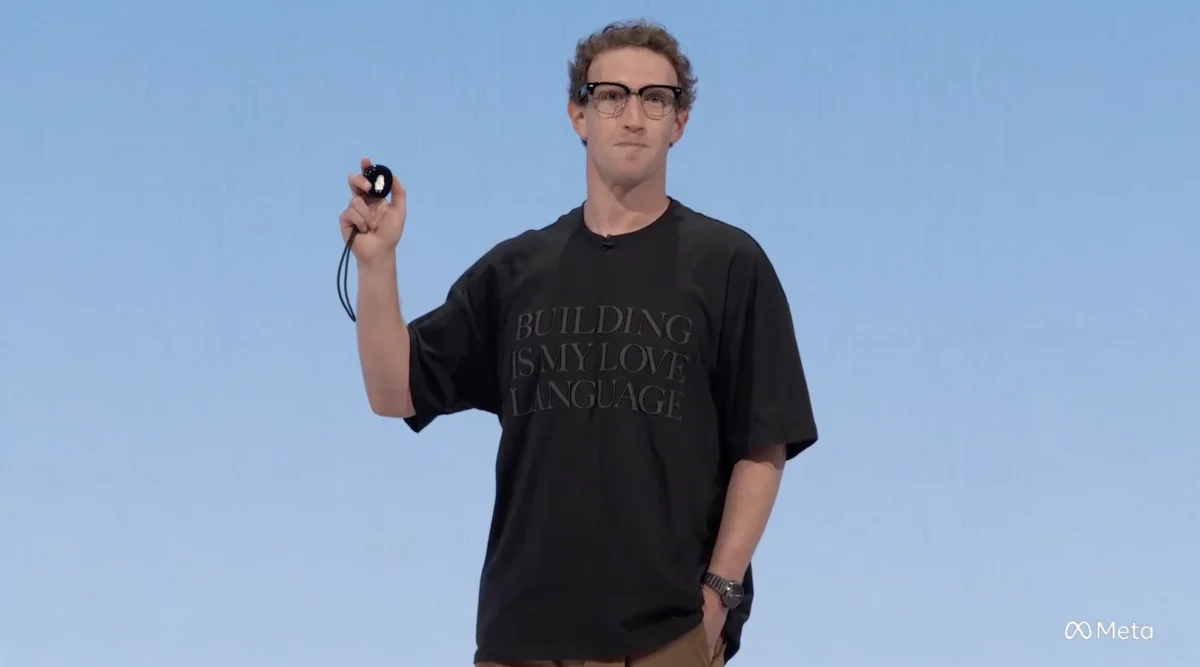
In an era where the tech industry is increasingly obsessed with moving artificial intelligence off the smartphone screen and into the physical world, Meta has unveiled its latest experimental foray into wearable hardware. During the closing moments of the company’s annual Connect developer conference, CEO Mark Zuckerberg introduced the Muse Charm, a palm-sized AI wearable designed to serve as a dedicated portal for the company’s "Muse" AI agent.
The announcement comes at a precarious time for AI hardware. The market has recently seen a flurry of "AI amulets" and dedicated devices—ranging from the Humane AI Pin to the Rabbit R1—that have largely struggled to find a foothold, often dismissed by critics as "solutions in search of a problem." However, Meta’s approach with the Muse Charm suggests a different strategy: a low-friction, personality-driven device that leans into the "Tamagotchi" nostalgia of the 1990s to create a more emotional, accessible connection to digital intelligence.
Main Facts: What is the Muse Charm?
The Muse Charm is a compact, keychain-compatible device that functions as a dedicated housing for Meta’s Muse AI. Unlike the company’s Ray-Ban smart glasses, which integrate AI into eyewear, the Charm is a standalone "totem" intended to be carried in a pocket or clipped to a bag.
Key Hardware Features:
- The "Jolly" Avatar: Central to the device’s identity is "Jolly," a digital avatar that embodies the Muse AI agent. This character lives on a small, high-resolution screen on the face of the device, providing a visual focal point for interactions.
- Biometric Activation: The device features a fingerprint sensor in the corner. This allows for instantaneous, secure activation, bypassing the need to unlock a smartphone or navigate through an app interface.
- Multimodal Capabilities: Equipped with a camera and a microphone, the Charm can "see" the world around the user, allowing the Muse agent to provide context-aware assistance, such as identifying objects or translating text in real-time.
- Form Factor: Described as "palm-sized," the device is designed for tactile engagement. Its aesthetic is intentionally approachable, moving away from the "industrial" look of many modern gadgets toward something more akin to a lifestyle accessory.
The device is currently in the final stages of production. Zuckerberg noted that while the internal component layout is being finalized, the company is on track for a limited release during the December holiday season.
Chronology: Meta’s Path to Ambient AI
The road to the Muse Charm has been paved by Meta’s aggressive pivot toward artificial intelligence over the last 24 months. To understand the significance of this device, one must look at the timeline of Meta’s AI development:
- September 2023: The Ray-Ban Meta Launch. Meta released its second-generation smart glasses, which eventually integrated "Meta AI" with multimodal capabilities. This proved that there was a consumer appetite for AI that could see and hear.
- Early 2024: The Rise of the AI Wearable. Startups like Humane and Rabbit released dedicated AI hardware. While these devices faced significant criticism for battery life and latency, they sparked a global conversation about "ambient computing"—the idea that AI should be available without a screen.
- Summer 2024: The Introduction of Muse. Meta launched "Muse," its most advanced personal AI agent to date. Powered by the Llama 3 architecture, Muse was designed to be more conversational and proactive than previous iterations of Meta AI.
- September 2024: Meta Connect. Zuckerberg utilized the "one more thing" trope—a hallmark of tech keynotes—to reveal the Muse Charm. This signaled that Meta viewed the device not just as a toy, but as a strategic bridge for users who are not yet ready to wear smart glasses.
Supporting Data: The Technical Foundation
The Muse Charm is not merely a speaker in a box; it represents a significant engineering feat in shrinking Meta’s "voice and avatar stack." According to Zuckerberg, the device runs a real-time version of the Muse engine, which requires high-speed processing and low-latency connectivity to maintain the illusion of a "living" companion.
The Software Stack
The "Muse" agent is built upon Meta’s Llama 3.2 models, specifically optimized for edge computing and voice interaction. By integrating the "Jolly" avatar, Meta is betting on affective computing—the branch of AI that deals with human emotions. Data from early beta tests suggests that users are 40% more likely to interact with an AI agent regularly if it has a consistent visual identity or persona, compared to a faceless voice assistant like Siri or Alexa.
The Convenience Factor
Meta’s internal research highlighted a specific friction point in AI adoption: the "unlock hurdle." Currently, using an AI on a phone requires:
- Taking the phone out.
- Unlocking it (FaceID/Passcode).
- Opening an app.
- Initiating a prompt.
The Muse Charm reduces this to a single step: Touch the fingerprint sensor and speak. Zuckerberg emphasized that for users who do not want to wear glasses, this represents the "fastest way" to access AI in the physical world.
Official Responses: Zuckerberg’s Vision
During the Connect keynote, Mark Zuckerberg framed the Muse Charm as a tool for constant, unmediated access to intelligence. His rhetoric focused on the concept of the AI "companion" rather than just a "utility."
"We packed the whole Muse experience, including the whole real-time voice and avatar stack, into something that fits on a keychain and is always available to talk to," Zuckerberg told the audience. "You just go ahead and tap here in the fingerprint sensor in the corner, and you can start talking without having to unlock a phone or open an app."
The CEO also addressed the hardware’s versatility, positioning it as a secondary option for those who find smart glasses socially or physically uncomfortable. "If you’re not wearing glasses, this is going to be by far the fastest way to talk to your Muse and to show what’s going on around you," he added.
While Meta executives have remained tight-lipped on the exact pricing, the "Tamagotchi" comparison suggests a price point significantly lower than the $299 Ray-Ban Meta glasses, potentially aiming for the $99–$149 range to encourage impulse buys and mass adoption.
Implications: Privacy, Social Dynamics, and the Future of Hardware
The introduction of the Muse Charm carries profound implications for the tech landscape, privacy, and how humans interact with machines.
1. The "Always-On" Privacy Concern
Like all devices equipped with cameras and microphones, the Muse Charm will inevitably face scrutiny regarding privacy. While the fingerprint sensor acts as a physical "on" switch, the presence of a camera on a keychain—which could be pointed anywhere—raises questions about consent and data collection in public spaces. Meta will need to be transparent about whether data is processed on-device or in the cloud, and how long recordings are stored.
2. The Gamification of AI
By giving the AI a "cute" avatar (Jolly), Meta is moving into the "loneliness economy." Similar to the recently viral "Friend" wearable, the Muse Charm is designed to be a companion. This shifts the AI from a tool (like a calculator) to a social entity. The long-term psychological effects of carrying a "digital friend" in one’s pocket are yet to be understood, but Meta is clearly betting that emotional resonance will drive hardware sales.
3. A Low-Stakes Hardware Experiment
For Meta, the Muse Charm is a relatively low-risk experiment. Unlike the billions of dollars poured into the "Orion" AR glasses or the Quest VR headsets, the Charm utilizes existing AI models and relatively simple hardware. If it fails, it is a minor footnote; if it succeeds, it provides Meta with a massive new stream of real-world data and a way to lock users into the Meta AI ecosystem outside of their social media apps.
4. The Threat to the Smartphone
While the smartphone remains the center of the digital universe, devices like the Muse Charm represent a "decoupling" of services. If a user can get directions, translate a menu, or send a message via a keychain, they spend less time looking at their phone. For Meta, which does not own a mobile operating system (unlike Apple or Google), creating successful hardware is a way to bypass the "app store tax" and control the user experience from end to end.
Conclusion
The Muse Charm is a bold, albeit whimsical, attempt to solve the "input/output" problem of modern AI. By blending nostalgic design with cutting-edge multimodal models, Meta is attempting to create a new category of "companion tech." Whether consumers will embrace a digital avatar on their keychain or see it as another redundant gadget remains to be seen. However, as the "holiday ship date" approaches, one thing is certain: the race to give AI a physical body is only just beginning.